
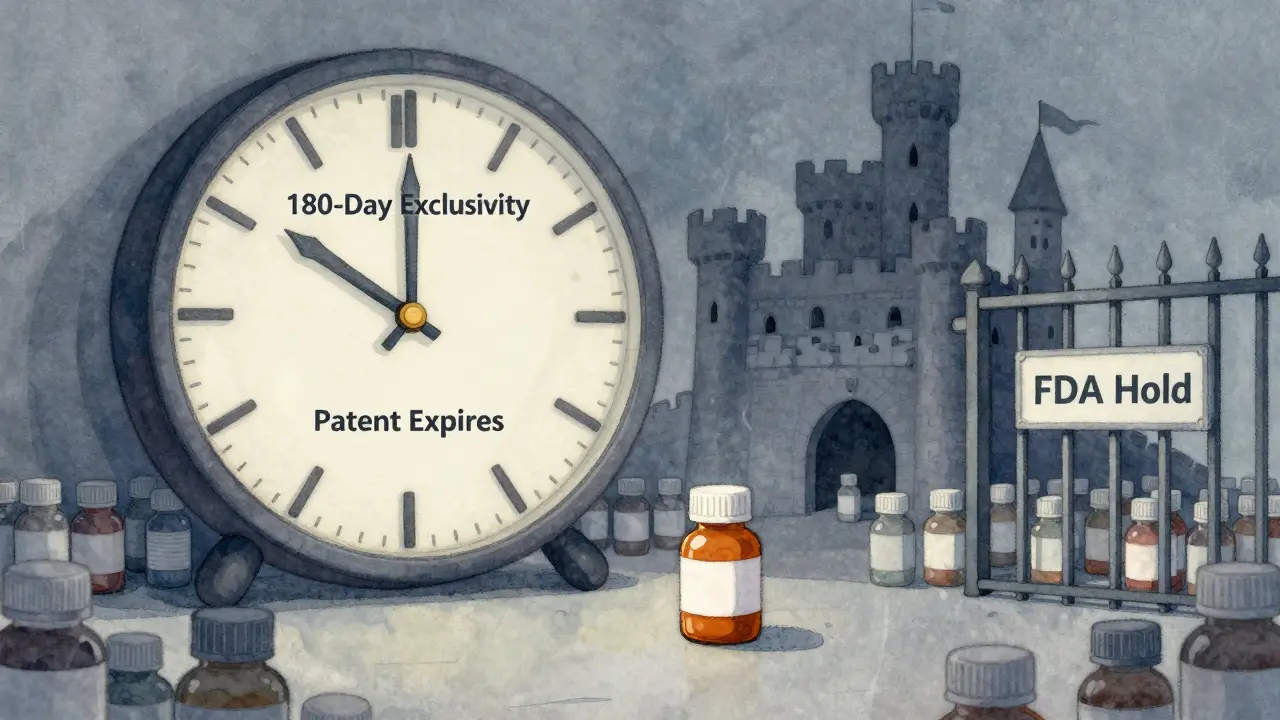
When a brand-name drug’s patent is about to expire, you might expect generic versions to flood the market right away. But that’s not what usually happens. Instead, there’s often a long wait - sometimes years - before the first generic hits shelves. Why? Because of a rule called 180-day exclusivity. It sounds like a shortcut to cheaper medicine, but in practice, it’s a legal loophole that can delay competition and keep prices high.
What Is 180-Day Exclusivity?
The 180-day exclusivity rule comes from the Hatch-Waxman Act of 1984. It was designed to encourage generic drug companies to challenge weak or questionable patents on brand-name drugs. If a generic company files a legal challenge and wins, it gets a 180-day window where no other generic can enter the market. That’s the incentive: be the first to challenge the patent, and you get a six-month monopoly on selling the generic version. But here’s the catch: the clock doesn’t start when the FDA approves the drug. It starts when the generic company actually begins selling it - or when a court rules the patent is invalid or not infringed. That means a company can file a challenge, sit on it for years while litigation drags on, and only start selling when it’s ready. Meanwhile, every other generic manufacturer is blocked from entering - even if they’ve already submitted their application.How It Works: The First-Mover Advantage
To qualify for the 180-day exclusivity, a generic company must be the first to file an Abbreviated New Drug Application (ANDA) with a Paragraph IV certification. That’s a formal legal statement saying the brand’s patent is either invalid or won’t be infringed by the generic version. The FDA doesn’t approve the generic right away. Instead, it waits to see if the brand-name company sues. If they do, the FDA can’t approve any other generics for 30 months - unless a court rules in favor of the generic first. This creates a race. Companies spend millions on lawyers, trying to be the first to file. Sometimes, multiple companies file on the same day. The FDA has rules to decide who wins, but it’s messy. And if the first applicant doesn’t start selling within 75 days of a court win or 180 days after the FDA accepts their application, they can lose the exclusivity.Why It’s Broken
The system was meant to speed up generic entry. But in reality, it often does the opposite. Take a blockbuster drug like $1 billion-a-year medication. If the first generic company files a patent challenge and the brand sues, the case can take 3, 5, even 7 years to resolve. During that time, the brand keeps its monopoly. The generic company doesn’t sell anything. But no other generic can either. So instead of competition kicking in right after the patent expires, you get a long stretch of no generics at all - then, suddenly, one generic appears and dominates the market for six months. This isn’t theoretical. In 2018, the FDA admitted this problem. They noted cases where the 180-day exclusivity effectively lasted years, blocking competition long after the patent should’ve expired. The agency even proposed a fix: make the exclusivity start only when the generic actually hits the market, and cap it at 180 days. That way, if a company delays selling, the clock doesn’t start - and other generics can enter sooner.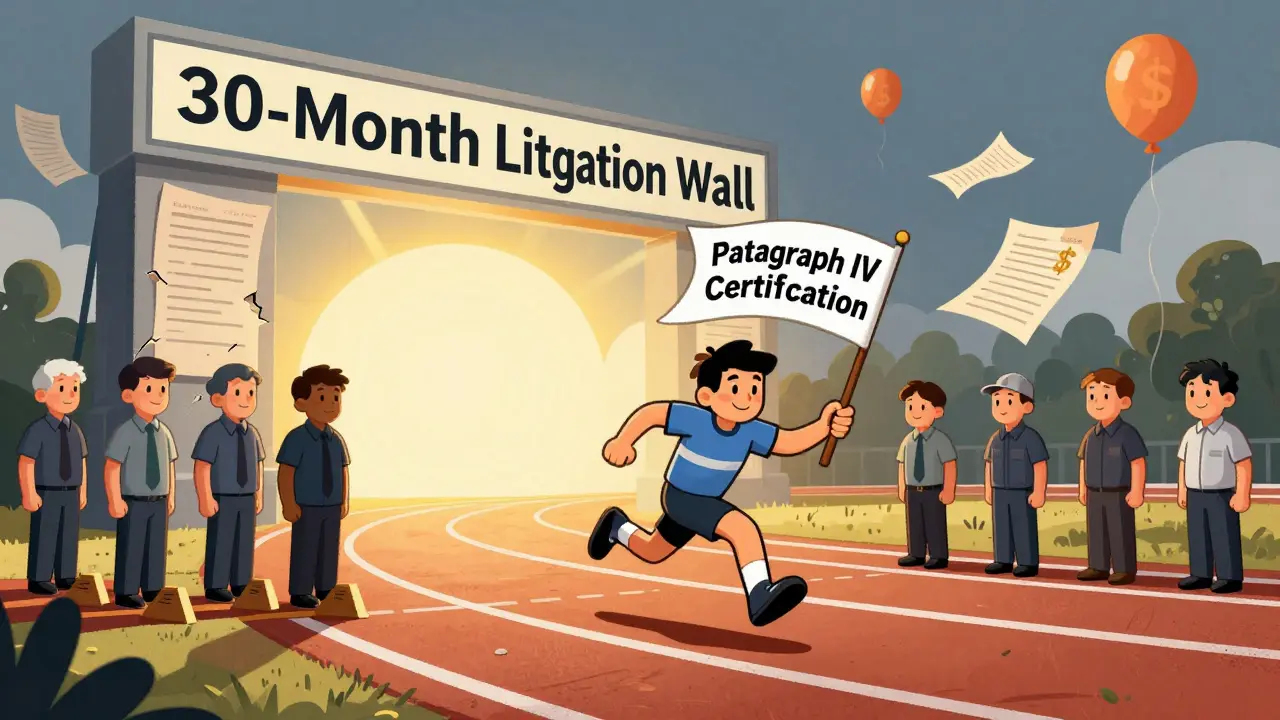
Who Benefits? Who Gets Left Behind?
The winner is the first generic company - if they play their cards right. They can charge high prices during their exclusivity window, sometimes even higher than the brand-name drug. That’s because they’re the only option. Patients and insurers pay more. Pharmacies get squeezed. The public pays the cost. The losers? Everyone else. Other generic manufacturers who spent money preparing their applications get stuck waiting. Patients who need affordable drugs wait longer. Taxpayers foot the bill for higher Medicare and Medicaid costs. Even the brand-name companies benefit sometimes - if they strike deals with the first generic challenger to delay entry, a practice known as "pay-for-delay." These deals are legal in the U.S. (though banned in the EU), and they’ve cost consumers billions.How It Compares to Other Exclusivity Rules
The 180-day exclusivity is different from other types of drug protections. For example:- New chemical entity exclusivity: 5 years of protection for brand-name drugs with no prior FDA approval. No generics allowed during that time.
- Orphan drug exclusivity: 7 years for drugs treating rare diseases.
- Biologics exclusivity: 12 years for complex biologic drugs, with 12-month exclusivity for the first interchangeable biosimilar.
The Real Cost to Patients
Generic drugs now make up over 90% of prescriptions in the U.S. But they don’t always come cheap - especially when competition is delayed. A study by the Congressional Budget Office found that when 180-day exclusivity is triggered, prices drop by 80-90% after the exclusivity ends. But if the exclusivity is delayed for years, those savings are pushed back. For a drug like Adderall or Lipitor, a delay of just one year in generic entry can cost the healthcare system hundreds of millions. Multiply that across dozens of drugs each year, and you’re talking billions in unnecessary spending.What’s Being Done?
The FDA has been pushing for reform since at least 2022. Their proposal would:- Start the 180-day clock only when the generic is actually sold
- Block other generics from entering until that clock starts
- Remove the loophole that lets companies sit on exclusivity for years
What This Means for You
If you’re on a brand-name drug that’s about to go generic, don’t assume the price will drop right away. Ask your pharmacist: "Has the first generic been approved and started selling?" If not, you might be waiting months - or years. If you’re on Medicare or Medicaid, your plan might be paying more than necessary because of this delay. If you’re a patient advocate, a pharmacist, or just someone who wants affordable meds, this is a policy issue worth watching. The 180-day exclusivity rule isn’t just a legal footnote - it’s a hidden tax on healthcare.Who qualifies for the 180-day exclusivity period?
Only the first generic drug company to file an ANDA with a Paragraph IV certification - a legal challenge to a brand-name patent - qualifies. The application must be substantially complete at the time of submission. Even if multiple companies file on the same day, the FDA has rules to determine which one is first. If the company doesn’t start selling within required deadlines or loses its patent challenge, it forfeits the exclusivity.
Does the 180-day exclusivity always last 180 days?
No. The exclusivity period can be delayed for years if the first applicant waits to start selling while patent litigation drags on. The clock only starts when the generic drug is commercially marketed or when a court rules the patent is invalid - whichever comes first. Until then, no other generic can enter, even if the patent has expired.
Can the first applicant lose the exclusivity?
Yes. Under the Medicare Modernization Act of 2003, the first applicant can forfeit exclusivity if they don’t market the drug within 75 days of a court decision or 180 days after the FDA accepts their application. They can also lose it if they withdraw their application, fail to get approval, or settle with the brand-name company in a way that delays market entry.
How does this affect drug prices?
It delays price drops. Without competition, brand-name drugs stay expensive. When the first generic finally enters, it often charges high prices too - since it’s the only option. Prices only fall sharply after the 180-day window ends and other generics arrive. But if the exclusivity is delayed for years, patients pay more for much longer.
Are there efforts to fix this system?
Yes. The FDA proposed changes in 2022 to make the 180-day exclusivity start only when the generic is actually sold, not before. They also suggested extending it to 270 days for early challengers. But Congress hasn’t passed any reforms yet. Legal battles and citizen petitions continue as generic manufacturers and consumer groups push for faster market access.
Comments
Praseetha Pn
Let me tell you something they don’t want you to know - this 180-day exclusivity? It’s not a loophole, it’s a cartel. Big Pharma pays off these generic companies to sit on their applications for years - just enough to keep prices sky-high. You think it’s about innovation? Nah. It’s about stock prices. The FDA? They’re asleep at the wheel. I’ve seen it happen with my dad’s blood pressure med - $400 a month for 3 years after patent expiry, then bam - one generic drops, price crashes to $12. But who got hurt in between? Us. Always us.
January 17, 2026 at 17:49
Nishant Sonuley
Look, I get why this rule exists - it’s supposed to incentivize the risky, expensive legal battles against pharma giants. But the system’s been weaponized. Companies now file ANDAs with Paragraph IV certifications like they’re playing chess with the entire healthcare system. And the worst part? The first filer doesn’t even need to *make* the drug - just threaten to. It’s like buying a lottery ticket and then refusing to cash it until you’ve squeezed every last dime out of the brand-name company. And meanwhile, people with diabetes, asthma, or heart conditions are rationing pills because they can’t afford the brand. This isn’t capitalism. This is legalized extortion with a FDA stamp on it.
January 18, 2026 at 19:01
Emma #########
I work in a community pharmacy, and I see the pain this causes every day. Patients come in crying because their copay went up again. They ask if there’s a cheaper option - and sometimes, there isn’t. Not because there’s no generic - but because the first company hasn’t started selling yet. I’ve had elderly folks skip doses just to make their prescription last. This isn’t policy. This is cruelty dressed up as law.
January 19, 2026 at 20:41
Andrew Short
Anyone who thinks this is a ‘loophole’ is either naive or complicit. This is how the system was designed - to protect monopolies. The Hatch-Waxman Act was never meant to lower prices. It was meant to give Big Pharma a controlled, predictable transition from monopoly to competition - with a buffer. The fact that people are surprised by this is proof they’ve been lied to. The ‘generic drug revolution’? A marketing slogan. The real story? The same corporations that made $10B on the brand now make $8B on the generic - just with less R&D cost. And you’re mad about it? Get a grip.
January 20, 2026 at 15:10
christian Espinola
Typo in the post: '180-day exclusivity' is correctly hyphenated, but 'Paragraph IV' is inconsistently capitalized. Also, 'FDA' should be 'the FDA' on first reference. But beyond that - this is textbook crony capitalism. The fact that a company can sit on exclusivity for years without selling? That’s not a bug. It’s a feature. And the FDA’s ‘proposal’? A joke. They’re still letting the first filer control the market. Real reform would require dismantling the entire ANDA priority system. But Congress won’t touch it. Too many lobbyists. Too much money.
January 22, 2026 at 09:50
Chuck Dickson
Hey - if you’re reading this and you’re frustrated, you’re not alone. But here’s the thing: change is possible. I’ve seen it. In 2020, a court forced the FDA to approve a generic even when the first applicant hadn’t sold - and it was a win. People rallied. Patients spoke up. Pharmacies pushed back. We need more of that. Write your reps. Support organizations like Public Citizen. Don’t just rage on Reddit - take action. The system’s broken, but it’s not invincible. We’ve beaten worse odds.
January 22, 2026 at 14:08
Naomi Keyes
Let’s be precise: the 180-day exclusivity is codified under 21 U.S.C. § 355(j)(5)(B)(iv), and the FDA’s interpretation - particularly regarding the ‘marketed’ trigger - has been challenged in multiple circuit courts, including the D.C. Circuit in 2020 (Apotex v. HHS). The agency’s 2022 proposal, while well-intentioned, fails to address the ‘joint first filer’ loophole, where multiple companies file simultaneously and then collude to delay market entry. Furthermore, the proposed 270-day extension for early challengers creates perverse incentives to file before patent expiry - which increases litigation and delays, not reduces it. This isn’t reform. It’s regulatory gymnastics.
January 23, 2026 at 10:17
Andrew Qu
Most people don’t realize that the first generic company often has to invest millions just to file the ANDA - legal fees, bioequivalence studies, manufacturing setup. So when they get that 180-day window, they’re not being greedy - they’re trying to recoup. The problem isn’t the company. It’s the system that lets them be the only one allowed in. Imagine if only one pizza place could open after a fire destroyed all the others - you’d think that was crazy. But that’s what’s happening with drugs. We need more lanes, not just one winner.
January 24, 2026 at 05:43
kenneth pillet
Been there. My mom’s cholesterol med. 3 years after patent expired. No generic. Then one pops up. Price drops 90%. But by then, she’d already spent $12k out of pocket. This isn’t complicated. It’s corruption. Just sayin’.
January 24, 2026 at 19:38
Jodi Harding
It’s not about drugs. It’s about control. They don’t want you healthy. They want you dependent.
January 26, 2026 at 16:12
Jay Clarke
Let me tell you about my cousin. He’s a biochemist. Worked at a generic company. They got the 180-day exclusivity for a $1.2B drug. Didn’t sell it for 14 months. Why? Because they had a secret deal with the brand: they’d delay entry in exchange for a $200M payout. Meanwhile, Medicare paid $300M in overcharges. The FDA knew. Congress didn’t care. The courts? Too slow. And now? My cousin quit. Said he couldn’t work for a system that turns human suffering into a spreadsheet.
January 28, 2026 at 15:00
Selina Warren
Every time I hear someone say 'free market,' I think of this. This isn't capitalism. It's feudalism with a corporate logo. The first generic isn't a hero - they're a gatekeeper. And the real villains? The lawyers, the lobbyists, the politicians who take the cash and pretend they're protecting innovation. Wake up. This isn't about patents. It's about power.
January 30, 2026 at 05:56
Robert Davis
Actually, the 180-day exclusivity is a necessary evil. Without it, no one would ever challenge a patent. Pharma would just keep extending them with minor tweaks - like they do with biologics. The system’s flawed, sure. But the alternative? Zero generics. Ever. So yeah, it’s messy. But it’s the only thing keeping the patent trolls in check. We need better rules, not more regulation.
January 31, 2026 at 15:36
Write a comment