
Many people see a prescription for a generic drug and wonder: Is this really the same? You’re not alone. Even though 9 out of 10 prescriptions in the U.S. are filled with generics, doubts still linger. Some worry the pill looks different. Others fear it won’t work as well-or might even be dangerous. These concerns are real, even if they’re not always backed by science. The good news? Most of them can be cleared up with simple, honest answers.
Do generic drugs work as well as brand-name ones?
Yes. Every generic drug must meet the same strict standards as the brand-name version. The U.S. Food and Drug Administration (FDA) doesn’t just approve generics based on paperwork. They require proof that the active ingredient-the part that actually treats your condition-is absorbed into your body at the same rate and amount as the brand-name drug. This is called bioequivalence. The FDA says the generic’s absorption must fall between 80% and 125% of the brand’s. That’s not a wide gap. It’s tight enough to ensure your body gets the exact same therapeutic effect.
Think of it like this: two different brands of aspirin both contain acetylsalicylic acid. One might be round, the other oval. One might be white, the other blue. But if they both have the same amount of the active ingredient and your body absorbs them the same way, they’ll do the same job. Generics are no different.
Why do generic pills look different?
Because the law lets them. Brand-name companies hold patents on the shape, color, and packaging of their pills. Once the patent expires, generic manufacturers can’t copy those exact looks. So they change them-on purpose. That’s why your generic metformin might be a small green tablet instead of the big white one you used to get. But the active ingredient? Identical. The dose? The same. The effect? Also the same.
Some patients notice the difference in appearance and assume something’s wrong. But that’s just how the system works. It’s not a sign of lower quality. It’s just a legal requirement to avoid confusion with the original product.
Are generic drugs made in unsafe factories?
No. The FDA inspects every facility that makes drugs sold in the U.S.-whether it’s in the U.S., India, China, or anywhere else. The same factories that make brand-name drugs often make generics too. In fact, about half of all generic medications are produced by the very companies that originally developed the brand-name versions. The FDA’s Generic Drug Program has a Risk Identification and Correction Action Program (RICA) that’s tracked and fixed over 1,200 potential quality issues since 2018. That’s not a system that lets unsafe drugs slip through.
Counterfeit drugs are a real problem in some countries-but not in the U.S. supply chain. Legitimate pharmacies and distributors follow strict rules. If you get your meds from a licensed U.S. pharmacy, you’re getting FDA-approved products. No exceptions.
Do generics have more side effects?
Not because they’re generic. Side effects come from the active ingredient, not the fillers or coating. Yes, generics can have different inactive ingredients-like dyes, flavors, or binders. In rare cases, someone might be allergic to one of those. For example, a dye used in one brand might cause a rash in a sensitive person. But that’s not because the drug is weaker or dirtier. It’s because the formula changed slightly.
If you switch from a brand to a generic and notice new side effects, it’s worth talking to your doctor or pharmacist. But don’t assume it’s because it’s generic. Often, it’s just your body adjusting to a different filler. Or, sometimes, it’s a coincidence-your condition changed, or you started a new medication. A 30-day follow-up after switching is a smart move, especially if you’re on a drug with a narrow therapeutic index.
What’s a narrow therapeutic index drug?
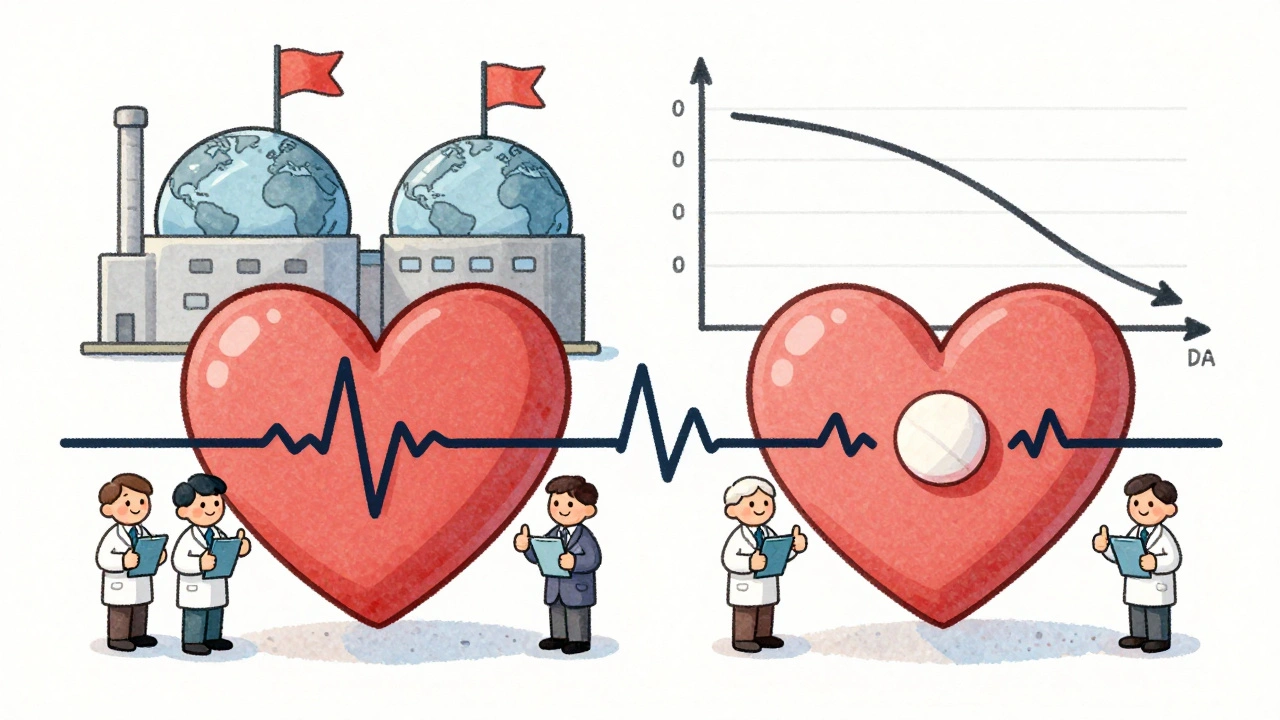
This is the one exception doctors and pharmacists pay close attention to. These are medicines where the difference between a helpful dose and a harmful one is very small. Examples include warfarin (a blood thinner), levothyroxine (for thyroid problems), and some seizure meds like phenytoin.
For these, even tiny changes in how your body absorbs the drug can matter. That’s why some doctors prefer to keep patients on the same brand or generic consistently. Switching between different generic versions-even if they’re all FDA-approved-can sometimes cause small shifts in blood levels. That’s not because generics are bad. It’s because these drugs are so finely balanced.
If you’re on one of these, your provider will likely monitor your blood levels more closely after a switch. Don’t panic. Just let your doctor or pharmacist know if you feel different. They’ll help you decide what’s best.
Why are generics so much cheaper?
Because they don’t have to pay for the original research. Brand-name companies spend billions developing a new drug-testing it, running clinical trials, getting approval. Once the patent expires, other companies can make the same drug without repeating all that work. They just have to prove it works the same way. That cuts costs dramatically.
On average, generics cost 80% to 85% less than the brand-name version. In some cases, the savings are even higher. Over the past decade, generics have saved the U.S. healthcare system more than $2.2 trillion. That’s billions of dollars back in patients’ pockets and in the system’s budget.
And competition drives prices down even further. Once a few companies start making the same generic, they fight for your business. That’s why you might see two different generics for the same drug, priced differently at your pharmacy.
Can my doctor stop me from getting a generic?
Yes, but only if they write "Do Not Substitute" on the prescription. Pharmacists are allowed by law to swap a brand for a generic unless the doctor specifically says not to. That’s called automatic substitution. It’s meant to save money and keep care affordable.
But here’s the thing: many doctors don’t know when a new generic hits the market. They might not realize a cheaper, equally effective version is now available. That’s where pharmacists step in. They can tell you if a generic is available, how much it’ll cost, and whether it’s right for you. Don’t be afraid to ask them. They’re trained to help you choose the safest, most affordable option.
Why do some people distrust generics?
It’s not just about science. It’s about trust, experience, and culture. A 2014 national survey found that while 87% of patients believed generics were just as effective, 16% still didn’t fully trust them. Non-Caucasian patients were significantly more likely to ask for brand-name drugs. Some people grew up hearing stories from family or friends who said, "The generic didn’t work for me." Others worry that cheaper means cut corners.
These fears aren’t silly. They’re human. But they’re often based on misinformation. A patient once told researchers, "Being generic, they have more in it to make it stronger." That’s the opposite of the truth. Generics have the same amount of active ingredient-not more, not less.
Changing long-held beliefs takes time. But every time a patient saves money without losing effectiveness, trust grows. And that’s what matters most.
What should I do if I’m unsure about switching?
Ask questions. Always.
- Ask your doctor: "Is there a generic version of this drug? Is it safe for me?"
- Ask your pharmacist: "What’s the difference between this brand and the generic? Will it work the same?"
- Check your insurance: "Which one is covered? What’s the out-of-pocket cost?"
If you’ve been on a brand-name drug for years and feel fine, there’s no rush to switch. But if you’re paying a lot, or your insurance pushes you toward generics, don’t assume the worst. Talk to your care team. They can help you make an informed choice.
And if you do switch, pay attention. Keep track of how you feel. If something changes-your energy, your symptoms, your side effects-call your provider. But don’t assume it’s the drug. Often, it’s something else entirely.
Bottom line: Generics are safe, effective, and saving lives
They’re not a compromise. They’re a smart choice. The science is clear. The regulators are strict. The savings are huge. And the vast majority of patients do just as well on generics as they did on brands.
There are rare cases where close monitoring is needed-especially with certain heart, thyroid, or seizure meds. But those are exceptions, not the rule.
Don’t let fear or myths keep you from affordable care. Generics aren’t second-rate. They’re the same medicine, at a fraction of the cost. And for millions of people, that’s the difference between taking their medicine-and skipping it because they can’t afford it.
Are generic drugs as effective as brand-name drugs?
Yes. Generic drugs must meet the same FDA standards as brand-name drugs for active ingredients, strength, purity, and how the body absorbs them. Bioequivalence testing ensures they work the same way in your body. Thousands of studies and decades of real-world use confirm this.
Why do generic pills look different?
By law, generic manufacturers can’t copy the exact shape, color, or logo of brand-name pills. So they change the appearance to avoid confusion. But the active ingredient, dose, and effectiveness are identical. The difference is only cosmetic.
Are generic drugs made in unsafe factories?
No. The FDA inspects all drug manufacturing facilities-whether they make brand-name or generic drugs-using the same strict standards. Many generics are made in the same factories as brand-name drugs. The FDA’s RICA program has fixed over 1,200 potential quality issues since 2018.
Do generics have more side effects?
Not because they’re generic. Side effects come from the active ingredient. Generics may have different inactive ingredients (like dyes or fillers), which can rarely cause reactions in sensitive people. But that’s not a sign of lower quality-it’s just a formulation difference. Always report new side effects to your provider.
When should I avoid switching to a generic?
For drugs with a narrow therapeutic index-like warfarin, levothyroxine, or certain seizure medications-small changes in absorption can matter. Your doctor may recommend staying on the same version (brand or generic) to keep your levels stable. Always follow your provider’s advice and get blood tests if needed.
Can my pharmacist substitute a generic without telling me?
Yes, unless your doctor writes "Do Not Substitute" on the prescription. Pharmacists are allowed to switch to a generic to save you money. But they’re also required to explain the change if you ask. Don’t hesitate to ask them about the drug you’re getting.
Why are generics so much cheaper?
Generics don’t need to repeat expensive clinical trials because they’re based on already-approved drugs. Once the patent expires, multiple companies can make the same drug, which drives prices down through competition. On average, generics cost 80-85% less than brand-name versions.
Do generics take longer to work?
No. FDA requirements ensure that generics are absorbed into the bloodstream at the same rate and to the same extent as brand-name drugs. If you notice a delay in how quickly your medication works, it’s likely due to other factors-like diet, other medications, or changes in your condition-not the generic version.
Next steps: What to do now
- If you’re on a brand-name drug and paying a lot, ask your pharmacist if a generic is available.
- If you’ve had a bad experience with a generic, talk to your doctor-not just assume it’s the drug. It might be a different filler or unrelated issue.
- For high-risk meds like blood thinners or thyroid drugs, ask if your provider recommends staying on one version.
- Use your insurance’s formulary list to compare prices. Sometimes the generic isn’t the cheapest option-another generic might be even cheaper.
Medications are personal. But they shouldn’t be a financial burden. Generics are one of the safest, most proven ways to keep your health care affordable without sacrificing quality. Ask questions. Get facts. And don’t let myths stop you from taking what you need.
Comments
John Webber
generic drugs are just as good as brand name, but i still dont trust em. why? because my cousin took a generic for blood pressure and ended up in the hospital. i dont care what the fda says, real life dont always match the studies.
December 3, 2025 at 06:38
Shubham Pandey
same thing. cheaper = worse. end of story.
December 4, 2025 at 20:33
Elizabeth Farrell
I just want to say how proud I am of how far we’ve come in making healthcare more accessible. Generics aren’t just about saving money-they’re about dignity. People shouldn’t have to choose between eating and taking their medicine. I’ve seen it firsthand. My neighbor skipped her thyroid meds because the brand was $200 a month. She switched to generic, paid $8, and now she’s back to gardening and baking cookies with her grandkids. That’s the real win here. No hype, no jargon-just people getting the care they deserve.
December 5, 2025 at 10:47
Sheryl Lynn
Oh, the *aesthetic* compromise of generic pharmaceuticals-how tragically bourgeois. One must wonder if the FDA’s bioequivalence thresholds are merely a concession to the capitalist imperative of efficiency over elegance. The color of a pill is not trivial-it’s semiotic. A white tablet is a symbol of trust; a green one, a bureaucratic afterthought. We’ve normalized mediocrity under the banner of ‘affordability.’ But at what cost to the patient’s psychological fidelity to their regimen?
December 6, 2025 at 09:45
Paul Santos
Let’s be real-generic drugs are the IKEA of medicine. Functional, cheap, and slightly soul-crushing. 😅 But hey, if it gets the job done without blowing your bank account, who am I to judge? Still, I’d love to see a study on placebo effects with generics vs. branded. I bet the *perception* of quality affects outcomes more than we admit.
December 8, 2025 at 01:26
John Morrow
The entire premise is flawed. The FDA’s bioequivalence range of 80–125% is a joke. That’s a 45% variance in absorption. For a drug like warfarin, that’s not ‘close enough’-it’s a death sentence waiting to happen. And don’t get me started on the fact that 50% of generics are made by the same companies that produce the brand names. It’s a shell game. They profit twice: once with the brand, then again with the generic they ‘invented.’ The system isn’t broken-it’s designed to exploit.
December 8, 2025 at 08:46
ruiqing Jane
Thank you for writing this. So many people are scared to switch because they don’t understand the science-and that’s not their fault. The system doesn’t explain it well. I work in a clinic, and I’ve seen patients cry because they think generics are ‘fake.’ We spend 20 minutes just showing them the FDA’s bioequivalence data and the fact that their grandma took generics for 30 years and lived to 94. Knowledge is the antidote to fear. Keep sharing facts like this.
December 9, 2025 at 04:55
Fern Marder
Generics? 😒 I switched to a generic for my anxiety med and felt like a zombie for two weeks. Turns out it had a different dye. I went back to brand. My mental health > $50. 🙃
December 10, 2025 at 15:18
Chris Wallace
I used to be super skeptical too. Then I got on a generic statin after my insurance dropped the brand. I checked my labs before and after-no change. Cholesterol stayed down. No muscle pain, no weird side effects. I’ve been on it for five years. Honestly? I can’t tell the difference. The only thing that changed was my wallet. I started buying more groceries. Maybe that’s the real win.
December 11, 2025 at 23:36
william tao
It is a matter of public record that the U.S. Food and Drug Administration, while ostensibly regulatory, operates under a framework of regulatory capture, wherein industry interests dictate policy thresholds. The 80–125% bioequivalence standard is not a scientific benchmark-it is a political compromise, engineered to facilitate the commodification of human physiology. One must question: if the drug is truly identical, why does the law mandate cosmetic differentiation? The answer lies not in safety, but in liability avoidance.
December 13, 2025 at 20:42
Sandi Allen
THE FDA IS A LIE. THEY TAKE MONEY FROM PHARMA. THE GENERICS ARE MADE IN CHINA IN FACTORIES WITH NO INSPECTIONS. THEY PUT TALCUM POWDER AND ASBESTOS IN THEM. MY NEIGHBOR’S DOG GOT SICK FROM A GENERIC. THEY’RE LYING TO YOU. DON’T TRUST THEM. CHECK THE LABELS. LOOK FOR THE ‘MADE IN USA’ STAMP. IF IT’S NOT THERE, DON’T TAKE IT. I’VE SEEN THE DOCUMENTS. THEY’RE HIDING IT.
December 15, 2025 at 11:04
Eddy Kimani
Interesting that the article mentions RICA but doesn’t explain what the data shows. I dug into the FDA’s public database-over 70% of the 1,200 issues flagged were minor labeling or packaging errors. Only 3% were actual potency problems. And of those, 80% were caught before distribution. The system’s not perfect, but it’s way more robust than people think. The real problem? Lack of patient education. We need more pharmacists explaining this at the counter, not just handing out pills.
December 17, 2025 at 04:56
Chelsea Moore
MY DOCTOR PRESCRIBED A GENERIC FOR MY DIABETES. I FELT LIKE I WAS BEING POISONED. I WAS SWEATING, SHAKING, HAD HEADACHES. I WENT BACK TO BRAND. I WAS FINE. NOW I’M TELLING EVERYONE. THIS IS A CONSPIRACY TO MAKE PEOPLE SICK SO THEY CAN SELL MORE DRUGS. I’M NOT ALONE. I’VE GOT 17 FRIENDS WHO SAW THE SAME THING. THE FDA ISN’T LISTENING BECAUSE THEY’RE PAID OFF.
December 17, 2025 at 08:31
John Biesecker
you know what’s wild? people get mad about generic pills looking different… but they’ll buy a $100 shirt with a logo they don’t even like just because it’s ‘designer.’ we’re okay with paying extra for branding on clothes, but not medicine? maybe we’re just bad at prioritizing what actually matters. 🤔
December 17, 2025 at 11:58
Genesis Rubi
Look, I get it. But let’s be real-America doesn’t need cheap medicine. We need AMERICAN medicine. Made in the USA. By Americans. Not some factory in India that’s barely regulated. I don’t care if it costs twice as much-I’d rather pay extra knowing my pills weren’t made by someone working 16-hour shifts in a sweatshop. This isn’t about money. It’s about national pride. And if you disagree, you’re just part of the globalist agenda.
December 19, 2025 at 03:20
Write a comment