
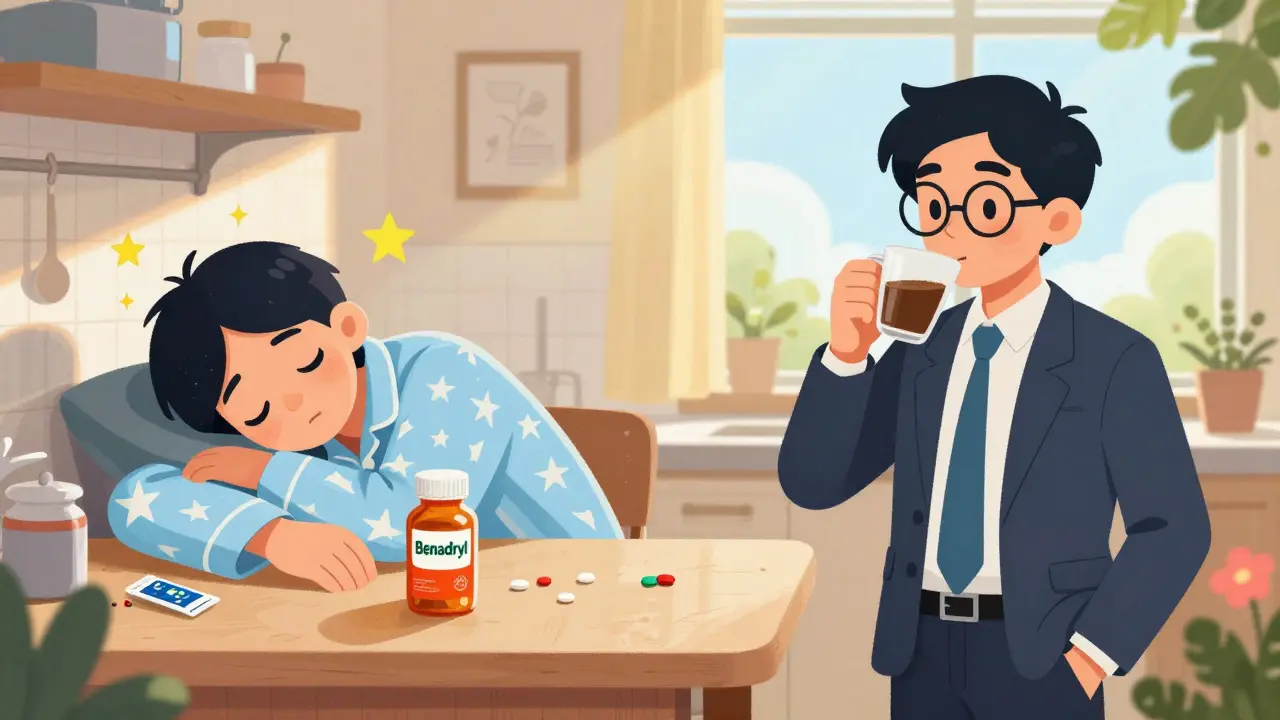
When your nose is running, your eyes are itchy, and you can’t tell if it’s a cold or allergies, you reach for an antihistamine. But not all antihistamines are the same. Two main types exist-first-generation and second-generation-and choosing the wrong one can leave you groggy at work, dizzy behind the wheel, or still sneezing after a full dose.
What’s the real difference between first- and second-generation antihistamines?
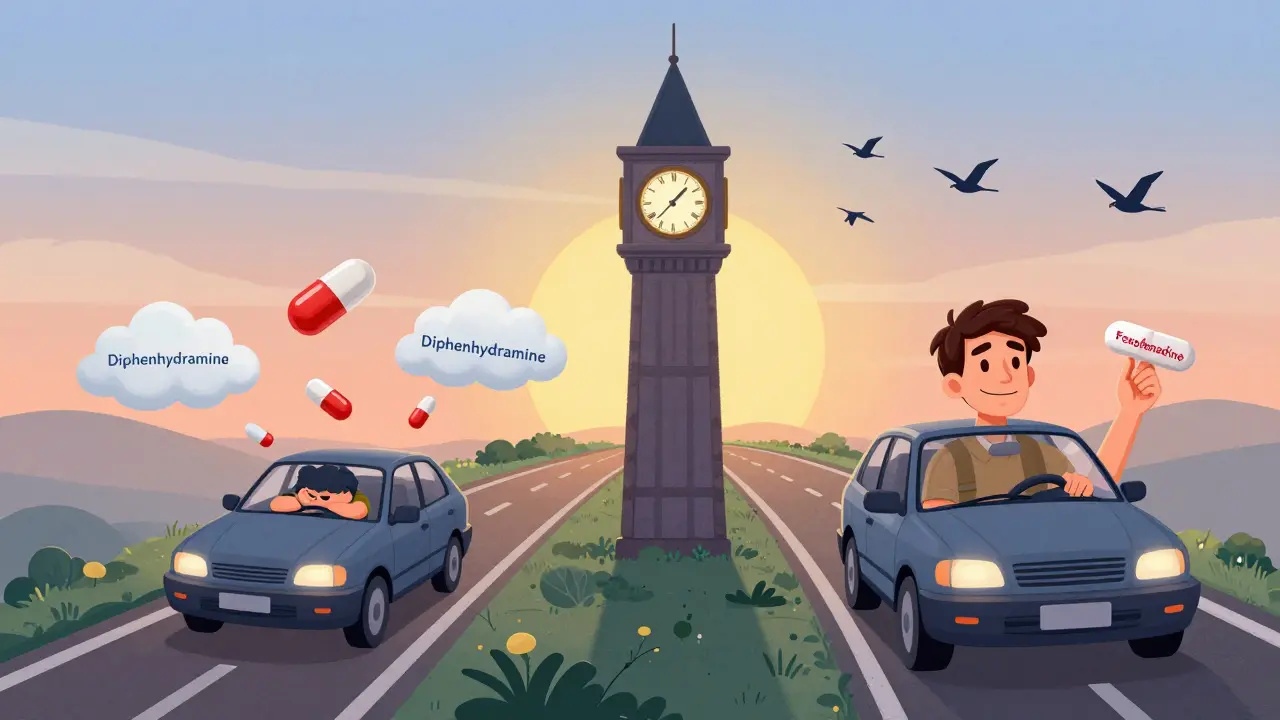
The big difference isn’t just in the name. It’s in how they move through your body. First-generation antihistamines like diphenhydramine (Benadryl), chlorpheniramine (Chlor-Trimeton), and promethazine (Phenergan) are small, fat-soluble molecules. That means they slip easily across the blood-brain barrier. They block histamine in your nose and skin-but they also block it in your brain. That’s why you feel sleepy. About 50 to 60% of people taking these meds report drowsiness, according to the Cleveland Clinic. Some even say it’s so strong they can’t drive safely.
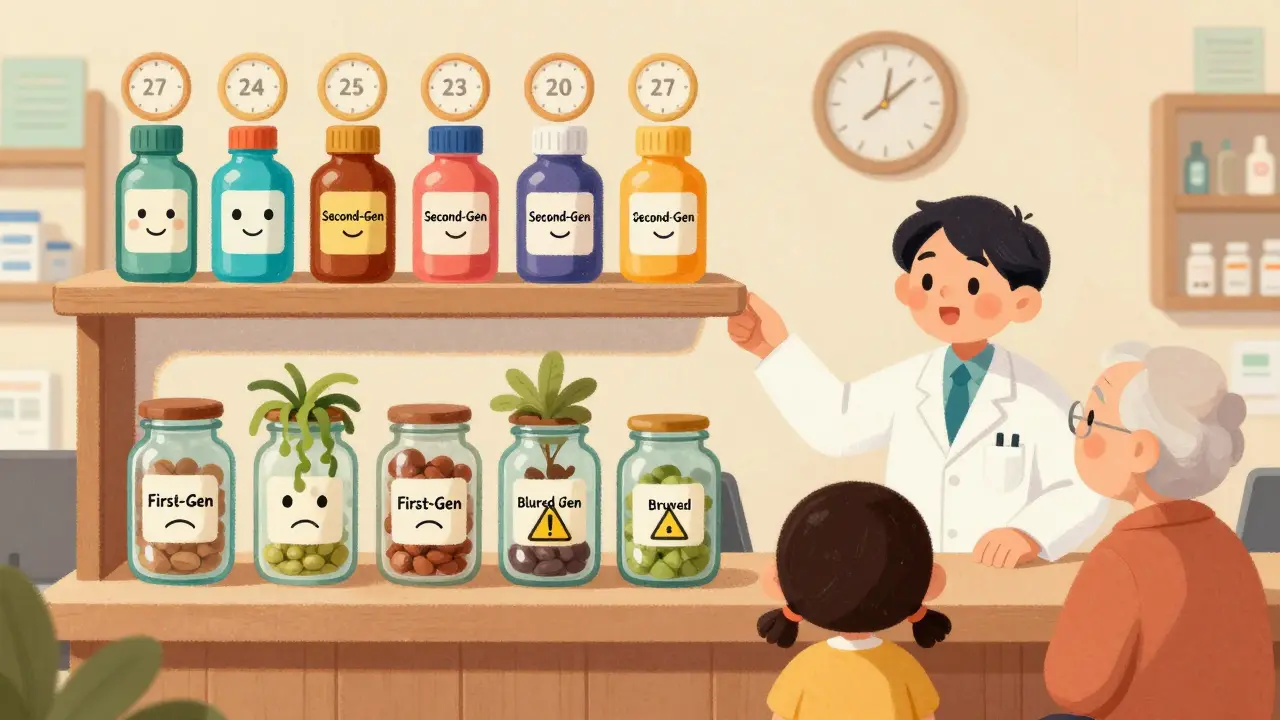
Second-generation antihistamines like loratadine (Claritin), cetirizine (Zyrtec), and fexofenadine (Allegra) were designed to fix that. They’re bulkier or have chemical tags that stop them from entering the brain easily. The result? Minimal drowsiness. Only 10 to 15% of users feel sleepy, and even then, it’s usually mild. That’s why doctors now recommend them as the first choice for chronic allergies like hay fever or year-round nasal symptoms.
Which one works faster?
If you’re caught off guard by a sudden allergy flare-up-say, from pet dander or pollen-you need quick relief. First-generation antihistamines win here. They start working in as little as 30 minutes. That’s why people keep Benadryl in their glovebox or purse. It’s the go-to for emergency relief.
Second-generation antihistamines take longer. They need 1 to 3 hours to reach peak levels in your blood. That’s not a flaw-it’s just how they’re built. If you know you’ll be exposed to allergens (like a trip to the park on a high-pollen day), take your second-gen antihistamine the night before or first thing in the morning. Don’t wait until your eyes are watering. Prophylactic dosing works better than reactive dosing.
How long do they last?
First-gen antihistamines last about 4 to 6 hours. That means you need to take them 3 or 4 times a day to stay covered. For someone with a busy schedule, that’s a hassle. Miss a dose? Symptoms creep back. And taking them repeatedly increases the risk of side effects like dry mouth, blurred vision, or trouble peeing-especially in older adults.
Second-gen antihistamines? One dose lasts 12 to 24 hours. Most people take them once a day. Compliance rates jump to 85% with once-daily dosing, compared to just 60% for the older versions. That’s not just about convenience-it’s about better control of symptoms over time.
Are they equally effective?
For itching, sneezing, and runny nose, both classes do a solid job. But second-generation antihistamines have a slight edge. A 2022 meta-analysis found they reduce nasal allergy symptoms by 60 to 70%, while first-gen only hit 50 to 60%. Some, like cetirizine (Zyrtec), are even stronger than others. Studies show cetirizine gives 15 to 20% more symptom relief than loratadine (Claritin) in moderate-to-severe cases.
But here’s the catch: neither class is great at stopping nasal congestion. That’s because congestion comes from swollen blood vessels, not just histamine. That’s why many people need a decongestant like pseudoephedrine in combination. Newer combo pills, like fexofenadine/pseudoephedrine extended-release, are starting to fill that gap.
Cost matters-especially if you’re paying out of pocket
Generic diphenhydramine (Benadryl) costs about $4 to $6 for 100 tablets. That’s pennies per dose. Generic loratadine (Claritin) runs $10 to $15 for 30 tablets. Cetirizine (Zyrtec) is similar. Brand-name versions can hit $25 or more a month.
For someone with chronic allergies who needs daily medication, that price difference adds up. But if you’re only using it occasionally for a bad day, first-gen might make sense. For long-term use? The higher cost of second-gen is often worth it-especially if you’re avoiding missed workdays, car accidents, or cognitive fog.
Who should use which?
Second-generation antihistamines are the clear winner for most people: adults with seasonal allergies, kids in school, shift workers, drivers, and anyone who needs to stay alert. They’re the standard recommendation from the American Academy of Allergy, Asthma & Immunology.
But first-generation antihistamines still have their place. If you’re struggling with allergy-related insomnia, diphenhydramine can be a powerful sleep aid. On Drugs.com, over half of users say it gives better sleep than melatonin for allergy-induced wakefulness. It’s also used for motion sickness and nausea-something second-gen antihistamines don’t handle well.
Older adults? Be careful. First-gen antihistamines can cause confusion, memory problems, and increase fall risk. Harvard’s Dr. Pieter Cohen compared their cognitive impact to low-dose benzodiazepines. For seniors, even occasional use can be risky.
What about side effects?
First-gen antihistamines come with a laundry list: dry mouth (30% of users), constipation, urinary retention (5-7% in elderly), blurred vision, and worse-long-term brain fog. Studies show a 25% drop in reaction time in driving simulators. That’s not just inconvenient. It’s dangerous.
Second-gen antihistamines? Much cleaner. The most common complaint is mild headache or dry mouth, but rarely anything serious. One exception: high doses. If you take more than the recommended amount of cetirizine or loratadine, you can still get drowsy. Always stick to the label.
What are people saying?
On Reddit’s r/Allergies, 68% of users say they switched from Benadryl to Zyrtec or Claritin because they couldn’t function at work. One user wrote: “Zyrtec lets me function at work without the brain fog Benadryl gives me.”
On Amazon, second-gen antihistamines average 4.2 stars. The top 5-star reviews say things like “non-drowsy” and “finally found something I can take daily.” First-gen products sit at 3.8 stars. The biggest complaints? “Makes me too sleepy for work” and “I need to nap after every dose.”
But flip to nighttime use, and the story changes. On Drugs.com, 52% of users say diphenhydramine helps them sleep better than melatonin. It’s not ideal for long-term sleep, but for occasional nights when allergies keep you up? It still works.
What’s new in the world of antihistamines?
Third-generation antihistamines like desloratadine and levocetirizine are gaining ground. They’re active metabolites of second-gen drugs-meaning they’re the cleaned-up, more potent versions. Desloratadine prescriptions rose 12% last year.
The FDA just approved bilastine in Europe, and early trials show it’s 20% better than existing options for nasal congestion. It’s not yet available in the U.S., but it’s a sign of where things are headed: better congestion relief without drowsiness.
Pharmacies are also stocking more combo pills-antihistamine plus decongestant in one tablet, designed for all-day relief. That’s a big win for people who struggle with both runny nose and stuffiness.
How to choose the right one for you
- If you need fast relief for a sudden flare-up → Try first-gen (Benadryl) for emergencies.
- If you have daily allergies and need to stay alert → Go second-gen (Zyrtec, Claritin, Allegra).
- If you’re over 65 → Avoid first-gen unless your doctor says otherwise.
- If you have trouble sleeping because of allergies → First-gen at night can help, but don’t make it a habit.
- If you’re on other meds → Check for interactions. First-gen antihistamines play poorly with alcohol, sleeping pills, and some antidepressants.
- If cost is a barrier → Generic first-gen is cheaper, but second-gen may save you more in lost productivity.
Don’t guess. Talk to your pharmacist. They see hundreds of people each week choosing between these two. They know what works, what doesn’t, and what to avoid.
Final thought
Antihistamines aren’t just pills. They’re tools. First-generation ones are like a hammer-powerful, blunt, and effective for one job. Second-generation are like a precision screwdriver-calm, steady, and built for daily use. You don’t need both. But knowing when to use each one? That’s the key to living well with allergies.
Can I take first-generation antihistamines every day?
It’s not recommended. While you can take them daily, the side effects-drowsiness, dry mouth, urinary issues, and cognitive slowing-add up over time. Long-term use, especially in older adults, is linked to increased dementia risk. For daily allergy control, second-generation antihistamines are safer and more effective.
Is Zyrtec better than Claritin?
For many people, yes. Cetirizine (Zyrtec) tends to work faster and stronger than loratadine (Claritin), especially for eye symptoms and moderate-to-severe allergies. Studies show Zyrtec provides 15-20% more symptom relief. But Claritin is gentler on the stomach and slightly less likely to cause drowsiness. If one doesn’t work, try the other.
Why does my second-generation antihistamine make me sleepy sometimes?
Even "non-drowsy" antihistamines can cause sleepiness at higher doses or in sensitive individuals. Factors like genetics, liver function, or taking them with alcohol can increase drowsiness. Stick to the recommended dose. If you’re still sleepy, try switching brands-some people respond better to fexofenadine (Allegra) than cetirizine.
Are antihistamines safe for kids?
Second-generation antihistamines like cetirizine and loratadine are approved for children as young as 2 years old and are preferred for daily use. First-generation antihistamines like Benadryl are not recommended for routine use in kids under 6 due to risks of over-sedation and behavioral side effects. Always check the label for age-appropriate dosing.
Can I use antihistamines for colds?
They’re often included in cold medicines, but they don’t treat the virus. They only help with runny nose and sneezing if those symptoms are caused by histamine release-which happens more in allergies than in viral colds. For a typical cold, they offer limited benefit and may cause unnecessary drowsiness.
Do antihistamines help with eczema?
They don’t cure eczema, but they can help with the itching, especially at night. First-generation antihistamines are sometimes used for this because their sedating effect helps patients sleep through the itch. But for long-term control, moisturizers and topical steroids are more effective. Talk to a dermatologist for a full plan.
Comments
Kristen Russell
Second-gen all the way. I used to take Benadryl for everything until I fell asleep at my desk during a Zoom call. Never again.
January 1, 2026 at 13:28
Donna Peplinskie
I’m so glad someone finally broke this down clearly-I’ve been telling my mom for years that she shouldn’t be taking diphenhydramine every night. She says it helps her sleep, but I’ve seen her stumble walking to the kitchen at 3 a.m. I showed her this post, and she’s switching to Zyrtec tonight. Thank you.
January 3, 2026 at 02:57
Matthew Hekmatniaz
As someone who grew up in a household where Benadryl was the cure-all-from allergies to insomnia to motion sickness-I’m still adjusting to the idea that it’s not always the best tool. The science here makes sense. I’ve been on loratadine for three years now. I used to feel like I was living in a fog. Now I can actually remember what I had for breakfast. Small wins.
January 4, 2026 at 02:53
Sally Denham-Vaughan
Y’all know the real MVP? Fexofenadine. I tried Zyrtec, got sleepy. Claritin? Meh. Allegra? Like a switch flipped. No drowsiness, no brain glue. I take it every day like a vitamin. Also, it’s the only one that doesn’t make my tongue feel weird.
January 5, 2026 at 18:05
Paul Ong
Doctors push second-gen because they don't want to deal with the side effects. But Benadryl works faster and cheaper. If you're not driving or operating heavy machinery, why not use the real tool?
January 6, 2026 at 03:44
Richard Thomas
There’s something deeply ironic about how we’ve medicalized sleep and wakefulness to the point where we now have to choose between two chemical states-drowsy or alert-just to exist in a world that demands constant productivity. First-gen antihistamines don’t just cause drowsiness; they force a confrontation with our biological limits. Second-gen don’t solve the problem-they just make us ignore it. We’re not treating allergies anymore; we’re optimizing human performance under the constraints of modern capitalism. And the real tragedy? We’re told this is progress.
January 6, 2026 at 19:49
Liam George
Ever wonder why Big Pharma pushed second-gen so hard? They didn’t do it for your safety. They did it because they could patent the new versions and charge $30 a bottle while generic Benadryl sits at $5. The drowsiness? A side effect. The profit? The goal. The FDA? Complicit. Read the old clinical trial documents-they knew the cognitive impact. They just didn’t care enough to stop it.
January 7, 2026 at 07:48
Andy Heinlein
just tried allegra after reading this and wow i feel like a new person. no more midday naps. also i think my dog noticed. he used to sleep on my lap while i was passed out now he just stares at me like im a wizard
January 8, 2026 at 20:16
Ann Romine
I’m curious-has anyone tried bilastine? I live in Europe and it’s been a game changer for my congestion. No drowsiness, no rebound. I wonder why it’s not available here yet. Is it just regulatory delays, or is there something they’re hiding?
January 9, 2026 at 17:42
Bryan Anderson
Thanks for writing this. I’m a pharmacist, and I see people choosing Benadryl every day because they think it’s ‘stronger.’ It’s not. It’s just sedating. I always tell them: if you’re using it for allergies, you’re using it wrong. If you’re using it to sleep, you’re using it as a crutch. There’s a better way.
January 11, 2026 at 13:36
Write a comment