
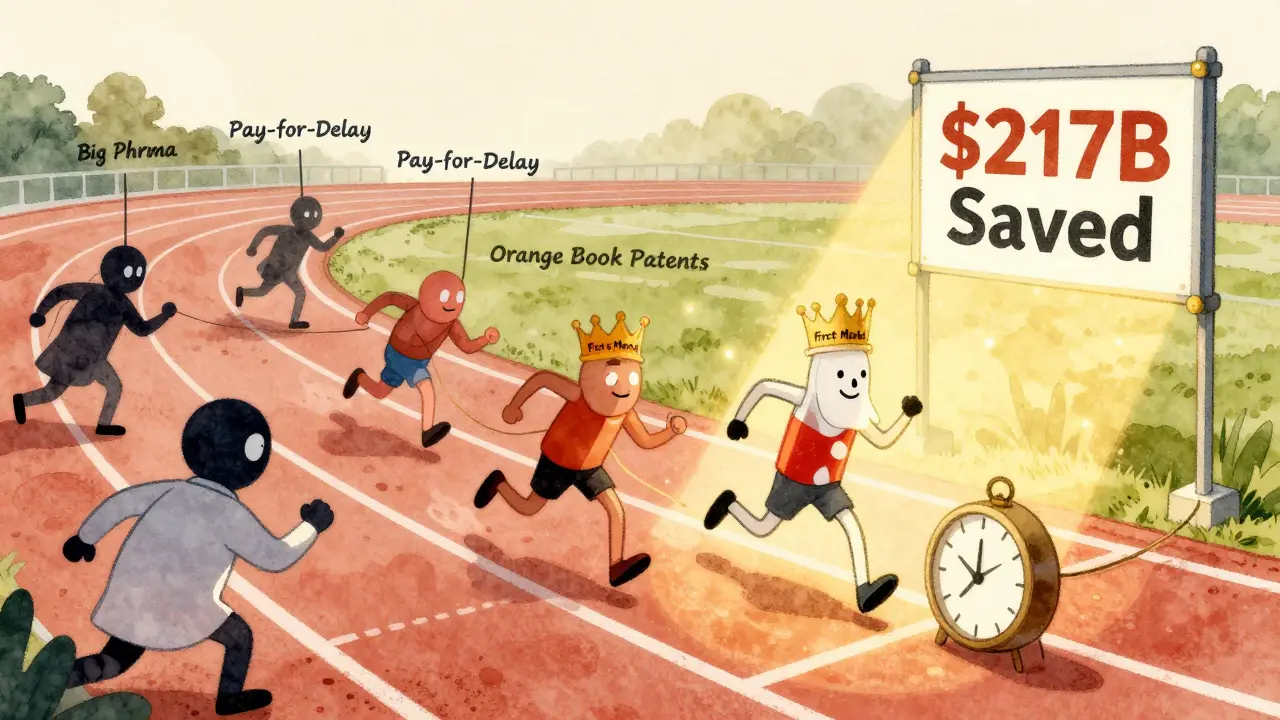
Generic drugs save lives and money. In the U.S. alone, they make up 90% of all prescriptions filled - up from just 19% in 1984. That’s not luck. It’s the result of a law designed to break monopolies: the Hatch-Waxman Act. But over time, the system meant to encourage competition has been twisted. Big pharma companies now use legal loopholes, delayed entries, and shady deals to keep prices high - and generic makers out. This isn’t just about profits. It’s about whether people can afford their medicine.
How the Hatch-Waxman Act Was Supposed to Work
Passed in 1984, the Hatch-Waxman Act was a compromise. Branded drug companies got extended patent life to recoup R&D costs. In return, generic manufacturers got a faster, cheaper path to market. Instead of running full clinical trials, they only had to prove their version worked the same way. The catch? The first generic company to challenge a patent got 180 days of exclusive rights to sell the generic version. That was the incentive: be first, win big. This system worked. By 2012, generic drugs saved U.S. consumers $217 billion in one year. A single generic entering the market could slash prices by 20% within 12 months. With five competitors, prices dropped nearly 85%. The law was supposed to create a race to the bottom - and for a while, it did.The Tricks Big Pharma Uses to Block Generic Entry
But the race got rigged. Instead of competing, some branded companies started paying generic makers to stay off the market. These are called pay-for-delay deals. The branded company writes a check - sometimes hundreds of millions - and the generic company agrees to delay launching its version. The FTC has investigated 18 of these cases since 2000, with settlements totaling over $1.2 billion. In 2023, Gilead Sciences paid $246.8 million to settle allegations it used this tactic to block cheaper HIV drugs. It’s not just cash payments. Companies also abuse the FDA’s Orange Book, a public list of patents for branded drugs. By listing weak or irrelevant patents, they create roadblocks. Generic manufacturers can’t enter until all listed patents are challenged or expire. Some companies even file dozens of them - not because they’re valid, but because they’re expensive to fight. The FTC sued Bristol-Myers Squibb in 2003 for exactly this, calling it a tactic to “impede generic competition.” Another trick? Product hopping. When a patent is about to expire, a company slightly changes its drug - maybe a new pill shape, a different coating, or a once-daily version - and pushes doctors and patients to switch. Then they pull the old version off the market. The original drug becomes unavailable, and generics can’t fill the gap because the new version has its own patent. AstraZeneca did this with Prilosec and Nexium. Courts dismissed monopolization claims because the old drug wasn’t technically blocked - but patients and pharmacists were left confused, and generics were delayed.Sham Petitions and Disparagement
Some companies don’t wait for patents to expire. They file fake complaints with the FDA - called sham citizen petitions. These aren’t real safety concerns. They’re legal distractions. A company might claim a generic version is unsafe, even when no evidence supports it. The FDA then has to review the claim, and the clock stops on generic approval. Teva Pharmaceuticals is currently under FTC investigation for filing dozens of these petitions to delay a generic version of Copaxone, a multiple sclerosis drug. Then there’s disparagement. Pharma companies spread rumors. They tell doctors that generics are less effective, have more side effects, or aren’t “real” drugs. They fund misleading studies. They use marketing materials that imply the brand is superior - even though the FDA says generics are identical in active ingredients and performance. This isn’t advertising. It’s psychological sabotage. And it works. Patients who believe generics are inferior won’t ask for them. Pharmacies won’t substitute them. And prices stay high.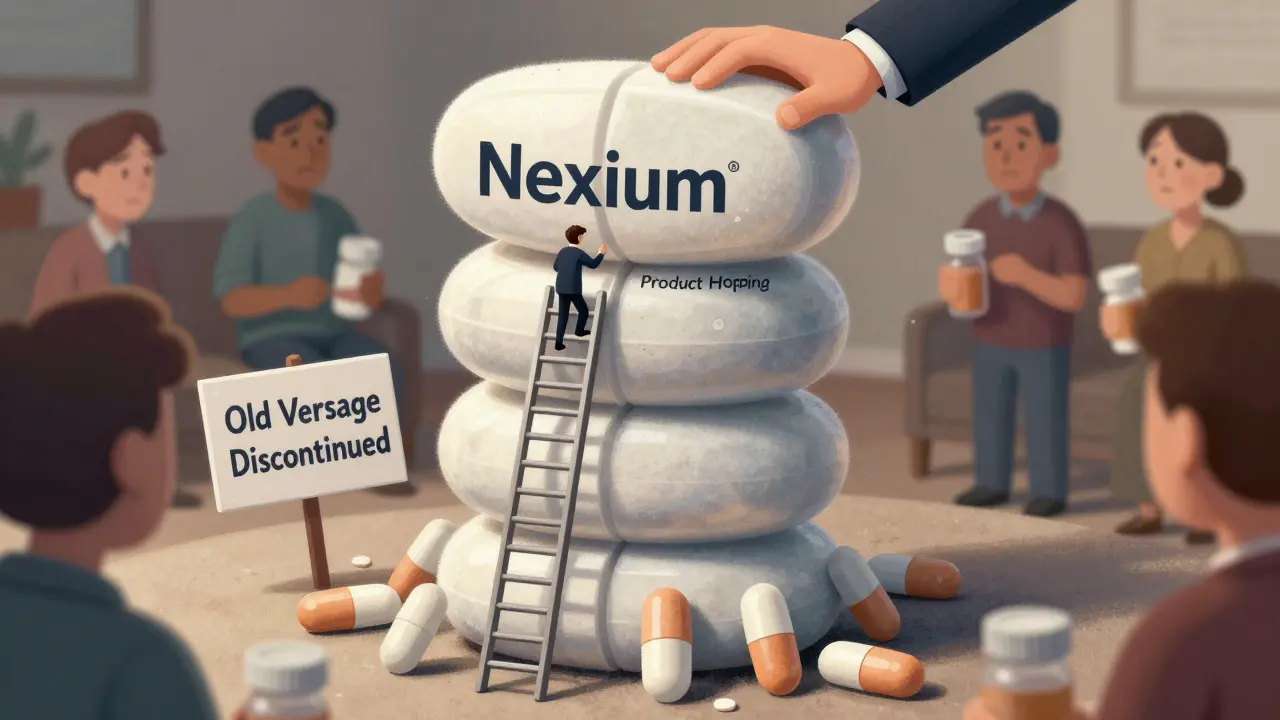
How Other Countries Are Fighting Back
The U.S. isn’t the only place where this is happening. The European Union has opened 27 antitrust cases in pharmaceuticals between 2018 and 2022 - 60% of them involved delaying generic entry. The European Commission found that companies sometimes withdraw marketing authorizations in specific countries just to block generics from entering. One company even stopped selling a drug in Belgium to prevent a generic version from being approved there. China took a hard line in January 2025, releasing new antitrust guidelines for pharmaceuticals. They identified five “hardcore restrictions” that are automatically illegal: price fixing, limiting production, dividing markets, joint boycotts, and blocking new technology. By Q1 2025, six cases had been penalized - five involved price fixing through group meetings, text messages, and even algorithm-driven pricing tools. Chinese regulators are now using AI to track suspicious price spikes across online pharmacies. In the EU, Commissioner Margrethe Vestager says delays in generic entry cost European consumers €11.9 billion every year. That’s not just a number. It’s people skipping insulin doses, cutting pills in half, or choosing between food and medicine.Who Gets Hurt?
The people who pay the price aren’t CEOs. They’re the 29% of U.S. adults who admit they’ve skipped or delayed medication because of cost, according to a 2022 Kaiser Family Foundation survey. A diabetic who can’t afford insulin. A cancer patient who can’t refill their chemo pill. A senior on a fixed income who has to choose between their blood pressure med and their groceries. Generic drugs aren’t “cheap alternatives.” They’re the same medicine, tested and approved. The only difference? No marketing budget. No patent protection. No payoff to a competitor to stay quiet. The Congressional Budget Office found generic competition cuts drug prices by 30% to 90%. That’s not theory. That’s real savings. But when companies game the system, those savings vanish.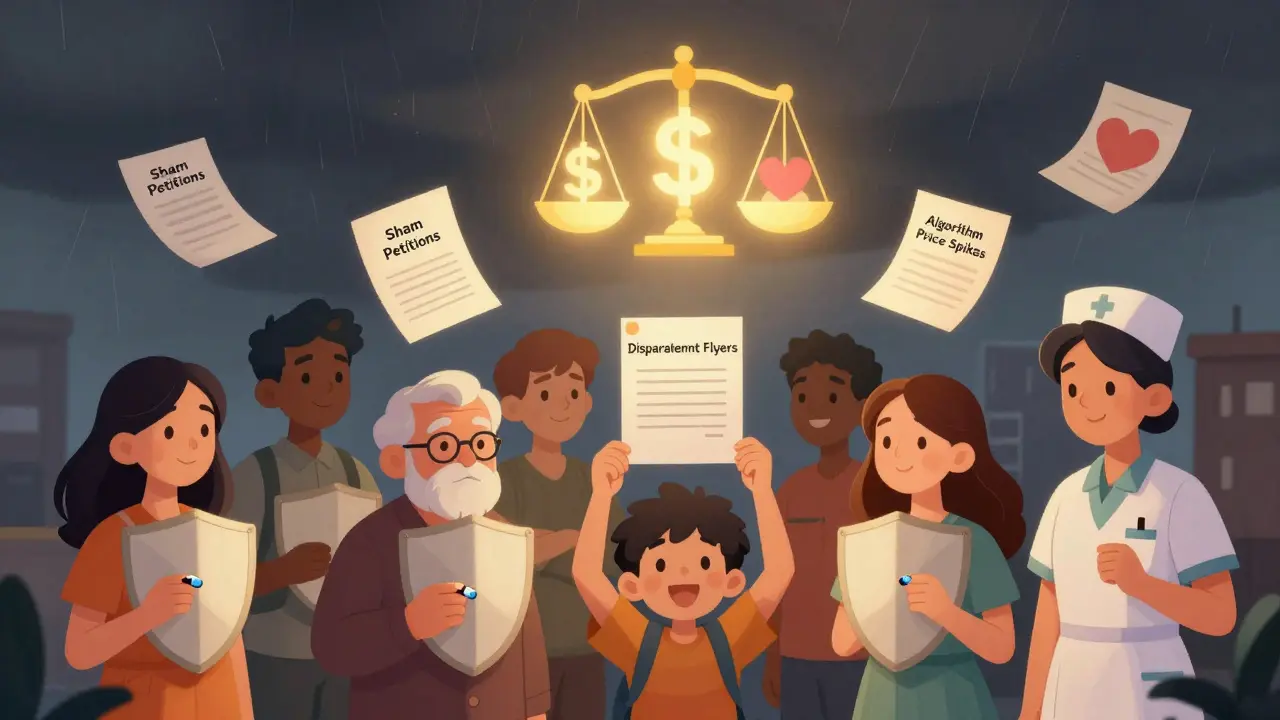
What’s Being Done - and What’s Not
The FTC has been pushing for change. In 2022, they held a workshop titled “Generic Drug Entry after Patent Expiration.” They’ve sued companies, demanded transparency, and called for Congress to close loopholes. But enforcement is slow. Cases take years. Courts often side with companies claiming “patent rights.” And new tactics keep emerging. Some lawmakers want to ban pay-for-delay outright. Others want to limit Orange Book listings to only essential patents. A few propose making it illegal to withdraw a drug from the market just to block generics. But without political will, these ideas stay on paper. Meanwhile, patients keep paying more. The U.S. spends nearly double per person on prescription drugs than any other high-income country. And generics - the one thing that could fix it - are being held hostage by legal tricks.What You Can Do
You can’t change antitrust law. But you can demand better. Ask your pharmacist: “Is there a generic version?” If they say no, ask why. If they say it’s not available, ask if the brand made it unavailable. Talk to your doctor. Share your story. Pressure your representatives. When enough people speak up, the system has to listen. The Hatch-Waxman Act was built on a simple idea: competition lowers prices. That idea still works. But only if we let it.What is the Hatch-Waxman Act and how does it affect generic drugs?
The Hatch-Waxman Act of 1984 created a legal pathway for generic drug manufacturers to bring cheaper versions of branded drugs to market without repeating expensive clinical trials. In exchange, branded drug companies received extended patent protection. The law also gave the first generic company to challenge a patent 180 days of exclusive sales rights - an incentive to enter the market quickly. This system helped generic drugs rise from 19% of U.S. prescriptions in 1984 to 90% today.
What are pay-for-delay agreements in the pharmaceutical industry?
Pay-for-delay agreements happen when a branded drug company pays a generic manufacturer to delay launching its cheaper version. Instead of competing, the two companies strike a deal: the generic gets money, and the brand keeps its monopoly. These deals violate antitrust laws if they involve large, unexplained payments. The U.S. Supreme Court ruled in 2013 that such agreements can be illegal, and the FTC has pursued over 18 cases since 2000.
How do companies use the FDA’s Orange Book to block generics?
The Orange Book lists patents tied to branded drugs. Generic companies must challenge every listed patent before they can enter the market. Some branded companies list weak, irrelevant, or even expired patents to create legal roadblocks. This forces generics to spend years and millions in court battles. The FTC has taken action against companies like Bristol-Myers Squibb for abusing this system to delay competition.
What is product hopping, and why is it a problem?
Product hopping is when a drug company slightly changes a medication - like switching from a pill to a capsule or adding a new coating - just before its patent expires. They then stop selling the original version and push doctors and patients to switch to the new one. Since the new version has its own patent, generics can’t legally copy it. This delays competition and keeps prices high. AstraZeneca used this tactic with Prilosec and Nexium.
Are generic drugs really the same as brand-name drugs?
Yes. The FDA requires generic drugs to have the same active ingredients, strength, dosage form, and route of administration as the brand-name version. They must also be bioequivalent - meaning they work the same way in the body. The only differences are in inactive ingredients like fillers or coatings, which don’t affect effectiveness. Many generics are made by the same companies that make brand-name drugs.
How do antitrust laws in China differ from those in the U.S.?
China’s 2025 Antitrust Guidelines for the Pharmaceutical Sector treat five practices as automatic violations: price fixing, limiting output, dividing markets, joint boycotts, and blocking new technology. They’re also cracking down on digital collusion - using apps, messaging platforms, or algorithms to coordinate prices. By Q1 2025, six cases had been penalized, five involving price-fixing agreements. In contrast, the U.S. focuses more on pay-for-delay deals and patent abuse, with enforcement led by the FTC and DOJ through litigation rather than automatic bans.
Comments
Chelsea Harton
generic drugs are just as good. stop being scared of them. my insulin is generic and i’m still alive. weird right?
January 17, 2026 at 22:31
Corey Chrisinger
it’s wild how we treat medicine like a luxury good. the hatch-waxman act was supposed to be a win-win - innovation + access. now it’s just a game of legal chess where the players are corporations and the pawns are diabetics, asthmatics, cancer patients. we’re not just failing pharmacology - we’re failing humanity. 🤕💸
January 18, 2026 at 17:52
Bianca Leonhardt
oh wow, big pharma is evil? shocking. next you’ll tell me water is wet. people who buy generics are just dumb enough to swallow whatever the fda says. you think your $3 pill is the same as the $300 one? lol. my cousin works at a lab - they’re not even made in the same country. lololol
January 20, 2026 at 13:04
Travis Craw
i get what you’re saying but honestly i dont know if banning pay-for-delay will fix it. companies just find new ways. maybe we need to cap drug prices outright? not sure. but i do know my grandma skipped her meds last year because the co-pay jumped. that’s not right.
January 22, 2026 at 07:39
Christina Bilotti
oh sweetie, you wrote a novel. did you also cry into your oat milk latte while reading it? the real tragedy isn’t big pharma - it’s that you think the average person cares enough to read past the first paragraph. also, product hopping? please. if you can’t tell the difference between a capsule and a tablet, maybe you shouldn’t be prescribing yourself.
January 24, 2026 at 01:40
vivek kumar
in india, we’ve seen this play out differently. generic manufacturers here don’t wait for patents to expire - they innovate around them. and yes, some are shady, but the government doesn’t sit idle. when a company tries to game the system, we slap fines and public shaming. no court delays. no 5-year lawsuits. just consequences. the u.s. system isn’t broken - it’s intentionally designed to protect profits over people.
January 25, 2026 at 19:22
Riya Katyal
so you’re telling me the only reason generics are cheaper is because they don’t have fancy ads? wow. that’s it? no magic science? no secret formula? just… no marketing? how cute. next you’ll say fast food is healthy because it has the same calories as a salad.
January 27, 2026 at 12:07
Henry Ip
you’re right. the system is rigged. but here’s what works - ask for the generic every time. even if the pharmacist says no. push back. tell them you know the science. tell them you’re not paying extra for a logo. change the culture one prescription at a time. we’ve got this.
January 28, 2026 at 21:15
Write a comment