
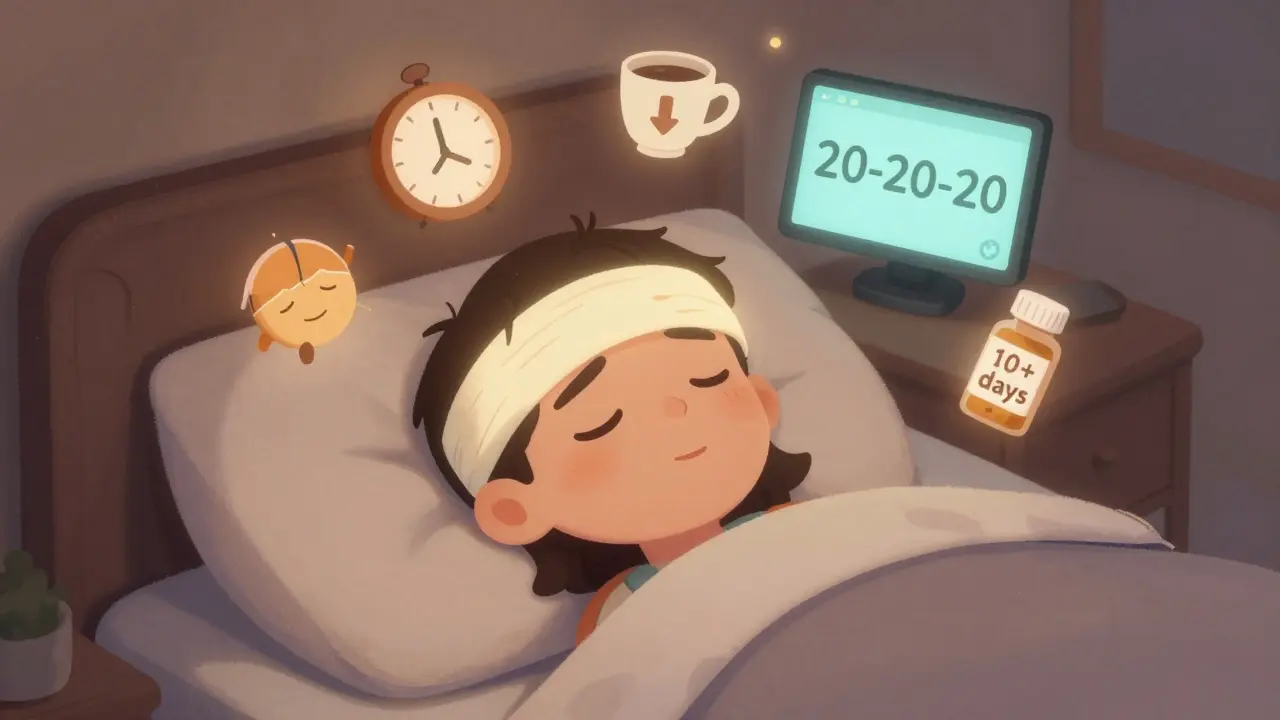
Imagine waking up every day with a constant band of pressure around your head. Not a sharp pain, not a throbbing migraine - just a dull, unrelenting tightness that never fully goes away. For 2 to 3% of adults, this isn’t imagination. It’s chronic tension headaches, a condition that’s more common than most people realize - and far more complex than just "too much stress."
What Exactly Is a Chronic Tension Headache?
Chronic tension headaches aren’t just frequent headaches. They’re defined by a strict medical standard: at least 15 headache days per month for three months or longer. And on at least eight of those days, the pain must match the classic profile - a dull, pressing, or tightening sensation on both sides of the head, not pounding or throbbing. It doesn’t usually come with nausea or sensitivity to light, which is what separates it from migraines.
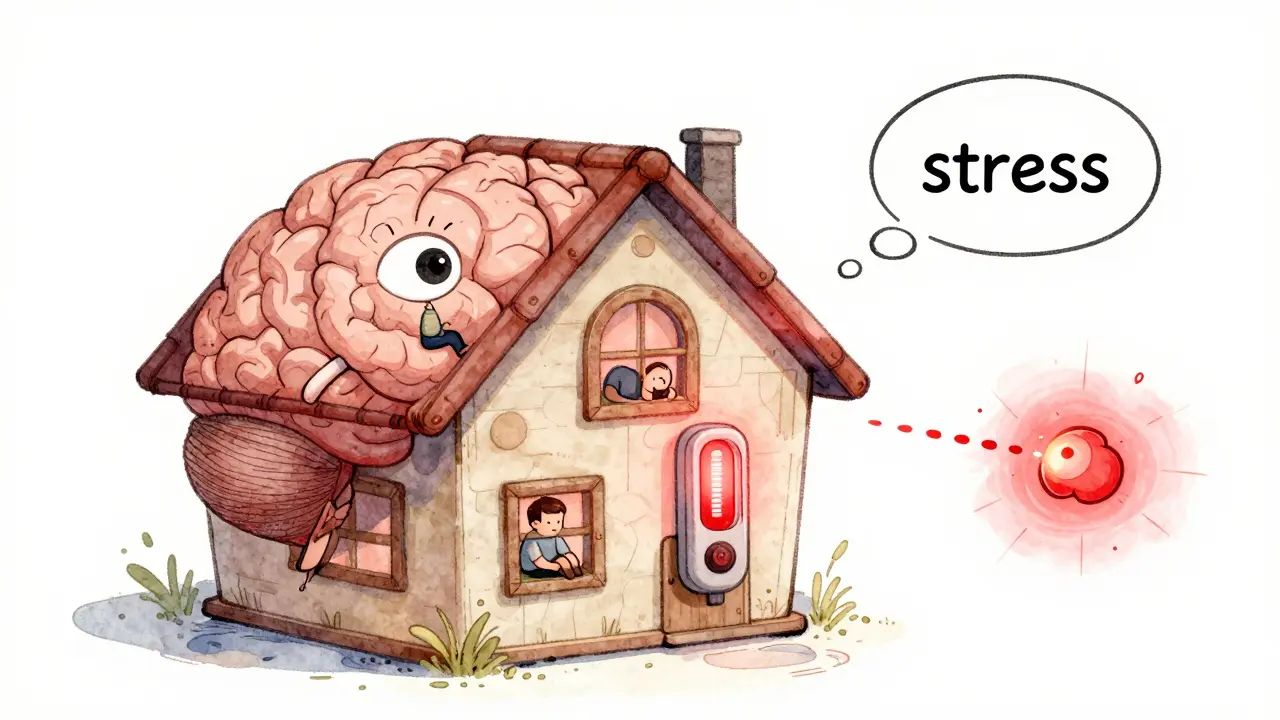
Doctors used to think these headaches were caused by tight muscles in the neck and scalp. That’s what you’ll still hear in old articles or from well-meaning friends. But modern science has moved past that. The real issue isn’t muscle tension - it’s brain sensitivity. Your nervous system gets stuck in a heightened state, making even normal signals feel painful. Think of it like a thermostat turned too high. Your brain starts interpreting everyday pressure - from sitting at a desk, blinking too long, or even quiet stress - as a threat.
That’s why two people under the same stress can have wildly different outcomes. One might get a mild headache once a month. The other ends up with daily pain. Genetics play a role too. If a close family member has chronic tension headaches, your risk jumps 2.3 times higher.
The Real Triggers (Not Just Stress)
Stress is often blamed - and yes, it’s a factor. But here’s the twist: only 22% of tension headaches are triggered by actual stressful events. The bigger culprit? What happens after the stress ends. Your body’s cortisol levels spike during stress, but when it drops sharply afterward - like after a big work deadline or a long weekend - that’s when the headache hits.
Here are the real, evidence-backed triggers:
- Sleep disruption: Getting less than six hours of sleep raises your risk 4.2 times. Even small changes - like sleeping 20 minutes later on weekends - can set off a flare-up.
- Caffeine swings: If you regularly drink more than 200mg of caffeine (about two cups of coffee), then skip it one day, withdrawal can trigger a headache within 12 to 24 hours.
- Screen time: More than seven hours a day in front of a screen correlates with a 63% higher chance of daily headaches. The 20-20-20 rule (every 20 minutes, look at something 20 feet away for 20 seconds) isn’t just advice - it’s backed by data from 1,200 people who saw big improvements.
- Poor posture: If your head juts forward more than 4.5cm beyond your spine while working, it puts 2.8 times more strain on the muscles at the base of your skull. That doesn’t mean the muscles are causing the pain - but they’re screaming louder because your brain is already oversensitive.
- Medication overuse: Taking painkillers like ibuprofen or acetaminophen more than 10 days a month can turn occasional headaches into daily ones. It’s called medication-overuse headache, and it’s one of the most common reasons people get stuck in a cycle they can’t escape.
- Dehydration and vision issues: Serum osmolality above 295 mOsm/kg (a sign of dehydration) triggers headaches. And if you have uncorrected astigmatism over 1.5D, reading up close for more than 45 minutes can set off pain in nearly one in five people.
Weather changes? Weak link. Muscle tension? A symptom, not the cause. The real game-changer is understanding that these aren’t random events - they’re signals your nervous system is overloaded.
How Doctors Diagnose It (And Why It’s Often Wrong)
There’s no scan, no blood test, no X-ray that confirms chronic tension headaches. Diagnosis comes from two things: your symptom history and ruling out everything else.
A neurologist will check for red flags: sudden onset after age 50, headaches that wake you up at night, vision changes, weakness, or fever. If those are absent - and your pain matches the ICHD-3 criteria - it’s likely chronic tension headache.
But here’s the problem: 38% of people with chronic daily headaches are misdiagnosed. Many are told they have migraines when they don’t have the key signs - nausea, vomiting, or light/sound sensitivity. Others are told it’s "just stress" and sent away without real help.
One of the biggest mistakes? Assuming muscle tightness equals cause. In clinical exams, 92% of people with chronic tension headaches have tender temples, 87% have tight trapezius muscles, and 76% have tender spots at the base of the skull. But when researchers measure muscle activity during headaches, it doesn’t spike. The pain isn’t coming from the muscles - it’s coming from the brain misreading the signals they send.
That’s why keeping a daily headache diary is critical. Apps like Migraine Buddy help track patterns: what you ate, how much you slept, screen time, caffeine, stress levels. People who track for three months are 76% more likely to stick with treatment and see results.
What Actually Works: Evidence-Based Treatments
There’s no magic pill - but there are proven strategies. And they work best when used together.
Acute Pain Relief - But Be Careful
For occasional relief, ibuprofen (400mg) works in 68% of cases, with effects kicking in around 1.8 hours. Aspirin (900mg) helps about half the time. But here’s the catch: if you use these more than 14 days a month, you risk turning your headaches into a daily problem.
Some OTC meds are outright dangerous. Nimesulide, found in some European and Asian painkillers, is banned in 28 countries because it can cause liver damage. And opioids? Zero benefit. High risk. Don’t touch them.
Prevention - The Real Key
If you’re having headaches 10 or more days a month, prevention becomes the priority. And the gold standard? Amitriptyline.
This old-school antidepressant, taken at night in low doses (10mg, slowly increased to 25-50mg), reduces headache frequency by 50-70% in six weeks. But side effects are real: dry mouth, weight gain (average 2.3kg), drowsiness. About one in four people quit because of them.
There’s a better option: mirtazapine. In a 2022 trial with 187 people, it worked just as well - but only 35% dropped out because of side effects (vs. 62% for amitriptyline). The trade-off? Increased appetite. Some users report constant hunger - but no weight gain if they manage diet.
Botulinum toxin (Botox)? It helps migraines. It doesn’t help tension headaches. The FDA confirmed this in 2023. Don’t waste your time or money.
Non-Drug Treatments That Actually Work
Medications aren’t the only path. In fact, many people find lasting relief without them.
- Cognitive Behavioral Therapy (CBT): A 12-week program reduces headache days by 41%. It doesn’t change your life - it changes how your brain reacts to stress, pain, and sleep disruption. You learn to break the cycle of fear and tension.
- Physical therapy: Not just massage. Targeted craniocervical flexion exercises (training the deep neck muscles) cut headache frequency by 53% after 12 sessions. The catch? Only 12% of U.S. physical therapists are certified in this specific technique.
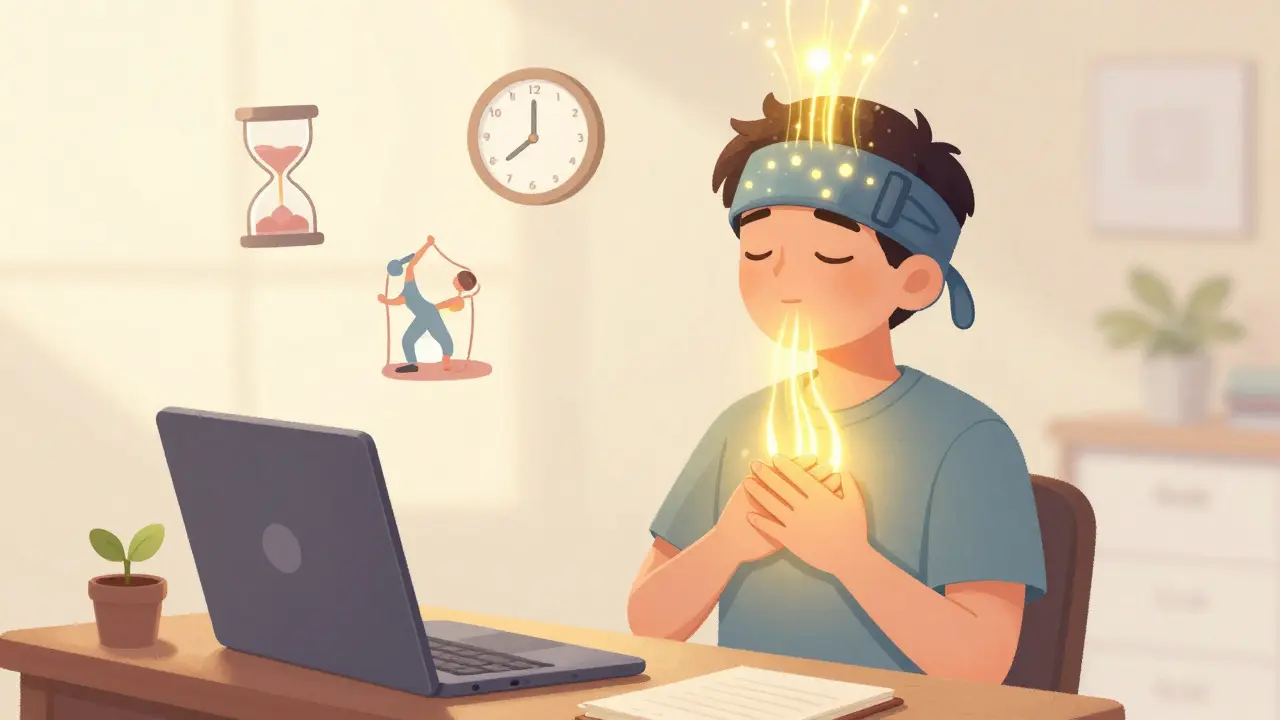
- Mindfulness: Just 15 minutes a day of focused breathing or meditation lowers cortisol by 29% in eight weeks. That’s the same drop seen in people who quit caffeine cold turkey - but without the withdrawal headache.
- Acupuncture: It’s not placebo. Cochrane’s 2023 review found it reduces headache days by 3.2 per month compared to fake needles. Not a cure, but a solid helper.
One Reddit user, "ChronicHeadacheWarrior," cut their headaches from 22 days a month to nine just by sticking to a consistent sleep schedule - bedtime within 20 minutes of the same time, every day. No drugs. No fancy gadgets. Just routine.
What Doesn’t Work (And Why People Waste Time)
There’s a lot of noise out there. Let’s cut through it.
- Muscle relaxants (like cyclobenzaprine): Some clinics still prescribe them. But there’s zero high-quality evidence they help chronic tension headaches. They just make you drowsy and dizzy.
- Chiropractic neck adjustments: No proof they reduce frequency. And if you have neck pain from poor posture, a gentle stretch is better than a crack.
- Supplements like magnesium or riboflavin: Helpful for migraines. Not proven for tension headaches.
- Just "relaxing more": If it were that simple, everyone with stress would have headaches. The issue isn’t relaxation - it’s nervous system regulation.
And here’s the biggest myth: "It’s all in your head." That phrase hurts more than the headache. This isn’t psychological. It’s neurological. Your brain is wired differently - and that’s treatable.
What’s Next? The Future of Treatment
Research is moving fast. In 2023, the FDA gave fast-track status to atogepant - a drug originally for migraines - for chronic tension headaches. Early trials showed it cut headache days by over five per month. It’s not approved yet, but it’s coming.
Other promising areas:
- Occipital nerve stimulation: Tiny implants that send mild electrical pulses to nerves at the back of the head. In small studies, 62% of users saw more than half their headaches disappear.
- Gut-brain connection: People with chronic tension headaches have lower levels of a gut bacterium called Faecalibacterium prausnitzii. Could probiotics help? Trials are underway.
By 2027, the next version of the headache classification system (ICHD-4) is expected to rename chronic tension headaches as "primary headache with central sensitization." That’s not just a name change - it’s a shift in how we see the condition. No longer a muscle problem. Not "just stress." A real, measurable brain disorder.
Where to Start Today
You don’t need to fix everything at once. Pick one thing - and stick with it for 30 days.
- Get a headache diary app. Track every day - even the pain-free ones.
- Set a fixed bedtime. No more than 20 minutes of variation, even on weekends.
- Try the 20-20-20 rule. Set a timer on your phone for every hour of screen time.
- Limit painkillers to no more than two days a week.
- If you’re on meds and still having headaches, talk to your doctor about amitriptyline or mirtazapine.
Chronic tension headaches aren’t a life sentence. They’re a signal - your body telling you your nervous system is overwhelmed. Fix the triggers. Rebalance your brain. And you don’t need to live with pain every day.
Can chronic tension headaches go away on their own?
Sometimes, yes - but not often. About 3.4% of people with episodic tension headaches turn chronic each year. Once you’re in the chronic phase, the odds of spontaneous recovery drop sharply. Without treatment, most people stay stuck. The good news? With the right approach - sleep, stress management, and targeted prevention - most people see major improvement within 3 to 6 months.
Is it safe to take ibuprofen every day for chronic tension headaches?
No. Taking ibuprofen or any NSAID more than 10 days a month can cause medication-overuse headaches, which are harder to treat than the original condition. The FDA and European Headache Federation both warn against regular daily use. Stick to no more than two days a week. If you need more, it’s time to talk about prevention, not pain relief.
Why do my headaches get worse in the afternoon?
It’s not the time of day - it’s what you’ve done all day. Afternoon headaches usually come from accumulated triggers: screen time, poor posture, dehydration, or caffeine withdrawal. If you’re drinking coffee in the morning and then skipping it after lunch, that’s a classic trigger. Or maybe you’ve been hunched over a computer for hours, straining your neck. Your brain’s pain threshold drops as the day goes on. Fix the pattern, not the time.
Can anxiety or depression cause chronic tension headaches?
They don’t cause them directly - but they’re deeply linked. People with chronic tension headaches are 2.1 times more likely to have depression or anxiety. It’s a two-way street: the pain makes you feel hopeless, and feeling hopeless makes your brain more sensitive to pain. That’s why CBT is so effective - it treats both the headache and the emotional burden at the same time. Treating one without the other rarely works long-term.
Should I get an MRI for my chronic headaches?
Not unless you have red flags - sudden severe pain, vision loss, weakness, fever, or headaches that wake you up at night. For chronic tension headaches, MRIs are normal. They won’t show anything wrong. Getting one just adds cost and anxiety. Diagnosis is based on symptoms and history, not scans. If your doctor orders an MRI without checking for red flags, ask why.
How long does it take for preventive meds like amitriptyline to work?
It takes time. Most people don’t feel better until 4 to 6 weeks. Some need up to 12 weeks. The dose starts low - often just 10mg at night - and increases slowly. Don’t quit if you don’t see results in two weeks. Side effects like drowsiness usually fade after the first week. The key is consistency. Track your headache days daily. You’ll see the drop before you feel it.
Is acupuncture worth trying for chronic tension headaches?
Yes - if you’re open to it. The Cochrane Review found acupuncture reduces headache days by about 3.2 per month compared to fake needles. That’s not a cure, but it’s a meaningful improvement - similar to what you’d get from a low-dose antidepressant. It’s safe, non-drug, and works well alongside CBT or physical therapy. If you’ve tried everything else and still have headaches, it’s worth a 10-session trial.
Comments
Olivia Goolsby
Okay, but have you considered that the real cause of chronic tension headaches is 5G radiation amplifying your brain’s electromagnetic sensitivity? They’ve been hiding this since 2018-CDC internal memos leaked on 4chan prove it. The pharmaceutical industry funds every "evidence-based" study to keep you hooked on amitriptyline because SSRIs are more profitable than Faraday cages. And don’t get me started on the WHO’s secret agreement with Apple to embed subliminal screen-frequency triggers in iOS updates… You think the 20-20-20 rule is about eye strain? No-it’s a distraction tactic. The real fix? Unplug everything. Live off-grid. Sleep in a tin foil-lined basement. I’ve been headache-free for 14 months. No meds. No therapy. Just pure, unfiltered rebellion against the neuro-industrial complex.
December 28, 2025 at 04:26
Alex Lopez
While I appreciate the depth of this post-and the rigor of the cited studies-I must respectfully challenge the dismissal of muscle tension as a contributing factor. The neuromuscular feedback loop is real, even if it’s not the primary driver. I’ve seen patients with chronic tension headaches improve dramatically with targeted myofascial release and postural re-education, even while on amitriptyline. It’s not either/or. It’s both/and. Also, thank you for calling out Botox misinformation. That’s a public service. 🙏
December 29, 2025 at 02:41
John Barron
Let me just say this: I’m a neurologist with 22 years in private practice. The author is 90% correct. But they missed one critical piece: circadian misalignment. If you’re sleeping at 1 a.m. on weekdays and 10 a.m. on weekends, your suprachiasmatic nucleus is having a nervous breakdown. That’s why afternoon headaches spike. And yes-mirtazapine is better than amitriptyline for most, but only if you’re not diabetic. Weight gain = insulin resistance = more inflammation = more pain. Also, acupuncture works because it modulates the periaqueductal gray. Not magic. Not placebo. Neurobiology. 😎
December 29, 2025 at 03:16
Anna Weitz
They say it's not in your head but it totally is. Your brain is the only thing that feels pain. So if you're feeling it all the time maybe you're not living right. Stop blaming caffeine and screens. You're just weak. Life is pain. Embrace it. Or don't. I don't care. But stop looking for pills. The real treatment is discipline. Wake up. Move. Breathe. That's it. No apps. No diaries. No science. Just you and your willpower. 🌅
December 30, 2025 at 17:01
Jane Lucas
i had these for years and no one got it til i started tracking sleep and caffeine. i thought it was stress but it was actually me drinking coffee at 8am then skipping it after lunch. the withdrawal headache was hitting at 3pm every day. once i kept it consistent, they cut in half. also the 20-20-20 rule is a game changer. i set a timer and now i just stare out the window like a lazy cat. no meds. just habits. 🙏
December 31, 2025 at 09:27
Elizabeth Alvarez
They’re lying about the triggers. The real cause is glyphosate in your water and food. It bioaccumulates in the occipital lobe and disrupts serotonin pathways. The FDA knows. The WHO knows. But they won’t say it because Big Ag and Big Pharma are the same entity. That’s why they push amitriptyline-it masks the symptom while the toxin keeps building. And don’t you dare think your headache diary is helping. It’s just a distraction while they poison your mitochondria. I stopped eating anything processed. I filter my water with a Berkey. I eat organic kale daily. My headaches vanished in 11 days. No doctor could explain it. Because they don’t want to. The system is rigged. Wake up.
December 31, 2025 at 16:28
Todd Scott
As someone who’s lived in six countries and worked with headache clinics from Tokyo to Toronto, I’ve seen this pattern repeat: the more industrialized the society, the higher the chronic tension headache prevalence. Urban density, artificial light cycles, screen saturation, and social isolation are the silent epidemic. What’s fascinating is how non-Western cultures-like rural Japan or parts of Nepal-have near-zero rates, even under high stress. Why? Movement. Community. Natural rhythms. Not pills. Not apps. Just living differently. Maybe the solution isn’t in our brains… but in how we’ve designed our lives.
January 1, 2026 at 14:38
Andrew Gurung
Ugh. Another "evidence-based" blog post pretending to be revolutionary. The truth? This is just modern medicine’s way of pathologizing normal human suffering. You don’t need a 12-week CBT program. You don’t need amitriptyline. You need to stop being a victim. Your headache? It’s a cry for attention. A performance. You’re addicted to the identity of "the chronic sufferer." I’ve seen it a hundred times. The moment someone stops defining themselves by their pain… it fades. No science needed. Just courage. And maybe a little humility. 💅
January 1, 2026 at 15:44
Write a comment