
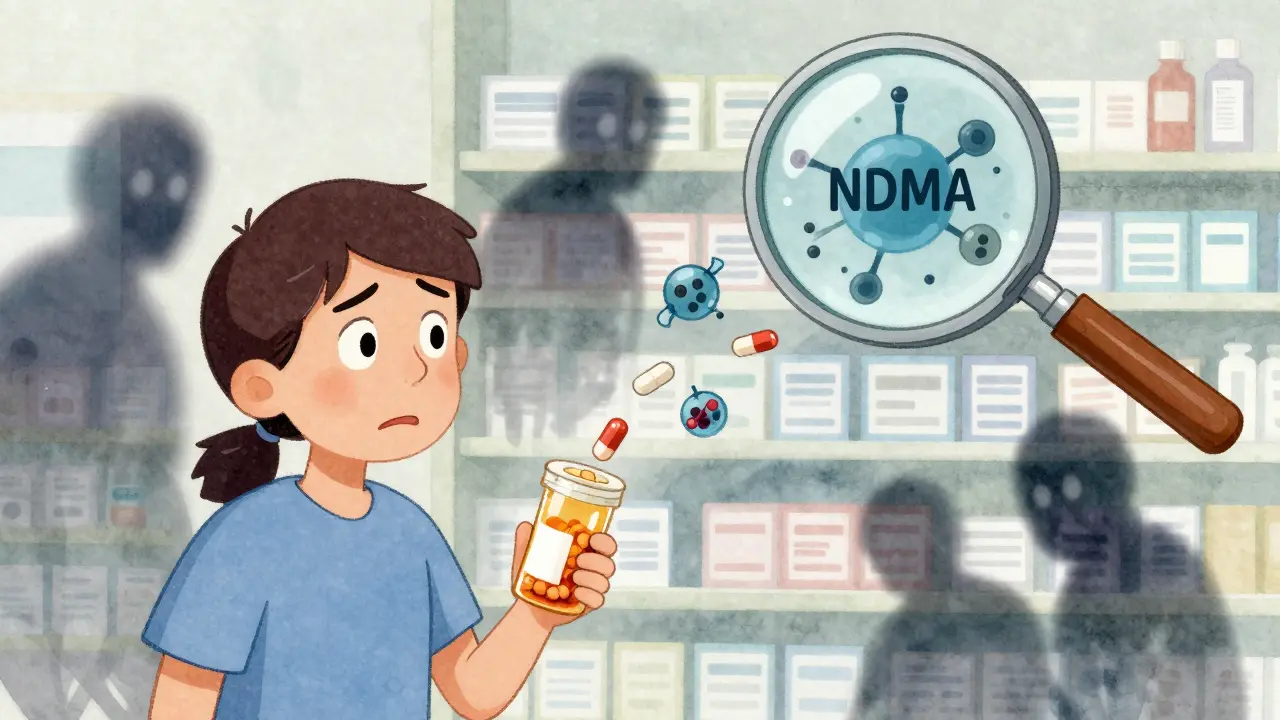
Generic drugs are supposed to be the safe, affordable alternative to brand-name medications. About 90% of prescriptions in the U.S. are filled with generics, saving billions each year. But behind the low price tag, a growing number of patients are being exposed to dangerous contaminants - and many don’t even know it.
What’s Really in Your Generic Pills?
Generic drugs must contain the same active ingredient as their brand-name counterparts, but they don’t have to be made in the same way. The manufacturing process, equipment, and even the source of raw materials can differ - and that’s where things go wrong. In 2018, a contamination crisis exploded when NDMA - a known human carcinogen - was found in blood pressure medications like Valsartan. The culprit? A change in the production process at Zhejiang Huahai Pharmaceutical in China. Sodium nitrite, used to speed up a chemical reaction, reacted with other ingredients to form NDMA at levels up to 200 times the FDA’s safe limit. Patients who took the contaminated pills for years saw cancer rates more than three times higher than expected. Over 1,300 lawsuits are now pending, with some victims diagnosed with colorectal cancer after just five years of exposure. This wasn’t an isolated event. In 2025, benzene - a chemical linked to leukemia - was detected in some versions of Walgreens’ Mucinex. Independent testing found levels as high as 4.7 parts per million, nearly double the FDA’s 2 ppm safety threshold. Patients like Miriam Birdsong and Cheryl Mikel, who took the medication daily for over a year, developed bone marrow abnormalities consistent with long-term benzene exposure.Cancer Drugs Are the Most Dangerous
While blood pressure and cold meds get attention, the most alarming cases are in chemotherapy. A 2025 STAT News investigation found that 17 chemotherapy drugs from Indian manufacturers failed basic quality tests. Twelve of them contained less than 80% of the labeled active ingredient - far below the FDA’s minimum 85% requirement. One batch of cisplatin, used to treat ovarian and lung cancer, was so weak that 34% of patients receiving it saw their treatment fail. In comparison, only 12% of patients on verified brand-name versions experienced failure. The FDA inspected Intas Pharmaceuticals’ facility in Ahmedabad in 2022 and found a "cascade of failure" - including shredded quality control documents and acid poured on records. The result? A nationwide shortage of critical cancer drugs that hit 92% of U.S. cancer centers during spring and summer 2023. Patients were forced to delay treatment or switch to more expensive brand-name options.Why Are These Problems So Common?
The root of the problem isn’t just bad actors - it’s systemic. India produces 40% of the generic drugs sold in the U.S., and China makes 80% of the raw active ingredients. Yet the FDA inspects fewer than 13% of these foreign facilities each year. With over 28,000 global manufacturing sites needing review and only $78 million allocated for inspections in 2025, the agency is overwhelmed. Manufacturers in low-cost regions often cut corners to stay competitive. Some use outdated equipment. Others skip validation steps. A 2024 FDA warning letter to Zee Laboratories found visible particulate matter - tiny bits of dirt or debris - in 100% of sampled vials of cisplatin. That’s not a one-off mistake. It’s a pattern. Even worse, the FDA has long hidden the names of drugs tied to contaminated factories in its public inspection reports. This policy, documented by ProPublica since 2008, made it nearly impossible for doctors and pharmacists to know which specific generics were unsafe. Only in September 2025 did the FDA announce a "Name Transparency Initiative" - but implementation is still uncertain.
Fentanyl Patches and the Silent Overdose Risk
Contamination isn’t always about chemicals. Sometimes, it’s about physical defects. Between 2002 and September 2025, over 52 million fentanyl patches were recalled in the U.S. due to seal failures. One 2023 recall by Sandoz affected 1.2 million Duragesic patches. Independent testing showed that 0.8% of those patches leaked more than 15% of their intended dose - enough to cause a fatal overdose in someone not tolerant to opioids. These aren’t theoretical risks. Emergency room records from 2023 show a spike in opioid overdoses linked to faulty patches. Patients thought they were getting steady, controlled pain relief - but instead, they were getting a sudden, dangerous surge of fentanyl.What Can You Do to Protect Yourself?
You can’t control where your drug is made, but you can take steps to reduce your risk:- Check FDA recall lists weekly. Pharmacists report spending 22% more time verifying drug sources since 2020. You can do the same. Visit fda.gov/safety/recalls and search by drug name.
- Ask your pharmacist for the manufacturer. If your generic levothyroxine suddenly causes your TSH levels to spike, it might be a bad batch. Ask if there’s been a recent switch in supplier.
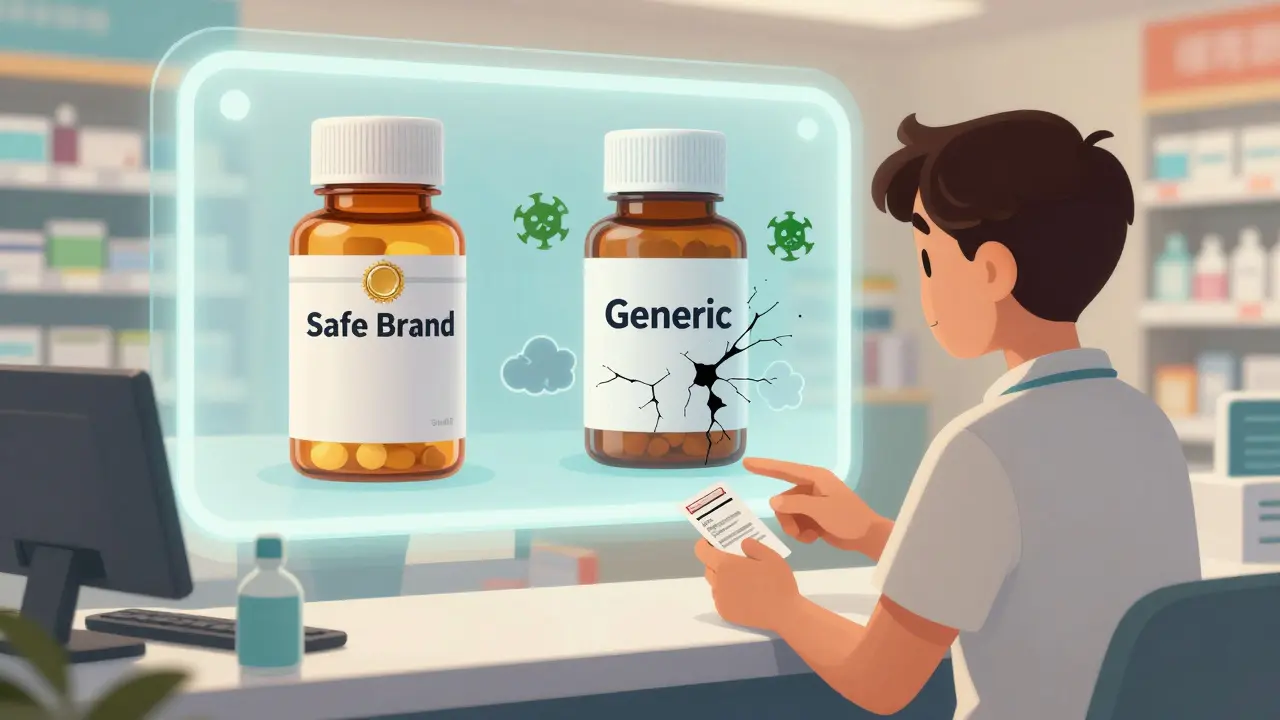
- Don’t assume "generic" means "safe." The FDA approves generics based on bioequivalence - not purity or long-term stability. Two generics with the same active ingredient can behave very differently.
- Watch for unusual side effects. If you start experiencing unexplained fatigue, rashes, nausea, or odd blood test results after switching to a new generic, talk to your doctor. It could be contamination.
- Consider brand-name for critical drugs. For medications like levothyroxine, warfarin, or chemotherapy, the small extra cost may be worth the certainty of quality.
The Bigger Picture: Who’s Responsible?
The generic drug industry is built on low prices. But when cost-cutting leads to cancer-causing chemicals in your blood pressure pill or diluted chemo in your IV bag, the trade-off becomes deadly. Experts like Dr. Dinesh Thakur, a former pharmaceutical insider turned whistleblower, say the problem isn’t just corporate greed - it’s government inaction. "The Indian government’s interest is in protecting the industry," he told STAT News. "Not patient safety." Meanwhile, Senator Rick Scott pointed out that 83% of the top 100 generic drugs in the U.S. contain no American-sourced active ingredients. That means we’re relying on foreign factories with little oversight for our most vital medicines. The FDA is trying to improve. The 2025 Generic Drug User Fee Amendments (GDUFA III) now require real-time stability testing for high-risk drugs. AI-powered predictive analytics and blockchain tracking are on the horizon. But these are long-term fixes. The contamination is happening now.What’s Next?
The Valsartan lawsuits are set to go to trial in late 2025. These cases could set a legal precedent: if manufacturers knew about contamination risks and hid them, they could face massive penalties. That’s the only thing that might force change. Until then, the burden falls on patients and providers. Don’t assume your generic is safe just because it’s cheap. Ask questions. Check the FDA. And if something feels off - trust your instincts. Your health isn’t a cost-saving metric.Are all generic drugs unsafe?
No, not all generics are unsafe. Most are safe and effective. But contamination incidents are rising - and they’re concentrated in specific manufacturers and drug classes. Blood pressure meds, chemotherapy, and some pain relievers have seen the most issues. Always check the FDA recall list and ask your pharmacist about the manufacturer.
How do I know if my generic drug is contaminated?
You usually can’t tell by looking or feeling. Contaminants like NDMA or benzene are invisible and odorless. The only way to know is through lab testing or a recall notice. If your medication suddenly stops working - like your thyroid levels going wild on levothyroxine - it could be a bad batch. Report it to your doctor and check the FDA’s recall database.
Can I trust generics made in India or China?
Many are perfectly fine. But the rate of violations is significantly higher in facilities from these countries. Over 16 of the 17 substandard cancer drugs found in 2025 came from India. China produces most of the raw ingredients. The key is transparency: ask your pharmacist which company made your drug and check its inspection history on the FDA website.
Why doesn’t the FDA shut down these factories?
The FDA can issue warning letters and block imports, but it can’t shut down foreign facilities. That’s up to the country’s own regulators. The U.S. can refuse to allow drugs from a facility to enter the country, but if the manufacturer fixes the issue - even minimally - the FDA often allows them back in. Without stronger penalties or independent audits, many manufacturers treat warnings as a cost of doing business.
Should I stop taking my generic medication?
Never stop taking a prescribed medication without talking to your doctor. If you’re concerned, ask if your drug has been recalled or if there’s a known issue with its manufacturer. For critical drugs like thyroid medicine or chemotherapy, switching to the brand-name version may be worth the extra cost for peace of mind.
What’s being done to fix this?
The FDA is moving toward real-time testing, AI-driven risk prediction, and blockchain tracking of drug shipments. The 2025 Name Transparency Initiative aims to stop hiding drug names in inspection reports. But these changes take years. In the meantime, the best protection is awareness - knowing which drugs have been recalled and asking tough questions about where your meds come from.
Comments
Himanshu Singh
i know its hard to believe but most generics in india are made with care. we have good labs and good people. yes, some bad apples, but dont throw the whole basket away. my cousin works in a pharma plant in hyderabad and they test every batch 5 times.
we want to help, not hurt.
December 29, 2025 at 00:13
Jasmine Yule
this is terrifying. i take lisinopril for my blood pressure and i had no idea. i just assumed it was safe because it was cheap.
im gonna call my pharmacist tomorrow and ask who made mine. if they dont know, im switching to brand. my life > $5.
December 30, 2025 at 19:51
Greg Quinn
there’s a deeper irony here: we outsource our health to countries with lower labor costs and weaker oversight, then act shocked when things go wrong. we want the lowest price, but we don’t want to pay for the infrastructure that makes it safe.
it’s not just about regulation-it’s about values. are we willing to pay for safety, or do we treat medicine like a commodity? the answer is written in our prescriptions.
December 30, 2025 at 21:22
Lisa Dore
i just want to say thank you for writing this. so many people don’t realize how much they’re trusting their lives to a pill made in a factory they’ve never heard of.
please share this with your friends. if one person checks their drug’s manufacturer because of this, it’s worth it.
December 31, 2025 at 09:30
Sharleen Luciano
of course the FDA doesn’t shut them down. they’re too busy kissing the hands of the big pharma lobbyists who profit from this mess.
you think your $4 generic is saving you money? think again. you’re paying with your organs. the real cost is invisible until your liver fails or your cancer doesn’t respond.
pathetic. just… pathetic.
January 1, 2026 at 17:51
Jim Rice
so let me get this straight-you’re scared of a pill because some guy in china mixed chemicals wrong? what about the 10,000 people who die from NSAIDs every year? or the 400k from medical errors?
you’re panicking over a needle in a haystack while ignoring the whole barn on fire.
January 2, 2026 at 00:20
Henriette Barrows
i had a bad reaction to my generic metformin last year-nausea, dizziness, weird tingling. switched back to brand and it vanished. my endo said it happens more than we think.
if your meds feel ‘off’, don’t ignore it. it’s not all in your head. i’m glad someone’s talking about this.
January 3, 2026 at 12:36
Alex Ronald
the FDA’s inspection rate is laughable. 13% of 28,000 sites? that’s 3,640 inspections a year. they need at least 10x that.
the solution isn’t just more inspections-it’s mandatory blockchain tracking from raw ingredient to pharmacy shelf. every batch, every lot, traceable.
we have the tech. we just need the will.
January 4, 2026 at 00:57
Russell Thomas
so you’re saying we should pay $200 for a blood pressure pill so we can feel safe?
lol. what about the 30 million Americans who can’t afford even $10? you want them to die of hypertension so you can sleep better?
your privilege is showing.
January 5, 2026 at 07:05
Joe Kwon
the GDUFA III framework is a step in the right direction-real-time stability testing for high-risk APIs, coupled with AI-driven anomaly detection, could reduce batch failures by up to 68% within 3 years.
we’re not just talking about compliance. we’re talking about predictive pharmacovigilance. the infrastructure exists. funding and political will are the bottlenecks.
January 5, 2026 at 14:37
Nicole K.
people who take generics are just being irresponsible. if you can’t afford brand-name, maybe you shouldn’t be taking medicine at all.
your health is your responsibility. stop blaming the system.
January 5, 2026 at 19:31
Fabian Riewe
i used to work in a compounding pharmacy. we’d get batches of generic insulin that looked cloudy. we’d call the supplier and they’d say, 'oh, that’s normal.'
we stopped dispensing them. my boss got fired for it.
if you’re reading this and you’re on a generic that just... doesn’t feel right? listen to your body. it knows.
January 6, 2026 at 16:44
Amy Cannon
i’m indian, i’m a woman, i work in pharma, and i’m ashamed.
we have the skills, the science, the heart-but too many factories cut corners because the global market rewards speed over safety.
we’re not all bad. but we’re not doing enough to fix the ones who are.
we need global accountability, not just american outrage.
January 6, 2026 at 22:29
Teresa Rodriguez leon
i lost my husband to colon cancer after he took contaminated valsartan for 3 years.
he trusted the system.
he didn’t even know.
January 8, 2026 at 00:24
Manan Pandya
i’ve seen the labs in Ahmedabad. they’re not all like that. some are world-class. the problem is the lack of consistent audits.
if the FDA published every inspection result-good or bad-patients could choose based on transparency, not luck.
the system isn’t broken. it’s just hidden.
January 9, 2026 at 10:58
Write a comment