

Digoxin-Amiodarone Dose Adjustment Tool
Dose Adjustment Calculator
Based on 2024 European Society of Cardiology guidelines and 40+ years of clinical evidence
Recommended Digoxin Dose Adjustment
Critical Monitoring Timeline
| Timeframe | Required Action | Why It Matters |
|---|---|---|
| 0-72 hours | Check digoxin level | Levels peak within 2-4 days |
| 1-2 weeks | Recheck digoxin level | Max toxicity risk period |
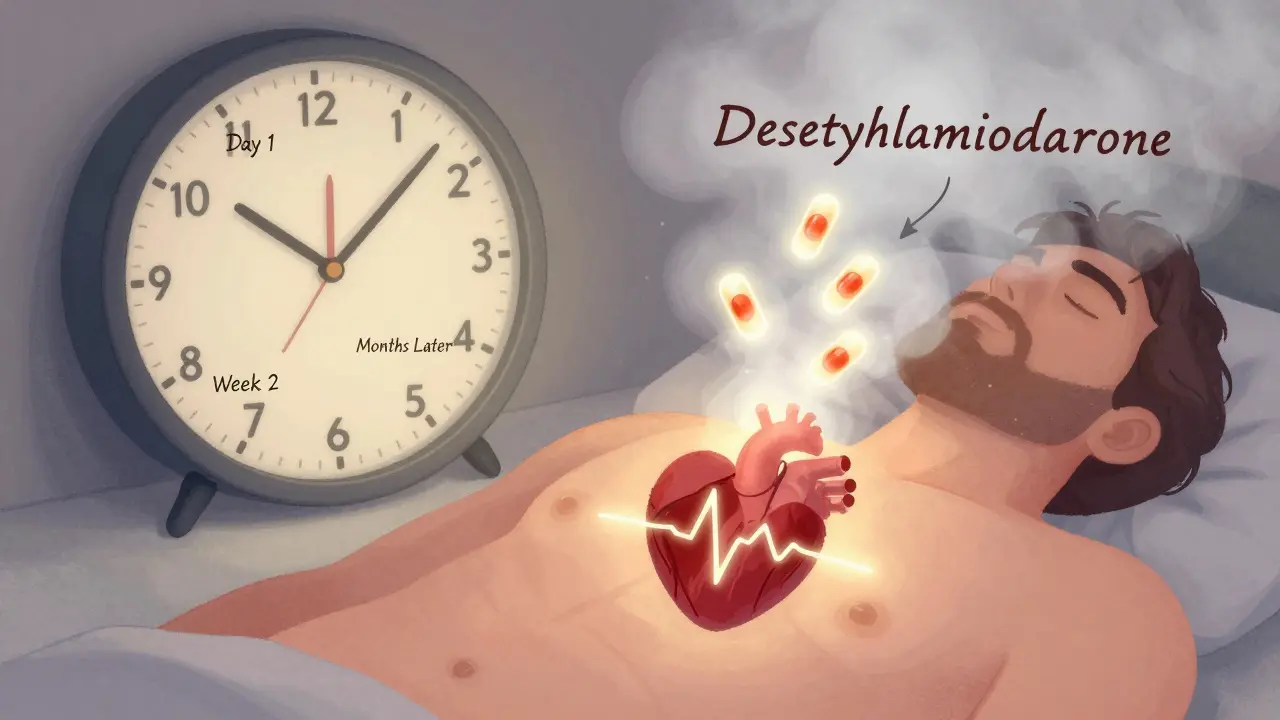
| After stopping amiodarone | Continue monitoring for 6-8 weeks | Metabolite desethylamiodarone persists |
Why This Drug Combo Can Be Deadly
Imagine taking two heart medications that work fine on their own-until you start them together. Suddenly, your body starts reacting in ways no one warned you about: nausea, blurry vision, a slow heartbeat, or worse. This isn’t rare. It happens every day in hospitals and clinics because digoxin and amiodarone interact in a way that can push digoxin into toxic territory-fast.
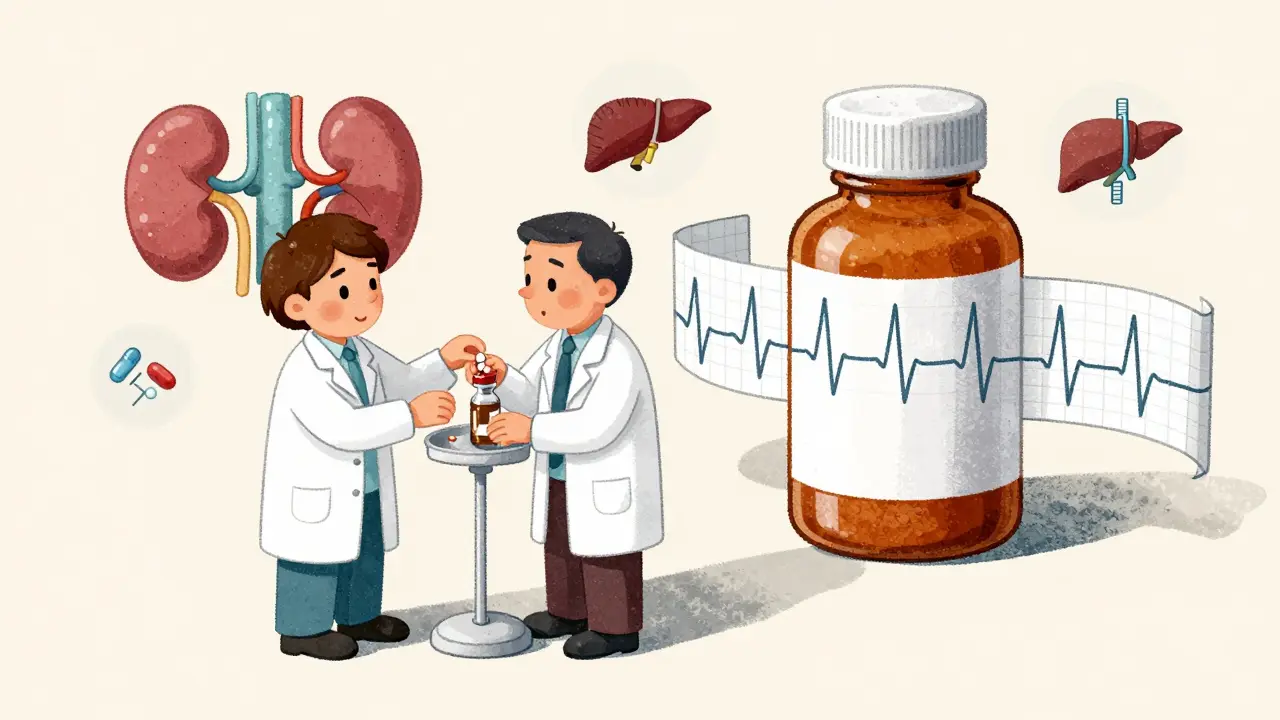
Digoxin has one of the narrowest therapeutic windows in all of medicine. That means the difference between a helpful dose and a dangerous one is tiny: 0.5 to 0.9 ng/mL in your blood. Too low? It won’t control your heart rhythm. Too high? You could end up in the ICU with life-threatening arrhythmias. Amiodarone, a powerful antiarrhythmic, doesn’t just add to the problem-it multiplies it. When you start amiodarone while on digoxin, digoxin levels can jump by 100% or more within days. And because amiodarone sticks around in your body for weeks-even months-after you stop it, the risk doesn’t go away quickly.
How the Interaction Actually Works
This isn’t just a guess. It’s been studied for over 40 years. In 1984, researchers found that patients on digoxin who started amiodarone saw their digoxin levels double. Since then, we’ve learned why.
Amiodarone blocks a protein called P-glycoprotein. This protein normally helps your body get rid of digoxin through your liver and kidneys. When it’s blocked, digoxin builds up. It’s like turning off a drain in a bathtub-water keeps coming in, but nothing flows out. Amiodarone also slows down how fast your body breaks down digoxin, cutting its clearance by nearly a third. And because amiodarone has a half-life of up to 100 days, this effect doesn’t fade after a few days. It lingers. Even after you stop amiodarone, your digoxin levels can stay high for months.
What’s worse? Amiodarone’s main metabolite, desethylamiodarone, is just as potent at blocking digoxin clearance. So even if you think you’re safe after stopping amiodarone, your body is still under the influence.
Who’s Most at Risk
This interaction doesn’t hit everyone the same way. Certain patients are sitting ducks.
- Older adults-especially those over 75. Their kidneys don’t clear drugs as well, and their bodies hold onto digoxin longer.
- People with kidney problems-creatinine clearance under 50 mL/min doubles the risk of toxicity.
- Those on high digoxin doses-even a 25% reduction might not be enough if they were already near the top of the safe range.
- Patients with heart failure-they’re often on digoxin for symptom control, and adding amiodarone for rhythm control creates a perfect storm.
A 2021 study found that when doctors didn’t reduce digoxin doses after starting amiodarone, 35% of heart failure patients died within 30 days-up from 8% when the dose was adjusted. That’s not a coincidence. That’s preventable.
What Doctors Should Do-Step by Step
There’s a clear, evidence-backed plan. It’s not complicated. It’s just often ignored.
- Check digoxin levels before starting amiodarone. Don’t guess. Get a blood test. Know where you’re starting.
- Reduce the digoxin dose by 50% on day one. This isn’t optional. The Singh et al. study and every major guideline since 1984 say this. For patients with kidney impairment, drop it to 33% of the original dose.
- Recheck digoxin levels 72 hours after starting amiodarone. Levels peak around 1-2 weeks, but the biggest jump happens in the first few days. Waiting longer is dangerous.
- Monitor for symptoms. Nausea, vomiting, confusion, yellow-green halos around lights, or a slow pulse aren’t just side effects-they’re red flags.
- Don’t assume safety after stopping amiodarone. Keep checking levels for up to two months. The metabolite keeps working.
Some hospitals have made this mandatory. At the University of Michigan, they introduced a protocol requiring automatic dose reduction and lab checks. Toxicity dropped from 12.3% to 2.1%. That’s not luck. That’s system change.
What Happens When It’s Ignored
Real cases tell the real story.
In January 2023, a 72-year-old woman with atrial fibrillation and chronic kidney disease was started on amiodarone for rhythm control. Her digoxin dose stayed at 0.125 mg daily. Within five days, she developed severe bradycardia and hyperkalemia-potassium hit 6.8 mEq/L. She needed ICU care for four days. Her digoxin level? 3.2 ng/mL. More than triple the upper limit.
A 2022 study across 15 U.S. hospitals found that in community hospitals, nearly 7 out of 10 patients had their digoxin dose left unchanged when amiodarone was added. That’s not negligence-it’s systemic failure. Many doctors don’t know the numbers. Others assume the patient’s “stable” on digoxin, so no change is needed. But stability changes fast with amiodarone.
Why This Interaction Is Different from Others
There are plenty of drug interactions. But few are this predictable-and this deadly.
Take digoxin and quinidine. That combo also raises digoxin levels, but it’s mostly through kidney changes. You can adjust based on creatinine. With amiodarone, it’s liver and kidney, plus protein binding, plus long half-life. It’s a mess.
And unlike digoxin with antibiotics like clarithromycin-where you just pause the antibiotic-you can’t just stop amiodarone. It’s often the only drug that keeps a patient’s heart rhythm under control. So you can’t avoid it. You have to manage it.
That’s why the 2024 European Society of Cardiology guidelines now recommend avoiding digoxin altogether if you’re going to use amiodarone. Use a beta-blocker or diltiazem instead. If you must use digoxin, reduce it upfront-and monitor like your life depends on it.
The Bigger Picture: Is Digoxin Still Worth It?
Digoxin use has dropped 32% since 2010. Why? Because newer drugs like ivabradine, beta-blockers, and calcium channel blockers are safer and just as effective for rate control in atrial fibrillation.
But digoxin still has a place. In patients with heart failure and reduced ejection fraction who still have symptoms despite other meds, it can improve quality of life. The problem isn’t digoxin-it’s how we use it.
When used alone, it’s fine. When paired with amiodarone without adjustment? It’s a ticking time bomb.
What Patients Should Know
If you’re on digoxin and your doctor says you need amiodarone, ask these questions:
- “Will my digoxin dose be lowered?”
- “When will my blood level be checked after you start the new medication?”
- “What symptoms should I watch for?”
- “If I stop amiodarone later, do I still need to monitor?”
Don’t assume your doctor knows. Studies show even cardiologists miss this. If you’re over 65, have kidney issues, or feel unwell after starting a new heart drug-speak up. Your life might depend on it.
Looking Ahead
Research is still evolving. The DIG-AMIO trial, currently recruiting patients, will compare whether a 50% or 33% digoxin reduction works better with amiodarone. Results are expected in late 2025.
Meanwhile, hospitals are using tech to help. The Veterans Health Administration added alerts to their electronic records that pop up when both drugs are prescribed together. Since then, digoxin toxicity events dropped by 41%.
The message is clear: this interaction is known. It’s predictable. It’s preventable. The only thing missing is consistent action.
Comments
Connie Zehner
I can't believe doctors still prescribe this combo 😭 I had my grandma on digoxin and they added amiodarone without telling us. She started seeing halos around lights and almost died. I had to scream at the nurse for 20 minutes to get her levels checked. WHY IS THIS NOT STANDARD??
December 20, 2025 at 01:01
Tim Goodfellow
This is the kind of post that makes me want to hug every pharmacist in the country 🙌 Digoxin + amiodarone is like throwing a lit match into a gasoline spill and calling it 'standard care'. The fact that 70% of community hospitals still don't adjust the dose? That's not ignorance-that's institutional negligence. We need mandatory CME on this. Like, now.
December 20, 2025 at 20:59
mark shortus
I just read this and my heart stopped. Not because of the meds. Because I KNOW someone who did this. My uncle. 74. Kidney issues. Took both drugs. Ended up in the ICU with a potassium level that could've killed a horse. They didn't check his digoxin for 10 days. He survived. But he's not the same. His hands shake. He forgets his own birthday. And the doctor? Said 'it was just bad luck'. BAD LUCK??? This was 100% preventable. I'm filing a complaint. And I'm not stopping until someone gets fired.
December 20, 2025 at 21:37
Elaine Douglass
thank you for writing this i didnt know any of this my dad is on both and i just asked his cardiologist to lower his dose and check his levels next week he said oh yeah good call lol
December 21, 2025 at 19:00
Takeysha Turnquest
We are all just atoms in a dying machine. Digoxin. Amiodarone. The body. The hospital. The system. None of it matters. But if you reduce the dose? Maybe for one second you feel like you have control. Like you're not just meat waiting to fail. That's the real drug. Not the pills. The illusion of choice.
December 21, 2025 at 20:14
Jedidiah Massey
The pharmacokinetic interplay between P-glycoprotein inhibition and CYP3A4-mediated clearance is non-trivial here. The desethylamiodarone metabolite has a plasma half-life exceeding 50 days, which prolongs the inhibition window beyond the typical 72-hour monitoring paradigm. This is why guideline-based dose reduction (50% for normal renal function, 33% for CrCl <50) is not merely prudent-it's pharmacologically imperative. Failure to implement this constitutes substandard care per ACC/AHA 2023 consensus.
December 23, 2025 at 00:19
Alex Curran
Been a nurse in Melbourne for 18 years. Saw this kill two patients in my first year. Never forgot it. Now I always check dig levels before starting amio. If the doc says no need? I print out the 2021 study and hand it to them. They usually shut up after that. Simple. No drama. Just science. And a little stubbornness.
December 23, 2025 at 01:41
Lynsey Tyson
i just wanted to say thank you for sharing this. i’ve been so scared to ask my doctor questions because i don’t want to seem like i’m challenging them. but reading this made me feel like it’s okay to speak up. my mom is 78 and on both meds. i’m calling her cardiologist tomorrow to ask about the dose. you’re right. we have to be our own advocates.
December 24, 2025 at 06:44
Edington Renwick
People who don't know the difference between digoxin and digoxin toxicity shouldn't be allowed to have grandchildren. This isn't a 'maybe'. It's a death sentence waiting for a signature on a prescription pad. And if your doctor doesn't know this? Find a new one. Seriously. Your life isn't a clinical trial.
December 25, 2025 at 01:48
Sarah McQuillan
Actually, in Canada we don't even use digoxin anymore. It's 2024. Why are you still prescribing 1950s drugs? We have SGLT2 inhibitors, vericiguat, ARNIs-why are you clinging to this dinosaur? Amiodarone's dangerous enough without adding ancient digitalis. This isn't medicine. It's nostalgia.
December 25, 2025 at 03:27
Write a comment