
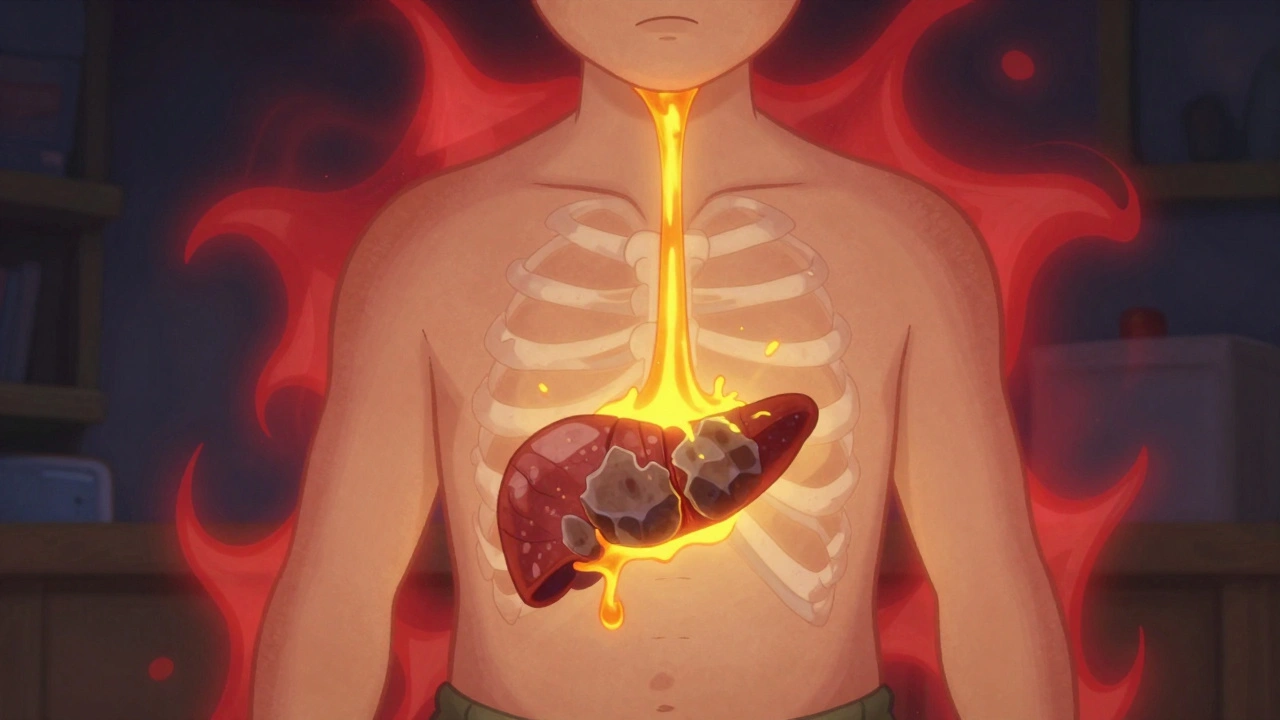
When your right upper abdomen suddenly locks up in sharp, unrelenting pain, it’s not just indigestion. It could be gallstones - and if you’ve had one episode, you’re far from done. Most people don’t realize that gallstones aren’t rare. About 1 in 10 adults in Australia and the U.S. have them. But here’s the twist: 8 out of 10 of those people will never feel a thing. The real problem starts when one of those stones gets stuck.
What Happens When a Gallstone Gets Stuck?
That sudden, intense pain - often after a fatty meal - is called biliary colic. It’s not cramping. It’s not gas. It doesn’t get better with a walk or a bowel movement. The pain hits fast, peaks within an hour, and can last from one to five hours. It’s centered under your ribs on the right side, sometimes radiating to your back or right shoulder. This happens because a gallstone blocks the cystic duct, trapping bile inside the gallbladder. The muscle walls of the gallbladder contract hard trying to push the stone through. That’s what causes the pain.
Once the stone moves or breaks free, the pain fades. But if it keeps happening, you’re not just unlucky - you’re on a path. More than 90% of people who have one episode of biliary colic will have another within 10 years. Two-thirds will have another within just two years. And each episode increases your risk of something worse: acute cholecystitis.
When Biliary Colic Turns Dangerous
Cholecystitis is gallbladder inflammation. It’s not just pain anymore - it’s infection. When a stone blocks the duct for more than a few hours, the gallbladder starts to swell, get hot, and become infected. You’ll notice the pain doesn’t fade. It gets worse. You might run a fever. Your skin might turn yellow. Your abdomen becomes tender to the touch. This isn’t something you can wait out. Left untreated, it can lead to a ruptured gallbladder, abscesses, or even sepsis.
Cholecystitis is the most common complication of gallstones, affecting about 1 in 5 people who have biliary colic. And if a stone slips into the common bile duct - which happens in 10-15% of symptomatic cases - you can develop jaundice, pancreatitis, or life-threatening bile duct infections. That’s why doctors don’t just tell you to "wait and see" anymore. The goal isn’t to manage pain. It’s to prevent the next crisis.
What Are Gallstones Made Of?
Not all gallstones are the same. In Western countries, about 80% are cholesterol stones. They form when your bile holds too much cholesterol and not enough bile salts to keep it dissolved. The rest are pigment stones, made of bilirubin - a waste product from broken-down red blood cells. These are more common in people with liver disease, sickle cell anemia, or chronic infections.
Why do they form? It’s not just diet. While fatty meals can trigger pain, they don’t cause stones. The real culprits are infrequent gallbladder emptying, rapid weight loss, pregnancy, certain medications, and genetics. Women are 2 to 3 times more likely to get them than men, especially after age 40. Hispanic populations have a 45% higher risk than non-Hispanic whites. Obesity is a major driver - nearly 40% of U.S. adults are obese, and that number keeps climbing.
How Do You Know You Have Gallstones?
Doctors don’t guess. They scan. The gold standard is an abdominal ultrasound. It’s quick, safe, and detects over 95% of gallstones. Blood tests can show signs of inflammation or liver stress, but they won’t confirm stones. CT scans and MRIs are used only if complications are suspected - like a stone stuck in the bile duct.
Here’s the frustrating part: many people see three or more doctors before getting diagnosed. Symptoms get mistaken for heartburn, stomach flu, or even a heart attack. Painkillers help temporarily, but they don’t fix the problem. If you’ve had repeated episodes of right-sided abdominal pain - especially after eating - ask for an ultrasound. Don’t wait for it to get worse.
Surgery: The Only Real Solution
There’s no magic pill. Medications like ursodeoxycholic acid can dissolve small cholesterol stones, but only in about 30-50% of cases. And even then, the stones come back in half of patients within five years. Shock-wave therapy to break up stones? It used to be popular, but recurrence rates are too high. It’s rarely used now.
The only reliable, long-term fix is removing the gallbladder - a procedure called cholecystectomy. And here’s the truth: most people who have symptoms will eventually need it. Studies show that 64% of patients managed without surgery end up having it within five years anyway. So why delay?
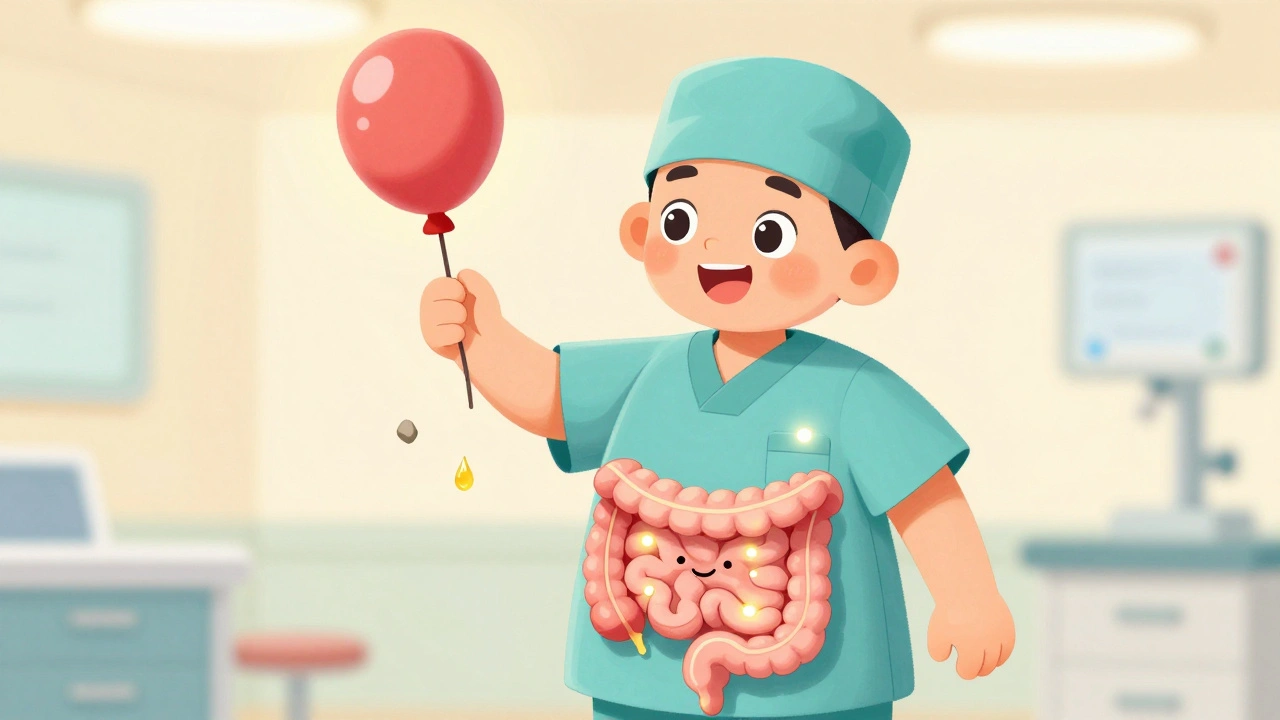
Laparoscopic cholecystectomy - the modern, minimally invasive version - is now done in 90% of cases. Four tiny cuts, a camera, and tiny tools. The surgery takes about 45 to 60 minutes. Most people go home the same day. Recovery? You’re back to light activity in a week. Full recovery? Around 7 days. Compare that to open surgery, which used to mean a 4.7-day hospital stay and 30 days off work.
Patients report dramatic improvements. One woman in Cleveland had 17 painful episodes over 18 months. After surgery, her pain vanished in 10 days. She was back to her normal life in two weeks. On Reddit, 82% of people who had the surgery say their quality of life improved significantly within two weeks.
Who Shouldn’t Have Surgery?
Surgery isn’t risk-free. For healthy people under 75, the risk of serious complications is less than 2%. But for older adults with multiple health problems - heart disease, diabetes, lung issues - the risk jumps. A 2023 study showed 30-day mortality for cholecystectomy in patients over 75 with three or more conditions rose to 2.8%. That’s why doctors now weigh risks carefully.
For high-risk patients, temporary options exist. Newer techniques like endoscopic ultrasound-guided gallbladder drainage can relieve pressure and infection without removing the gallbladder. It’s not a cure, but it buys time. The goal is to stabilize the patient, then plan surgery when they’re stronger.
Guidelines from the Society of American Gastrointestinal and Endoscopic Surgeons say: if you have acute cholecystitis, get the gallbladder out within 72 hours. Waiting increases the chance the surgery will need to be switched from laparoscopic to open - which happens in 25% of delayed cases, but only 7% if done early.
What to Expect After Surgery
Life without a gallbladder is normal. Your liver still makes bile - it just flows directly into your small intestine instead of being stored. Most people adapt quickly. But about 12% develop diarrhea, especially after fatty meals. It’s usually mild and improves over time. A small group - about 6% - get post-cholecystectomy syndrome: ongoing pain, bloating, or nausea. This isn’t always due to leftover stones. Sometimes it’s bile reflux or undiagnosed IBS.
Doctors now use enhanced recovery after surgery (ERAS) protocols to speed healing. That means getting up and walking within 4 hours, drinking liquids within 6 hours, and eating solid food the same day. These steps cut hospital stays by 30% and reduce readmissions by 25%.
The Bigger Picture
Every year in the U.S., about 700,000 gallbladders are removed. The global market for gallstone treatments is growing fast - projected to hit $2.7 billion by 2028. Why? Because obesity, aging, and poor diet aren’t going away. But the medical community isn’t standing still. New tools like single-incision laparoscopic surgery are being tested, but they’re riskier than standard laparoscopy and not widely recommended yet.
What’s clear? Gallstones aren’t a nuisance. They’re a ticking clock. The pain you feel today might be the warning before something far worse. Surgery isn’t scary - it’s the smartest way to take back control. And for most people, it’s the difference between living with constant fear and living without pain.
Comments
Christian Landry
damn i had a gallstone attack last year and thought it was just bad tacos 😅 turns out i was one episode away from cholecystitis... got the laparoscopic surgery and wow what a difference. no more fear of dinner. life’s good now.
December 8, 2025 at 03:11
Katie Harrison
I appreciate how clearly this explains the progression from biliary colic to cholecystitis. So many people dismiss the pain as 'just indigestion'-but this is a ticking time bomb. I’m glad the guidelines now push for early intervention. Prevention > crisis management.
December 9, 2025 at 10:44
Mona Schmidt
The stats on recurrence are staggering-over 90% of people who have one episode will have another within ten years. And yet, so many physicians still default to 'wait and see.' This post nails why that approach is outdated. Ultrasound is cheap, non-invasive, and 95% accurate. If you’re having right-upper-quadrant pain after fatty meals, don’t wait for sepsis to get diagnosed.
December 9, 2025 at 12:05
Guylaine Lapointe
People who say 'you can live without a gallbladder' are missing the point. It’s not about survival-it’s about dignity. I watched my mom endure six months of pain, misdiagnoses, and steroid injections before they finally did the surgery. She cried the day they told her she didn’t need to fear food anymore. This isn’t just medicine. It’s liberation.
December 10, 2025 at 18:02
Taya Rtichsheva
so u just cut out the whole thing?? like... why not just let it chill??
December 12, 2025 at 03:18
Angela R. Cartes
I mean, I get it-but isn’t it kind of wild that we’re just removing organs like they’re faulty appliances? We’ve got a $2.7 billion industry built on surgically fixing problems caused by... capitalism and processed food. Maybe we should ask why this is so common instead of just accepting it as inevitable.
December 12, 2025 at 16:19
Andrea Beilstein
There’s something deeply human about how we treat pain. We numb it, delay it, blame it on stress-until it becomes a crisis. The gallbladder isn’t just a stone trap. It’s a silent witness to our neglect. Removing it doesn’t fix the lifestyle. But maybe, just maybe, surviving it makes you finally listen.
December 13, 2025 at 08:15
Lisa Whitesel
Laparoscopic surgery is fine but don’t act like it’s harmless. 12% get chronic diarrhea. 6% get post-cholecystectomy syndrome. And you’re telling people it’s a quick fix? You’re selling a myth. The real problem is we’ve turned surgical intervention into a marketing campaign for lazy medicine.
December 13, 2025 at 15:19
Write a comment