
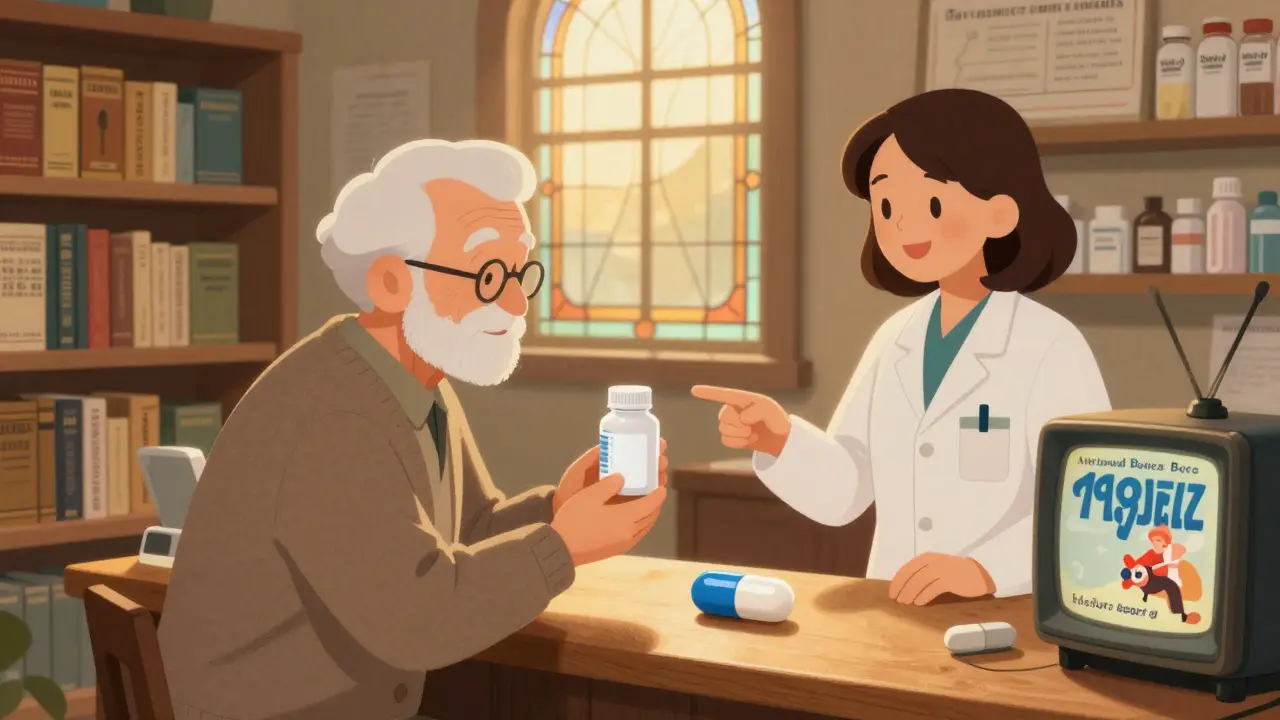
When you walk into a pharmacy and the pharmacist hands you a pill in a plain white bottle instead of the familiar blue box with the big logo, do you hesitate? You might not realize it, but your reaction has less to do with science and more to do with when you were born.
Generic drugs work the same as brand-name ones. They contain the exact same active ingredients, meet the same safety standards, and are tested to deliver the same results. The U.S. Food and Drug Administration (FDA) says they’re interchangeable. And yet, nearly 36% of people still believe generics are less effective. That gap between fact and feeling is widest among older generations - and it’s not because they’re misinformed. It’s because they’ve been conditioned to trust names, not chemistry.
Why Baby Boomers Stick to Brand Names
If you were born between 1946 and 1964, you grew up in an era when drug ads were on TV, doctors handed out samples in shiny packaging, and brand names like Tylenol, Advil, or Lipitor became household words. These weren’t just medicines - they were symbols of quality, reliability, and even care. When your doctor prescribed a brand-name drug, you trusted it because the name meant something. That trust stuck.
Today, many Baby Boomers have been taking the same medications for decades. They’ve seen their parents use the same brands. They’ve heard stories about people who switched to generics and felt “off.” Even if those stories aren’t backed by data, they feel real. And in medicine, feelings often override facts.
Studies show that older adults are more likely to report side effects after switching to generics - even when the generic is chemically identical. Why? Because they expect to feel something different. It’s not the drug. It’s the expectation. This is called the nocebo effect: when you believe something will hurt you, your body responds as if it already has.
Gen X: The Skeptical Middle Ground
Gen Xers (born 1965-1980) are the bridge between the brand-loyal past and the cost-conscious future. They remember when brand-name drugs were the only option - but they also lived through the rise of HMOs, rising co-pays, and the first wave of generic availability in the 1990s.
Many Gen Xers are the ones managing their parents’ prescriptions while raising kids and paying for their own medications. They’re practical. They’ll switch to a generic if it saves them $20 a month. But they’re not quick to trust. They’ve seen too many “miracle drugs” fail. They Google everything. They read the fine print.
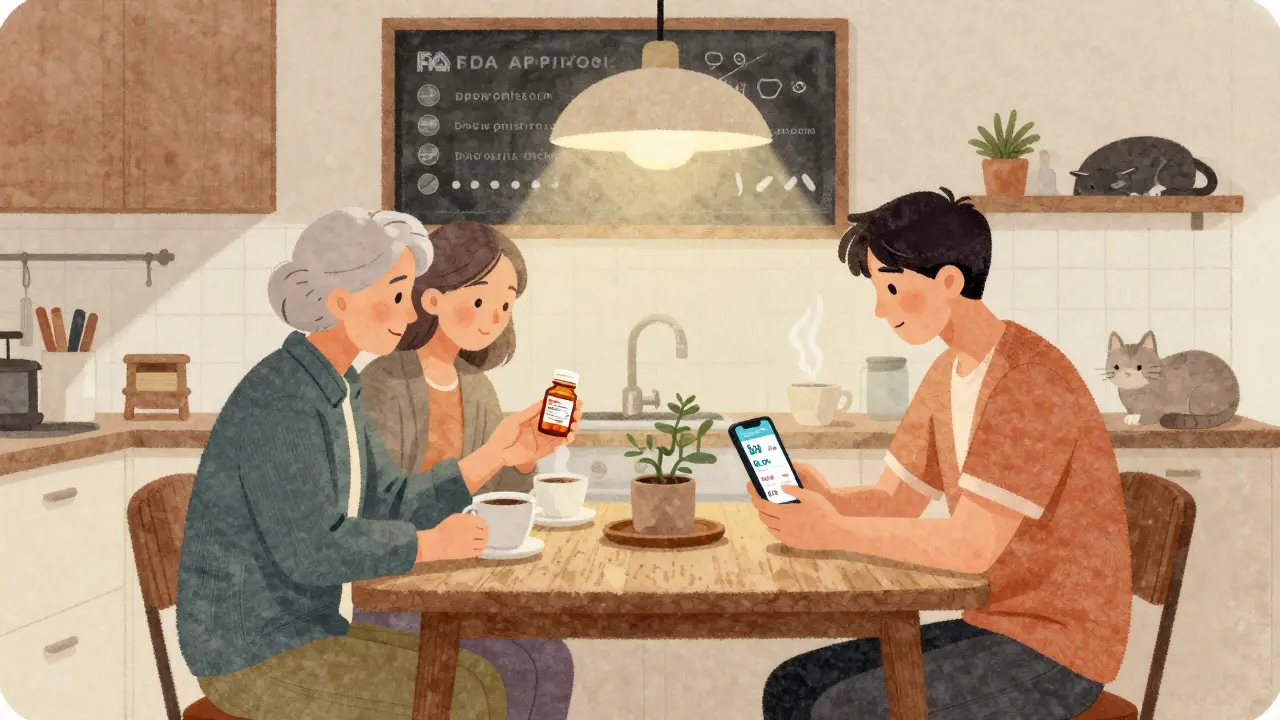
Research shows this group is more likely to ask their pharmacist: “Is this really the same?” They want proof. Not marketing. Not logos. They want to see the FDA approval stamp, check the manufacturer, compare pill shapes. If the pharmacist takes the time to explain - not just hand over the bottle - Gen Xers are more likely to accept the switch.
Millennials and Gen Z: Generics Are Normal
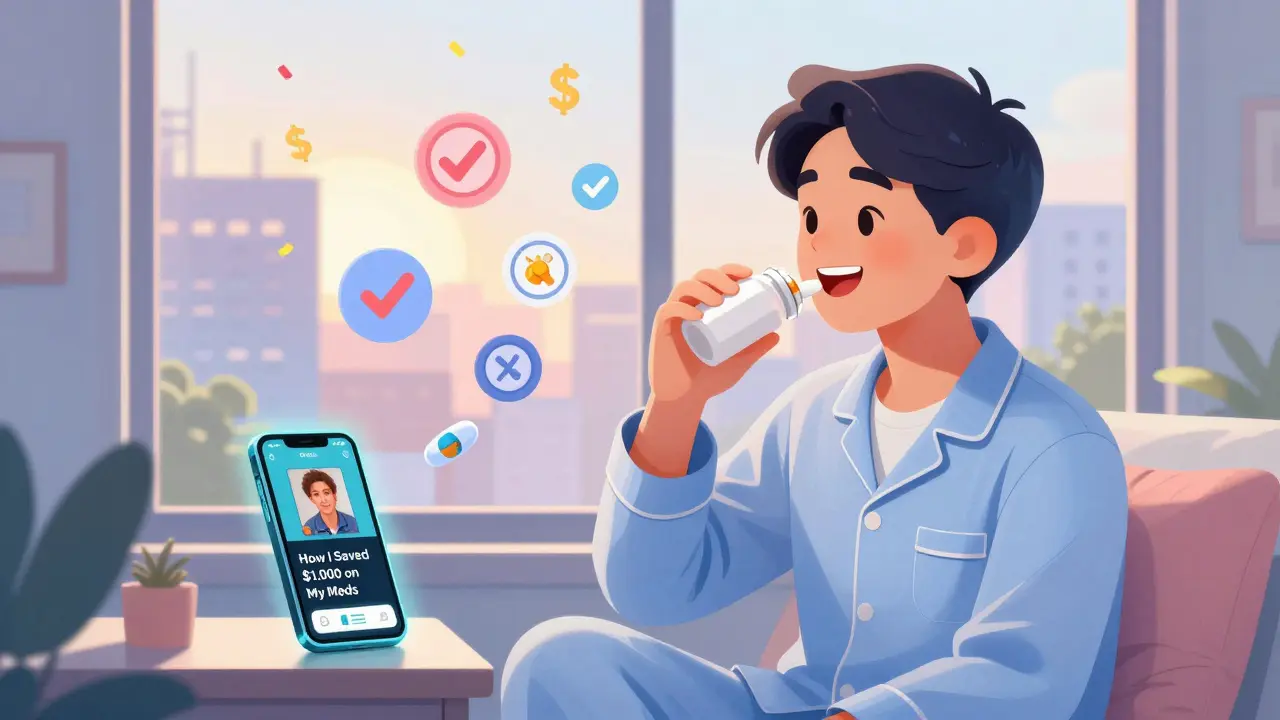
If you’re under 40, you’ve never known a world where generics weren’t everywhere. You’ve used them since you were a kid. You’ve seen your parents refill prescriptions online. You’ve compared prices on apps like GoodRx. You’ve watched influencers talk about saving money on meds.
Millennials and Gen Z don’t see generics as a compromise. They see them as smart. They don’t care about the color of the pill or the brand on the bottle. They care about whether it works - and whether it costs less. In fact, studies show younger adults are more likely to switch to generics without being asked. They don’t need convincing. They’ve already made the decision.
They also trust data more than branding. If a study says generics are just as safe, they believe it. They’re more likely to have read the FDA’s explanation of bioequivalence. They’re used to getting information fast - and they don’t wait for a doctor to tell them what to think.
The Real Problem Isn’t Science - It’s Trust
Here’s the thing: doctors, pharmacists, and regulators all agree. Generics are not cheaper because they’re worse. They’re cheaper because they don’t need to spend millions on ads, celebrity endorsements, or fancy packaging. The active ingredient is the same. The manufacturing standards are the same. The testing is the same.
So why do people still doubt them?
Because trust isn’t built in labs. It’s built over time - through experience, stories, and marketing. Brand-name companies spent decades convincing people their pills were special. Generics never got that chance. They were never marketed as heroes. They were just… there.
And that’s the problem. When you don’t see a brand, you assume it’s less reliable. It’s not logical. But it’s human.
Health Literacy Is the Key - But It’s Not the Same for Everyone
Studies show that people with higher health literacy - the ability to understand medical info - are more likely to use generics. But here’s the catch: health literacy doesn’t rise evenly with age.
Older adults often have more experience with medications, but less exposure to modern health information. They might have learned about drugs from a pamphlet in 1985. Younger people learn from TikTok videos, Reddit threads, and pharmacy apps. The information is faster, but not always accurate.
What works for one generation doesn’t work for another. Telling a 70-year-old “the FDA says it’s the same” doesn’t mean much if they’ve never heard of the FDA. Showing a 25-year-old a 10-page government PDF won’t help either.
Effective messaging needs to match the medium. For older adults, a conversation with their pharmacist, a printed chart comparing pill shapes and dosages, or a trusted doctor saying, “I prescribe this to my own parents,” carries weight. For younger people, a simple Instagram post with a before-and-after price comparison - “$120 → $12” - works better than a 500-word explanation.
How the System Is Changing - And Why It Matters
Generic drugs make up 90% of all prescriptions filled in the U.S. - but only 23% of total drug spending. That means they’re saving the system hundreds of billions every year. Without generics, millions of people couldn’t afford their meds. People with diabetes, heart disease, high blood pressure - they’d be forced to choose between pills and rent.
Some states now require pharmacists to automatically substitute generics unless the doctor says no. Insurance companies push them. But none of that matters if patients refuse to take them.
China’s government forced a massive shift by centralizing drug purchases. They cut prices by up to 80% and got 78% of prescriptions switched to generics in just a few years. But they didn’t just cut prices. They ran public campaigns. They trained doctors. They put posters in clinics showing side-by-side comparisons of brand and generic pills.
It worked - because they understood perception, not just policy.
What You Can Do - No Matter Your Age
If you’re older and still hesitant: ask your pharmacist to explain the difference. Look at the pill. Compare the ingredients on the box. Ask if your doctor prescribes generics for themselves. You might be surprised.
If you’re younger and already using generics: help your parents or grandparents. Don’t lecture. Just say, “I switched to this one and saved $100 a month. Want me to show you how?”
If you’re a healthcare provider: don’t assume everyone knows what bioequivalence means. Show, don’t tell. Use visuals. Use real numbers. Ask what they’re worried about - and listen.
The truth is, generics aren’t a compromise. They’re a choice. And the only thing standing between people and that choice is a belief that was built decades ago - not in a lab, but in a living room, watching a commercial.
It’s time to rewrite that story.
Are generic drugs really as effective as brand-name drugs?
Yes. Generic drugs must meet the same strict standards as brand-name drugs set by the FDA. They contain the same active ingredients, work the same way in the body, and are tested to ensure they deliver the same clinical results. The only differences are in inactive ingredients like color or shape - which don’t affect how the drug works.
Why do older people distrust generic medications?
Many older adults grew up in an era when brand-name drugs were heavily marketed and seen as symbols of quality. They’ve been using the same brands for decades, and switching feels risky - even when there’s no scientific reason to worry. Negative stories, personal experiences, or even the look of a plain pill can trigger doubt. It’s not about the drug - it’s about decades of learned trust in specific names and packaging.
Do younger generations prefer generics?
Yes. Millennials and Gen Z are more likely to choose generics without hesitation. They grew up with price comparison apps, online pharmacies, and a culture that values cost-efficiency. They trust data over branding and are more comfortable researching medications themselves. For them, generics aren’t a backup option - they’re the smart default.
Can switching to generics cause side effects?
Not because of the drug itself. Generics are required to be bioequivalent, meaning they work the same way in the body. However, some people report feeling different after switching - often due to the nocebo effect, where expecting a problem causes real symptoms. Changes in pill size, color, or inactive ingredients can also trigger this feeling, even though they don’t affect the drug’s effectiveness.
How can I convince a family member to try a generic drug?
Don’t argue with facts. Instead, offer to help them talk to their pharmacist or doctor. Show them the FDA’s official statement on generics. Point out how much money they’ll save - and ask if they’d be willing to try it for one refill. Many people are open to trying if they feel supported, not pressured. Sometimes, just seeing someone they trust use the same generic makes all the difference.
Comments
Ian Long
Look, I get why people are skeptical. I used to be one of them. But after my dad had a heart attack and we were paying $300 a month for his blood thinner, we switched to the generic - same pill, same results, saved $250. He didn’t feel any different. Didn’t get sicker. Didn’t hallucinate. Just kept living. The real tragedy isn’t the pill color - it’s people skipping doses because they can’t afford the brand.
January 8, 2026 at 23:54
Lindsey Wellmann
OMG YES 🙌 I just switched my mom’s cholesterol med to generic and she cried because the pill was ‘too plain’ 😭 Like, honey, it’s not a luxury handbag - it’s a lifesaver. I had to send her a TikTok of a pharmacist holding up both bottles side by side with ‘SAME STUFF, 90% OFF’ and now she calls it ‘the budget miracle pill.’ 💊💸
January 10, 2026 at 16:53
Jacob Paterson
Of course older people distrust generics. They were sold a dream: a branded pill = a doctor’s blessing = safety. Meanwhile, the pharmaceutical industry made billions convincing them that a $200 bottle was somehow ‘better’ than a $20 one. And now you’re surprised they’re confused? Wake up. This isn’t ignorance - it’s manipulation. And the system still profits from it.
January 11, 2026 at 06:34
Pooja Kumari
Oh my god, I live in India and we’ve been using generics for decades - not because we’re poor, but because we’re smart. Our government made sure the quality was controlled. We know the manufacturers. We trust the science. But here in the US, it’s like people think if it doesn’t have a logo, it’s not real medicine. I had a friend who refused her blood pressure med because the pill was white instead of blue - and she had a stroke last year. The color didn’t kill her. The fear did.
It’s not about education. It’s about emotional attachment to packaging. We don’t need more PDFs. We need stories. We need moms showing their kids the same pill in two bottles. We need pharmacists saying, ‘I give this to my husband. Same as the brand.’ That’s trust. Not FDA jargon.
January 12, 2026 at 15:12
Angela Stanton
Let’s be real - the nocebo effect is real, but so is the placebo effect. People report side effects from generics because they’ve been conditioned to expect them. Meanwhile, the same people will take a $500 supplement with zero FDA oversight because it has ‘natural’ on the label. The cognitive dissonance here is hilarious. You’ll trust a stranger’s Instagram post about ‘turmeric cures cancer’ but not a federally mandated bioequivalence study? The system’s broken, but the users are the ones playing the game.
January 13, 2026 at 22:46
Jerian Lewis
I’ve been on generics for 12 years. Never had an issue. My doctor prescribes them. My insurance requires them. I don’t care what they look like. I care that I’m alive. The fact that this is even a debate is exhausting.
January 14, 2026 at 09:28
Kiruthiga Udayakumar
My aunt in Delhi takes 7 different generics every day - she’s 82, has diabetes, hypertension, and arthritis. She never asks for brand names. She says, ‘If it’s written by the doctor and the pharmacy gives it, it’s good.’ And she’s healthier than half the people in her suburban US neighborhood who pay $400 for the same pills. Sometimes, simplicity is wisdom.
January 15, 2026 at 20:57
Patty Walters
My grandma used to say, ‘If it doesn’t look like the one I’ve been taking, it’s not the same.’ So I printed out the FDA page with the pill images side by side - brand vs generic. Same shape, same number, same active ingredient. She stared at it for 10 minutes. Then she said, ‘Huh. Guess I’ve been mad at the wrong thing.’ She switched the next refill. Saved $80. We ate pizza that week. 😊
January 16, 2026 at 19:10
tali murah
Let me get this straight: we’ve spent 40 years brainwashing people into believing that a $120 pill is inherently superior to a $12 pill - and now we’re shocked that people don’t trust the cheaper version? The real crime isn’t the generic. It’s the marketing machine that turned medicine into a luxury brand. And now we’re asking patients to ‘get educated’ while the same corporations still own the ads, the doctors’ lunch money, and the FDA’s revolving door. Wake up. This isn’t a trust issue. It’s a corruption issue.
January 17, 2026 at 17:26
Alicia Hasö
To everyone who’s ever hesitated: you’re not wrong for feeling this way. You were taught to believe in logos. That’s not your fault. But here’s the beautiful part - you can unlearn it. Start small. Ask your pharmacist to show you the FDA comparison sheet. Hold both pills in your hand. Feel the weight. Read the label. You’ll see - it’s the same. And when you do? You’re not just saving money. You’re reclaiming your power. You’re saying: I deserve health - not marketing.
This isn’t about generics. It’s about dignity. And you deserve both.
January 18, 2026 at 17:52
Ashley Kronenwetter
The FDA’s bioequivalence standards are rigorous. Generic manufacturers must demonstrate that the rate and extent of absorption of the active ingredient are not statistically different from the brand-name product. This is not a suggestion - it is a legal requirement under 21 CFR 314.92. The variability allowed is within 80-125% of the reference product. This is not ‘close enough.’ It is scientifically validated interchangeability.
January 19, 2026 at 15:44
Heather Wilson
People don’t trust generics because they’re dumb. They don’t trust them because they’ve been lied to for decades. And now you want them to just ‘trust the science’ after being sold a lie for 30 years? That’s not education. That’s gaslighting. The system failed them. Don’t blame the victims.
January 21, 2026 at 10:47
Micheal Murdoch
Generations don’t just differ in how they see pills - they see medicine differently. Boomers saw it as a gift from authority. Gen X saw it as a transaction. Millennials see it as a service. Gen Z sees it as a product - and they shop like it. The real question isn’t why they distrust generics - it’s why we keep using the same old messaging for everyone. We’re trying to teach a 70-year-old with a flip phone how to use a smartphone app. We need to meet them where they are. Not where we wish they were.
Maybe the answer isn’t more data. Maybe it’s more humanity.
January 22, 2026 at 19:52
Write a comment