

Every year, millions of people experience harmful side effects from medications they took exactly as prescribed. These aren’t mistakes - they’re adverse drug reactions (ADRs), and they’re often preventable. One in five hospital admissions in Europe and the U.S. is linked to ADRs. Many of these reactions happen because two people can take the same drug, at the same dose, and have wildly different outcomes - one feels fine, the other ends up in the ER. The reason? Genetics.
Why Your Genes Matter When You Take Medicine
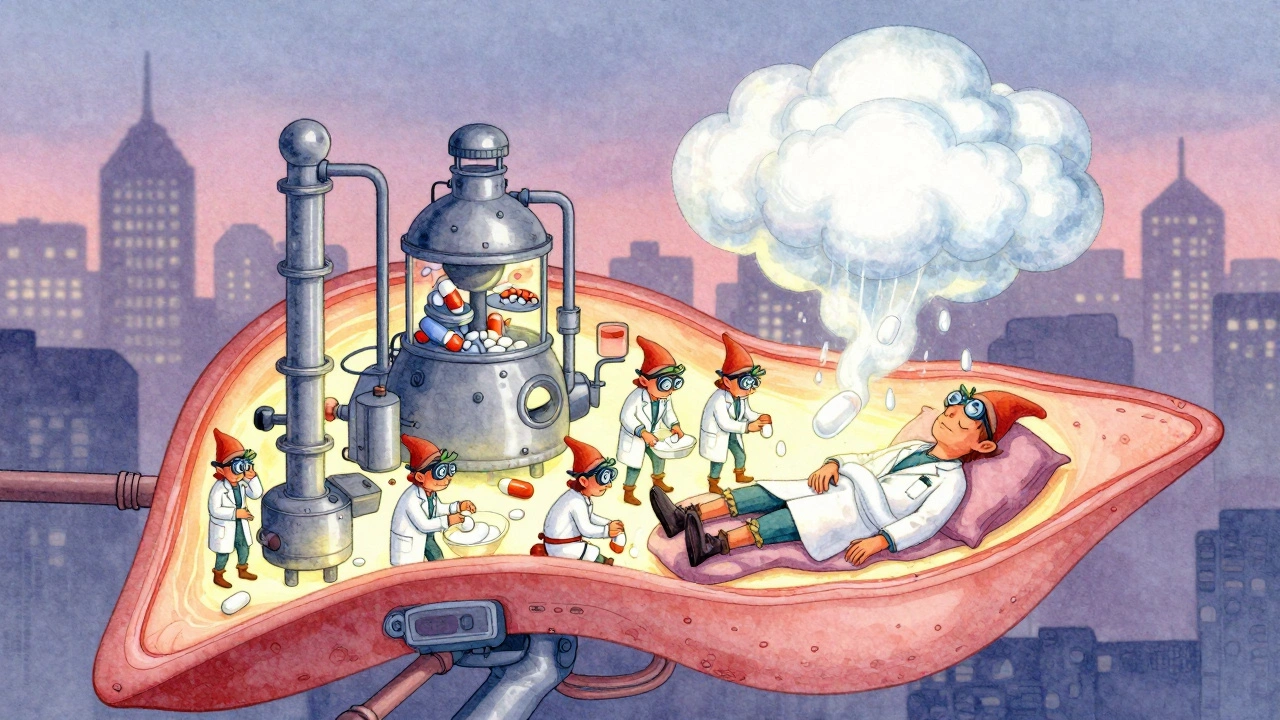
Your body doesn’t process drugs the same way as your neighbor’s. That’s because of small differences in your DNA, especially in genes that control how enzymes break down medications. These enzymes are like factory workers in your liver. Some work fast, some work slow, and some don’t work at all. If you’re a slow metabolizer of a drug like clopidogrel (used after heart attacks), it won’t work well. If you’re a fast metabolizer of codeine, you could turn it into too much morphine and stop breathing. These aren’t rare cases. They’re predictable - if you know your genes.That’s where pharmacogenetic testing comes in. It looks at specific genes that affect how you respond to over 100 common drugs. The test doesn’t tell you if you’ll get cancer or diabetes. It tells you whether your body will handle a painkiller, antidepressant, blood thinner, or chemotherapy the right way - or if it’s going to cause trouble.
The Science Behind the Test
The most important genes tested are CYP2C19, CYP2D6, CYP2C9, TPMT, DPYD, SLCO1B1, and HLA-B. Each one plays a role in how your body handles certain medications:- CYP2C19: Affects clopidogrel (Plavix), proton pump inhibitors, and some antidepressants. About 25% of people have a variant that makes this drug useless.
- TPMT: Determines how you process azathioprine and mercaptopurine, used for autoimmune diseases and leukemia. Without testing, 1 in 300 patients gets life-threatening bone marrow suppression.
- HLA-B*1502: Found mostly in people of Asian descent. Carrying this variant means you have a 95% lower risk of developing Stevens-Johnson syndrome if you avoid carbamazepine.
- SLCO1B1: Influences how your body handles statins. A variant here increases your risk of muscle damage by 4x.
A 2023 study called PREPARE, which followed nearly 7,000 patients across seven European countries, showed that testing before prescribing reduced serious ADRs by 30%. That’s not a small number. It means one in every three serious reactions was avoided simply by knowing the patient’s genes ahead of time.
How Testing Works in Real Clinics
Getting tested is simple. A swab from your cheek or a blood sample is sent to a lab. Results come back in 24 to 72 hours. The key isn’t just the result - it’s what happens next. The report gets added to your electronic health record. If a doctor tries to prescribe a drug that could be dangerous for your genes, the system flags it. It might say: “Patient has CYP2C19 poor metabolizer status. Avoid clopidogrel. Consider prasugrel instead.”This isn’t science fiction. Hospitals in the U.S., Canada, the UK, and the Netherlands have been doing this for years. The University of Florida’s personalized medicine program saw a 75% drop in ADR-related emergency visits after implementing preemptive testing. That’s not luck. It’s design.
Costs vary. In the U.S., a full panel test runs $200-$500. That sounds expensive until you consider that one ADR can cost $15,000-$50,000 in hospital bills. A 2021 review of 59 studies found that pharmacogenetic testing saved money in 78% of cases. The NHS estimates ADRs cost the UK £500 million a year - money that could be saved with testing.
Who Benefits the Most?
Some groups see bigger benefits than others:- Psychiatric patients: Up to 80% have a genetic variant affecting antidepressant metabolism. Testing reduces side effects and helps find the right drug faster.
- Cancer patients: Drugs like 5-FU (used for colon cancer) can be deadly if DPYD is faulty. Testing prevents severe toxicity in 1 in 10 patients.
- Older adults on multiple meds: Polypharmacy increases ADR risk. Pharmacogenetic testing helps untangle which drug is causing the problem.
- People of Asian descent: HLA-B*1502 testing before carbamazepine is now standard in many countries.
Even if you’re healthy, getting tested once can protect you for life. Your genes don’t change. One test can guide your care for decades.
What’s Holding It Back?
Despite the evidence, adoption is still slow. Only 18% of primary care doctors use pharmacogenetic testing. Why?- Doctors don’t feel confident interpreting results. A 2022 survey found only 37% of physicians felt comfortable using the data.
- Integration is messy. Not all EHR systems have decision support built in. Results get buried in PDFs.
- Insurance coverage is patchy. Medicare covers testing for clopidogrel and thiopurines, but not always for antidepressants or statins.
- Genetic diversity gaps. Most data comes from European populations. Variants in African, Indigenous, and Latin American groups are still being mapped. New research is fixing this - but slowly.
There’s also a fear of genetic privacy. About one-third of people worry their data could be misused. But the tests only look at drug metabolism genes - not disease risk or ancestry. They’re not like 23andMe. They’re more like a medication instruction manual written in your DNA.

What’s Next?
The future is moving fast. The FDA updated its list of gene-drug pairs to 329 in March 2024 - up from 287 just two years ago. The European Commission is investing €150 million to roll out preemptive testing across member states by 2027. In the U.S., academic medical centers plan to adopt it at 87% rates by 2026.One of the biggest advances? Moving from single-gene tests to polygenic scores - combining dozens of genetic signals to predict how you’ll respond to a drug. Early studies show this improves accuracy by 40-60% over older methods.
Costs are falling too. A 2022 pilot project showed point-of-care PCR tests could bring the price down to $50-$100 by 2026. Imagine getting your results while you’re still in the doctor’s office.
What You Can Do Today
You don’t have to wait for your doctor to suggest it. If you’re on multiple medications, have had a bad reaction before, or are about to start a new drug - ask. Say: “Is there a pharmacogenetic test I should have before taking this?”If you’ve already had a genetic test (like from 23andMe or Ancestry), check if your raw data includes CYP2C19, CYP2D6, or TPMT variants. You can upload it to free tools like PharmGKB or GeneSight to get a basic interpretation. It’s not a substitute for clinical testing, but it’s a starting point.
And if you’re a clinician? Start with one drug. Test for TPMT before prescribing azathioprine. Or test CYP2C19 before clopidogrel. One change can save a life.
Pharmacogenetic testing isn’t about predicting the future. It’s about preventing the past from repeating itself. No more guessing. No more trial and error. Just the right drug, at the right dose, for your genes.
Comments
Shannara Jenkins
Finally, someone talks sense about this. I’ve been pushing my doctor to test for CYP2C19 since I had that nightmare with Plavix - turned out I was a poor metabolizer. No more guessing games. Just give me the test, save the ER visits, and let’s move on.
It’s not magic. It’s math. And math beats trial-and-error every time.
December 3, 2025 at 21:37
Elizabeth Grace
I took 3 antidepressants before one actually didn’t make me want to jump off a bridge. My mom cried when the test came back saying I’m a CYP2D6 ultra-rapid metabolizer. Like, wow, no wonder I felt like a zombie for two years.
Why isn’t this mandatory? I’m not asking for a miracle - I’m asking for basic human decency.
December 5, 2025 at 18:30
Lynn Steiner
Oh great, now we’re going to DNA-test every person before they get a Tylenol? Next thing you know, the government will be scanning your spit to decide if you’re ‘worthy’ of pain relief.
Also, I’m 52 and never had a bad reaction - so why should I pay $500 for a test that’s basically a glorified fortune cookie? #MakeAmericaPrescribeAgain
December 5, 2025 at 20:34
Alicia Marks
This changed my life. My dad almost died on warfarin. Test came back: SLCO1B1 variant. Switched to apixaban. No more bleeding. No more panic. Just peace.
Ask your doctor. Seriously. Do it.
December 7, 2025 at 12:32
Laura Baur
It is not merely a matter of pharmacogenetic utility - it is an epistemological imperative. The reduction of human physiological response to discrete genetic markers is not science - it is a form of biopolitical technocracy disguised as progress.
Who decides which genes are ‘important’? Who owns the data? And why, in a society that fetishizes individualism, do we still permit the state and pharmaceutical conglomerates to dictate the terms of our biological autonomy?
The HLA-B*1502 variant is not a ‘risk factor’ - it is a historical artifact of colonial genomics, mapped by Western labs on non-European bodies and then weaponized as a diagnostic tool. This is not medicine. It is bio-surveillance with a white coat.
And yet - I still got tested. Because I am trapped in the system, and the system is not going to change unless we break it. But I will not pretend this is liberation. It is merely a more elegant cage.
December 8, 2025 at 06:56
Jack Dao
Wow. So now we’re supposed to believe that a $500 spit test is the silver bullet for 1 in 5 hospital admissions? Tell me, Jack - how many of those admissions are caused by patients not taking their meds? Or doctors ignoring contraindications? Or hospitals cutting corners?
Genes are just one piece. The real problem is lazy medicine. You don’t need a DNA test to know that mixing warfarin with ibuprofen is a bad idea. You need a doctor who pays attention.
And before you say ‘but the data shows it works’ - sure, in controlled trials. But in real life? My aunt got tested, the system flagged her, and the pharmacist still gave her the wrong dose because ‘it was a busy day.’
Stop selling snake oil as precision medicine. We’re not robots. We’re humans with bad insurance, tired doctors, and broken systems.
Also - I’m not paying $500 to find out I can’t take ibuprofen. I’ve known that since I was 16 and threw up after a concert.
December 9, 2025 at 18:56
dave nevogt
There’s something quietly beautiful about the idea that our bodies carry instructions written over millennia - and now, finally, we’re learning to read them not as curses or destinies, but as maps.
For centuries, medicine treated the body like a black box. You give a pill. You wait. You hope. You pray. You blame the patient when it doesn’t work.
Pharmacogenetics doesn’t just personalize treatment - it restores dignity. It says: ‘Your biology is not broken. It’s different. And we’re finally trying to understand it.’
I don’t know if this will fix the system. I know it will save lives. And sometimes, that’s enough to begin.
Also - if you’re reading this and you’ve ever felt like your pain was ‘all in your head’ - I believe you. Your genes didn’t lie. And neither did you.
December 10, 2025 at 03:09
Arun kumar
in india we dont even get basic meds on time but now u talkin bout gene test? 😅
my uncle took blood thinner and got bleeding in brain. doc said 'bad luck'.
we need clean water first. then medicine. then gene test.
but still… if this helps even one person, good job. 🙏
December 11, 2025 at 00:51
Zed theMartian
Oh please. You think your CYP2D6 status makes you special? I’ve got a 23andMe report that says I’m 12% Neanderthal and 0.3% Viking. That’s way more useful than knowing whether I can metabolize codeine.
Also, why are we letting corporations patent our DNA snippets? Next thing you know, Pfizer will charge you a subscription fee to breathe without side effects.
And don’t get me started on ‘polygenic scores.’ That’s just statistical witchcraft with a PhD.
Real talk: If your doctor can’t prescribe without a genetic test, maybe they shouldn’t be prescribing.
Also - I’m not getting tested. My body is my temple. And temples don’t need DNA audits.
December 11, 2025 at 14:29
Paul Keller
Let’s be brutally honest: pharmacogenetics is not a breakthrough - it’s an indictment. It exposes the fact that for over a century, medicine has operated on the assumption that all human bodies are interchangeable. That’s not science. That’s arrogance.
We prescribed the same dose of warfarin to a 90kg man and a 45kg woman because ‘it’s in the guidelines.’ We gave clopidogrel to a 68-year-old diabetic because ‘it’s standard.’ We ignored the fact that 25% of the population has a genetic variant that renders the drug inert - and then blamed the patient when the stent clots.
This isn’t about innovation. It’s about accountability. The system failed millions. Now, finally, we have a tool to prove it. And instead of fixing the system, we’re asking patients to pay $500 to prove they weren’t just ‘bad cases.’
Yes, the PREPARE study showed a 30% reduction in ADRs. But what about the 70% that still happened? Where’s the study on the doctors who ignored the results? The labs that misread the data? The EHRs that buried the report in a PDF nobody opened?
Testing is necessary. But it’s not sufficient. We need mandatory training. We need integrated decision support. We need liability protections for clinicians who follow the results. We need insurance coverage that doesn’t treat this like a luxury spa treatment.
And we need to stop celebrating this as progress while the rest of the system remains broken. This isn’t the future of medicine. It’s the bare minimum.
Also - I’m a physician. I’ve ordered 147 of these tests in the last year. I’ve saved lives. And I’m exhausted. Because every time I do, I have to fight the insurance company, explain it to the patient, and then pray the pharmacist doesn’t ignore the flag.
So yes - test everyone. But don’t call it a win until the system stops making us beg for basic safety.
December 12, 2025 at 18:14
Rebecca M.
So… you’re telling me I should’ve gotten a DNA test before I took that antidepressant that made me cry during cereal commercials? 😭
Well. Now I know. And I’m never trusting a doctor again. 🤡
December 13, 2025 at 11:34
Write a comment