

When someone says they take medication for anxiety or depression, the reaction isn’t always understanding. Sometimes it’s silence. Sometimes it’s a raised eyebrow. Or worse - a joke about being "on pills." This isn’t just awkward. It’s harmful. For millions of people, the fear of being judged for taking mental health medication keeps them from getting the care they need. And it starts with how we talk about it.
Why Medication Stigma Is Different
Stigma around mental health isn’t new. But stigma around the medications that treat it? That’s a different beast. People might accept that someone has depression, but still believe taking an antidepressant means they’re weak, lazy, or addicted. They confuse psychiatric drugs with street drugs. They think if you’re really strong, you should "just get over it" without pills. The truth? Antidepressants work. Studies show they help 40-60% of people with moderate to severe depression - numbers that match or beat many treatments for high blood pressure or diabetes. Yet, 25% of people who are prescribed antidepressants stop taking them within 30 days - not because they don’t work, but because they’re ashamed. A 2023 report from the American Psychiatric Association found nearly half of patients feel embarrassed to admit they’re on medication. That’s not a personal failure. It’s a societal one.How Language Fuels the Problem
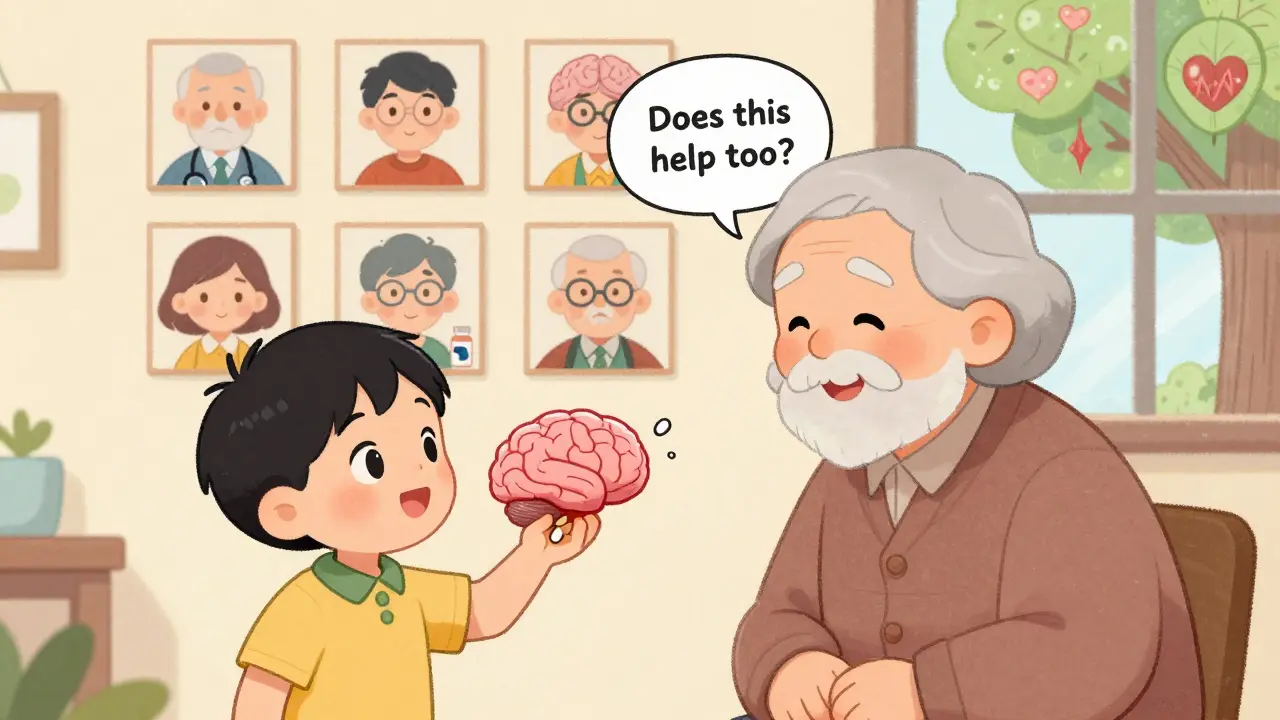
Words matter. A lot. The National Institute of Mental Health found that using terms like "meds," "pills," or "drugs" increases negative attitudes by 41% compared to saying "medication" or "treatment." When a doctor says, "You need to start your meds," it sounds casual, even dismissive. But when they say, "This medication helps balance the chemicals in your brain," it sounds medical - like insulin for diabetes. Even small shifts help. Instead of "I’m on antidepressants," try: "I take medication for my brain health, just like someone with diabetes takes insulin." That comparison works because it’s familiar. People get that diabetes isn’t a moral failing. Neither is depression.What Works: Real Strategies That Reduce Stigma
There are proven ways to change the conversation. And they don’t require big campaigns or fancy tools.- Normalize it. Say out loud: "Lots of people take medication for mental health. It’s as common as taking blood pressure pills." Henry Ford Health’s research showed that when mental health care is offered right in primary care clinics - not in a separate psychiatric wing - stigma drops by 38%. Why? Because it’s treated like any other health issue.
- Use analogies. Compare mental health medication to physical health treatments. "Your thyroid needs hormone replacement. Your brain needs chemical balance. It’s the same idea." People understand this better than abstract talk about neurotransmitters.
- Ask open questions. Instead of assuming someone is resistant, ask: "How do you feel about taking medication for your condition?" and "What worries you about it?" A 2023 study in General Hospital Psychiatry found this simple two-question approach boosted medication adherence by 33%.
- Share stories. Real stories beat statistics. A 2023 study with 700 college students found that hearing someone talk about how medication helped them hold a job, reconnect with family, or sleep again increased willingness to take medication by 22%. YouTube creator John Green, who’s talked openly about his SSRIs since 2017, says 68% of his 2.4 million subscribers felt less ashamed after watching his videos.
What Doesn’t Work - And Why
Not every well-meaning effort helps. Some even backfire. A 2023 study in the Community Mental Health Journal tested empathy-building exercises where people simulated hallucinations to understand psychosis. Instead of reducing stigma, it increased fear by 15%. Why? Because it focused on the most extreme, rare symptoms - not the everyday reality of taking medication to feel stable. Also, avoid saying things like, "It’s not a drug, it’s medicine." That implies drugs are bad. Many medications are drugs. The goal isn’t to deny that - it’s to show that drugs can heal, not just harm.What Providers Can Do
Doctors, nurses, and therapists are on the front lines. They have power - not just to prescribe, but to normalize.- Use the word "medication," not "pills."
- Frame treatment as part of long-term care. Say: "This is like managing asthma or heart disease - it’s a chronic condition that needs ongoing support."
- Don’t rush. If a patient hesitates, pause. Let them talk. Often, their hesitation isn’t about side effects - it’s about shame.
- Consider training. A 2022 meta-analysis found that providers who completed 8+ hours of cultural competency training on medication stigma showed a 29% improvement in communication and patient trust.
What Patients Can Do
If you’re taking medication, you’re not alone. And you don’t have to explain yourself to everyone.- Start small. Tell one trusted person. A partner. A sibling. A coworker you trust. Reddit’s r/mentalhealth thread on "How I talk about my medication without shame" had over 1,200 upvotes - people shared lines like, "I take it like I take my vitamins. It’s part of my routine."
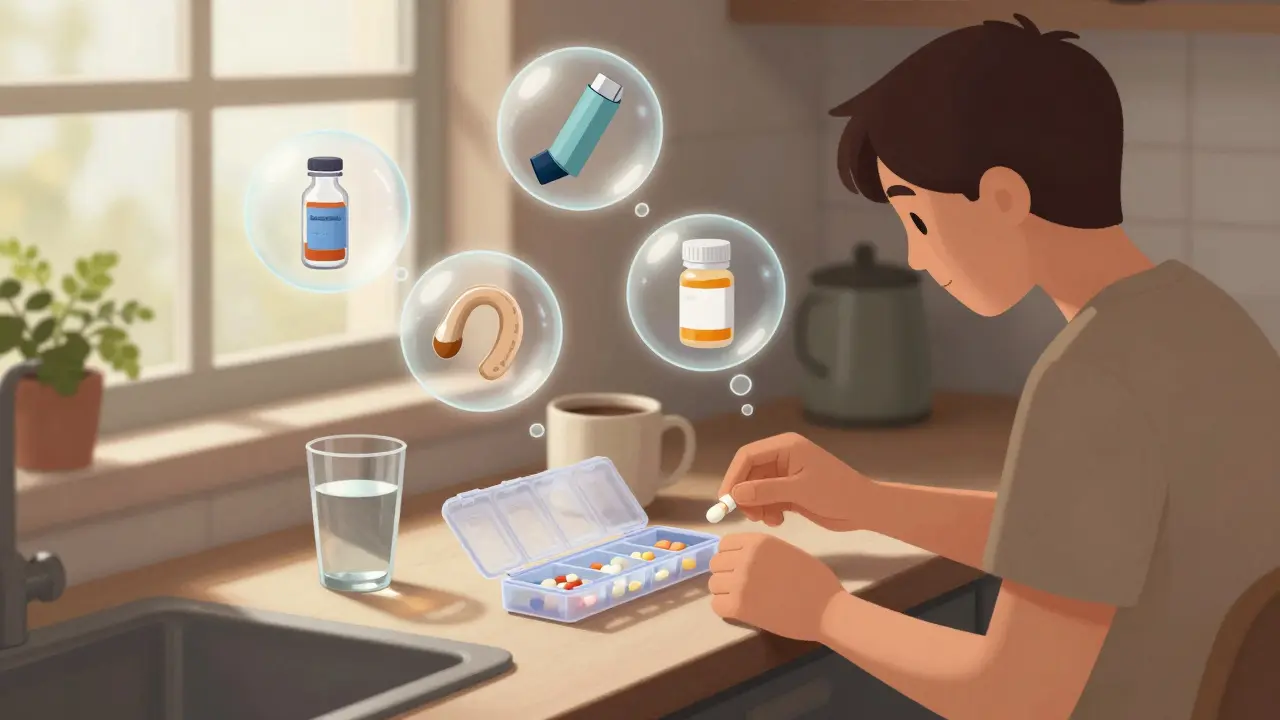
- Carry your medication in a pill organizer, not a plastic bag. It looks more like routine care, less like "secret drugs."
- Use apps. The SAMHSA "Medication Conversation Starter" app has been downloaded over 150,000 times. It gives you simple, ready-to-use responses to common stigmatizing comments - like, "That’s not what it’s for," or "Aren’t those addictive?"
Workplace and Cultural Barriers
Discrimination still happens. A 2022 Mental Health America survey found 43% of people who told their employer about their medication faced negative consequences - including being passed over for promotions or feeling isolated. In some cultures, the stigma is even deeper. Asian American communities, for example, have 47% lower antidepressant adherence than White Americans, partly due to beliefs that mental health issues should be handled privately, not with medication. The good news? Change is happening. The CDC’s "Medications as Medicine" campaign is reframing psychiatric drugs as part of chronic disease care - like heart medication or insulin. Early results show a 21% increase in positive attitudes in pilot areas. And by 2026, the American Medical Association predicts 65% of antidepressant prescriptions will come from primary care doctors - not psychiatrists. That’s huge. It means fewer people will see mental health meds as "special" or "other."Looking Ahead
We’re moving in the right direction. More providers are trained. More patients are speaking up. More stories are being shared. But progress isn’t linear. Telehealth, for example, has made care more accessible - but 41% of patients say they feel even less comfortable discussing medication over video calls. That’s something we need to fix. The goal isn’t to make everyone comfortable talking about their meds. The goal is to make sure no one feels ashamed for needing them. Because mental health medication isn’t a last resort. It’s a tool. A science-backed, life-changing tool - just like a wheelchair, a hearing aid, or an inhaler. It’s time we treated it that way.Why do some people feel ashamed to take mental health medication?
Many people internalize the belief that needing medication means they’re weak or broken. Others confuse psychiatric drugs with illegal substances, thinking they’re addictive or alter personality. Media portrayals often show characters on medication as unstable or dependent. Cultural norms, especially in communities that value self-reliance, also play a role. A 2022 JAMA study found 37% of patients avoid taking meds due to shame, not side effects.
Is it true that mental health meds are less effective than physical health meds?
No. Antidepressants have a 40-60% success rate for moderate to severe depression - similar to how blood pressure medications work for hypertension. Studies show 70-80% of people with moderate to severe depression need medication plus therapy to fully recover. The idea that these drugs don’t work comes from misinformation, not science.
How can I talk to my doctor about my concerns with medication?
Be honest. Say: "I’m open to medication, but I have some worries." Ask: "How does this help my brain?", "What are the real risks?", and "How long might I need it?" Doctors who use the two-question approach - "How do you feel about taking medication?" and "What concerns do you have?" - have higher adherence rates because they listen first.
Can medication stigma be reduced in schools or workplaces?
Yes. Training programs like NAMI’s "Medication as Treatment" workshop improve communication skills in 87% of participants. In workplaces, normalizing mental health benefits - like offering EAPs or including mental health in wellness talks - reduces stigma. Schools that integrate mental health education into health classes see fewer students hiding their medication.
Are there cultural differences in how medication stigma is experienced?
Absolutely. Asian American communities have 47% lower antidepressant adherence than White Americans due to beliefs that mental health issues should be handled within the family, not with drugs. Latino and Black communities often distrust the medical system due to historical mistreatment. Tailored education - led by culturally matched providers - is key to overcoming these barriers.
What should I do if someone makes a joke about my medication?
You don’t owe them an explanation. But if you want to respond, try: "It’s not a joke - this helps me stay well, just like someone’s insulin helps them." Or simply: "I’d appreciate it if you didn’t make light of this." The SAMHSA app has scripted responses for exactly these situations. Your health matters more than their comfort.
Is it okay to take medication long-term?
Yes. Many people take mental health medication for years - just like people take blood pressure or thyroid medication. There’s no moral or medical reason to stop if it’s working. The goal isn’t to get off medication; it’s to live well. The CDC and WHO now classify many mental health conditions as chronic, like diabetes or asthma - and chronic conditions often need ongoing treatment.
How can I support someone who’s taking mental health medication?
Don’t ask if they’re "still on it" or if they "really need it." Instead, say: "I’m glad you’re taking care of yourself." Offer to go with them to appointments if they want. Listen without judging. And if they share their story, thank them. Support isn’t about fixing - it’s about showing up.
Comments
Emma Nicolls
I took SSRIs for 3 years and no one ever knew except my mom. I started carrying my pills in a little case instead of a bag and suddenly people stopped asking if I was "on drugs." It’s wild how small things change perception. 🌱
March 14, 2026 at 08:18
Richard Harris
I’ve worked in GP clinics for 12 years. The moment we stopped putting mental health appointments in a separate wing, the stigma dropped. People started seeing it like checking blood sugar. Simple. Normal.
March 16, 2026 at 01:23
Jinesh Jain
In India, taking medication for anxiety is still seen as admitting defeat. My cousin started taking sertraline last year. She told her family she was taking vitamins for her nerves. They believed her. It worked.
March 17, 2026 at 15:29
Sabrina Sanches
I hate when people say "just meditate or yoga" like it’s a cure. I tried both. They helped. But they didn’t fix the chemical imbalance. Medication isn’t weakness. It’s science. And I’m proud of it.
March 19, 2026 at 11:38
Shruti Chaturvedi
My therapist said something that changed everything: "Your brain isn’t broken. It’s just out of balance." That’s all I needed to hear. No shame. Just biology. Like a thyroid. Like blood pressure.
March 21, 2026 at 01:41
Devin Ersoy
Look, I get it. But let’s be real - calling antidepressants "like insulin" is a PR move. Insulin is life-or-death. Antidepressants? They’re more like caffeine for your mood. Not the same. But hey, if it helps you feel human, go for it. Just don’t pretend it’s a miracle.
March 21, 2026 at 21:53
Kelsey Vonk
I love how you compared it to insulin. That’s the key. We don’t shame diabetics for using insulin. We don’t call them weak. Why? Because we understand it’s a biological tool. Mental health meds are the same. Your brain needs support. It’s not a character flaw. It’s physiology. And honestly? The fact that 25% quit because they’re embarrassed? That’s the real tragedy. We’ve turned healing into a secret. 🤍
March 22, 2026 at 04:59
Dylan Patrick
I used to hide my pill bottle. Now I leave it on my nightstand. My roommate asked. I said, "It helps me sleep and stop crying. Same as your allergy meds." She said, "Oh. Cool." And that was it. No drama. Just normal.
March 22, 2026 at 10:07
Katherine Rodriguez
Why do we even need to justify this? Like, if you had cancer, would you apologize for chemo? No. So why do we whisper about antidepressants? It’s not a moral issue. It’s a medical one. Stop making it weird.
March 23, 2026 at 21:35
Aaron Leib
The data is clear: stigma reduction through normalization works. Primary care integration, consistent language, and patient stories are proven interventions. We need policy-level adoption, not just anecdotal change. This isn’t about sensitivity - it’s about evidence-based public health.
March 24, 2026 at 04:10
Scott Smith
I’ve been on meds for 8 years. I used to say "I take vitamins" to avoid questions. Now I say "I take medication for my brain." The silence after that? It’s not judgment. It’s reflection. People are thinking. That’s progress.
March 24, 2026 at 20:50
Kathy Leslie
I work in a school. We started a mental health fair last year. One kid brought her pill organizer and said, "This is my daily routine." No one laughed. They just nodded. That’s how change happens. Slow. Quiet. Real.
March 25, 2026 at 09:46
rakesh sabharwal
The entire premise is flawed. Medication is a crutch. Real resilience comes from discipline, willpower, and spiritual grounding. You can’t fix the soul with chemistry. This is pharmaceutical colonization of human experience.
March 25, 2026 at 12:04
douglas martinez
The research is overwhelming. Stigma isn’t just social - it’s biological. Chronic shame elevates cortisol, which worsens depression. Addressing stigma isn’t performative. It’s therapeutic. This isn’t about language. It’s about survival.
March 26, 2026 at 09:17
Write a comment