
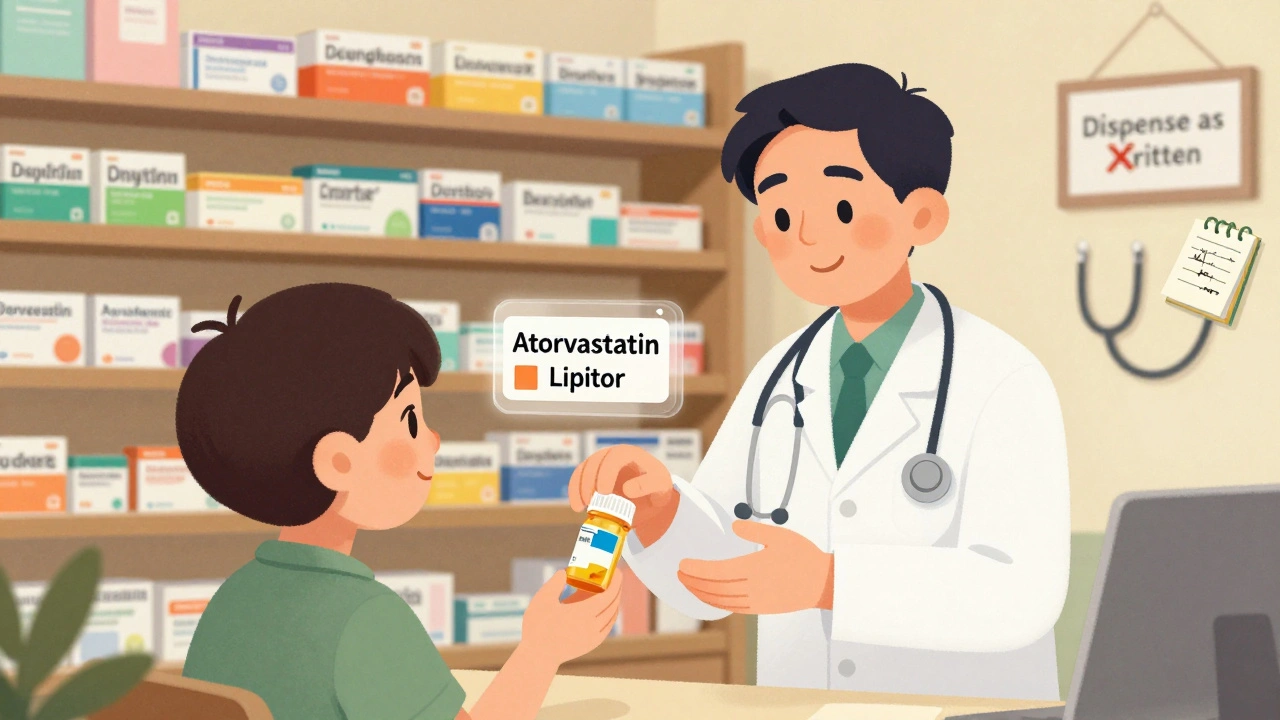
When your pharmacist hands you a pill bottle with a different name than what your doctor wrote, it’s not a mistake. It’s generic substitution-a common, legal practice where your insurance company or state law pushes you toward a cheaper version of your medication. The active ingredient is the same. The effect should be the same. But the paperwork, the rules, and the patient experience? Those are anything but simple.
Why Generic Substitution Exists
Generic drugs aren’t knockoffs. They’re FDA-approved copies of brand-name drugs, required to match the original in strength, dosage, and how the body absorbs the medicine. The FDA says generics must deliver between 80% and 125% of the brand’s effect-tight enough to ensure safety, loose enough to allow manufacturing flexibility. In 2023, 90% of all prescriptions filled in the U.S. were generics. They cost 80% less on average. That’s why insurers push them: they saved the U.S. healthcare system $373 billion in 2023 alone. But here’s the catch: not every patient reacts the same way to every generic. Some people report changes in how they feel after switching-even if blood tests show identical drug levels. Why? Inactive ingredients. Fillers, dyes, coatings. These don’t treat your condition, but they can trigger allergies, upset stomachs, or even affect absorption in sensitive individuals. A patient switching from one generic manufacturer to another might notice a difference, even if both are technically "bioequivalent."How Insurance Companies Force the Switch
Your insurer doesn’t just suggest generics-they often require them. Most plans have a mandatory generic substitution policy. If you’re prescribed Lipitor, your insurance will only pay for atorvastatin. If you insist on the brand, you pay the difference out of pocket. Some plans go further: they’ll deny coverage entirely if you don’t try the generic first. Private insurers like Sun Life and Great West Life in Canada started this trend in 2011-2012. Their data showed brand-name drugs cost $72 per claim on average-generics, $27. That’s a 62.5% drop. In the U.S., pharmacy benefit managers (PBMs) like Express Scripts and CVS Caremark control 85% of these policies. They decide which drugs are on formularies, which generics are preferred, and when a brand requires prior authorization. Medicare Part D patients see generic substitution at a 94% rate. Commercial insurance? Around 87%. Medicaid? Lower, because state laws vary. But the pressure is everywhere. Insurers don’t just save money-they make money. PBMs earn rebates from generic manufacturers. The more generics they push, the higher their cut.State Laws Are a Patchwork
Federal law lets pharmacists substitute generics unless the doctor says "dispense as written." But each state adds its own layer. In 19 states, pharmacists are legally required to substitute generics-even if the doctor didn’t say to. In 7 states and Washington, D.C., you must give written consent before they swap your medication. In 31 states, you must be notified, even if you don’t have to agree. Texas has one of the clearest rules: a pharmacist can only substitute if (1) the generic costs you less, (2) you don’t refuse it, and (3) your doctor didn’t write "brand medically necessary" on the prescription. They must also use the FDA’s "Orange Book" to confirm the generic is rated "A"-meaning it’s therapeutically equivalent. Other states have similar but not identical rules. If you’re in New York, you might need a signed form. In Florida, the pharmacist just has to tell you they switched it.
When You Can-and Should-Fight Back
You have rights. Even if your insurance wants a generic, you can still get the brand-name drug. You just have to jump through a few hoops. The most reliable way? Ask your doctor to write "Dispense as Written" or "Brand Medically Necessary" directly on the prescription. This legally blocks substitution in most states. The Merck Manual confirms: patients can insist on brand-name drugs, even if it costs more. But insurers won’t just roll over. They’ll likely ask for prior authorization. That means your doctor has to submit documentation proving why the generic won’t work. For example, if you’re on warfarin, lithium, or an anti-seizure drug, your doctor might note a history of unstable levels after switching. Blue Cross Blue Shield of Michigan approved 78% of these requests in 2023 when proper clinical data was provided. Don’t be surprised if different insurers ask for different things. Aetna might want three lab results showing failure with generics. UnitedHealthcare might need five. Some require a letter from your specialist. Others just want a checkbox filled. It’s inconsistent-and frustrating.Real People, Real Problems
Reddit threads and Drugs.com reviews tell the real story. One user, u/MedPatient87, switched from Synthroid to generic levothyroxine and spent six months adjusting doses after their thyroid levels went haywire. Another, u/CostSaver2022, switched from Lipitor to atorvastatin and saw no change-just a $45 monthly savings. The most common complaint? Pharmacists substituting despite "dispense as written" on the script. That happened in 37% of negative reviews. Another issue? Switching between generic manufacturers. One person reported a rash after switching from one atorvastatin brand to another. Same active ingredient. Different fillers. Different reaction. Experts like Dr. Jerry Avorn from Harvard Medical School warn that narrow therapeutic index drugs-those where small changes in blood levels can cause big problems-need extra care. But the FDA still says approved generics are safe for all medications, even these. The conflict isn’t about science-it’s about perception, experience, and control.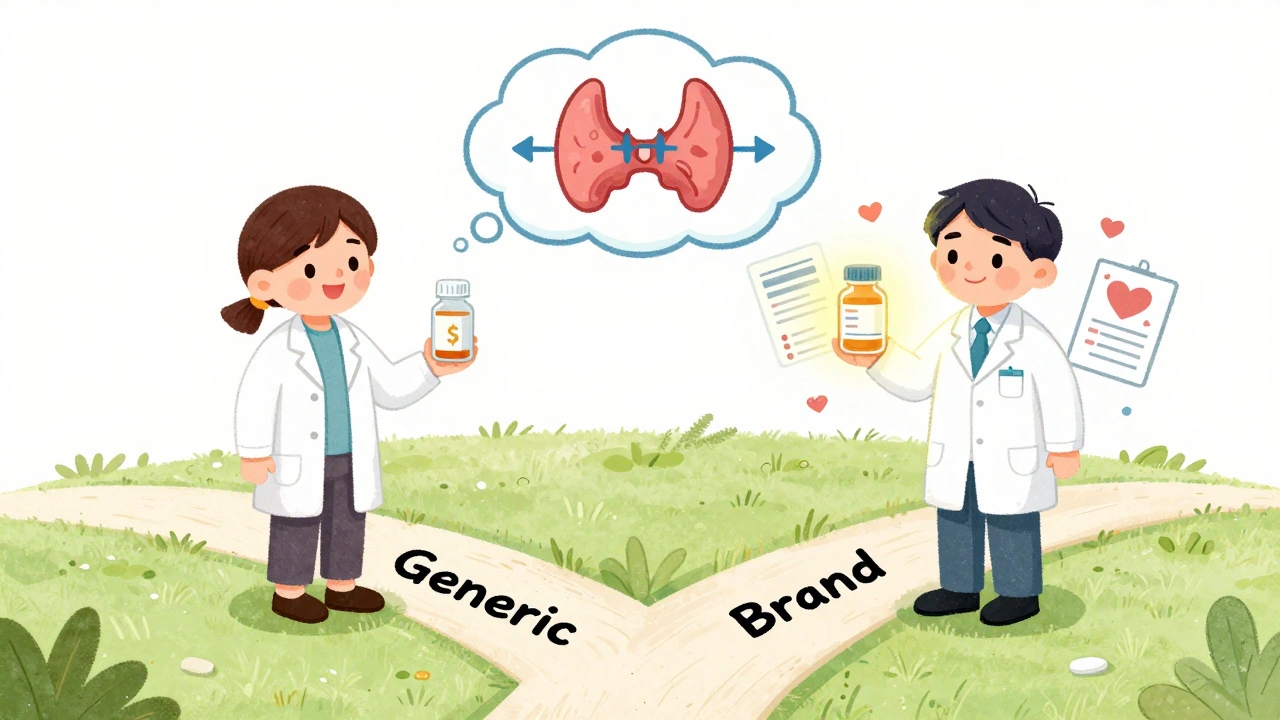
What You Can Do Today
1. Check your prescription. Look for "Dispense as Written" or "Brand Medically Necessary." If it’s not there, ask your doctor to add it. 2. Ask your pharmacist. When you pick up your script, ask: "Was this switched?" If yes, ask why. If you’re uncomfortable, say you want the brand. 3. Know your insurance rules. Log into your plan’s portal. Look for your drug on the formulary. Is the generic preferred? Is prior authorization required for the brand? 4. Document everything. If you notice side effects after switching, write them down. Track symptoms, dates, and doses. Bring this to your doctor. It’s your best tool for getting approval for the brand. 5. Don’t assume generics are always cheaper. Sometimes, a brand-name drug is on a $0 copay list because of a manufacturer coupon. Generics can be more expensive if they’re not on your plan’s preferred list.The Bigger Picture: Biologics and the Future
Not all drugs are created equal. Small-molecule generics (like atorvastatin or metformin) are easy to copy. But biologics-drugs made from living cells, like Humira or Enbrel-are far more complex. Their copies are called biosimilars, not generics. And they’re harder to approve. As of November 2023, the U.S. had over 10,000 small-molecule generics. Only 38 biosimilars. And substitution rules are stricter: 38 states require prescriber notification before switching. 27 require patient consent. The FDA is still working on standardizing interchangeability. That means for now, switching a biologic without your doctor’s input is rare. The trend? More pressure on generics. More complexity around biosimilars. And more battles over who controls your treatment: you, your doctor, your pharmacist, or your insurer.Bottom Line
Generic substitution saves money. It’s not inherently bad. But it’s not always neutral. It’s a system designed to cut costs-and sometimes, that means overriding patient experience. You don’t have to accept every substitution. You have the right to ask for the drug your doctor prescribed. You have the right to know when a switch happens. And you have the right to push back-especially if your health depends on consistency. Start with your doctor. Document your experience. Know your plan’s rules. And don’t let a pharmacy or insurer make the decision for you-unless you’re okay with it.Can my pharmacist substitute my brand-name drug without telling me?
In most states, pharmacists are required to notify you if they substitute a generic for a brand-name drug. But in 19 states, they can substitute without your consent-even if your doctor wrote "dispense as written." Always ask when you pick up your prescription. If you’re not told, you have the right to ask why a change was made.
What does "Dispense as Written" mean on a prescription?
"Dispense as Written" (or "DAW") means the prescriber is asking the pharmacist not to substitute a generic version. In most states, this legally blocks substitution. However, some insurers may still deny coverage unless you pay the full price difference. It’s not a guarantee you’ll get the brand-it just stops the pharmacist from switching it without your knowledge.
Why do I feel different after switching to a generic?
The active ingredient is the same, but the inactive ingredients-like fillers, dyes, or coatings-can vary between manufacturers. For some people, especially those with sensitivities, these differences can cause side effects like stomach upset, rashes, or changes in how the drug is absorbed. If you notice new symptoms after switching, document them and talk to your doctor. You may need to request the brand or a specific generic manufacturer.
Can I get my brand-name drug covered if the generic doesn’t work?
Yes. Most insurers allow prior authorization for brand-name drugs if you can prove the generic failed. Your doctor needs to submit medical records showing side effects, lab results, or symptoms that improved only after returning to the brand. Approval rates vary, but insurers approve about 75-80% of these requests when proper documentation is provided.
Are biosimilars the same as generics?
No. Generics are exact copies of small-molecule drugs. Biosimilars are highly similar to complex biologic drugs but not identical. They require more testing and often can’t be substituted automatically. Many states require prescriber approval before switching to a biosimilar. Always check whether your drug is a biologic and whether your plan treats it differently.
Comments
Lynn Steiner
This is why I hate how pharmacies just swap shit without telling you. I switched from Synthroid to some generic and started having panic attacks like clockwork. No one warned me. No one asked. Now I have to fight just to get my damn prescription filled right. 🤬
December 2, 2025 at 05:40
Alicia Marks
You got this. Your voice matters. Keep advocating for yourself - your health is worth the fight. 💪
December 2, 2025 at 09:54
Paul Keller
It is imperative to recognize that the systemic incentivization of generic substitution within the U.S. pharmaceutical supply chain represents a structural conflict of interest between fiscal efficiency and clinical autonomy. The pharmacy benefit managers, as intermediary entities with fiduciary obligations to shareholders rather than patients, operate under a rebate-driven model that systematically undermines physician authority and patient agency. This is not merely a policy issue - it is an ethical erosion of the doctor-patient relationship, masked as cost containment. The FDA’s bioequivalence thresholds, while statistically sound, fail to account for inter-individual pharmacokinetic variance, particularly in patients with comorbid gastrointestinal or metabolic conditions. The notion that a 20% deviation in absorption is clinically neutral is, frankly, a dangerous oversimplification.
December 2, 2025 at 21:58
Shannara Jenkins
Hey, I’ve been there. Switched generics and got a weird rash. Called my pharmacist - they were super helpful and even called my doc to get it switched back. You’re not alone. Just ask questions. They’re there to help, even if the system’s messy. 😊
December 4, 2025 at 11:27
Elizabeth Grace
My grandma got switched to a generic for her blood pressure med and started feeling dizzy all day. She cried because she thought she was dying. Turns out it was the dye. No one told us. Now I check every bottle like a hawk. 🙃
December 5, 2025 at 22:08
Steve World Shopping
Generic substitution is a textbook example of regulatory capture. PBMs are rent-seekers exploiting therapeutic equivalence loopholes. The FDA’s 80-125% bioequivalence window is an economic concession, not a clinical standard. You’re being manipulated by a cartelized system where formulary tiers function as price discrimination engines. The real issue isn’t generics - it’s the absence of patient-centric formulary governance.
December 6, 2025 at 19:18
Rebecca M.
Oh sweetie, you’re just now realizing your insurance doesn’t care if you live or die? They just want you to live cheaper. 🙄 I’ve been fighting this since 2017. They switched my antidepressant and I cried for a week. Then I paid cash for the brand. Worth every penny. My sanity isn’t negotiable.
December 7, 2025 at 06:02
Steve Enck
The metaphysical dilemma here lies not in pharmacokinetics but in ontological sovereignty: who determines the self when the body is mediated by corporate formularies? The pill is not merely a chemical entity - it is a symbol of autonomy, and its substitution represents the commodification of bodily integrity. The FDA’s bioequivalence metrics are a reductionist illusion; the patient’s phenomenological experience cannot be quantified in AUC or Cmax. We are not data points. We are subjects. And yet, we are treated as variables in an actuarial algorithm. This is not healthcare. This is administrative colonialism.
December 7, 2025 at 10:11
Jay Everett
Bro, I switched from brand-name Keppra to generic and had a seizure. Literally. Took 6 months to get my doc to fight the insurance. Now they approve it without question. If you feel weird after a switch - don’t ignore it. Document everything. Take pics of the bottle. Write down symptoms. Your doctor needs ammo. And yeah, sometimes the brand is cheaper with coupons. I got mine for $0 with a manufacturer coupon. 🤯
December 9, 2025 at 07:57
मनोज कुमार
Generic = cheaper. Insurance = profit. Doctor = powerless. Patient = victim. End of story. No need for long posts. Just pay cash if you can. Or shut up and take the pill.
December 10, 2025 at 23:44
Joel Deang
omg i had this happen with my zoloft!! switched to generic and felt like a zombie for 3 weeks. called my phamacy and they were like ‘oh yeah we do that all the time’ no warning!! now i always ask ‘was this switched?’ and they just roll their eyes 😭
December 11, 2025 at 00:06
Roger Leiton
Just had my first biosimilar switch last month - they gave me Humira instead of the biologic. I asked if it was the same. The pharmacist said ‘technically yes, but your doctor should’ve been consulted.’ I’m glad I asked. 🤔 I’m gonna call my doc tomorrow to make sure they document it. Anyone else had this happen?
December 12, 2025 at 07:23
Laura Baur
It is profoundly concerning that the regulatory architecture governing generic substitution permits pharmacists to override physician intent in 19 states. This constitutes a violation of the principle of therapeutic autonomy, a cornerstone of medical ethics. The FDA’s Orange Book, while useful for bioequivalence classification, is not a clinical decision-making tool. The inclusion of inactive ingredients as permissible variables in drug formulation is a regulatory failure disguised as innovation. Patient-reported outcomes are dismissed as anecdotal, yet they are the only data that reflect real-world biological individuality. The system prioritizes cost-efficiency over patient dignity - and that is not merely a policy flaw. It is a moral failure.
December 14, 2025 at 02:32
Jack Dao
People who complain about generics are just lazy. If you can’t handle a $20 savings, you shouldn’t be on medication. The system works. If you feel weird, it’s probably your anxiety. Stop being dramatic.
December 14, 2025 at 16:06
dave nevogt
I used to think generics were interchangeable. Then my wife switched from brand-name Topamax to generic and started having severe migraines - not from the drug, but from the stress of the switch. She didn’t know it was changed until she saw the pill color. It took us three months to get it back. I’ve learned: ask every time. Document everything. And never assume. The system doesn’t care if you’re okay. Only if it’s cheaper.
December 16, 2025 at 03:18
Write a comment