
When you pick up a prescription, you might notice your pill looks different than last time. Maybe it’s a different color, shape, or has strange markings. That’s normal-if you’re getting a legitimate generic drug. But if something feels off-like a weird taste, crumbly texture, or a label that looks smudged-you could be holding something dangerous. Counterfeit drugs are real, and they’re easier to find than you think. The good news? You don’t need to be a pharmacist to spot the difference. With a few simple checks, you can protect yourself and your health.
What Makes a Generic Drug Legitimate?
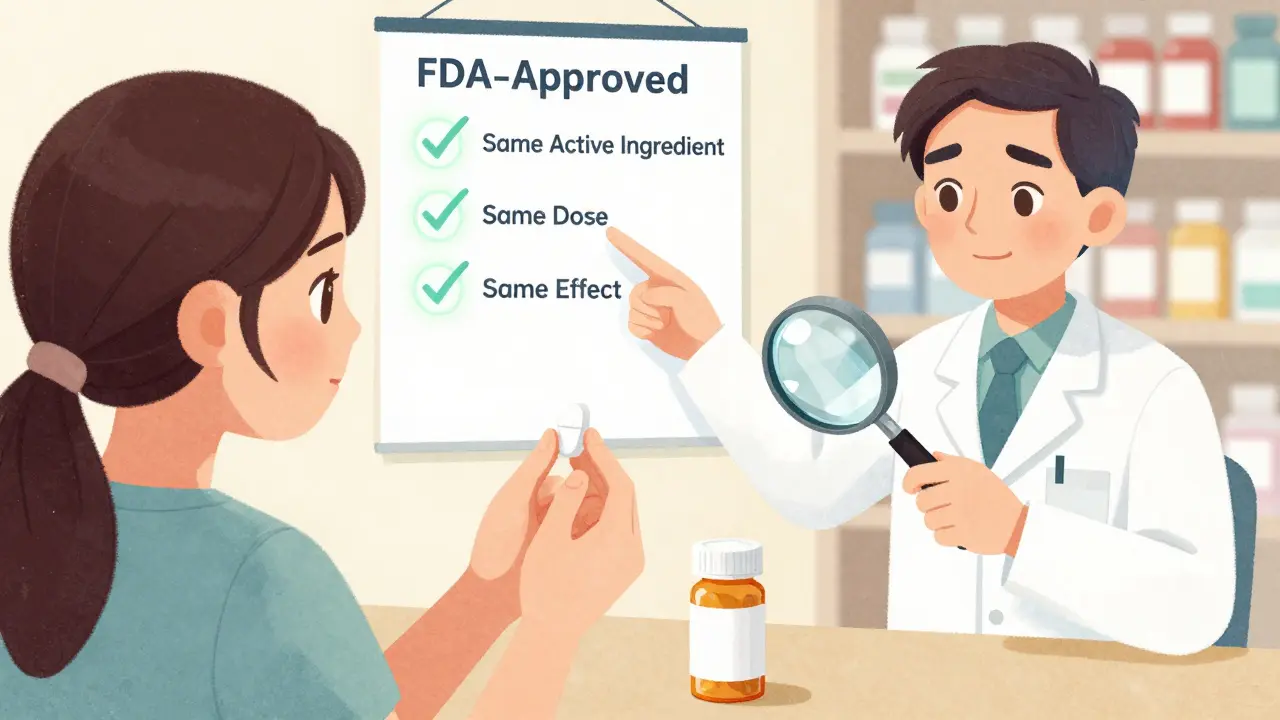
A legitimate generic drug isn’t a copy-it’s a legally approved version of a brand-name medication. It has the same active ingredient, the same dose, and works the same way in your body. The U.S. Food and Drug Administration (FDA) requires generics to match the brand-name drug within 80-125% of its absorption rate. That’s not a guess. It’s science. A 2021 study in JAMA Internal Medicine looked at over 2,000 generic approvals and found that 98.7% met these strict standards. The median difference in how the drug entered the bloodstream? Less than 1%. That’s why doctors trust generics.But here’s what most people don’t realize: generics can look completely different from the brand. That’s by design. Brand-name companies hold patents on color, shape, and packaging. Once the patent expires, generic manufacturers can’t copy those details. So a brand-name pill might be blue and oval, while the generic is white and round. That doesn’t mean it’s fake. It means it’s legal.
How to Spot a Fake Generic Drug
Counterfeit drugs don’t follow rules. They’re made in unregulated labs, sometimes in basements overseas. They might contain too little active ingredient, too much, or even toxic stuff like rat poison, floor cleaner, or chalk. The World Health Organization says 1 in 10 medicines in low- and middle-income countries are fake. But even in the U.S., you’re not immune.Here’s what to look for:
- Texture issues: Does the pill crumble when you touch it? Is it overly sticky or powdery? Legitimate pills are hard, uniform, and factory-made.
- Imprint errors: Every FDA-approved pill has a unique code stamped on it. If the numbers or letters are blurry, uneven, or missing, walk away.
- Color shifts: If your generic pill suddenly changed from light yellow to deep orange without you being told, ask your pharmacist. It’s not always a problem-but it’s worth checking.
- Label mistakes: Misspellings like “Lipitor” written as “Lipitorr” or wrong dosage numbers (5mg instead of 50mg) are red flags. So is foreign language on a U.S. prescription bottle.
- Packaging: Legitimate drugs come in sealed, tamper-evident containers. If it’s in a plastic bag, a cardboard box, or a bottle with a crooked label, that’s not normal.
- Odor or taste: Some people report a chemical or metallic aftertaste with counterfeits. If your pill tastes different than before and you didn’t switch manufacturers, ask questions.
Where to Get Generic Drugs Safely
Not all pharmacies are equal. The FDA estimates that 96% of online pharmacies selling drugs without a prescription are illegal. Even if they look professional, they might be selling fakes.Stick to these trusted sources:
- Local, licensed pharmacies: If you’ve been going to the same pharmacy for years, you’re probably fine. Pharmacists here are trained to spot fake packaging.
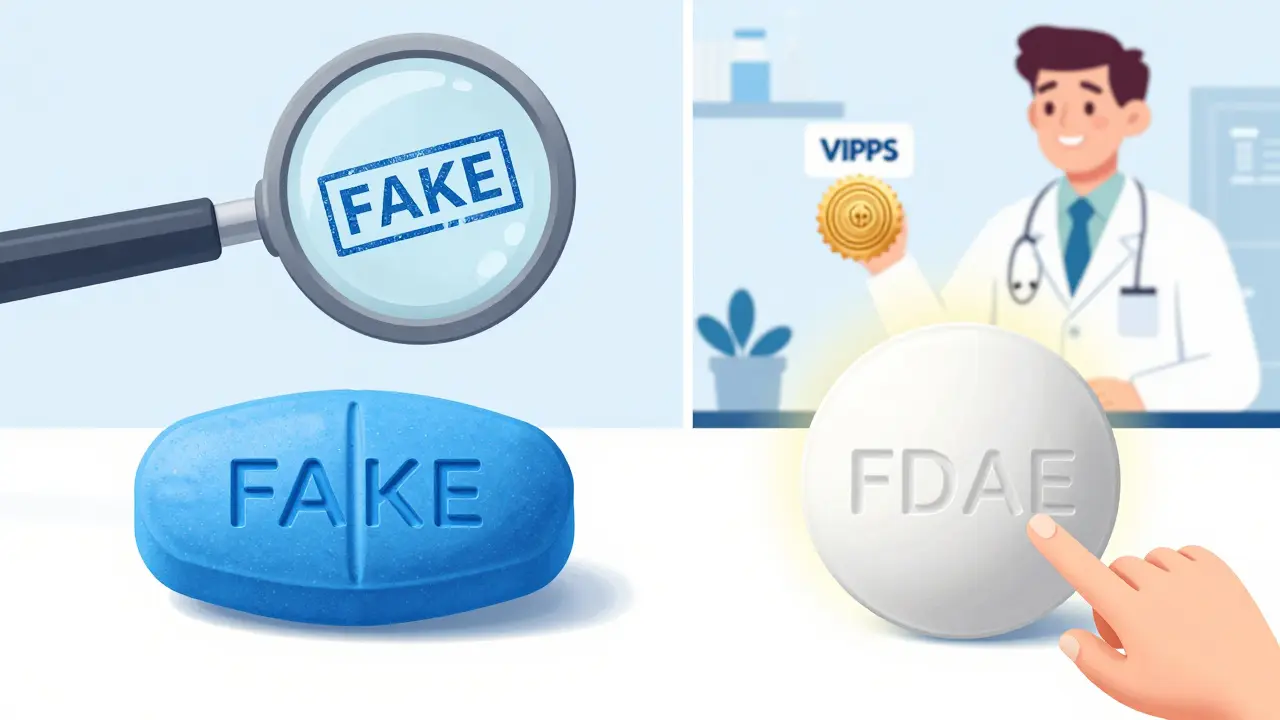
- VIPPS-accredited online pharmacies: The Verified Internet Pharmacy Practice Sites (VIPPS) program, run by the National Association of Boards of Pharmacy (NABP), certifies online pharmacies that meet strict safety standards. As of late 2023, only 62 online pharmacies had this seal. You can check the list at nabp.net.
- Hospital or clinic pharmacies: These are among the safest because they’re tightly controlled and rarely outsource supply chains.
Never buy from:
- Facebook or Instagram ads offering “discounted brand-name drugs”
- Websites with .ru, .cn, or .xyz domain names
- Pharmacies that don’t require a prescription
- Street vendors or unmarked kiosks
Use the FDA’s Tools to Verify Your Drug
You don’t need to guess whether your pill is real. The FDA gives you the tools to know for sure.First, check the Orange Book. It’s a public database of all approved generic drugs. Search by drug name or manufacturer. If it’s listed, it’s approved. As of September 2023, it included over 14,800 generic products.
Second, look for the lot number on your bottle. You can enter it into the FDA’s Drug Recall Database to see if your batch was flagged. It takes less than a minute.
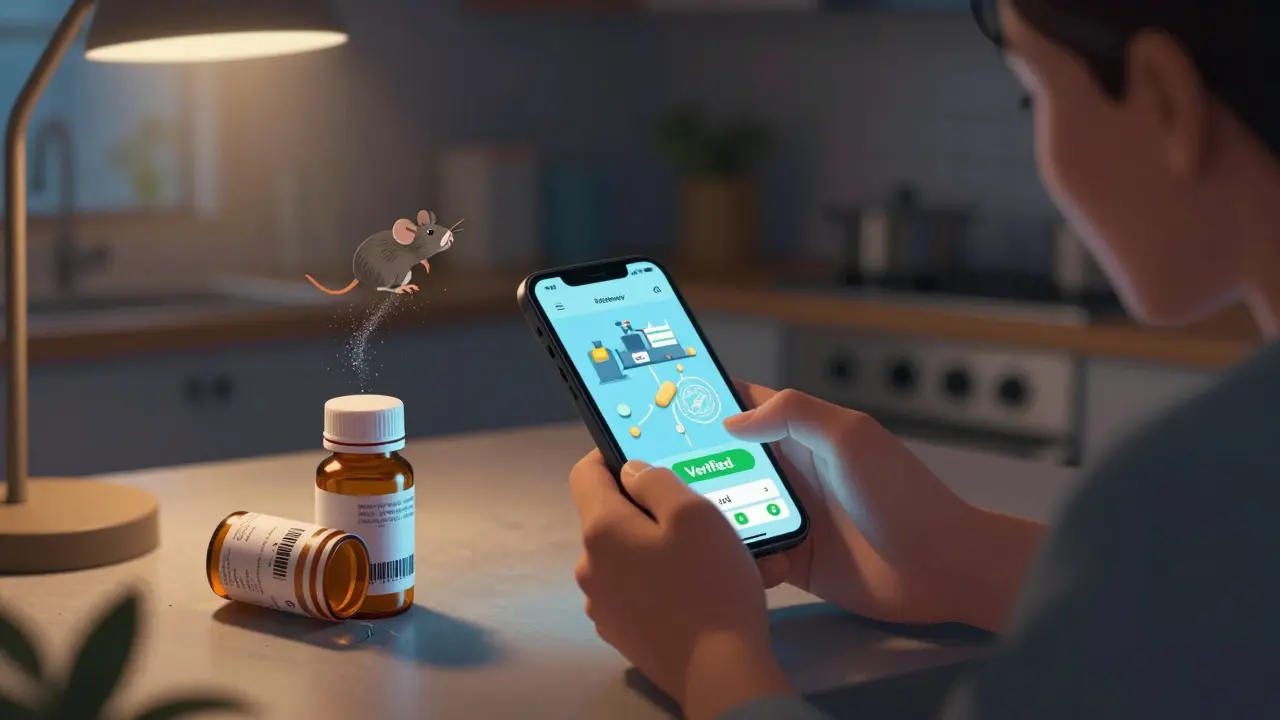
Third, check for a 2D barcode. Since 2022, major manufacturers like Teva and Sandoz have put these on all U.S. products. Use a free app like MediSafe to scan it. If the app confirms the drug matches the manufacturer’s records, you’re safe.
Some newer drugs even have serialized numbers that trace every step from factory to pharmacy. This system, called the Drug Supply Chain Security Act (DSCSA), became fully active in November 2023. It’s designed to block counterfeit drugs before they reach you.
What to Do If Something Feels Off
If you notice anything suspicious-strange side effects, pills that don’t work like before, or packaging that looks wrong-don’t ignore it.Step 1: Call your pharmacist. They can compare your pill to the manufacturer’s database. Most have access to real-time alerts about counterfeit batches.
Step 2: Save the bottle and the pills. Don’t throw them away. Take a clear photo of the label, the pills, and the packaging.
Step 3: Report it to the FDA’s MedWatch program. You can file a report online in under 10 minutes. In 2022, the FDA received over 1,200 reports of counterfeit drugs. The majority involved heart medications and erectile dysfunction pills-exactly the kind people buy online to save money.
Step 4: Ask your doctor if you need a new prescription. Sometimes, switching to a different generic manufacturer fixes the issue. Not all generics are made the same, even if they’re approved.
Real People, Real Experiences
A Reddit user from Ohio posted in September 2023 that after switching to a new generic version of metformin, they felt dizzy and nauseous. They took a photo of the pill and sent it to their pharmacist. The pharmacist confirmed it was a counterfeit batch. The pharmacy had unknowingly received it from a supplier that didn’t follow proper distribution rules. The user got a replacement, and the FDA issued a recall.Another user in Florida reported saving $400 a month on their blood pressure meds by using a VIPPS-accredited online pharmacy. They scanned the 2D code on their bottle every time they refilled-and never had a problem.
These aren’t rare stories. They’re common. But they only happen because people took the time to check.
Bottom Line: You’re Not Alone
Generic drugs are safe. They’ve saved the U.S. healthcare system over $370 billion since 2020. But safety only works if you’re part of the system. Don’t assume your pill is fine because it came from a pharmacy. Always look. Always ask. Always report.Legitimate generics don’t need to look like the brand. But they should always feel right. If something’s off, trust your gut. Your health isn’t worth the risk of a $10 shortcut.
Can generic drugs be less effective than brand-name drugs?
No, not if they’re legitimate. The FDA requires generic drugs to prove they work the same way in your body as the brand-name version. Studies show that 98.7% of approved generics match the brand’s absorption rate within a tiny margin. If a generic seems less effective, it’s likely because you’re taking a counterfeit, or you switched to a different manufacturer with slightly different inactive ingredients. Talk to your pharmacist before assuming the drug itself is faulty.
Why do generic pills look different from brand-name ones?
Brand-name drug companies hold patents on the color, shape, and logo of their pills. Once the patent expires, generic manufacturers can’t copy those features. So they make the pill a different color, shape, or size-but the active ingredient and dose stay exactly the same. This is required by law. It’s not a sign of inferior quality-it’s just how the system works.
Is it safe to buy generic drugs online?
Only if the website is VIPPS-accredited. The National Association of Boards of Pharmacy (NABP) certifies only 62 online pharmacies as of 2023. All others are likely illegal. Most fake drug sites look professional, but they operate outside U.S. law, often from overseas. They don’t require prescriptions, don’t store drugs properly, and may sell you fakes. Always check the VIPPS seal before buying.
What should I do if I think I got a fake generic drug?
Don’t take it. Save the bottle and pills. Take photos of the packaging, label, and pills. Contact your pharmacist right away-they can check if it’s a known counterfeit. Then report it to the FDA’s MedWatch program. You can file a report online in minutes. Your report helps the FDA track and stop dangerous drugs before they hurt more people.
Are all generic drugs made in the U.S.?
No. Many generic drugs are made in countries like India and China. But that doesn’t mean they’re unsafe. The FDA inspects over 2,500 manufacturing facilities each year-both in the U.S. and abroad. As long as the drug is approved by the FDA and sold through a licensed U.S. pharmacy, it meets the same safety standards as American-made drugs. The key is the supply chain, not the country of origin.
Can I trust the price of a generic drug?
Generally, yes. Legitimate generics are cheaper because they don’t repeat expensive clinical trials. But if a generic is priced far below market average-like $5 for a drug that normally costs $30-it’s a red flag. Counterfeiters undercut prices to lure buyers. Compare prices with your local pharmacy or a VIPPS site. If it’s too good to be true, it probably is.
Comments
Aisling Maguire
Just picked up my generic metformin last week and noticed it was a different shade of white. Thought I was losing my mind until I remembered this post. Called my pharmacist-turns out the manufacturer switched. They showed me the FDA lookup and everything checked out. So glad I didn’t panic. Always check the imprint code, folks. It’s the easiest way to know you’re not getting junk.
March 1, 2026 at 07:51
Byron Duvall
Let’s be real-98.7% of generics are ‘safe’? That’s not a guarantee, that’s a gamble. The FDA inspects a fraction of overseas labs. Most of these ‘approved’ drugs are made in places where they don’t even have running water in the factories. I’ve seen videos of pill mills in India where workers are literally stirring chemicals with their bare hands. This whole system is a lie sold to us so Big Pharma can keep their monopoly prices. Don’t trust the label. Trust your gut.
March 1, 2026 at 12:12
Charity Hanson
Y’all need to chill. I’ve been buying my blood pressure meds from a VIPPS site for 3 years now. Scanned every bottle with MediSafe. Zero issues. I save $300 a month. That’s groceries, gas, rent-stuff that actually matters. Don’t let fearmongering stop you from saving money. If you’re worried, check the lot number. It takes 60 seconds. Done.
March 3, 2026 at 04:57
Noah Cline
The absorption rate variance is statistically meaningless. The real issue is bioequivalence thresholds being too lax. 80-125%? That’s a 45% swing. You’re essentially rolling dice on whether your drug works. And don’t get me started on excipients-fillers like lactose, titanium dioxide, or even gluten in some generics. People with sensitivities are getting silently poisoned. This isn’t about counterfeit pills-it’s about systemic regulatory failure.
March 3, 2026 at 22:00
Lisa Fremder
Why are we even talking about this? If you can’t afford brand-name drugs, you shouldn’t be taking them. Get a job. Stop relying on government handouts. The FDA doesn’t owe you cheap medicine. If your pill looks weird, go to a hospital pharmacy. Not some online scam site. And stop whining about how it’s ‘not fair.’ Life isn’t fair.
March 4, 2026 at 09:11
Justin Ransburg
Thank you for this. I’ve been a pharmacist for 22 years and I can’t tell you how many times I’ve had patients come in terrified because their pill changed color. The truth? It’s almost always fine. The real danger is when people stop taking their meds because they’re scared. That’s when bad things happen. If you’re unsure, ask. Always ask. We’re here to help.
March 5, 2026 at 06:17
Brandon Vasquez
I had a cousin who got a counterfeit version of Eliquis. She ended up in the ER with a stroke. Scary stuff. But here’s the thing-she didn’t report it. Thought it was her fault. Please, if you think something’s off, report it. Even if you’re not sure. The FDA needs data. Your report might save someone’s life.
March 6, 2026 at 11:18
Vikas Meshram
Contrary to popular belief, the DSCSA serialization system does not prevent counterfeits-it merely tracks them after they enter the supply chain. And since 95% of U.S. pharmacies still use manual verification for batch codes, the system is functionally useless unless you’re a Fortune 500 distributor. The FDA’s Orange Book? Outdated. Contains entries from manufacturers that shut down in 2017. This is performative regulation. The real solution? Ban all overseas manufacturing. Period.
March 6, 2026 at 13:17
Jimmy Quilty
Did you know the FDA doesn’t test any generics before they hit U.S. shelves? They rely on the manufacturer’s own lab reports. And guess who audits those labs? The same companies that own the factories. It’s a self-certifying loop. I’ve seen the documents. The ‘inspections’ are scheduled weeks in advance. They clean up the place, hire temporary workers, and pass. Meanwhile, real patients are dying. This isn’t a public health issue-it’s a corporate cover-up.
March 7, 2026 at 15:44
Eimear Gilroy
My mom’s generic lisinopril changed from blue to yellow last month. She freaked out. I looked up the imprint code on the FDA site-it matched. But then I noticed the lot number was from a supplier that had a recall in April. We called the pharmacy. They didn’t even know. They just restocked. So now I check every bottle. I scan the barcode, look up the lot, and cross-reference with MedWatch. It’s a habit now. And honestly? It’s the only thing keeping me sane.
March 7, 2026 at 17:57
Ajay Krishna
As someone from India who works in pharma logistics, I can say this: most generic drugs are made with integrity. Yes, there are bad actors-but the majority of factories follow WHO-GMP standards. The problem isn’t the country-it’s the middlemen. When a U.S. pharmacy buys from a broker instead of the direct manufacturer, that’s when things go sideways. Buy from the big names: Teva, Sandoz, Mylan. Avoid the ‘unknown manufacturer’ label. That’s where the risk hides.
March 9, 2026 at 03:53
Gigi Valdez
The data on bioequivalence is robust. The 98.7% figure is not cherry-picked. It’s from a peer-reviewed meta-analysis of FDA submissions. The variation in absorption is less than 1% on average. That’s tighter than many brand-name drugs themselves. The perception of inferiority is psychological, not pharmacological. Trust the science, not the appearance.
March 10, 2026 at 03:31
Sumit Mohan Saxena
It is imperative to emphasize that the Drug Supply Chain Security Act (DSCSA) mandates serialization at the package level, which enables verification at the point of dispensing. However, implementation is uneven across community pharmacies. Many still rely on visual inspection of batch codes, which is insufficient. The FDA’s current enforcement strategy is reactive rather than proactive. A systemic overhaul, including mandatory barcode scanning at point of sale, is not merely advisable-it is a public health imperative.
March 12, 2026 at 01:08
Ben Estella
Stop being so naive. The FDA is a puppet of Big Pharma. They approve generics from factories that have been cited for violations. They ignore complaints. They cover up recalls. If you think your pill is safe because it came from CVS, you’re delusional. The system is rigged. You think you’re saving money? You’re playing Russian roulette with your life. Wake up.
March 12, 2026 at 07:11
Write a comment