

If you’ve been told you’re allergic to penicillin or another antibiotic, you’re not alone. About 10% of people in the U.S. say they have an antibiotic allergy. But here’s the surprising part: less than 1% of those people are actually allergic when tested properly. Most people outgrow their allergies, or they never had one to begin with. Mislabeling yourself as allergic can lead to worse infections, longer hospital stays, and more expensive - and riskier - antibiotics. The good news? There’s a safe, proven way to find out if you’re truly allergic. Allergy testing for antibiotics isn’t scary, and with the right preparation, it can change how you’re treated for the rest of your life.
Why Antibiotic Allergy Testing Matters
When doctors think you’re allergic to penicillin, they avoid it - even if you’ve never had a real reaction. Instead, they reach for broader-spectrum antibiotics like vancomycin, ciprofloxacin, or daptomycin. These drugs are more expensive, harder on your gut, and more likely to cause antibiotic-resistant infections. One study found patients labeled as penicillin-allergic get these stronger antibiotics 69% more often than those without the label. That adds up to an extra $6,000 per person each year in healthcare costs.
But here’s the real win: if testing shows you’re not allergic, you can go back to using penicillin - a drug that’s been around for 80 years, works better for many infections, and costs just $12 per dose. One patient in a 2023 study switched from daptomycin ($1,850 per dose) to penicillin after testing, cutting their annual antibiotic bill from over $67,000 to under $4,400. That’s not just money saved. It’s fewer side effects, shorter hospital stays, and better outcomes.
Testing isn’t just for penicillin. It’s also available for other beta-lactam antibiotics like amoxicillin, ampicillin, and cefazolin. The process is standardized, safe, and backed by decades of research from the American Academy of Allergy, Asthma & Immunology and the Infectious Diseases Society of America.
What You Need to Do Before Testing
Preparation is everything. If you take the wrong medications before your test, you could get a false negative - meaning the test says you’re not allergic when you actually are. That’s dangerous. Here’s exactly what to stop, and when.
- First-generation antihistamines like diphenhydramine (Benadryl) and hydroxyzine must be stopped 72 hours before your test. These are common in sleep aids and cold medicines.
- Second-generation antihistamines - loratadine (Claritin), cetirizine (Zyrtec), fexofenadine (Allegra), desloratadine (Clarinex), and levocetirizine (Xyzal) - need to be stopped 7 full days before testing. They’re in daily allergy pills and are harder to clear from your system.
- Tricyclic antidepressants like doxepin (used for depression and chronic pain) contain antihistamine properties and must be stopped 14 days before testing. Don’t stop these on your own - talk to your doctor first.
You don’t need to stop blood pressure meds, diabetes drugs, or thyroid medications. But you must tell your allergist about everything you take - especially ACE inhibitors like lisinopril or enalapril. These can make an allergic reaction harder to treat if one happens.
Also, don’t take any herbal supplements, immune boosters, or over-the-counter allergy remedies in the week before your test. They can interfere with results, even if they’re labeled “natural.”
What Happens During the Test
Allergy testing for antibiotics is a three-step process, done in a clinic or hospital setting where emergency tools are right there. It’s not painful, and most people find it easier than they expect.
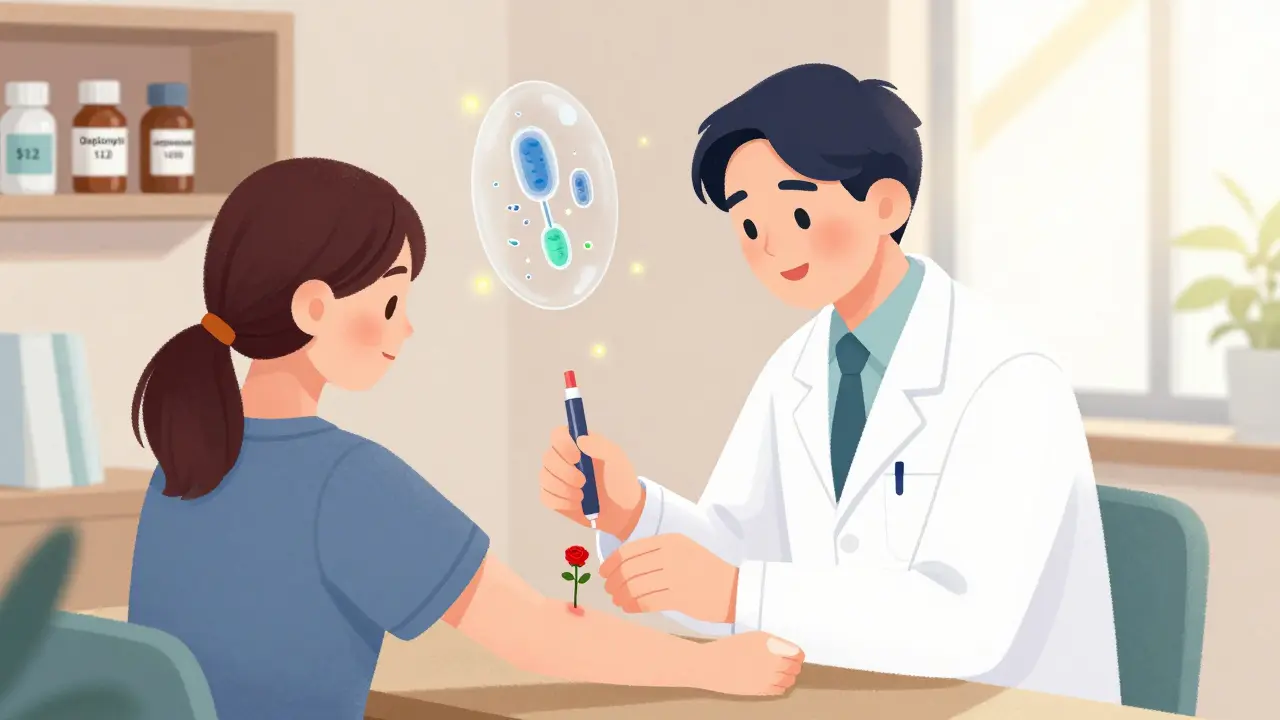
- Skin prick test: A tiny drop of penicillin solution is placed on your forearm or back. A small plastic device gently pricks the skin through the drop. It feels like a quick, light scratch - like a mosquito bite. No blood is drawn. If you’re allergic, a small red, itchy bump will appear within 15 minutes.
- Intradermal test: If the skin prick is negative, a small amount of the same solution is injected just under the skin with a thin needle. This forms a tiny bubble (bleb). Again, redness or swelling over 3mm after 15 minutes means a positive result.
- Oral challenge: If both skin tests are negative, you’ll be given a small dose of the antibiotic - usually 10% of a regular pill - and watched for 30 minutes. Then you’ll take the full dose and be monitored for another 60 minutes. This is the only way to confirm you can safely take the drug again.
The risk of a serious reaction during the oral challenge is extremely low - about 0.06%. That’s less than 1 in 1,600. The clinic will have epinephrine, oxygen, and other emergency tools ready. Staff are trained to respond immediately if needed.
What a Positive or Negative Result Means
A positive skin test - a raised, red, itchy bump - means you likely have a true IgE-mediated allergy. That’s the kind that can cause anaphylaxis. But even then, many people lose this allergy over time. About half of people who had a severe reaction in childhood are no longer allergic after 5 years. Eighty percent are clear after 10 years.
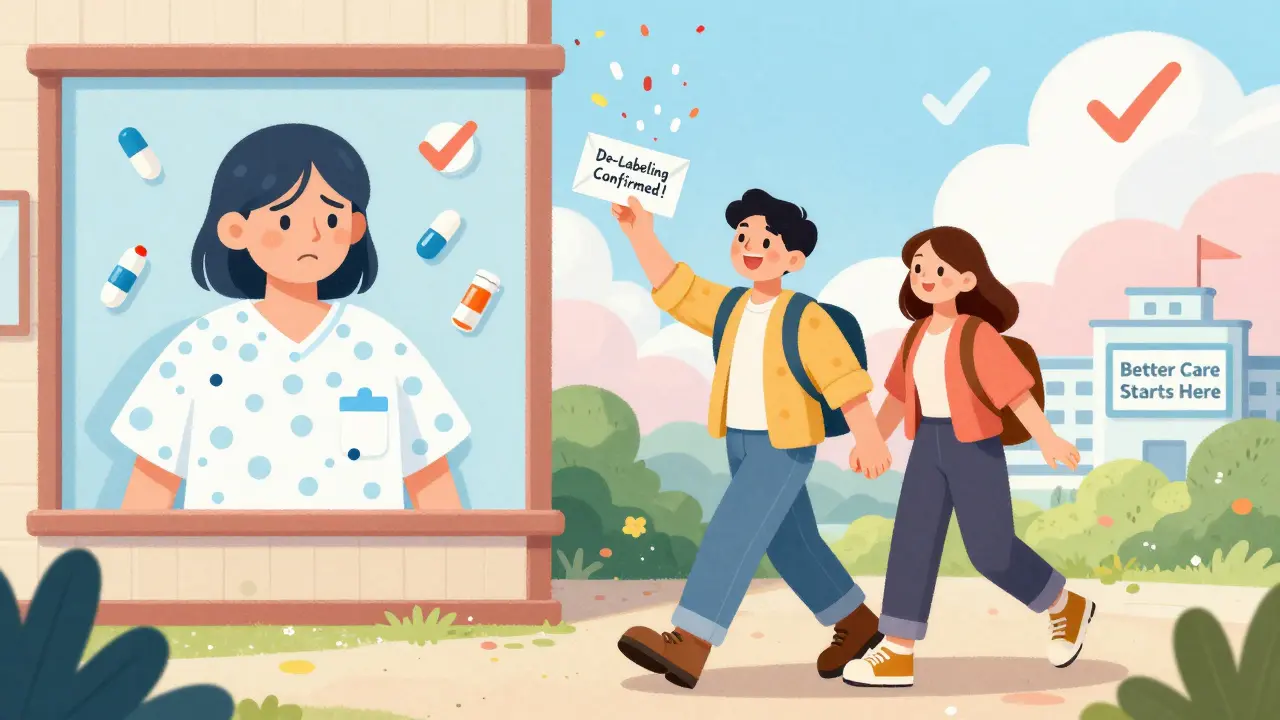
A negative result means you’re not allergic. You can take penicillin or related antibiotics safely. You’ll get a letter or note from your allergist to give to your doctor so your records are updated. This is called “de-labeling.”
Some people get mild itching or redness at the test site hours later. That’s normal. It’s not a sign of allergy - just skin irritation. You can treat it with over-the-counter hydrocortisone cream. About 15% of people experience this, according to Boston Children’s Hospital.
Don’t confuse nausea, dizziness, or anxiety during the test with an allergic reaction. Those are common and don’t mean you’re allergic. Only a true skin or systemic reaction counts.
What to Expect After the Test
Most people feel fine right after. You can drive home, eat normally, and go back to work. Some report mild soreness or bruising at the test site - nothing serious.
If you’re cleared, your doctor will update your medical record. That means next time you have an infection - whether it’s strep throat, a urinary tract infection, or pneumonia - you’ll get the best, safest, cheapest antibiotic: penicillin or amoxicillin. No more broad-spectrum drugs. No more unnecessary side effects.
If you’re still allergic, you’ll get a plan to avoid the drug and carry an epinephrine auto-injector if needed. But even then, you’ll know for sure - and that’s better than guessing.
Who Should Get Tested
You should consider testing if:
- You were told you’re allergic to penicillin as a child, but never had a serious reaction.
- You’ve never taken penicillin since the original reaction.
- You’ve had a rash or stomach upset after taking an antibiotic, but no trouble breathing or swelling.
- You’re facing surgery or an infection and need the best antibiotic.
- You’re tired of paying more for antibiotics that don’t work as well.
Even if you’re older, it’s worth it. Allergies fade. The test doesn’t get less safe with age. And the benefits - better treatment, lower costs, fewer side effects - apply to everyone.
Common Myths About Antibiotic Allergy Testing
Myth: Blood tests can tell if you’re allergic to penicillin.
Truth: Blood tests for penicillin allergy are not reliable. They give false positives and false negatives. Skin testing plus oral challenge is the gold standard. The NIH is working on a new blood test, but it’s not ready yet.
Myth: If I had a reaction once, I’ll always be allergic.
Truth: Most people outgrow it. Even after anaphylaxis, 80% lose the allergy within 10 years.
Myth: Testing is too risky.
Truth: The risk of a serious reaction during testing is 0.06%. That’s lower than the risk of a car accident on your way to the clinic. The risk of staying mislabeled? Much higher.
Myth: My doctor doesn’t need to know.
Truth: If you don’t get tested, your record stays wrong. That affects every future prescription - and could cost you your life if you need an antibiotic during a serious infection.
Where to Go for Testing
Not every clinic offers this. You need an allergist or immunologist trained in drug allergy testing. Most hospitals with allergy departments do it. If you’re in a rural area, you might need to travel. But it’s worth it.
Some places are now offering supervised at-home challenges for low-risk patients. A pilot study at UCSF showed a 94.7% success rate. This could make testing available to the 85% of U.S. counties that currently don’t have an allergist.
Ask your primary care doctor for a referral. Or search for an allergist who specializes in drug allergies. Don’t settle for a general allergy clinic - ask if they do antibiotic testing specifically.
Real Stories, Real Results
One Reddit user, u/AllergyWarrior2023, wrote: “The skin prick felt like a mild mosquito bite. The oral challenge? I swallowed a pill like normal. No big deal. Now I can take amoxicillin for my sinus infections - and save $1,200 per course.”
Another, u/PenicillinFree, said: “I thought I was allergic because I got a rash at 8. I was 37 when I got tested. Turned out I wasn’t. My doctor switched me to penicillin for a tooth infection. I paid $15 for the prescription. Before, they gave me something that cost $300.”
These aren’t rare cases. In a survey of over 1,200 people who got tested, 92% said it was less scary than they thought. 88% said they’d recommend it to a friend.
The data is clear: testing saves money, saves lives, and saves you from unnecessary suffering. It’s not a luxury. It’s a smart health move.
What Happens Next?
If you’ve been labeled allergic to an antibiotic, don’t live with it. Ask your doctor about testing. Bring this article with you. Ask if they’ve heard of the 2022 guidelines from AAAAI and IDSA. Ask if they can refer you to an allergist.
If you’ve already been tested and cleared, tell your doctor to update your chart. Make sure your pharmacy has the new record. Keep a copy of the letter from your allergist in your phone or wallet.
Antibiotic allergies are often misunderstood. But with accurate testing, you can take back control of your health - and your prescriptions.
Comments
Mark Alan
OMG I CAN’T BELIEVE THIS 😱 I was told I was allergic to penicillin at 6 and now I’m 32 and I’ve been paying $400 for azithromycin every time I get a sinus infection?? This is literally life-changing. I’m booking my test TOMORROW. 🚀💊
January 29, 2026 at 00:48
Linda O'neil
This is such an important post. I’m an allergist and I see this all the time. People get labeled allergic after a mild rash in childhood and then spend decades on worse, pricier, more toxic antibiotics. The science is rock solid - skin testing + oral challenge is 98% accurate. If you’ve been told you’re allergic, get tested. It’s not risky, it’s just common sense. Your body will thank you.
January 29, 2026 at 10:38
Colin Pierce
I had no idea antihistamines messed with the test. I was taking Zyrtec daily for my pollen allergies and didn’t realize I’d have to stop it for a week. I just scheduled my appointment - thanks for the heads-up. Also, I’m kinda mad my PCP never mentioned this. Why is this not standard info?
January 30, 2026 at 12:58
Ambrose Curtis
soo... wait. u mean to tell me i dont need to avoid all penicillins just cuz i got a rash at 8? i thought i was gonna die if i ever took amoxicillin again lmao. my doc just gave me cipro every time i had a UTI. now i find out i coulda been taking $12 pills this whole time?? i’m so mad. but also so relieved. i’m doing the test. no more getting screwed by the system.
January 30, 2026 at 15:55
James Dwyer
This is one of those things that should be taught in high school health class. Imagine if everyone knew this - we could cut billions in healthcare costs and save lives just by doing a simple skin test. No hype. No fear. Just science. Thank you for sharing this.
January 31, 2026 at 01:41
jonathan soba
Let’s be real - this is a textbook case of medical mismanagement. The fact that 90% of people labeled allergic aren’t actually allergic speaks volumes about how lazy and reactive our healthcare system is. Doctors don’t want to admit they were wrong. Patients don’t know to question it. And so the cycle continues. This isn’t progress - it’s negligence dressed up as tradition.
January 31, 2026 at 14:09
Kevin Kennett
I’m a nurse and I’ve seen patients get septic because they were given the wrong antibiotics due to a mislabeled allergy. I’ve also seen people cry when they find out they’re not allergic after 20 years. This isn’t just about money - it’s about dignity. You deserve to be treated with the best tool available. Don’t let fear or outdated labels hold you back. Get tested. Bring this article to your doctor. You’re not being difficult - you’re being smart.
February 1, 2026 at 04:04
Howard Esakov
Honestly, if you’re still taking cephalosporins or vancomycin because someone told you you were allergic to penicillin in 1997, you’re not being cautious - you’re being dangerously uninformed. This isn’t a ‘maybe’ situation. The data is irrefutable. The guidelines are published. The allergists are waiting. If your doctor doesn’t know this, they’re operating in the Stone Age. Go find someone who does. Your future self will thank you - and your wallet will too.
February 1, 2026 at 17:03
Write a comment