
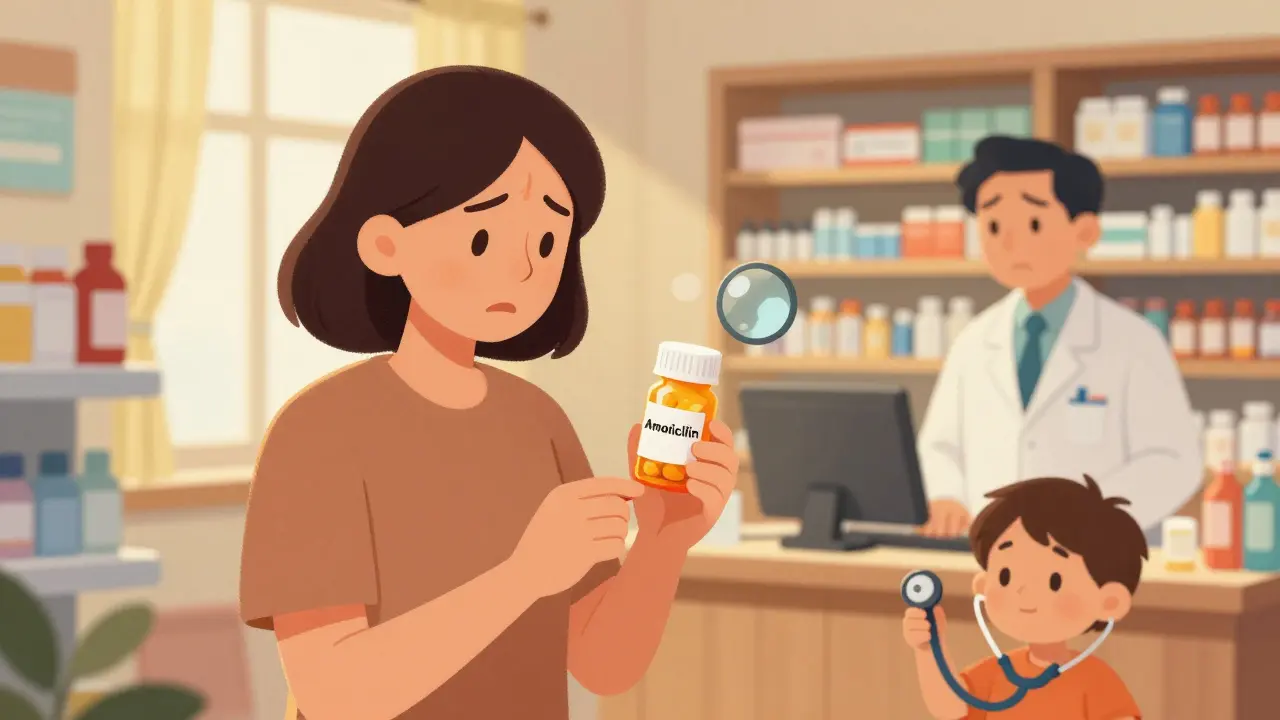
Getting the wrong medication or the wrong dose from your pharmacy isn’t just a mistake-it’s a safety risk. Maybe you picked up your prescription and noticed the pills look different. Or your child was given a liquid dose that’s ten times too strong. Maybe the label says amoxicillin but the bottle inside has acetaminophen. These aren’t rare. They happen more than you think.
What do you do next? You don’t just shrug it off. You report it. And when you do, something important happens-not just for you, but for everyone who walks into that pharmacy after you.
What Counts as a Pharmacy Error?
A pharmacy error isn’t just about getting the wrong drug. It includes:
- Wrong medication (e.g., you got blood pressure pills instead of diabetes pills)
- Wrong dose (e.g., 10 mg instead of 5 mg, or a child’s dose given to an adult)
- Wrong instructions (e.g., "take with food" missing, or "take once daily" changed to "three times daily")
- Wrong patient (your prescription given to someone else)
- Missing or incorrect labeling (no expiration date, no warning about alcohol interaction)
- Failure to warn about dangerous interactions (e.g., mixing blood thinners with NSAIDs)
Even if you didn’t take the medication, if you caught it before use, it’s still an error-and still worth reporting. These are called "near-misses," and they’re just as important as actual harm. In fact, the Institute for Safe Medication Practices says near-misses are the best early warning system pharmacies have.
Why Reporting Matters More Than You Think
Most people don’t report pharmacy errors because they think: "It’s just one mistake. It won’t change anything." That’s not true.
Every report feeds into a system designed to find patterns. One person reports a wrong dose. Another reports the same pharmacy giving out the same error. Soon, regulators see a trend: that pharmacy’s automated system is mislabeling 50-mg pills as 100-mg pills. The pharmacy gets audited. Software gets fixed. Staff gets retrained. Someone else’s life is saved.
The FDA gets over 1.3 million reports a year through MedWatch. But experts say 90% of medication errors go unreported. That means for every error you report, you’re helping close a gap that could have killed someone else.
Dr. Michael Cohen of ISMP put it simply: "The value of error reporting lies not in counting mistakes but in understanding their root causes to redesign systems that prevent harm." Your report isn’t about blaming a pharmacist. It’s about fixing the system.
How to Report a Pharmacy Error: Step-by-Step
You have options. Which one you choose depends on where you are and what kind of error you experienced.
1. Report to the Pharmacy First
Always start here. Go back to the pharmacy. Bring the medication, the receipt, and your ID. Ask to speak with the pharmacist-in-charge. Say clearly: "I received the wrong medication/dose, and I want to report this so it doesn’t happen again." Most pharmacies will apologize and fix it immediately. But don’t stop there. Ask for a copy of their internal incident report. Some will give it to you. If they refuse, that’s a red flag.
2. Report to Your State Board of Pharmacy
This is the most powerful step for consumer action. Every state has one. In California, for example, you can file online at www.pharmacy.ca.gov. You’ll need:
- Your name and contact info
- The pharmacy’s name and address
- The date of the error
- Prescription number
- Copy of the prescription and the actual medication (if you still have it)
- Any medical records showing harm or risk
California’s Board received 1,842 complaints in 2021. Of those, 217 led to disciplinary action-fines, mandatory training, or license suspension. Other states like New York, Florida, and Texas have similar systems. Check your state’s board website. Most have free online forms.
3. Report to the FDA via MedWatch
The FDA’s MedWatch program is the federal system for tracking serious medication errors. You don’t need to be a doctor to use it. Anyone can file.
Go to www.fda.gov/medwatch and download Form 3500 (for consumers). Fill it out. You can submit it:
- Online (fastest)
- By phone: 1-800-FDA-1088
- By mail or fax
They process electronic reports in about 5 days. But here’s the catch: the FDA doesn’t follow up with you. You won’t get a call or email saying "we fixed it." But your report goes into a database of over 24 million entries. If the same error pops up three more times from the same pharmacy, someone at the FDA will notice.
4. Report to ISMP’s National Medication Error Reporting Program (MERP)
ISMP is the gold standard for understanding how and why errors happen. Unlike the FDA, ISMP doesn’t just collect data-they call you back. They want to know: What was the pharmacy like that day? Was the staff rushed? Was the label hard to read? Did the computer system glitch?
Call 1-800-233-7767 or go to www.ismp.org and use their secure online form. They analyze about 12,000 reports a year. And because they’re a nonprofit focused on safety-not punishment-they can dig deeper than government agencies.
One woman in Ohio reported her son got 10 times the correct dose of insulin. ISMP interviewed her, found the pharmacy had just switched to a new labeling system that confused similar-looking vials. They shared the finding with all 107 certified Patient Safety Organizations. Within months, 12 pharmacies updated their labeling protocols.
5. Report to the Joint Commission (If It Happened in a Hospital Pharmacy)
If the error happened in a hospital, nursing home, or clinic pharmacy, report it through the Joint Commission’s Patient Safety Event Reporting System. Go to www.jointcommission.org and use their portal or call 1-800-994-6610. They require details like date, patient age range (not full name), and contributing factors. They don’t accept faxes or emails.
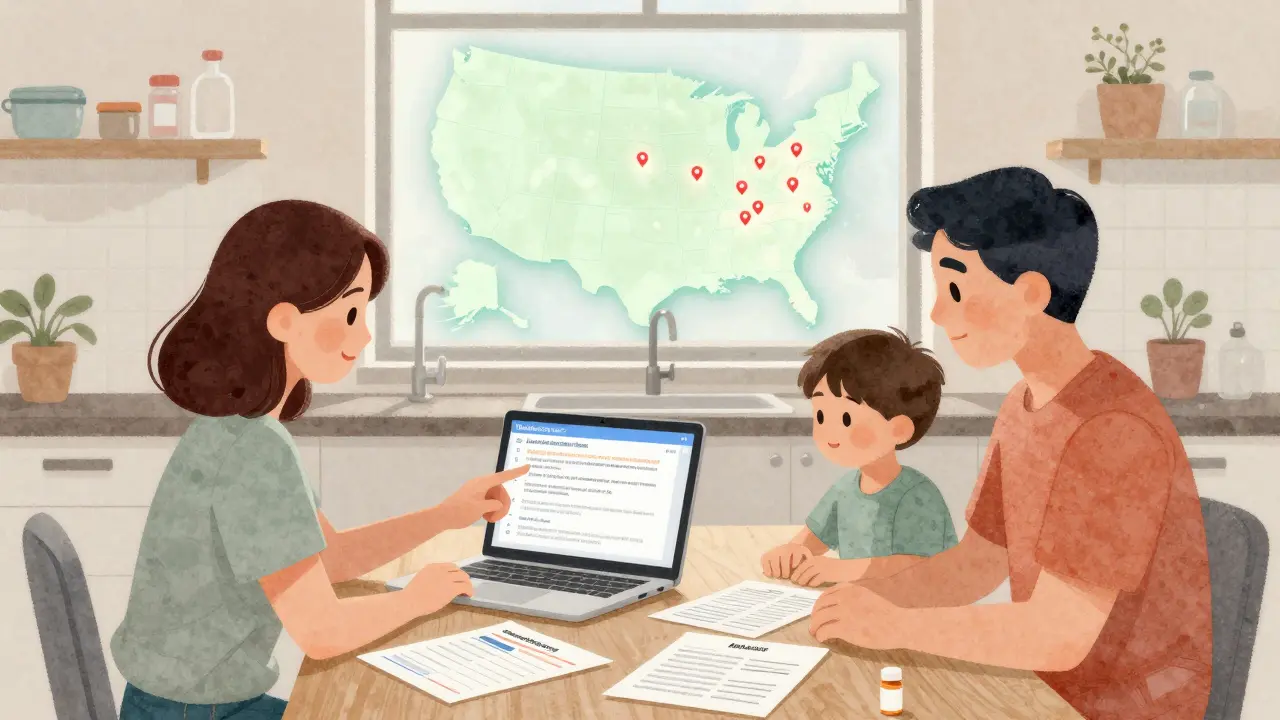
What Happens After You Report?
Here’s the truth: You won’t always get a call. You won’t always get an apology. But something still changes.
At the state level, your report triggers an investigation. The board may visit the pharmacy, review surveillance footage, interview staff, and check training logs. If they find negligence, the pharmacist could lose their license. If it’s a system flaw, they’ll require changes.
At the federal level, the FDA and ISMP compile your report with others. If the same error appears five times in a month from different pharmacies using the same software, the FDA may issue a safety alert. ISMP may publish a case study that changes how thousands of pharmacies train their staff.
In 2023, a Walmart pharmacy in Ohio corrected a dangerous insulin error within 24 hours after an ISMP report. Why? Because ISMP shared the case with 300+ pharmacies using the same electronic system. The manufacturer updated the software. The error didn’t happen again.
But not every report leads to action. Only 42% of people who report feel satisfied with the outcome, according to a 2021 UC San Francisco study. That’s why persistence matters. If you don’t hear back in 30 days, call again. Ask for the case number. Follow up. Your voice is the only thing that keeps these systems accountable.
What You Should Never Do
Don’t assume it was your fault. Pharmacists make mistakes too. That’s why systems exist.
Don’t wait until you’re hurt. If you catch it before taking the pill, report it anyway. That’s how prevention works.
Don’t be afraid of retaliation. Federal law protects you. Under the Patient Safety and Quality Improvement Act of 2005, your report is confidential. The pharmacy can’t legally fire a pharmacist just because you reported them.
Don’t use social media to name names. That doesn’t help fix the system. It just creates drama. Report through official channels.
What’s Changing in 2025?
Things are improving-but slowly.
The FDA is launching a mobile app for MedWatch in mid-2024, making reporting as easy as snapping a photo of your pill bottle. California now lets you track your complaint online in real time. ISMP’s consumer portal, launched in March 2023, simplifies the process without sacrificing legal protections.
And Congress is considering the Patient Safety Improvement Act of 2023. If it passes, it would create a national standard for reporting medication errors-no more 50 different state rules. That means fewer confusing forms. Faster responses. Better data.
Right now, only 18 states require mandatory reporting of serious errors. But that number is rising. In 2018, it was 22. Now it’s 37. Progress is happening.
Final Thought: Your Report Could Save a Life
There’s a woman in Texas who reported her husband’s wrong dose of warfarin. The pharmacy didn’t fix anything. She reported it to ISMP. Two weeks later, another patient at the same pharmacy got the same error-this time, they didn’t catch it. The patient had a stroke.
That’s why you report.
Not because you want revenge. Not because you think you’ll get a refund.
But because if you don’t, someone else might die next.
You’re not just a patient. You’re a safety net.
Comments
Bret Freeman
This is exactly why we need to stop treating pharmacies like sacred temples where mistakes are forgiven because they're 'overworked.' I've seen pharmacists hand out insulin vials with no labels and act like it's no big deal. If you don't report, you're complicit. This isn't about being angry-it's about survival. Someone's kid could die tomorrow because you didn't speak up today.
December 22, 2025 at 17:36
Austin LeBlanc
Let me tell you about the time I got metformin instead of lisinopril. I didn’t even take it-I caught it because the pill color was wrong. The pharmacist laughed and said, 'Happens all the time.' That’s when I knew: this system is broken. I filed with my state board, the FDA, and ISMP. Three weeks later, they shut down the automated dispenser at that location. Don’t wait for someone to die. Report it now.
December 22, 2025 at 20:44
niharika hardikar
It is imperative to recognize that pharmacovigilance mechanisms remain underutilized due to systemic apathy among laypersons. The absence of standardized reporting protocols across jurisdictions engenders cognitive dissonance in the public domain, thereby attenuating the efficacy of error mitigation frameworks. A robust, interoperable national database-aligned with ISO 13485 compliance standards-is not merely advisable; it is a bioethical imperative.
December 23, 2025 at 23:29
John Pearce CP
Our country has become soft. People complain about a wrong pill like it’s a Starbucks mix-up. This isn’t a customer service issue-it’s a national security threat. We have soldiers dying overseas because our domestic drug supply chain is a joke. If you’re not reporting, you’re weakening America’s medical integrity. Get off your couch and do your civic duty.
December 25, 2025 at 13:29
Andrea Di Candia
I used to think reporting was pointless until my mom got the wrong blood thinner. She didn’t take it, but I filed everything-pharmacy, state board, ISMP. A month later, they found the same error had happened to three other people at that location. The pharmacist got retrained. The software got fixed. I didn’t get a thank-you note. But I know I helped. That’s enough. Keep reporting. Even if no one says thank you, someone’s life is safer because you did.
December 26, 2025 at 22:19
Joseph Manuel
Statistical analysis of MedWatch data from 2018–2023 reveals a 22% increase in near-miss reporting correlating with a 17% decline in fatal medication errors in high-volume retail chains. However, this trend plateaus in regions lacking mandatory reporting laws. The absence of longitudinal feedback loops to reporters indicates a structural failure in systemic reinforcement. Until reporting triggers demonstrable corrective feedback, compliance will remain low.
December 28, 2025 at 17:27
Andy Grace
I’ve worked in pharmacies for 18 years. Most errors aren’t because someone’s lazy-they’re because they’re understaffed, overworked, and using software that’s older than some of the pharmacists. I’m not excusing it. But if you report, please don’t just scream at the person who handed you the bottle. Tell them what went wrong. Maybe they’ll fix it before the next person gets hurt.
December 29, 2025 at 16:34
Delilah Rose
I remember when my brother got the wrong antidepressant dose. We didn’t know what to do. We were scared. I called the pharmacy and they acted like we were being dramatic. Then I found ISMP’s website. They called me back within 48 hours. Asked me about the pharmacy’s layout, how busy it was, whether the labels were faded. They didn’t just take the report-they listened. And then they sent a letter to every pharmacy in our state with the same labeling system. That’s the kind of system we need. Not blame. Not rage. Just someone who actually cares enough to fix it.
December 29, 2025 at 19:44
Spencer Garcia
Report it. Always. Even if you’re not sure. Even if you didn’t take it. Even if the pharmacist says it’s fine. You’re not being annoying-you’re being essential. One report might not change anything. But ten? Twenty? That’s how systems wake up.
December 30, 2025 at 15:07
Abby Polhill
As someone who grew up in a country where you just took what they gave you-no questions asked-I’m floored by how much agency we have here. In India, if you get the wrong pill, you go home and hope it’s okay. Here? You can file a report with the FDA and actually expect something to happen. That’s powerful. Don’t waste it. Use it. Even if it feels small. It’s not.
December 31, 2025 at 12:39
Pankaj Chaudhary IPS
As a public servant who has witnessed systemic failures in healthcare delivery, I can confirm that the culture of silence around medication errors is a national disgrace. The fact that 90% go unreported reflects not negligence alone, but a profound failure of civic education. We must institutionalize mandatory reporting literacy in schools, community centers, and primary care clinics. Your report is not a complaint-it is an act of democratic accountability. Do not hesitate.
January 1, 2026 at 23:35
Write a comment