
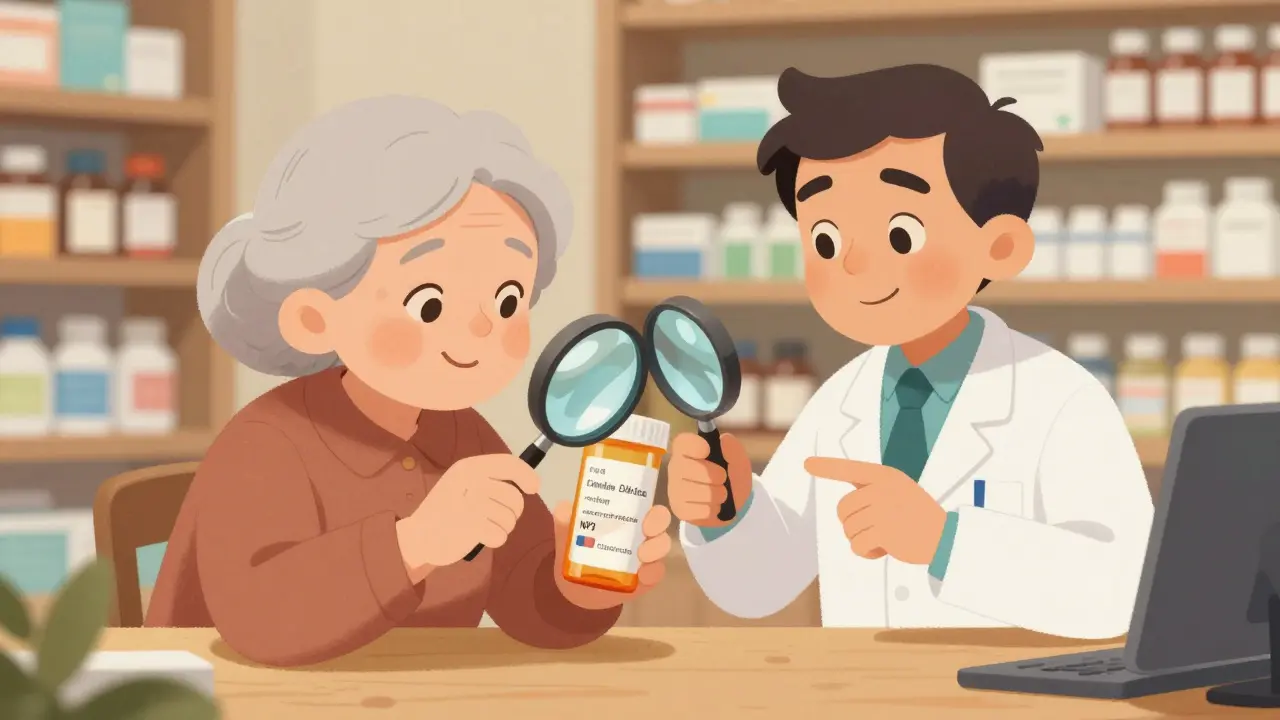
Every time you pick up a new prescription, you’re holding a safety document-not just a receipt. The tiny print on that label holds the key to making sure you get the right medicine, from the right doctor, at the right pharmacy. Yet most people glance at it, toss it in a bag, and move on. That’s a mistake. Verifying the prescriber and pharmacy information on your prescription label isn’t just a good habit-it’s a lifesaver.
Why This Matters More Than You Think
Every year, over 1.3 million people in the U.S. are injured because of medication errors. Around 7,000 of those cases end in death. And according to the Institute for Safe Medication Practices, nearly 12% of those errors happen because someone didn’t check who prescribed the medicine or where it came from. Think about it: a dentist prescribes a controlled painkiller. But the label says your primary care doctor did. That’s not a typo-it’s a dangerous mismatch. In one documented case, a patient got a Schedule II opioid prescribed by a dentist, but the pharmacy label listed their family physician. The patient didn’t notice until they started feeling strange. Turns out, the pharmacy filled the wrong prescription entirely. That’s the kind of error that can kill. The FDA says that if you spend just 60 to 90 seconds checking your label every time you get a new prescription, you can cut your risk of a medication error by over 30%. That’s not a guess. It’s based on data from 2.7 million prescriptions reviewed by the FDA’s Center for Drug Evaluation and Research.What You Need to Check on the Label
Your prescription label isn’t just a barcode and directions. It’s a legal document with specific requirements. By law, it must include:- Prescriber’s full name-not just initials, not just a last name. It should be the complete legal name of the person who wrote the prescription.
- National Provider Identifier (NPI) number-a unique 10-digit code assigned to every licensed healthcare provider in the U.S. This is your official way to confirm the prescriber’s identity.
- Prescriber’s phone number-this should be their office line, not a fax or automated system.
- Pharmacy’s full legal name-not "CVS Pharmacy" if it’s actually "CVS Pharmacy at 123 Main St." The exact registered name matters.
- Pharmacy address and phone number-you should be able to call them directly and speak to a pharmacist.
- Prescription number-this is the key number you’ll need when calling for refills or asking questions.
- Pharmacist’s name-required in 42 states. If it’s missing, ask why.
How to Verify Step by Step
Don’t just read the label. Verify it. Here’s how:- Check the prescriber name-Compare it to the doctor’s name you saw. Did you see Dr. Lisa Chen? Is her name printed exactly that way? If it says "Dr. L. Chen" or "Dr. Lisa Chen, MD," that’s fine. But if it says "Dr. Robert Kim," and you haven’t seen him in years, stop. Call the pharmacy.
- Match the NPI number-If you have access to your doctor’s profile on the NPPES database (which you can look up online), compare the number. If you don’t, call your doctor’s office and ask them to confirm their NPI. Most will give it to you over the phone.
- Call the pharmacy-Use the number on the label. Ask: "Can you confirm this prescription was written by [Dr. Name] for [Your Full Name]?" Don’t rely on automated systems. Ask for a live pharmacist. They’re trained to help you with this.
- Check the prescription number-If you’ve refilled this before, does the number match what you remember? A new number isn’t a problem-but if the number doesn’t match the one you were given last time, and you didn’t switch pharmacies, that’s a red flag.
- Compare with your records-Do you keep a list of your meds? If not, start. Write down the drug name, dose, prescriber, pharmacy, and date filled. Use your phone notes, a notebook, or a free app from your pharmacy. This makes verification faster and easier next time.
When Things Go Wrong
You’re not alone if you’ve seen errors. A Reddit thread with over 1,200 comments from patients in March 2024 showed that 68% of people who regularly checked their labels caught at least one mistake in the past year. The most common errors:- Misspelled prescriber names (42% of cases)-"Dr. Jones" instead of "Dr. Johns." Easy to miss, hard to catch.
- Wrong specialty (28% of cases)-A dermatologist prescribed a heart medication. A dentist prescribed a psychiatric drug. These aren’t just odd-they’re dangerous.
- Wrong pharmacy-You filled at Walgreens. The label says CVS. That means your prescription was transferred without your consent.
- Auto-filled wrong info-Electronic prescriptions can auto-populate the wrong provider name, especially if two doctors share the same last name. This happens in 18% of digital prescription errors, according to AHRQ.
Why Physical Labels Still Beat Apps
You might think your pharmacy app is enough. It’s not. A 2023 study in the Journal of the American Pharmacists Association compared app-based verification to checking the physical label. The app had a 7.2% error rate. The physical label? Just 2.1%. Why? Because apps can glitch. They can show outdated info. They can be hacked. Or worse-they can show you a label that looks right, but the pharmacy never actually dispensed the right drug. The physical label is your only real-time, unchangeable record. It doesn’t need Wi-Fi. It doesn’t need a login. It’s printed on paper, right in your hand. That’s why the FDA still says: Always check the label, even if you use an app.Special Cases: Mail-Order and Specialty Pharmacies
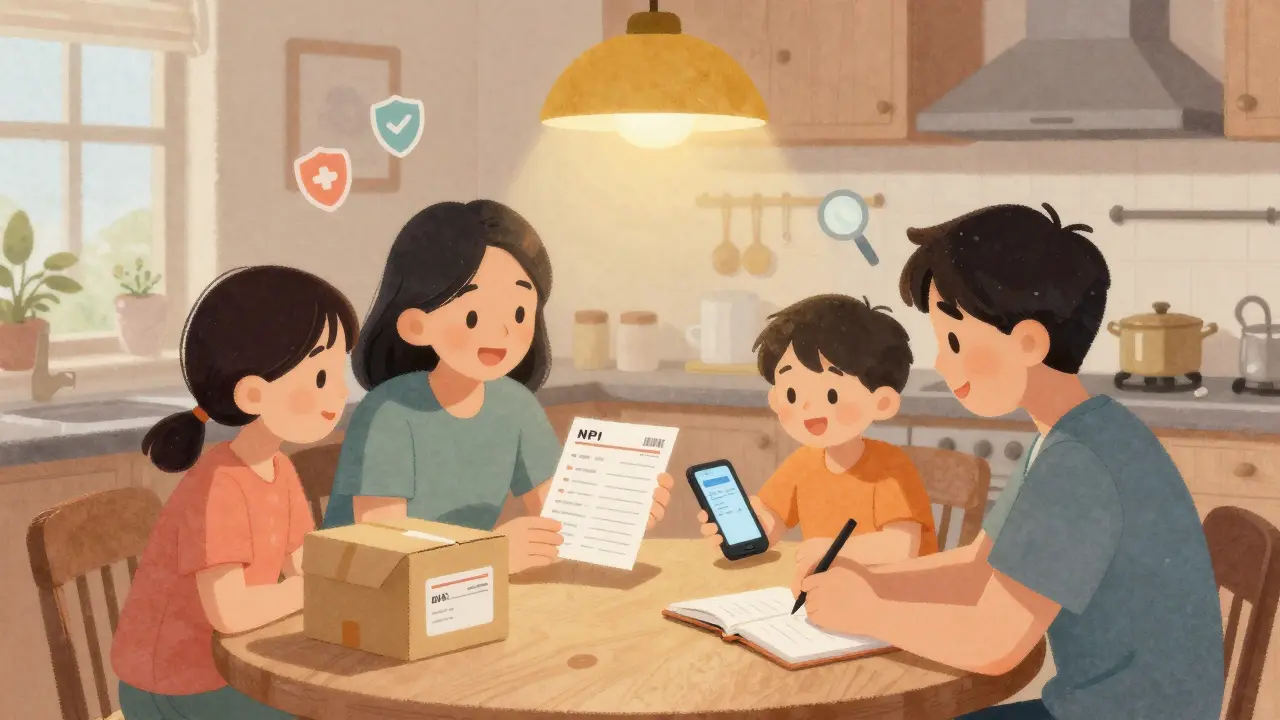
If you get your meds through mail-order or a specialty pharmacy (for things like cancer drugs, insulin pumps, or rare conditions), the risk of error is 23% higher than at your local CVS or Walgreens. Why? These pharmacies handle complex, high-risk medications. One wrong dose or mix-up can be catastrophic. And because you don’t see the pharmacist face-to-face, you’re more likely to skip verification. Here’s what to do:- When your meds arrive, don’t open the box until you’ve checked the label.
- Compare the prescriber name and NPI to your records.
- Call the pharmacy before taking the first dose-even if the label looks perfect.
- Ask for a printed copy of the label to be mailed to you, too. Keep it in your medication file.
What to Do If You Can’t Read the Label
If you’re over 65, you’re not alone. Nearly 37% of older adults struggle to read small print on labels. Most pharmacies offer free magnifying tools. Just ask. Many also offer large-print labels or audio labels on request. Some even let you record a voice note from the pharmacist explaining the label. You can also ask the pharmacist to spell out the prescriber’s name slowly. If it’s "Dr. M-C-H-A-E-L-S-O-N," write it down. Don’t guess.What’s Changing in 2026
The FDA launched a pilot program in May 2024 testing QR codes on labels. Scan the code, and you get a digital version of the label with extra details-like the prescriber’s license status, a link to their profile, and a video explaining the drug. Early results show a 19% improvement in verification accuracy. But the FDA is clear: this is a tool, not a replacement. You still need to look at the paper label. Also, by 2027, the FDA wants 75% of U.S. adults to verify their prescription labels regularly. Right now, it’s 62%. That’s progress-but there’s still a gap.Final Tip: Make It a Habit
Verification isn’t a one-time thing. Do it three times:- When you first get the prescription
- Before you take the first dose
- When you refill it
Comments
steve rumsford
Man i just glanced at my last script and realized the doc name was misspelled as "Dr. Jons" instead of "Dr. Johns". I almost took it. That 90 seconds saved me from a nightmare.
January 6, 2026 at 18:39
Paul Mason
So many people treat prescriptions like lottery tickets. You don't just grab a random pill bottle and hope for the best. If your label says "Dr. Smith" but you saw Dr. Patel, you don't shrug and take it. You call the pharmacy right then and there. This isn't rocket science, folks. It's basic survival. And if they give you attitude? Go to another pharmacy. Your life isn't a suggestion.
January 7, 2026 at 20:48
Aparna karwande
Why is this even a discussion? In India, we don't just hand out prescriptions like candy. Every label is checked, double-checked, and sometimes triple-checked by the pharmacist in front of you. We don't have this culture of "eh, it's probably fine". If your doctor's name is misspelled, the pharmacy is shut down. No excuses. No "I'm too busy". Your life matters more than their laziness. And if you're too lazy to read the label? Then you deserve what you get. This isn't about trust-it's about accountability. And America? You're failing at the basics.
January 9, 2026 at 13:09
Vince Nairn
Wow. So the solution to 7,000 deaths a year is... reading? I mean, I'm impressed. Who knew the secret to not dying was staring at a piece of paper for a minute? I feel like we just cracked the code on human error. Next up: don't drive off cliffs if you see a sign that says "Cliff". Groundbreaking stuff here.
January 9, 2026 at 16:41
Ayodeji Williams
bro i once got a script for my cat and the label said "Dr. Karen" but i swear i saw Dr. Mike... i called the pharmacy and they were like "oh yeah we mixed up two patients"... i was like 😳🤯💀... i still don't trust any pharmacy after that
January 10, 2026 at 10:39
Kyle King
Did you know the FDA is pushing QR codes on labels because they want to track you? This isn't about safety-it's about control. They're building a database of every prescription you take, every doctor you see, and soon they'll link it to your insurance, your car, your smart fridge. The label is a trap. The real danger isn't a misspelled name-it's the system that wants you to think you're safe while they collect your data. You think they care if you live or die? They care if you're compliant.
January 10, 2026 at 23:33
Kamlesh Chauhan
why do we even need to check this stuff like its a math test? the pharmacy is supposed to know what they're doing. if they mess up its their fault not mine. i just take the pills and go. why make it harder? its exhausting
January 12, 2026 at 00:55
Emma Addison Thomas
It's interesting how much cultural context matters here. In the UK, pharmacists are often seen as trusted advisors-not just dispensers. I’ve had pharmacists sit with me for 15 minutes explaining my meds, checking my history, even calling my GP to confirm. It’s part of the system. Maybe the answer isn’t just more vigilance from patients, but better support from providers. We can do better than putting the burden entirely on the person holding the bottle.
January 13, 2026 at 03:38
Write a comment