
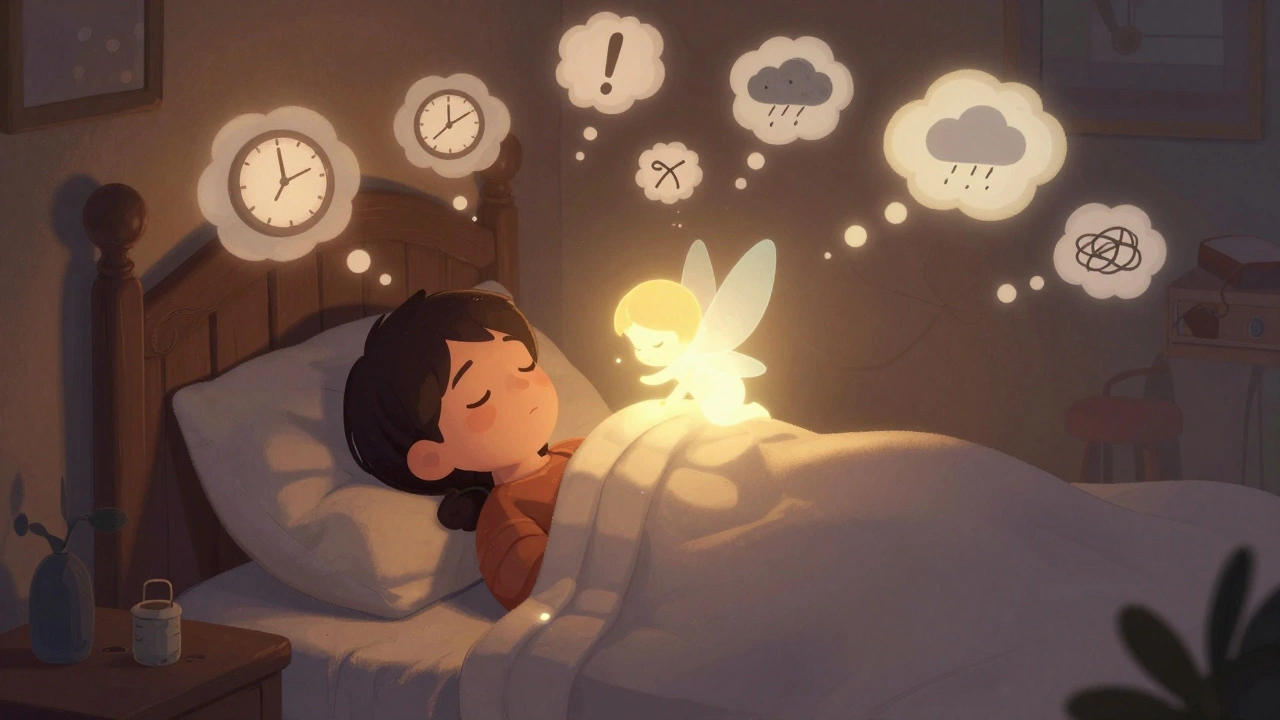
Why Your Sleep Matters More Than You Think
If you’ve been lying awake for hours, racing with thoughts, or waking up exhausted even after eight hours in bed-you’re not just tired. You’re caught in a cycle that’s making your depression or anxiety worse. And here’s the truth most people miss: insomnia isn’t just a symptom of depression or anxiety. It’s a driver. Treating it doesn’t just help you sleep better-it can change the course of your mental health.
The Science Behind Sleep and Mental Health
For years, doctors treated insomnia as a side effect. If you were depressed, you got antidepressants. If you were anxious, you got therapy or pills. Sleep problems? Just wait until the mood improves. But research from the last decade flipped that idea on its head. Studies now show that people with chronic insomnia are 40 times more likely to develop severe depression than those who sleep well. That’s not correlation-it’s causation.
The DSM-5, the official guide psychiatrists use to diagnose mental health conditions, now lists insomnia as both a symptom and a standalone risk factor. That means even if you don’t feel sad or anxious right now, poor sleep can set the stage for it. Brain imaging and hormone studies reveal that people with insomnia and depression have overactive stress systems. Their bodies pump out too much cortisol, ACTH, and CRH-stress hormones that keep the nervous system stuck in high gear. No wonder you can’t sleep. No wonder you feel on edge.
What Is CBT-I? The Gold Standard for Insomnia
The most effective, science-backed treatment for insomnia isn’t a pill. It’s Cognitive Behavioral Therapy for Insomnia, or CBT-I. Unlike sleeping pills that mask the problem, CBT-I fixes the root causes: bad sleep habits, fear of not sleeping, and distorted beliefs like “I need eight hours or I’ll collapse tomorrow.”
CBT-I is structured, time-limited, and typically delivered over 6 to 8 weekly sessions. Each session lasts about an hour. You’ll work with a trained therapist-or use a digital platform-to build new sleep behaviors. The core pieces are simple but powerful:
- Stimulus control: Your bed is only for sleep and sex. No scrolling, no working, no worrying in bed. If you’re not asleep in 20 minutes, get up and do something quiet until you feel sleepy.
- Sleep restriction: You spend too much time in bed awake. So we cut your time in bed to match how much you’re actually sleeping. If you only sleep 5 hours a night, you’re only allowed 5 hours in bed-until your sleep efficiency improves.
- Relaxation training: Techniques like diaphragmatic breathing and progressive muscle relaxation teach your body to shut down the fight-or-flight response that keeps you alert at night.
- Cognitive therapy: You’ll challenge thoughts like “If I don’t sleep tonight, I’ll fail at work tomorrow” and replace them with realistic, less catastrophic ones.
Why CBT-I Beats Sleeping Pills
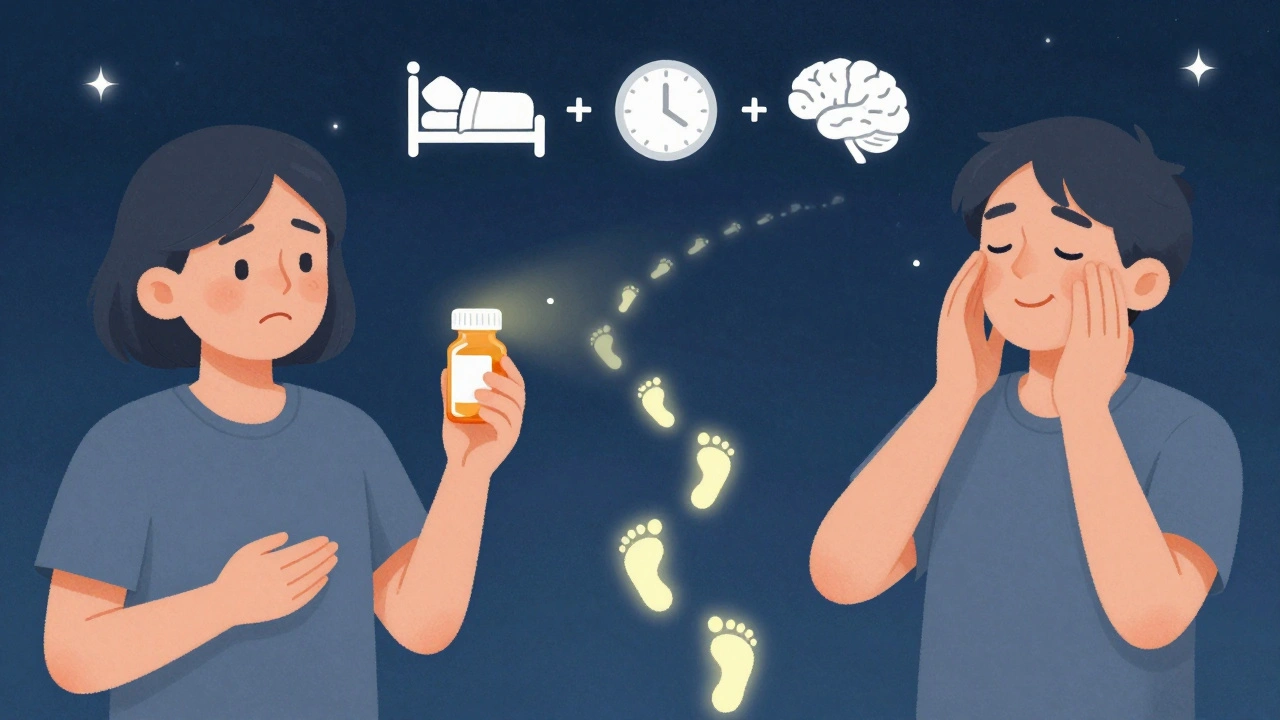
Medications like zolpidem (Ambien) or benzodiazepines might help you fall asleep faster in the short term. But they don’t fix the thinking patterns or behaviors that caused the insomnia in the first place. And they come with risks: dependence, grogginess, falls, memory issues. Worse, they offer zero protection against future depression.
CBT-I does. A 2023 review of 186 studies found that people who completed CBT-I and achieved full insomnia remission were 83% less likely to develop major depression later on. Those who got treatment but didn’t fully recover their sleep still had a 41% lower risk. That’s the difference between temporary relief and real prevention.
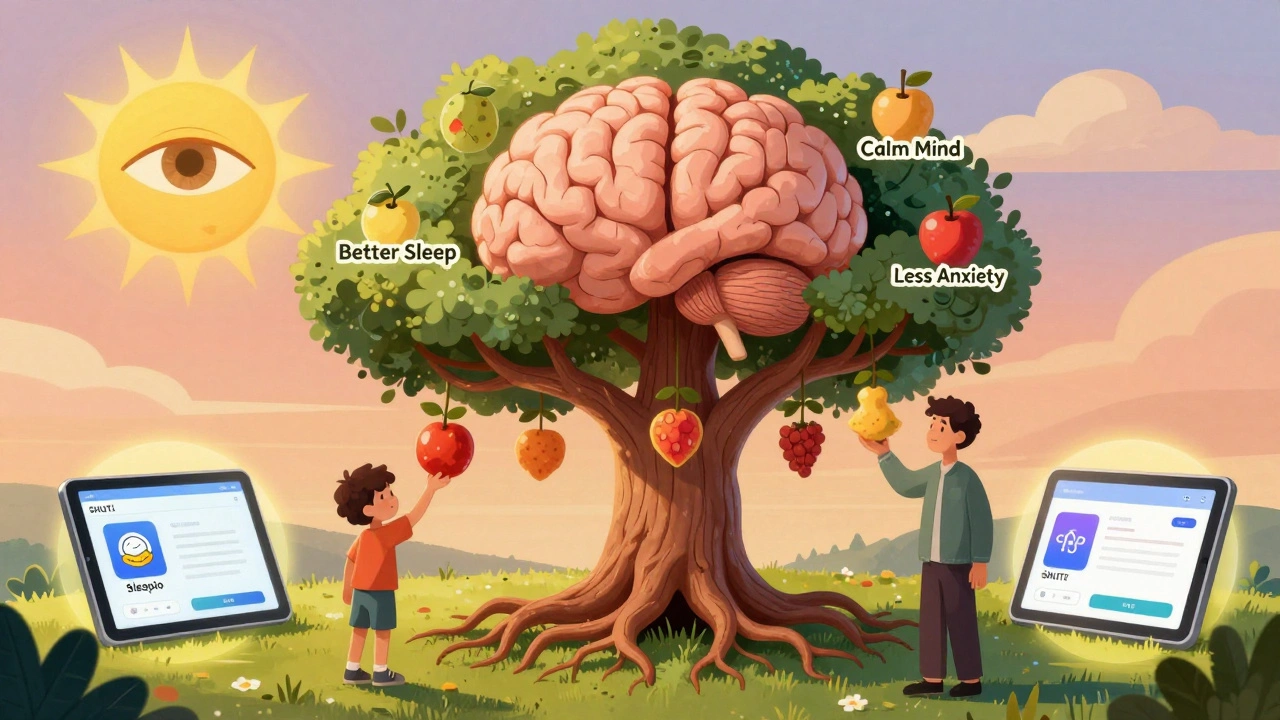
One study showed that people using digital CBT-I platforms like Sleepio or SHUTi had a 57% lower chance of developing moderate-to-severe depression compared to those who just read sleep education materials. And the benefits stick. Five years later, people who did CBT-I still slept better and had fewer depressive episodes than those who took pills.
How CBT-I Helps Depression and Anxiety Directly
It’s not just about sleep. When insomnia improves, mood improves too. A 2018 meta-analysis of 23 high-quality studies found that CBT-I produced a large improvement in depression symptoms-bigger than many antidepressants. On the Hamilton Depression Scale, the effect size was -1.29, which is considered clinically meaningful. On the Beck Depression Inventory, it was -0.68, which is similar to the effect of talk therapy for depression.
For anxiety, the results are just as strong. People who completed CBT-I reported less worry, fewer panic attacks, and lower overall stress. Why? Because sleep deprivation amps up the amygdala-the brain’s fear center-and weakens the prefrontal cortex, which helps you think clearly and regulate emotions. Fix sleep, and you’re literally rewiring your brain to handle stress better.
And here’s something powerful: treating insomnia can cut depression relapse risk by up to 50%. That means if you’ve had depression before and you treat your sleep, you’re far less likely to fall back into it-even if you stop taking antidepressants.
What If CBT-I Doesn’t Work for Me?
It works for about 70-80% of people. But not everyone. Around 30-40% don’t achieve full remission. That doesn’t mean it failed-it means you might need a different approach.
Some people struggle with sleep restriction. It’s hard to go to bed at 2 a.m. when you’re used to being in bed by midnight. The first week can feel brutal. You’ll be tired. You might feel worse before you feel better. But 65-75% of people say the discomfort eases after the second week. Stick with it.
Others struggle with consistency. Keeping a sleep diary is a key part of CBT-I. If you skip it, progress slows. Try using a simple app like Sleep Cycle or even a notebook. Write down: when you got in bed, when you fell asleep, when you woke up, how many times you woke up, and how you felt the next day.
If you’re not responding after 6 weeks, talk to your provider. Some people benefit from combining CBT-I with a low-dose antidepressant. A 2024 JAMA Psychiatry study found that adding sertraline to CBT-I boosted depression remission rates by 40% compared to the medication alone.
Accessing CBT-I: Real-World Challenges
Here’s the hard truth: CBT-I is the best treatment for insomnia-and yet, only 1-2% of people with insomnia get it. Why? There aren’t enough trained therapists. Only about 5% of U.S. psychologists are certified in CBT-I. Insurance often doesn’t cover it, or only covers a few sessions. And in rural areas, it’s nearly impossible to find.
That’s where digital CBT-I comes in. Platforms like Sleepio, SHUTi, and CBT-I Coach are clinically proven, FDA-cleared, and available 24/7. One study showed 76% of users had a clinically meaningful drop in insomnia severity after 6 weeks. Many are covered by insurance now, especially through employer wellness programs. Some even offer sliding-scale pricing.
And the pandemic changed everything. Between 2019 and 2022, telehealth CBT-I use jumped 300%. More people are realizing that sleep isn’t a luxury-it’s a medical need.
What You Can Do Today
You don’t need to wait for a therapist to start improving your sleep. Here’s what you can do right now:
- Get out of bed if you’re not sleeping. Don’t lie there stressing. Go to another room, read a book under dim light, and come back only when you’re sleepy.
- Set a fixed wake-up time. No matter what time you fell asleep, get up at the same time every day-even on weekends. This resets your body clock.
- Stop checking the clock. Seeing the time at 3 a.m. triggers panic. Turn your clock away.
- Limit caffeine after 2 p.m. and avoid alcohol before bed. Both wreck sleep quality.
- Try a 10-minute breathing exercise before bed: Breathe in for 4 seconds, hold for 4, exhale for 6, pause for 2. Repeat 5 times.
The Bigger Picture: Sleep as Prevention
We treat depression and anxiety like they’re isolated problems. But they’re often connected to something deeper: sleep. Treating insomnia isn’t just about feeling less tired. It’s about reducing your risk of a major mental health crisis. Economic studies show that for every dollar spent on CBT-I, society saves $2.50 to $3.50 in reduced healthcare costs, fewer sick days, and better work performance.
Major health systems like Kaiser Permanente now screen every depression patient for insomnia. If it’s there, they refer them to CBT-I before anything else. That’s the future. And it’s already here.
If you’re struggling with sleep and mood, don’t wait for your depression to get worse. Start with your sleep. It’s the most powerful, least talked-about tool you have.
Can insomnia cause depression, or is it just a symptom?
Insomnia is both a symptom and a cause. While it’s common to have trouble sleeping when you’re depressed or anxious, research shows that chronic insomnia can actually trigger depression. People with long-term insomnia are 40 times more likely to develop major depression than those who sleep well. Treating insomnia early can prevent depression from developing or returning.
Is CBT-I better than sleeping pills for depression-related insomnia?
Yes. Sleeping pills like zolpidem help you fall asleep faster in the short term, but they don’t change the behaviors or thoughts keeping insomnia going. CBT-I fixes the root causes and leads to lasting improvement. Studies show CBT-I reduces depression symptoms more than pills and cuts relapse risk by up to 50%. It’s the only treatment proven to prevent future depression.
How long does CBT-I take to work?
Most people start seeing improvements in 2 to 4 weeks. Full benefits usually show up after 6 to 8 weeks. Sleep restriction can feel tough at first-you might be more tired-but that’s normal. The key is consistency. People who stick with the program for the full course see the best results in both sleep and mood.
Can I do CBT-I on my own with an app?
Yes. Digital CBT-I platforms like Sleepio and SHUTi are clinically proven to work just as well as in-person therapy for most people. They guide you through the same techniques: sleep restriction, stimulus control, and cognitive restructuring. Many are covered by insurance, and you can start anytime. If you’re not improving after 6 weeks, consider working with a therapist.
What if I’ve tried CBT-I and it didn’t work?
About 30-40% of people don’t achieve full remission, but that doesn’t mean it failed. Sometimes it’s because the treatment wasn’t followed closely enough-like skipping sleep diaries or not sticking to the schedule. Other times, you might need a combination of CBT-I and medication. Talk to your doctor about adding a low-dose antidepressant like sertraline, which has been shown to boost CBT-I’s effectiveness by 40%.
Is CBT-I covered by insurance?
Some plans cover CBT-I, especially digital versions. Check with your insurer-many now include it under mental health or behavioral health benefits. Employers with wellness programs often offer free access. If cost is a barrier, look for sliding-scale clinics or university-affiliated programs. Many offer low-cost or free CBT-I training through psychology departments.
Can children or teens use CBT-I for anxiety-related insomnia?
Yes. CBT-I is adapted for adolescents and even younger children with modifications. It’s recommended by the American Academy of Sleep Medicine as first-line treatment for pediatric insomnia. Parents play a key role in helping kids stick to routines and limit screen time before bed. Digital programs like CBT-I Coach have child-friendly versions.
Comments
Ada Maklagina
I used to think sleep was just rest. Turns out it’s the OS reboot your brain never told you it needed. I did CBT-I for 6 weeks. Didn’t cure my anxiety, but it stopped it from running the show at 3 a.m.
Now I wake up and don’t immediately dread the day.
December 5, 2025 at 23:13
Harry Nguyen
So let me get this straight. We’re supposed to believe a bunch of therapy scripts and breathing exercises are better than a pill that works the same night? This is why America’s falling apart. No discipline. No shortcuts. Just endless self-help nonsense dressed up as science.
December 6, 2025 at 10:23
Lynette Myles
CBT-I is controlled by Big Pharma to keep you dependent on digital platforms. Sleepio? SHUTi? All owned by corporations that profit from your sleep debt. They don’t want you cured-they want you subscribed.
December 7, 2025 at 23:09
Katie Allan
To anyone feeling stuck-this isn’t about perfection. It’s about showing up. Even if you only follow two steps-fixed wake time and no clock watching-you’re already ahead of where you were. Progress isn’t linear. But it’s real.
And you’re not broken. You’re just tired.
December 8, 2025 at 09:05
James Moore
I’ve read every peer-reviewed paper on this, and I’m sorry-but the entire paradigm of ‘sleep as root cause’ is a dangerous oversimplification. The amygdala isn’t some isolated switch-it’s embedded in a neurochemical cascade shaped by epigenetics, socioeconomic stress, and cultural disintegration. You can’t fix systemic trauma with diaphragmatic breathing and a sleep diary. That’s like trying to fix a collapsing bridge by repainting the guardrails. CBT-I works for the privileged who have the luxury of time, routine, and mental bandwidth. What about the single mom working two shifts? The veteran with PTSD? The kid in a toxic household? They don’t need a 6-week program-they need housing, safety, and dignity. And no app is going to give them that.
December 9, 2025 at 01:40
Kylee Gregory
I think Harry’s point is valid, but maybe not in the way he meant it. CBT-I isn’t a magic bullet, but it’s one of the few tools that actually gives people agency. Even if the world is broken, you can still control your bed, your light, your clock. Maybe that’s not enough-but it’s something. And sometimes, something is the start of everything.
December 9, 2025 at 14:33
Laura Saye
The neurobiological feedback loop between sleep deprivation and affective dysregulation is well-documented in the literature-particularly in the context of HPA axis hyperactivity and prefrontal cortical hypoactivation. What’s often underemphasized is the phenomenological dimension: the erosion of metacognitive awareness that occurs when one is chronically sleep-deprived. CBT-I, by reintroducing structure and cognitive reappraisal, doesn’t merely improve sleep efficiency-it restores a sense of ontological stability. Which, in a world that feels increasingly chaotic, is perhaps the most profound intervention of all.
December 10, 2025 at 03:45
luke newton
I’ve been doing this for years. I don’t need CBT-I. I need someone to fix the fact that my job is soul-crushing, my rent is a scam, and my kid has anxiety from watching too much TikTok. You think breathing exercises are gonna fix that? Wake up. This whole post is just another way to make people feel guilty for being broken by a system that doesn’t care.
December 10, 2025 at 13:18
Write a comment