
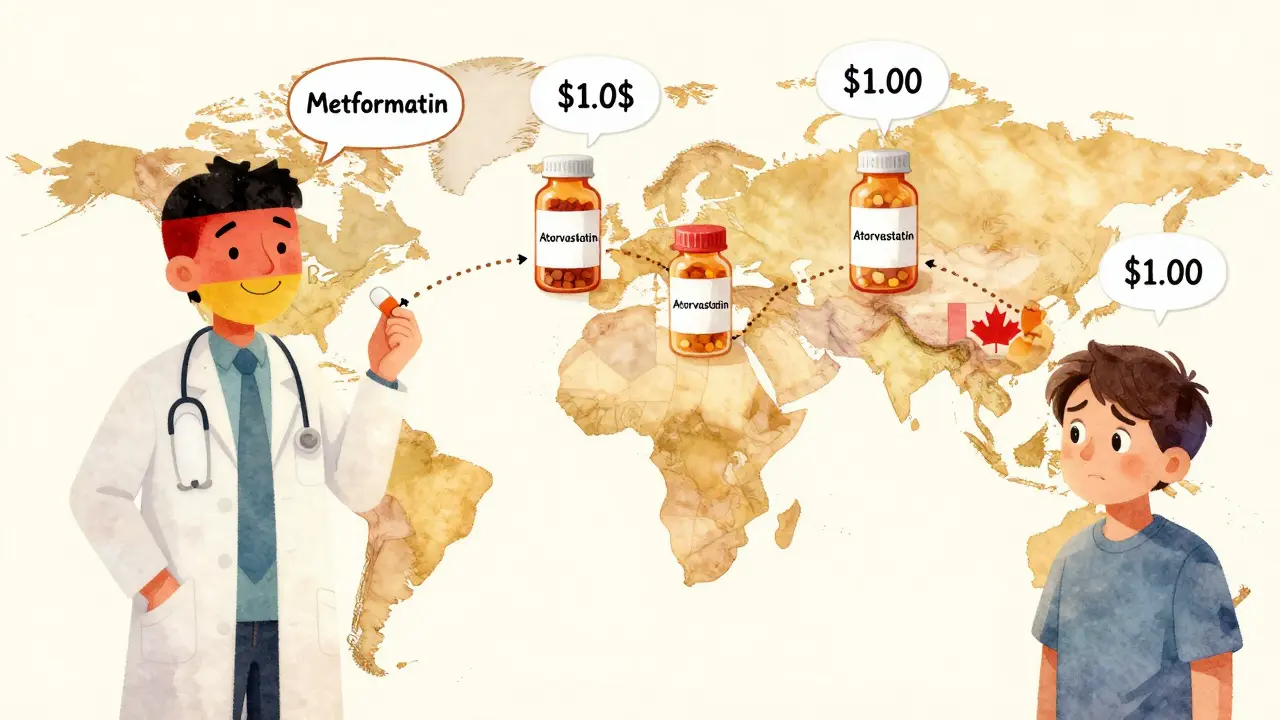
When you walk into a pharmacy in Germany, Spain, or Canada and pick up a generic version of a common medication like metformin or atorvastatin, you might pay just a few cents per pill. But if you were in the United States, the same pill could cost ten times more. Why? The difference isn’t in the pill itself-it’s in how governments decide what to pay for it. That’s where international reference pricing comes in.
What Is International Reference Pricing?
International reference pricing (IRP) is when a country looks at what other countries pay for the same generic medicine and uses those prices to set its own. It’s not about guessing or guessing based on what a drug company says it costs to make-it’s about comparing real-world prices across borders. This method started in Europe in the 1980s when governments saw their drug bills rising and needed a way to control spending without cutting access. For generic drugs-medicines that are chemically identical to brand-name versions but cost far less-IRP became a key tool. Instead of letting manufacturers set prices freely, countries created rules: if five other countries are paying $0.10 for a 10mg tablet of lisinopril, your country won’t pay more than that. Some use the average price. Others use the median. A few even use the lowest price, though that’s rare because it can cause shortages.How Do Countries Actually Do It?
There are two main types of reference pricing: external and internal.- External reference pricing means comparing prices from other countries. For example, France might look at Germany, Italy, Spain, and the UK to set its price for a generic antibiotic.
- Internal reference pricing means setting a single price for a group of identical or very similar generic drugs within the same country. If five companies make the same 20mg tablet of omeprazole, the government picks the lowest price and says, “Everyone gets reimbursed at that rate-even if your brand costs more.”
Which Countries Are Used as References?
It’s not random. Countries pick reference partners based on similarity: income level, healthcare system, and geographic proximity. Western European nations typically use France, Germany, Italy, Spain, and the UK. Eastern European countries often look to Austria, Germany, and the Netherlands. Switzerland does something unique: it takes two-thirds of the average price from its international peers and adds one-third based on its own domestic prices. The OECD says most countries use 5 to 7 reference countries. Using more than 10 doesn’t help much-it just makes the system more complex and increases the chance of price spirals, where one country cuts its price, others follow, and soon everyone’s prices crash too low.Why Do Generic Prices Vary So Much?
A 2022 OECD report showed that countries using IRP for generics pay 25-40% less than those that don’t. But here’s the catch: not all generics are treated the same. Simple generics-like aspirin or paracetamol-are cheap to make. IRP works great here. But complex generics-like inhalers, injectables, or extended-release tablets-cost nearly as much to develop as new drugs. In countries with strict IRP, manufacturers stopped making these because the price didn’t cover costs. The FDA found a 17% drop in new complex generic applications in the strictest IRP countries between 2015 and 2020. That’s why some systems are changing. France launched a dynamic IRP system in January 2023 that adjusts prices every quarter based on market share. If a cheaper version suddenly dominates sales, the reference price drops. If no one buys the cheapest option, it doesn’t get penalized. Early results show 8.2% extra savings without major shortages.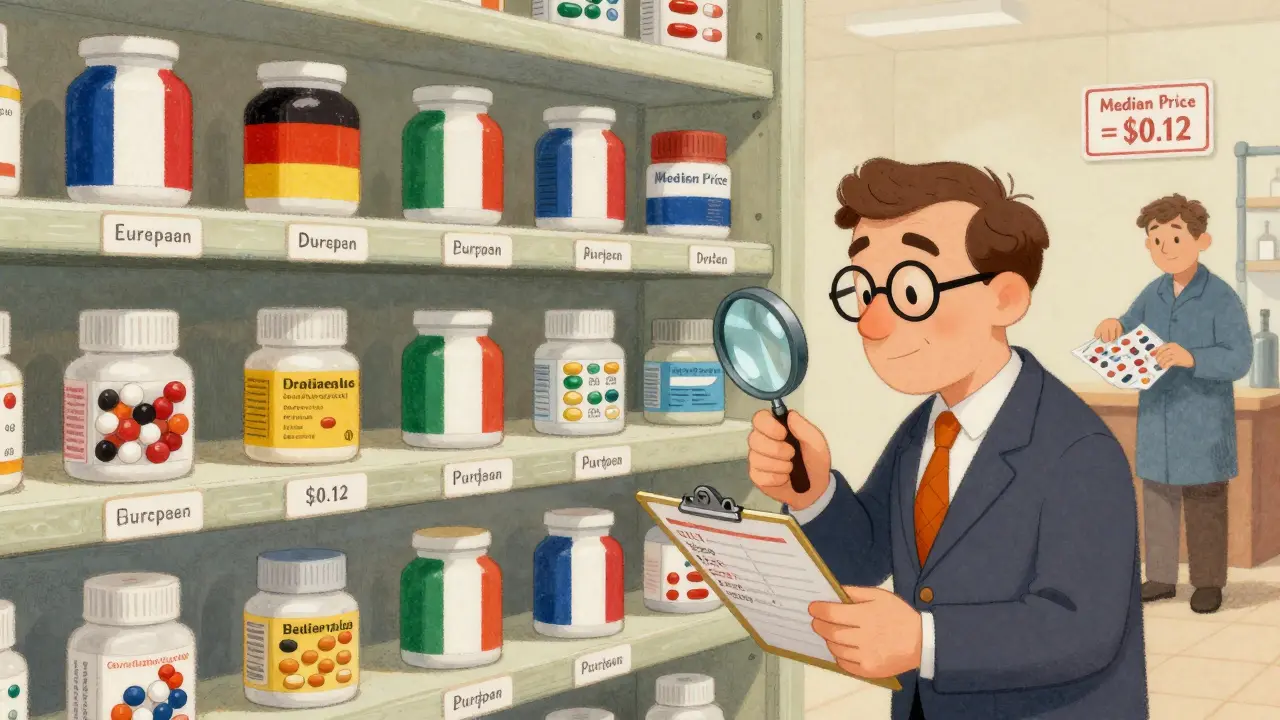
What Are the Downsides?
IRP saves money-but it doesn’t come without risks.- Shortages: Greece had 37% of its generic medicines unavailable between 2012 and 2015 after slashing prices too hard. Pharmacies couldn’t get the cheapest version, so they ran out.
- Quality concerns: A 2021 OECD survey found 34% of patients worried that cheaper generics were less effective-even though there’s no scientific evidence to support that.
- Market exit: In Portugal, 22 generic products disappeared in 2019 because manufacturers couldn’t make a profit. Sandoz and Teva reported revenue losses in Europe despite selling more volume.
- Administrative burden: Spain spends the equivalent of 15 full-time staff just to update reference baskets across 27 therapeutic categories every year.
How Do Patients and Pharmacists Experience IRP?
In Spain, 89% of prescriptions for generics are filled with the reference-priced version-up from 52% in 2010. Pharmacists say it’s easier to substitute because the rules are clear. But 63% of them report occasional stockouts of the lowest-priced product, forcing them to switch to a more expensive one. In Greece, patients told researchers they had to visit multiple pharmacies to find one brand of a generic drug. Some had to wait weeks. Others switched to the originator brand out of fear-even though it cost three times more. In Germany, hospital procurement managers say IRP cut their paperwork by 37%. But managing therapeutic equivalence across different reference groups? That’s still messy. One pill might be deemed “equivalent” in one group but not in another, depending on how the committee defined it.What About the United States?
The U.S. doesn’t use IRP for generics in Medicare or Medicaid at the federal level. But some states are experimenting. Colorado’s Medicaid program started using reference pricing in 2021. Result? A 12-15% drop in spending on generic drugs in the first year. No major shortages. No complaints from pharmacies. It’s a small-scale test, but it’s working. Canada uses IRP only for brand-name drugs. For generics, each province runs its own tendering system-similar to the Netherlands. That’s why generic prices vary wildly between Ontario and Alberta.What’s Changing Now?
The European Commission launched a pilot in April 2023: a shared European Reference Pricing Platform. Fifteen generic drugs are being tracked across seven countries. The goal? To make pricing more transparent and reduce the administrative mess. By 2025, they want to cover 100 medicines. IQVIA predicts that by 2027, 65% of European generic prices will be set by IRP-up from 58% in 2022. But the trend isn’t just about cutting prices anymore. It’s about smart pricing. The OECD now recommends tiered reference groups: simple generics get one price rule; complex ones get another.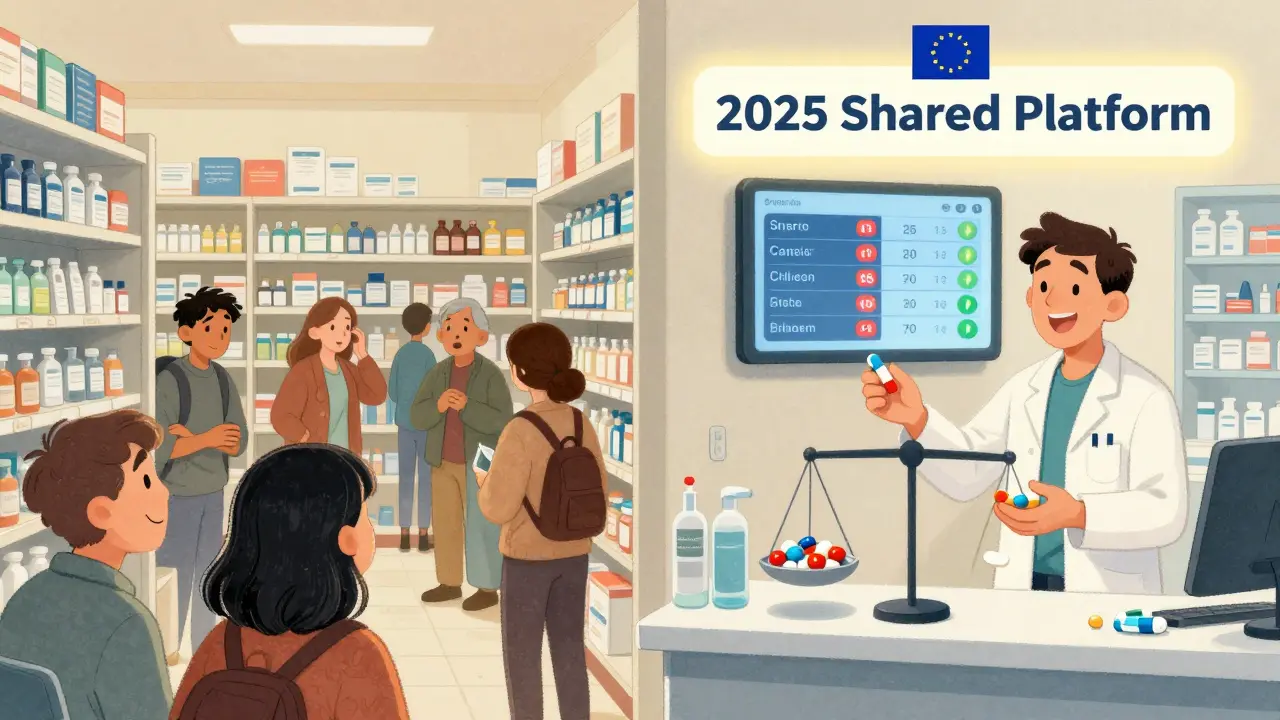
Is IRP the Future?
Yes-but not the kind you think. IRP isn’t going away. It’s too effective at saving money. But the old model-just copying the lowest price from five countries-is outdated. The future is nuanced: dynamic pricing, tiered baskets, cost-of-production adjustments, and incentives for complex generics. Countries that treat all generics the same are seeing problems. Those that adapt are getting better results. The goal isn’t just the cheapest price. It’s the right price-one that keeps medicines available, ensures quality, and lets manufacturers stay in business.How Do Manufacturers Respond?
Teva says IRP led to a 9% revenue drop in Europe, even though they sold 15% more pills. Sandoz, on the other hand, says well-designed IRP helped them grow market share in 18 countries. The difference? One company focused on volume and efficiency. The other invested in reliable supply chains and quality control. Manufacturers now build their business models around IRP. They know which countries use median pricing versus lowest-price pricing. They know which ones update prices quarterly. They know which ones allow small margins for complex products. It’s no longer about marketing-it’s about manufacturing, logistics, and cost modeling.What Can Other Countries Learn?
If you’re thinking of adopting IRP for generics, here’s what the data says:- Use 5-7 reference countries-not more.
- Average or median prices work better than the lowest price.
- Separate simple and complex generics.
- Update prices annually, not quarterly, unless there’s a crisis.
- Build in buffers for manufacturing cost increases.
- Monitor shortages closely. Have backup plans.
- Involve manufacturers early. Don’t surprise them with sudden cuts.
Final Thought
International reference pricing isn’t magic. It doesn’t make drugs cheaper by itself. It just forces competition. And in the world of generics-where every pill is chemically the same-price is the only thing that differs. The real challenge isn’t setting the price. It’s setting the right price. One that saves money without breaking the system. One that keeps people fed with medicine, not just cheap pills.What is international reference pricing for generic drugs?
International reference pricing (IRP) is when a country sets the price of a generic medicine by looking at what other countries pay for the same drug. Instead of letting manufacturers charge whatever they want, governments use prices from similar countries as a benchmark to control costs and ensure affordability.
Which countries use international reference pricing for generics?
28 of 32 European countries use IRP for generic medicines, according to Medicines for Europe. Most Western European nations-including Germany, France, Spain, Italy, and the Netherlands-use it regularly. Eastern European countries like Romania and Bulgaria also rely on it. Outside Europe, Canada and Australia use it selectively, while the U.S. does not use it federally, though a few states like Colorado have tested it.
How does IRP affect generic drug availability?
When IRP sets prices too low, manufacturers may stop making certain generics because they can’t cover production costs. Greece saw 37% of its generic medicines go out of stock between 2012 and 2015. Portugal lost 22 products in 2019. But countries that use average or median pricing instead of the lowest price, and that separate simple from complex generics, avoid most shortages.
Do generic drugs under IRP have lower quality?
No. Generic drugs approved by regulators like the FDA or EMA are required to be chemically identical to brand-name drugs. However, some patients and pharmacists worry about differences in inactive ingredients or how quickly the drug releases in the body. These concerns are often based on perception, not science. Studies show no difference in effectiveness between reference-priced generics and more expensive versions.
Why doesn’t the U.S. use international reference pricing?
The U.S. doesn’t use IRP because its healthcare system is fragmented and lacks centralized price negotiation power. Medicare is legally restricted from negotiating drug prices directly. Some states, like Colorado, have tested IRP for Medicaid and seen savings. But nationwide adoption is unlikely without major policy changes.
What’s the difference between internal and external reference pricing?
External reference pricing compares prices across countries. Internal reference pricing sets one price for all similar generic drugs within a country. For example, if five companies make the same 10mg tablet, the government picks the lowest price and reimburses all at that rate. Most European countries use internal IRP for generics because it’s simpler and more predictable.
Are there any new developments in international reference pricing?
Yes. France introduced dynamic IRP in January 2023, adjusting prices quarterly based on sales volume. The European Commission launched a pilot platform in April 2023 to share pricing data across seven countries. Experts predict that by 2027, most European countries will use more flexible IRP systems that consider manufacturing complexity-not just price.
Comments
Dana Termini
IRP isn’t perfect, but it’s the only thing keeping generic drugs affordable in places where healthcare isn’t a profit scheme. The US system is broken, and pretending otherwise just lets pharma keep raking in billions.
It’s not about being anti-American-it’s about being pro-health.
January 6, 2026 at 02:32
Amy Le
So let me get this straight-we’re supposed to copy Europe’s prices because they’re ‘fair’? Meanwhile, our innovation pays for their cheap pills. You want price controls? Fine. But don’t act like the rest of the world isn’t free-riding on American R&D.
And yes, I know about ‘complex generics.’ That’s why they cost more. Because we invented them. Stop punishing success.
January 8, 2026 at 00:53
Lily Lilyy
Everyone deserves access to medicine, no matter where they live. It’s not about politics-it’s about people.
Imagine if your child needed insulin and you had to choose between rent and refills. That’s real life. Countries using IRP are choosing compassion over corporate profits. We can do better too.
January 9, 2026 at 21:28
Susan Arlene
so like… europe just looks at what other countries pay and says ‘ok cool we’ll do that’? why don’t we just do that?
also why is everyone so mad about it? it’s a pill. not a spaceship.
January 11, 2026 at 08:47
Ashley S
THIS IS WHY AMERICA IS WEAK.
Letting other countries dictate our prices? We’re the richest nation on earth and we can’t even negotiate a fair price for pills? Pathetic.
Next they’ll be telling us how to breathe.
🇺🇸
January 12, 2026 at 11:40
Rachel Wermager
IRP operates under the assumption of price elasticity and cost-based reimbursement paradigms, but fails to account for the non-linear marginal cost structures of complex generics, particularly those requiring bioequivalence validation under FDA 505(b)(2) pathways.
The OECD’s tiered basket model is a step toward dynamic pricing equilibrium, but lacks integration with pharmacoeconomic models like QALY-adjusted cost-per-dose thresholds. Until we model manufacturer exit functions under price caps, we’re optimizing for the wrong variable.
January 14, 2026 at 11:23
Beth Templeton
Wow. So Europe figured out how to not get ripped off. Who knew?
Meanwhile, Americans pay $50 for a pill that costs 50 cents to make.
Not a crisis. Just Tuesday.
January 15, 2026 at 17:29
Joann Absi
THEY’RE STEALING OUR MEDICINE!
Why do you think the FDA approves so many generics? So Europe can buy them for pennies and laugh at us?
And now they want to make it official? NO.
WE BUILT THIS. WE OWN THIS. AND WE’RE NOT GIVING IT UP.
🇺🇸💪💊
January 15, 2026 at 21:42
Mukesh Pareek
India produces 20% of global generic volume. We don’t use IRP because we don’t need to-we make it cheaper than anyone else.
Why copy others when you can lead? The real lesson isn’t in pricing-it’s in manufacturing scale and supply chain mastery.
India doesn’t reference. We redefine.
January 17, 2026 at 10:34
Jeane Hendrix
i’m curious-when countries use median pricing instead of lowest, do they still see shortages? and if so, how often? i feel like the data’s kinda split on that
also, does anyone have a link to that france dynamic pricing study? i wanna read the full thing
January 19, 2026 at 09:05
Leonard Shit
my grandma’s on metformin. she pays $4 a month at walmart. i know people who pay $400 for the same thing. it’s not even close to fair.
we’re not europe. but we’re not helping people either. just saying.
January 20, 2026 at 07:20
Gabrielle Panchev
But-hold on-let’s just pause for a moment and consider the ethical implications of commodifying human health, especially when the very act of reference pricing implies a hierarchical valuation of life based on geopolitical proximity and economic parity, which, in turn, reinforces neoliberal logics that reduce biological necessity to market equilibrium, thereby eroding the intrinsic dignity of care as a universal right-because if we allow price to determine access, aren’t we implicitly saying that some lives are simply less worth saving? And isn’t that the exact logic that got us into this mess in the first place? I mean, think about it.
January 21, 2026 at 05:17
Venkataramanan Viswanathan
India exports generics to over 150 countries. We don’t need IRP because our cost structure is built for scale, not negotiation.
But I respect what Europe is doing. It’s pragmatic. Not perfect, but better than letting corporations set prices like they own the air.
January 22, 2026 at 00:46
Kiran Plaha
So if the US adopted IRP, would pharmacies still be able to stock all the brands? Or would we end up with the same shortages as Greece?
January 22, 2026 at 13:09
Matt Beck
IRP is just capitalism with a nice haircut.
They’re still making money. They’re just not making *all* the money.
And now they’re crying? 😂
Let them make pills. Let us pay less. Win-win.
🇺🇸➡️🇪🇺
January 24, 2026 at 07:35
Write a comment