
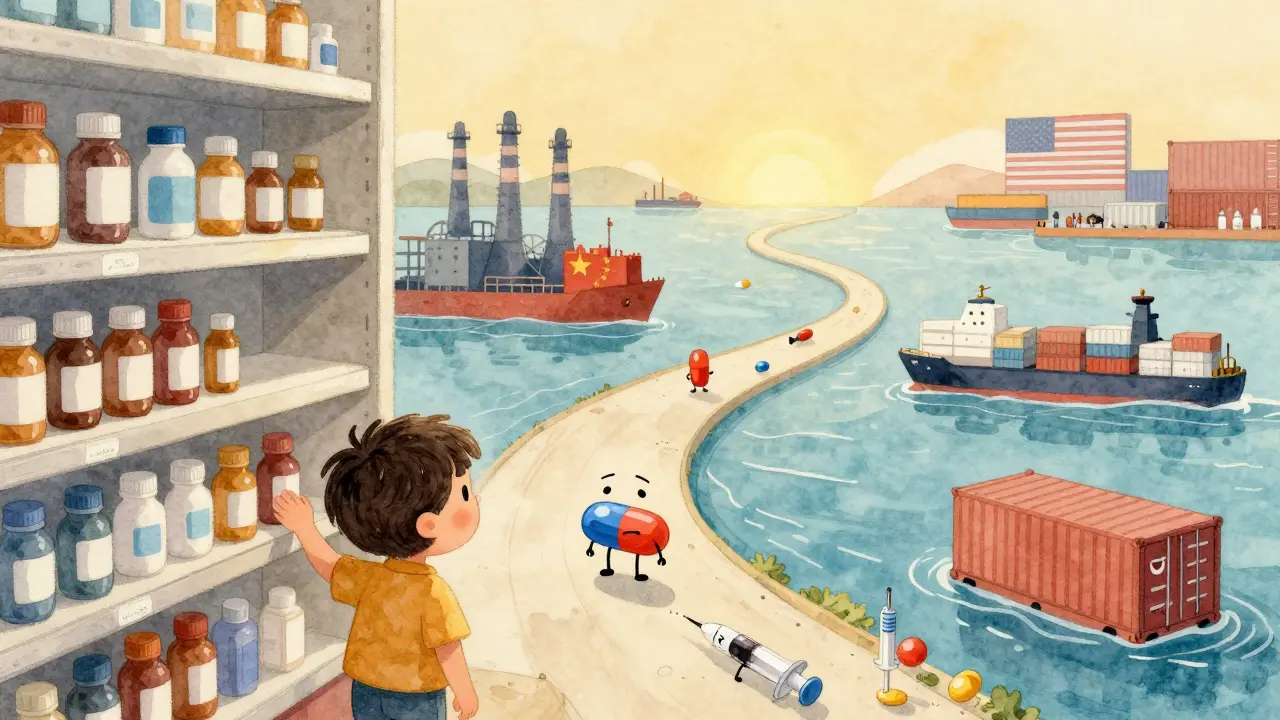
When you walk into a pharmacy and your prescription isn’t in stock, it’s not because the doctor got it wrong. It’s because the pill you need was made halfway across the world - and something broke along the way.
How a Pill Made in China Ends Up Missing on Your Shelf
More than 80% of the active ingredients in U.S. prescription drugs come from abroad, mostly from China and India. These aren’t just minor components - they’re the actual chemicals that make the medicine work. For example, the generic antibiotic amoxicillin, used by millions every year, relies on raw materials sourced almost entirely from two provinces in China. When a factory there shuts down for environmental checks, or a port in Shanghai gets backed up, the ripple effect hits U.S. hospitals within weeks. It’s not just about distance. It’s about concentration. The global pharmaceutical supply chain is built on efficiency, not safety. Companies moved production overseas because labor was cheaper, regulations looser, and taxes lower. In 2020, the U.S. imported $12.4 billion worth of active pharmaceutical ingredients (APIs) from China alone. Today, that number is still rising. But the system doesn’t have room for error. One factory outage can delay production for hundreds of millions of doses.Why Resilience Was Ignored for Cost Savings
For years, drugmakers treated supply chains like a spreadsheet line item. Why keep a factory in Ohio when you can make the same ingredient in Hyderabad for 60% less? It made sense - until it didn’t. During the pandemic, the world saw what happens when you bet everything on one region. When China locked down in early 2020, the U.S. ran out of heparin, a blood thinner. When India restricted exports of generic drugs in 2022 to protect its own supply, hospitals scrambled to find alternatives for antibiotics and heart medications. The result? 228 drug shortages in the U.S. in 2024 - the highest number in a decade, according to the FDA. The problem isn’t just politics or pandemics. It’s structural. Most drug manufacturers don’t own the factories that make their active ingredients. They outsource them to contract manufacturers - often in countries with weak oversight. A single supplier might serve 15 different U.S. brands. If that supplier runs into trouble, everyone’s out of stock.What’s Being Done - And Why It’s Not Enough
The U.S. government has tried to fix this. The 2022 CHIPS and Science Act included $1.5 billion to bring API production back home. In 2024, the FDA launched a program to fast-track approval for domestic API manufacturers. But building a chemical plant isn’t like building a smartphone factory. It takes 3-5 years. And the cost? Up to $500 million per facility. Some companies are trying to diversify. A few large pharma firms now source APIs from both India and Vietnam, with backup suppliers in Poland and Ireland. One major insulin maker doubled its supplier base in 2023 and saw its stockout rate drop by 40%. But these are exceptions. Most small and mid-sized drugmakers still rely on single-source suppliers because switching is expensive and risky. Even when companies try to reshore, they hit walls. The U.S. doesn’t have enough trained chemical engineers to run these plants. Skilled workers in this field are aging out, and few new graduates are choosing pharma manufacturing. That’s why 33% of companies report understaffing in global trade and production roles - a problem that won’t fix itself overnight.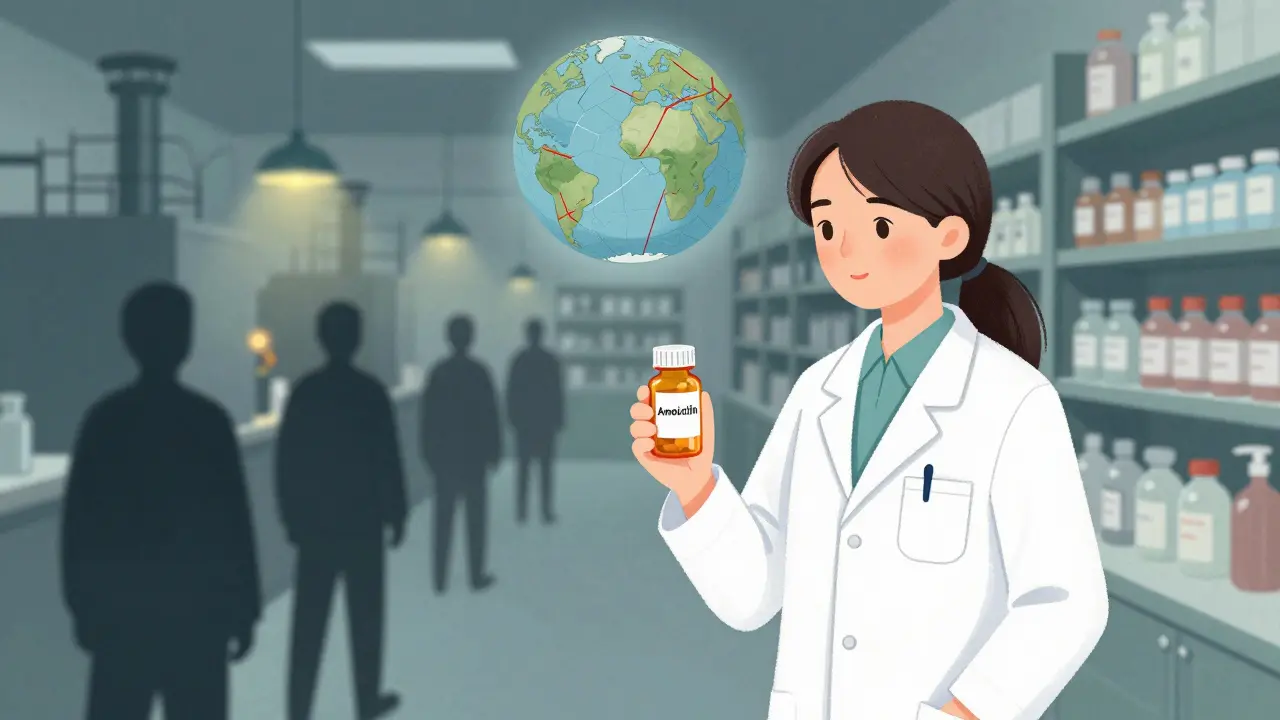
The Hidden Cost: Tariffs, Delays, and Rising Prices
Tariffs have made things worse. Since 2024, the U.S. has added 12 new tariff categories targeting pharmaceutical inputs. One of them hit a key chemical used in blood pressure meds - raising its price by 270%. That cost didn’t disappear. It got passed on to insurers, then to patients. Shipping times have also ballooned. In 2019, it took 14 days for a container of APIs to get from China to Los Angeles. Today, it’s 21 days - and that’s if nothing goes wrong. Delays of 30-60 days are now common during monsoon season in India or port strikes in Europe. For drugs with short shelf lives - like insulin or vaccines - that’s a death sentence. Meanwhile, the cost of keeping extra stock - called “just-in-case” inventory - has jumped 15% since 2022. Some hospitals are now storing six months’ worth of critical drugs. But that’s not sustainable. Storage costs money. And if the drug expires before it’s used? It’s thrown away. The FDA estimates $1.2 billion in wasted medications annually due to supply chain instability.Real Solutions Are Already Working - But Rare
There are success stories. One U.S.-based generic drugmaker, based in North Carolina, switched from relying on China to using dual sourcing: 60% from India, 40% from a new partner in Portugal. They also invested in a digital twin system - a virtual model of their entire supply chain - that alerts them to delays before they happen. Their on-time delivery rate is now 99.2%. They didn’t get rich doing it. But they didn’t run out of stock either. Another company, a small manufacturer of asthma inhalers, started using microfactories - automated, compact production units that can be set up quickly in the U.S. or Mexico. These cost 40% more upfront, but they cut lead times by 25%. They now make 30% of their product locally and have eliminated all shortages in the past 18 months. Blockchain is helping too. Some suppliers now use it to track every batch of API from raw material to final pill. If a batch fails quality tests, they can trace it back to the exact batch of chemicals - and isolate the problem. This cuts quality disputes by 65% and reduces recalls. But these are still niche. Only 40% of Asian-based manufacturers have adopted multi-shoring strategies. Most still operate on the old model: lowest cost wins. And until that changes, shortages will keep happening.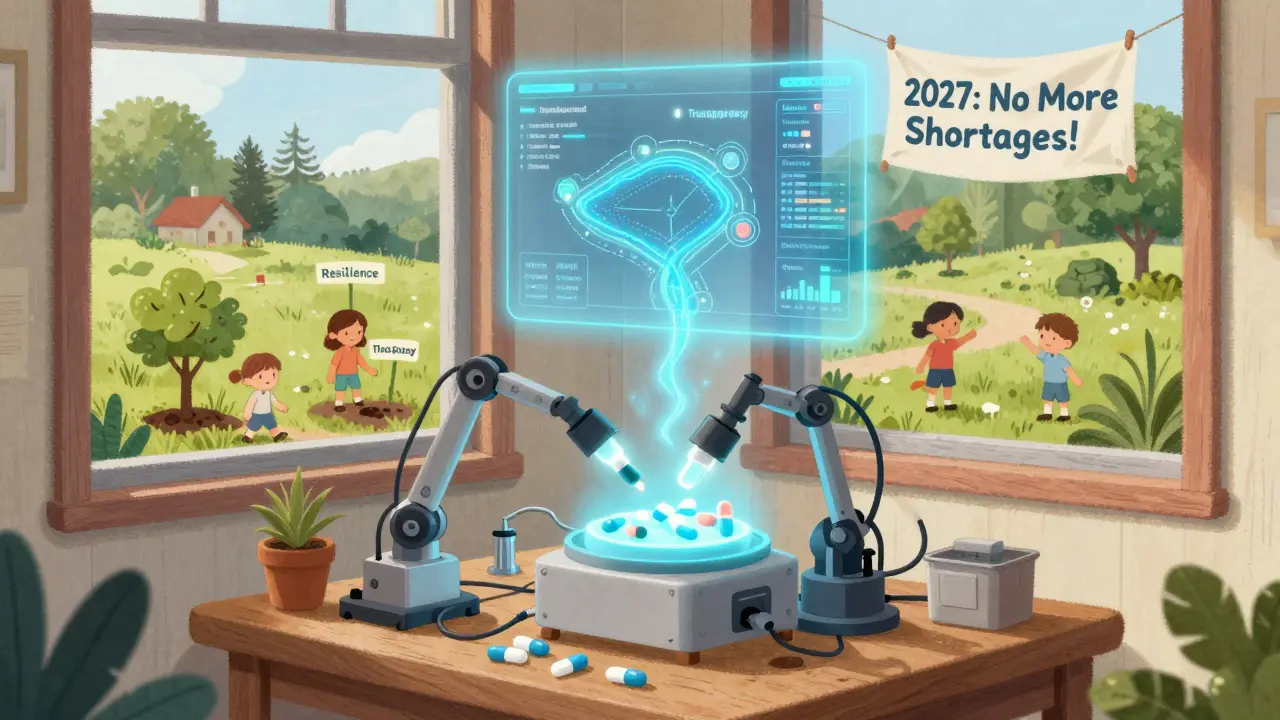
What This Means for You
You might not think about where your pills come from. But when your medication is suddenly unavailable, it’s not just inconvenient - it’s dangerous. Missing a dose of blood thinners, epilepsy meds, or insulin can lead to hospitalization - or worse. If you’re on a long-term prescription, ask your pharmacist: Is this made in the U.S.? If not, ask if there’s an alternative with a more reliable supply chain. Some generics have the same active ingredient but come from different manufacturers. Your doctor can switch you - if they know to ask. You can also support policy changes. Contact your representative. Ask them to support bills that fund domestic API production and require drugmakers to disclose where their ingredients come from. Transparency is the first step toward accountability.The Road Ahead
The global pharmaceutical supply chain isn’t going away. But it’s changing. By 2027, experts predict that 50% of major drugmakers will have moved from single-source to multi-shoring models. AI-driven forecasting will help predict shortages before they happen. Governments will likely mandate minimum stockpiles for critical drugs. But none of this matters if we don’t change the mindset that cheap is always better. The cost of a drug shortage isn’t just financial. It’s measured in lives. In missed treatments. In ER visits. In preventable deaths. The pills we depend on aren’t just products. They’re lifelines. And right now, that lifeline is hanging by a thread - stretched across oceans, held together by fragile factories and outdated systems. It’s time to rebuild it - not for profit, but for people.Why are drug shortages happening now?
Drug shortages are happening now because the global supply chain for active pharmaceutical ingredients (APIs) is overly concentrated in just a few countries - mainly China and India. These regions produce over 80% of the world’s drug ingredients. When a factory shuts down, a port closes, or a government restricts exports, the entire chain breaks. Unlike consumer goods, drugs can’t be easily swapped out. There’s no backup supplier ready to jump in, and building new facilities takes years. In 2024, the U.S. had 228 drug shortages - the highest in a decade - directly tied to these supply chain vulnerabilities.
Can the U.S. make its own drugs again?
Yes, but it’s expensive and slow. The U.S. has the technical ability to produce APIs domestically, but it lacks the infrastructure and workforce. Building a single API manufacturing plant costs between $300 million and $500 million and takes 3-5 years. There’s also a shortage of trained chemical engineers and technicians. While the government has pledged $1.5 billion to bring production home, that’s only enough to support a handful of new facilities. Without major investment in workforce training and incentives for private companies, domestic production will remain a small fraction of total supply.
Are generic drugs more vulnerable to shortages?
Yes, generics are far more vulnerable. Brand-name drugs often have multiple suppliers and higher profit margins, so companies invest in backup production. Generic manufacturers operate on razor-thin margins - sometimes just pennies per pill. To stay profitable, they rely on the cheapest source, often a single factory in China or India. If that factory has a problem, there’s no alternative. In fact, 85% of all drug shortages in 2024 were for generic medications. These are the drugs most people depend on - and the ones most likely to disappear.
What can I do if my medication is out of stock?
First, don’t stop taking your medication without talking to your doctor. Ask your pharmacist if there’s a different brand or manufacturer of the same drug available - sometimes the active ingredient is identical, but it comes from a different supplier. If not, your doctor can often prescribe an alternative with a similar effect. You can also check the FDA’s Drug Shortages database for updates. And if this happens often, consider asking your doctor to switch you to a drug with a more reliable supply chain - even if it’s slightly more expensive. Your health is worth it.
Is nearshoring to Mexico a real solution?
Yes, but with limits. Nearshoring to Mexico cuts shipping time by 30-40% compared to Asia and avoids many of the geopolitical risks tied to China. Some U.S. drugmakers are already moving API production there, especially for injectables and oral solids. Labor costs are higher than in Asia, but lower than in the U.S., and proximity allows for faster response to demand changes. However, Mexico’s chemical manufacturing capacity is still limited. It can’t replace China for bulk production of complex APIs. It’s best used as a backup - not a full replacement.
How do tariffs affect drug availability?
Tariffs make drugs scarcer and more expensive. Since 2024, the U.S. has imposed new tariffs on over $340 billion in imports - including key chemicals used in blood pressure, diabetes, and heart medications. These tariffs raise the cost of raw materials by 20-270%. Instead of absorbing the cost, manufacturers pass it on to patients and insurers. Some companies stop importing those ingredients altogether, leading to shortages. Others raise prices. Either way, patients pay the price. The irony? Tariffs meant to protect U.S. industry are making essential medicines harder to get.
Will AI help fix drug supply chains?
AI is already helping - but only in advanced companies. AI can predict delays by analyzing shipping data, weather patterns, customs clearance times, and factory output. Some firms now use digital twins - virtual models of their entire supply chain - to simulate disruptions before they happen. These tools can cut lead times by 20% and reduce stockouts by up to 30%. But adoption is low. Only 68% of large pharma companies use AI in their supply chains, and smaller ones can’t afford it. Without widespread access, AI won’t fix the system - it’ll just widen the gap between big and small players.
Comments
Oluwapelumi Yakubu
Look, we’ve been dancing around the elephant in the room: capitalism doesn’t care if you live or die-it cares about margins. We outsourced our pharmaceutical soul for a few pennies per pill, and now we’re surprised when the lifeboat sinks? This isn’t a supply chain crisis-it’s a moral collapse dressed in balance sheets.
We treat medicine like fast fashion: cheap, disposable, replaceable. But a human body doesn’t run on TikTok trends. When your insulin vanishes, it’s not a ‘logistical hiccup’-it’s a death sentence with a barcode.
And yet, we keep voting for the same people who cheerlead offshoring while sipping artisanal cold brew in their DC condos. The system isn’t broken-it’s working exactly as designed. For someone else.
Reshoring? Great. But without universal healthcare, it’s just rearranging deck chairs on the Titanic while the water rises. We need to stop pretending this is about efficiency. It’s about who we are-and who we’re willing to let die to keep our profits clean.
January 3, 2026 at 12:35
en Max
It is important to note, however, that the structural vulnerabilities in the global pharmaceutical supply chain are not merely the result of offshoring; they are exacerbated by systemic underinvestment in domestic manufacturing infrastructure, coupled with regulatory fragmentation across federal agencies. The FDA’s approval timelines, while streamlined in certain initiatives, remain incompatible with the capital-intensive, highly regulated nature of API production.
Moreover, the labor gap-particularly in chemical engineering and GMP compliance-is not a transient issue; it is the cumulative effect of decades of disinvestment in vocational STEM pathways. Without a coordinated, multi-generational workforce development strategy-anchored in community colleges, apprenticeships, and federal subsidies for plant operators-the resiliency narrative remains aspirational, not actionable.
Furthermore, the economic disincentives for multi-sourcing are non-trivial: switching suppliers requires re-validation, re-qualification, and re-licensing under 21 CFR Part 211, which can add 18–24 months and $2–4M in non-recoverable costs per product line. Thus, while diversification is ideal, it is not economically rational for margin-constrained generic manufacturers.
January 5, 2026 at 00:51
Angie Rehe
Oh please. You’re all acting like this is some shocking revelation. We’ve known this for 15 years. The FDA has been warning about single-source dependencies since 2009. But no one in Congress wants to touch it because Big Pharma donates millions to their campaigns. And now you want to ‘support policy changes’? Like what? A tweet? A petition? Get real.
Meanwhile, the same people who scream about ‘Made in America’ are the ones buying $300 insulin from Walmart because they can’t afford the $1,200 version. Hypocrisy is a full-time job in this country.
And don’t even get me started on ‘nearshoring to Mexico’-like that’s some magical fix. They don’t have the chemical infrastructure. They’re not even close. This whole thing is a distraction. The only real solution? Nationalize the API supply chain. Period. End of story.
January 6, 2026 at 06:40
Jacob Milano
I love how everyone’s acting like this is new. I’ve been watching this train wreck since 2018. My dad’s on blood thinners-he’s had to switch brands three times in two years because ‘the Chinese factory had a power outage.’
But here’s the thing no one talks about: we’re not just outsourcing pills. We’re outsourcing trust. You know how you feel when you take a pill and it works? That’s not magic. That’s consistency. And when you start getting pills from a different country every time, you don’t know if it’s the same. Even if the label says ‘same active ingredient.’
I’ve talked to pharmacists who say some generics look different, dissolve slower, even taste weird. But they can’t say anything because the brand doesn’t want to admit it.
Maybe we need a ‘pharmaceutical quality seal’-like organic, but for medicine. Something you can trust, no matter where it’s made.
And yeah, I know it’ll cost more. But I’d pay $50 extra to know my kid’s asthma inhaler won’t vanish next month.
January 7, 2026 at 14:13
Enrique González
Let’s stop pretending this is just about drugs. This is about how we value life in this country.
When a factory in China shuts down, we panic because someone’s insulin is late. But when a factory in Detroit shuts down, we shrug and say ‘it’s the economy.’
We need to stop treating healthcare like a spreadsheet. It’s not a line item. It’s a person. It’s your mom. It’s your neighbor. It’s you, someday.
It’s time to stop being cheap. Start being human.
January 9, 2026 at 08:42
Aaron Mercado
THIS IS A CATASTROPHE!!! AND NO ONE IS TALKING ABOUT THE REAL CULPRITS!!!
THE CHINESE GOVERNMENT IS HOLDING OUR MEDICINES HOSTAGE!!! THEY’RE NOT EVEN TRYING TO HIDE IT!!! THEY KNOW WE’RE ADDICTED TO THEIR CHEMICALS!!!
AND WHAT ABOUT THE INDIANS??? THEY’RE JUST AS BAD!!! THEY BLOCK EXPORTS TO PROTECT THEIR OWN PEOPLE WHILE AMERICANS DIE!!!
AND THE FDA??? THEY’RE SLEEPING ON THE JOB!!! THEY LET THESE FACTORIES SLIP THROUGH WITH NO INSPECTIONS!!!
WE NEED TO CUT OFF CHINA COMPLETELY!!! DECLARE A NATIONAL EMERGENCY!!! PUT TROOPS AT THE PORTS!!!
AND WHY ISN’T ANYONE MENTIONING THE VACCINE CONNECTION??? THEY USED THE SAME FACTORIES FOR COVID STUFF!!! THIS IS A PLOT!!!
WE’RE BEING POISONED BY FOREIGNERS AND OUR GOVERNMENT IS TOO COWARDLY TO DO ANYTHING!!!
January 10, 2026 at 20:41
John Wilmerding
While the systemic risks in pharmaceutical supply chains are well-documented, it is critical to distinguish between policy failures and market dynamics. The CHIPS Act’s $1.5 billion allocation, while symbolically significant, represents less than 0.3% of the annual U.S. pharmaceutical import value. Meaningful domestic re-shoring requires not just capital, but a re-engineering of the entire ecosystem: from tax incentives for GMP-compliant automation, to tuition reimbursement for chemical engineering students specializing in API synthesis, to liability protections for manufacturers who adopt multi-sourcing.
Additionally, the FDA’s recent pilot program for expedited API approvals-while promising-lacks a standardized framework for evaluating non-traditional suppliers (e.g., microfactories in Mexico). Without harmonized regulatory recognition across North American partners, fragmentation will persist.
Most importantly, the private sector cannot be expected to shoulder this burden alone. A public-private partnership model, akin to the Defense Production Act’s use in pandemic response, is necessary to de-risk investment and create a resilient, non-profit-driven infrastructure for essential medicines.
January 12, 2026 at 10:10
Peyton Feuer
My grandma’s on blood pressure meds. Last month, the pharmacy said her brand was ‘temporarily unavailable.’ They gave her a different one. She got dizzy, fell, broke her hip.
Turns out the new one was made in India. Same active ingredient. But different fillers. She’s allergic to one of them.
Pharmacists don’t always know the difference. Doctors don’t always check. And patients? We just take what’s handed to us.
Maybe we need a barcode on every pill that shows where it came from. Like a food label. ‘Made in China, batch #X729, shipped 1/15/26.’
Then we could actually make informed choices. Not just pray.
January 13, 2026 at 12:11
Mandy Kowitz
Wow. A whole article about how pills are hard to get. Who knew?
Next you’ll tell me the sky is blue and water is wet.
Also, I’m pretty sure I’ve been out of my meds three times this year. And I didn’t need a 2000-word essay to figure out why.
It’s China. It’s always China. Move on.
January 14, 2026 at 23:46
Chris Cantey
They say it’s about supply chains. But really, it’s about control. Who owns your body when your medicine comes from abroad?
Think about it. If a foreign government decides to cut off your heart medication because of a trade dispute, you don’t have a choice. You’re not a patient-you’re a bargaining chip.
And the worst part? We knew this was coming. We’ve been warned. But we kept buying the cheapest version. We kept voting for the people who said ‘free trade’ like it’s a virtue.
Now we’re paying the price. In pain. In fear. In silence.
And no one wants to talk about it. Because admitting the truth means admitting we’re complicit.
January 16, 2026 at 22:39
Abhishek Mondal
Let me be blunt: the American fixation on ‘domestic production’ is a nostalgic fantasy rooted in economic illiteracy. India and China dominate API manufacturing not because of exploitation, but because of superior scale, decades of state-backed industrial policy, and an entrenched ecosystem of chemical engineering talent.
Attempting to replicate this in the U.S. without equivalent subsidies, state coordination, and labor policy reform is akin to building a Ferrari in a garage with a hammer.
Furthermore, the notion that ‘multi-shoring’ solves systemic risk is a fallacy-geopolitical risk is not mitigated by geographic diversification if all alternatives remain under the same global capital structure.
What is needed is not reshoring, but a global regulatory harmonization framework-something the WTO has failed to deliver for 30 years.
Until then, Americans must accept that their pharmaceutical dependency is not a bug-it is the feature of a globalized economy.
January 18, 2026 at 05:38
Terri Gladden
Okay but have you seen the new TikTok trend where people film themselves crying because their diabetes meds are out? I saw one girl say she’s been rationing her insulin and it made me sob for 45 minutes straight.
And then I saw a CEO on CNBC saying ‘we’re doing our best’ and I just threw my phone across the room.
Why are we letting this happen? Why is no one doing anything? I’m not even mad-I’m just… empty.
Someone please fix this. I can’t take it anymore.
January 18, 2026 at 19:49
Jennifer Glass
I think the real question isn’t ‘can we make drugs here?’ but ‘do we want to?’
Because if we really wanted to, we’d pay for it. We’d pay higher taxes. We’d pay more for prescriptions. We’d support policies that make sense instead of ones that sound good on a campaign ad.
But we don’t. We want cheap pills and we want it now. And we’re shocked when the system designed to give us that fails?
It’s not a mystery. It’s a mirror.
Maybe the problem isn’t China. Maybe it’s us.
January 19, 2026 at 16:32
Joseph Snow
Everything you’re hearing about ‘drug shortages’ is a distraction. The real agenda? The government is using this crisis to justify a national pharmaceutical monopoly. Once they control the API supply, they’ll control the prices. Then the prices. Then your choices.
Think about it: why now? Why after 20 years of outsourcing? Why push ‘reshoring’ right before the election?
They don’t want you to have access to cheaper generics. They want you dependent on overpriced, government-approved brands.
This isn’t about safety. It’s about control.
And if you believe the official story? You’re part of the problem.
January 19, 2026 at 21:05
Jacob Milano
Just read the comment above about the grandma and the different fillers. That’s the real horror story.
Not the factories. Not the tariffs. Not the geopolitics.
It’s the fact that we’ve turned medicine into a lottery. And people are dying because the numbers don’t match.
What if every pill had a QR code? Scan it, see where it came from. Who made it. When. What batch. What tests passed.
Would you still take it if you knew it was made in a factory that hadn’t been inspected since 2021?
That’s the transparency we need. Not more factories. Just more honesty.
January 21, 2026 at 03:15
Write a comment