
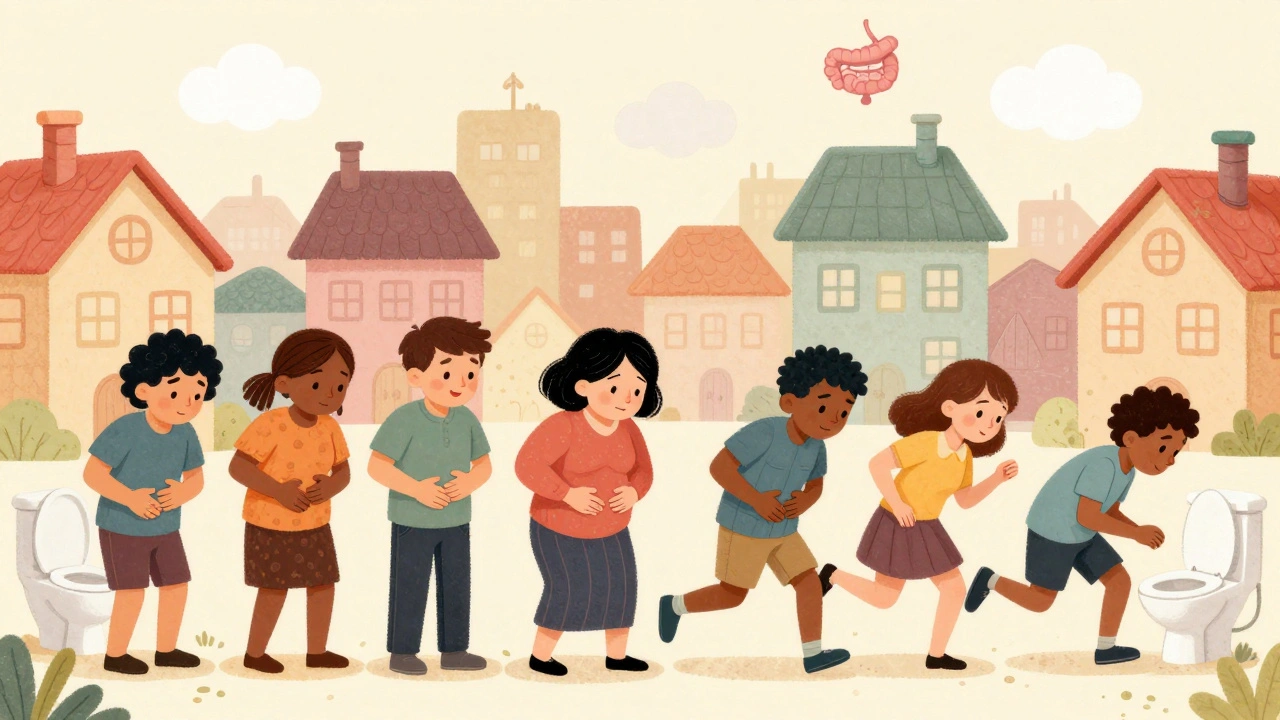
If you’ve been dealing with constant bloating, cramps, or unpredictable bathroom trips, you’re not alone. Around 1 in 7 people worldwide live with irritable bowel syndrome, or IBS. It’s not just "a sensitive stomach"-it’s a real, diagnosable condition that affects how your gut and brain talk to each other. And while it doesn’t cause damage to your intestines, it can make daily life feel like a minefield. The good news? You can manage it. Understanding your symptoms, what triggers them, and what treatments actually work can turn chaos into control.
What IBS Really Feels Like
IBS isn’t one thing. It shows up differently for everyone. The core signs are abdominal pain or cramping that comes and goes, usually getting worse after eating and better after a bowel movement. Along with that, you’ll likely notice changes in your bowel habits-either constipation, diarrhea, or both.Constipation-predominant IBS (IBS-C) means you’re straining, passing hard stools, and feeling like you haven’t fully emptied your bowels. Diarrhea-predominant IBS (IBS-D) brings sudden urgency, watery stools, and maybe even accidents. Mixed IBS (IBS-M) swings between the two, sometimes in the same day. About 40% of people with IBS have IBS-D, 35% have IBS-C, and the rest deal with the mixed type.
Other common symptoms include bloating so bad your clothes feel tight, excess gas, and mucus in your stool. It’s not just your gut, either. Around 70% of people with IBS also report non-digestive issues like nausea, acid reflux, chest pain that feels like a heart issue (but isn’t), or even a lump-in-the-throat sensation. These can be confusing and scary, but they’re part of the same system malfunction.
How Doctors Diagnose IBS
There’s no single test for IBS. Doctors don’t find a tumor or an infection-they rule everything else out. That’s why diagnosis can take months, sometimes years. The official standard is the Rome IV criteria: you need abdominal pain at least once a week for three months, with two of these three features: pain linked to bowel movements, a change in how often you go, or a change in stool consistency.Before calling it IBS, your doctor will check for red flags. If you’re over 45 and just started having symptoms, or if you’ve lost weight without trying, have blood in your stool, or have a family history of colon cancer or Crohn’s disease, you’ll need more testing. That might include a blood test for anemia or celiac disease, a stool test for inflammation (calprotectin), or a breath test to check for bacterial overgrowth. A colonoscopy is often recommended for people over 45 or anyone with warning signs.
It’s frustrating, but this process is necessary. IBS looks a lot like inflammatory bowel disease (IBD), celiac disease, or even colon cancer. Getting the right diagnosis means you get the right treatment.
What Makes IBS Flare Up
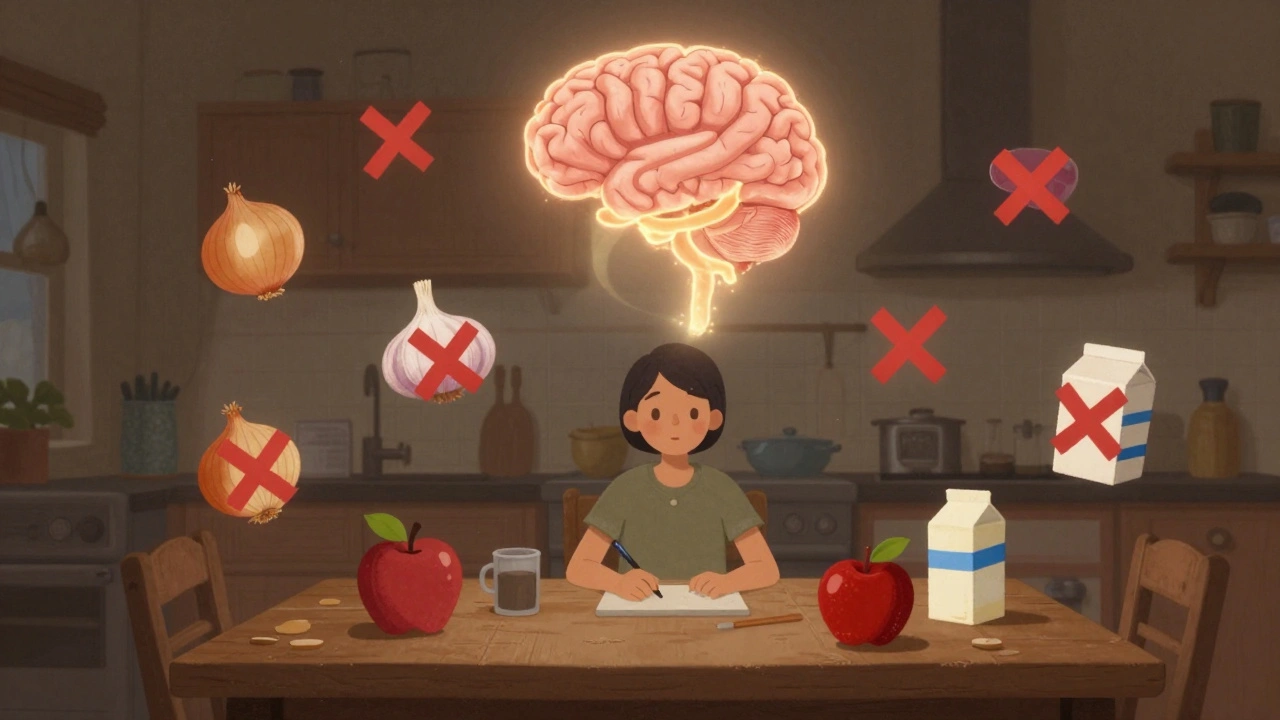
Triggers are personal-but some show up again and again. About 70% of people with IBS say food makes their symptoms worse. High-FODMAP foods are the biggest culprits. These are short-chain carbs that ferment in the gut and cause gas, bloating, and cramps. Common ones include onions, garlic, wheat, dairy (lactose), apples, pears, beans, and artificial sweeteners like sorbitol.Other triggers include caffeine (coffee, tea, energy drinks), alcohol, spicy foods, and fatty meals. Even if you’re eating healthy, a big plate of avocado toast or a creamy pasta can set off a flare.
Stress is another major player. Around 60-80% of people notice their symptoms get worse during stressful times-work deadlines, family arguments, or even just lack of sleep. Your gut has its own nervous system, and it reacts strongly to emotional stress. Hormones matter too. Around two-thirds of IBS patients are women, and many report worse symptoms right before or during their period. Estrogen and progesterone fluctuations can slow or speed up gut movement.
Antibiotics can also trigger IBS. About 1 in 4 people develop symptoms after taking them. That’s because antibiotics wipe out good and bad bacteria alike, throwing your gut microbiome out of balance. Sometimes, this imbalance sticks around long after the course ends.
Medications That Actually Help
There’s no one-size-fits-all pill for IBS. Treatment depends on your subtype and what symptoms bother you most.For IBS-D, two FDA-approved drugs are commonly used: rifaximin (Xifaxan) and eluxadoline (Viberzi). Rifaximin is an antibiotic that works locally in the gut and helps reduce bloating and diarrhea in about half of users. Eluxadoline slows down gut movement and reduces pain and diarrhea-but it can cause constipation or pancreatitis in rare cases, so it’s not for everyone, especially if you don’t have a gallbladder.
Over-the-counter loperamide (Imodium) helps with diarrhea, but it doesn’t touch the pain or bloating. It’s a quick fix, not a long-term solution.
For IBS-C, linaclotide (Linzess) and plecanatide (Trulance) are the go-to options. They work by drawing water into the intestines, softening stools and speeding things up. About 30-40% of users get at least three normal bowel movements a week. But side effects? Diarrhea is common, especially at first. Lubiprostone (Amitiza) is another option-it activates a chloride channel to increase fluid secretion. It’s less effective than the others but may be easier to tolerate.
For pain and cramping, antispasmodics like hyoscine (Levsin) or dicyclomine (Bentyl) can help. They relax the muscles in the gut and reduce spasms. About 55% of people report improvement. But they can cause dry mouth, blurred vision, or dizziness, so they’re not ideal for everyone.
Low-dose tricyclic antidepressants like amitriptyline (10-30 mg at night) are surprisingly effective-even if you’re not depressed. They don’t work as mood boosters here. Instead, they calm the nerves in your gut and reduce pain signals to your brain. Studies show 40-50% of people feel better overall after 4-8 weeks. It’s not a magic bullet, but it’s one of the most consistent tools we have.
Non-Medication Strategies That Work
Medications help, but they’re not the whole story. The most effective IBS management combines several approaches.The low-FODMAP diet is the most researched dietary approach. Done right-with help from a dietitian-it improves symptoms in 50-75% of people. It’s not about cutting out forever. It’s a three-step process: eliminate high-FODMAP foods for 2-6 weeks, then slowly add them back one at a time to find your triggers. Most people discover they can tolerate small amounts of some foods they thought they had to avoid completely.
Psychological therapies are just as powerful as pills. Gut-directed hypnotherapy and cognitive behavioral therapy (CBT) have been shown to reduce symptoms as well as medication does. In one study, 60% of people who did hypnotherapy felt significantly better after 12 weeks. These therapies help retrain your brain’s response to gut signals, reducing pain and anxiety around digestion.
Probiotics? Only certain strains work. Bifidobacterium infantis 35624 (sold as Align) is the only one with strong evidence. It improved global symptoms in 35% of users in clinical trials-better than placebo, but not a miracle. Other probiotics? Most don’t help, and some might even make things worse.
What’s New in IBS Research
Science is moving fast. In 2023, the FDA gave breakthrough status to ibodutant, a new drug that blocks a pain-signaling molecule in the gut. Early results show 45% of patients improved compared to 22% on placebo. That’s promising.Fecal microbiota transplantation (FMT)-basically, a poop transplant-is being studied too. A 2022 review found 35% of IBS patients went into remission after FMT, compared to just 15% in control groups. It’s still experimental, but the idea that gut bacteria directly influence IBS is gaining traction.
Meanwhile, researchers are mapping the gut microbiome of IBS patients and finding distinct bacterial patterns for IBS-D versus IBS-C. That could lead to personalized treatments based on your unique gut profile.
Living With IBS: Real Expectations
IBS isn’t curable. But it’s manageable. Most people who stick with a tailored plan-diet, stress tools, and the right meds-see big improvements within 6 months. A 2022 survey of over 1,200 IBS patients found that 62% felt better after dietary changes, and 55% said their quality of life improved with medication.But it takes patience. Diagnosing IBS often takes years. Finding your triggers can take months. Medications might need tweaking. The low-FODMAP diet is hard to follow alone. That’s why working with a dietitian and a doctor who gets IBS matters.
Don’t give up if one treatment fails. Try another. What works for your friend might not work for you. But with the right combination, most people find a way to live with IBS without it ruling their life.
Can IBS turn into colon cancer?
No, IBS does not cause colon cancer or lead to permanent damage in the intestines. It’s a functional disorder, meaning the gut doesn’t work right-but it’s not diseased. However, some symptoms of IBS (like changes in bowel habits or abdominal pain) can overlap with signs of colon cancer. That’s why doctors check for red flags like unexplained weight loss, rectal bleeding, or onset after age 50. If those are present, further testing is needed to rule out other conditions.
Is the low-FODMAP diet permanent?
No, it’s not meant to be lifelong. The low-FODMAP diet has three phases: elimination (2-6 weeks), reintroduction (8-12 weeks), and personalization (ongoing). The goal is to find which FODMAPs trigger your symptoms so you can avoid only those, not cut out entire food groups forever. Most people can eventually eat some high-FODMAP foods in small amounts without problems. Staying on the strict version too long can hurt your gut microbiome and lead to nutritional gaps.
Do probiotics help with IBS?
Some do-but only specific strains. The only probiotic with strong clinical evidence for IBS is Bifidobacterium infantis 35624 (sold as Align). It improved overall symptoms in 35% of users in trials. Most other probiotics, including popular brands, haven’t shown consistent benefits. Some might even worsen bloating. Don’t waste money on random probiotics-look for this specific strain if you want to try one.
Why do I feel so tired with IBS?
Fatigue is common in IBS and often tied to poor sleep, chronic pain, inflammation, and stress. Constant gut discomfort disrupts sleep, and stress hormones like cortisol can drain your energy. Some research also suggests that gut bacteria imbalances may affect serotonin production-a chemical linked to both mood and energy. Treating IBS symptoms often improves fatigue, but if it’s severe, check for iron deficiency or thyroid issues, which can also cause tiredness.
Can stress really make IBS worse?
Yes-strongly. Your gut and brain are connected by nerves and chemicals. When you’re stressed, your brain sends signals that slow or speed up digestion, increase pain sensitivity, and trigger inflammation in the gut. Studies show 60-80% of people with IBS report worse symptoms during stressful periods. Managing stress through therapy, mindfulness, or hypnotherapy isn’t optional-it’s a core part of treatment, just like diet or medication.
What’s the best way to track my IBS triggers?
Keep a daily symptom diary. Write down what you ate, when you had pain or bowel changes, your stress level (1-10), sleep quality, and menstrual cycle (if applicable). Apps like FODMAP Tracker or MySymptoms make this easy. After 2-4 weeks, look for patterns. Did your bloating always happen after coffee and onions? Did cramps spike after a bad night’s sleep? This data helps you and your doctor make smarter choices.
What to Do Next
If you think you have IBS, start by seeing your doctor. Don’t self-diagnose. Rule out other conditions first. If you’re already diagnosed, start tracking your symptoms and diet. Talk to a registered dietitian about the low-FODMAP diet. If stress is a big factor, ask about gut-directed hypnotherapy or CBT. Don’t wait for symptoms to get worse-early, structured management leads to the best outcomes.IBS isn’t a life sentence. It’s a puzzle. And with the right pieces-diet, mindset, and medication-you can put it together.
Comments
Grant Hurley
I tried the low-FODMAP diet for 3 weeks and thought I was gonna die. Then I realized I was just eating kale and boiled chicken for every meal. Turned out I could handle small amounts of garlic-just not in a whole bulb. Now I’m back to pasta and onions, just less of it. Life’s better. 😅
December 3, 2025 at 06:31
patrick sui
The gut-brain axis is such a wild concept-your enteric nervous system has more neurons than your spinal cord. 🤯 IBS isn’t "just stress," it’s neurogastroenterology in action. Rifaximin works for IBS-D because it modulates the microbiome without systemic absorption. But most docs don’t even know that. They just slap on Imodium and call it a day.
December 4, 2025 at 09:32
Michelle Smyth
Honestly, IBS is just the modern version of hysteria. Women get diagnosed with it because doctors don’t know how to handle psychosomatic symptoms anymore. I mean, have you seen the number of "gut-directed hypnotherapy" ads? It’s all just placebo with a fancy name.
December 5, 2025 at 02:05
Lucinda Bresnehan
I was diagnosed with IBS-M after 4 years of being told "it’s all in your head." Then I found a dietitian who actually knew about FODMAPs. The reintroduction phase was terrifying but SO worth it. I can now eat a slice of sourdough without turning into a human whooshing sound. 🙌
December 5, 2025 at 22:17
Adrian Barnes
It is not merely a coincidence that the rise in IBS diagnoses coincides with the proliferation of processed foods, artificial sweeteners, and chronic stress culture. The medical-industrial complex profits from managing symptoms rather than addressing root causes. You cannot pharmacologically fix a civilization that has severed its relationship with biological rhythm.
December 6, 2025 at 23:40
Conor Forde
Linaclotide? More like Linzess-terrible. I took it for two weeks and turned into a human toilet with legs. My cat started avoiding me. I’d rather eat a bowl of hot sauce and cry in a corner than take that crap again. And don’t get me started on the "low-FODMAP diet"-it’s just a fancy way to say "starve yourself until you’re too weak to care."
December 8, 2025 at 23:14
Declan Flynn Fitness
Bro, I used to have IBS-D so bad I’d skip meetings just in case. Started doing 10 mins of diaphragmatic breathing before bed and cut out caffeine after 2pm. Within 3 weeks, my gut calmed down. No pills. No drama. Just simple stuff. You don’t need a PhD to fix your gut-just consistency. 🙏
December 9, 2025 at 09:33
Dennis Jesuyon Balogun
In Nigeria, we don’t have access to these fancy meds. We use ginger tea, peppermint oil, and prayer. Guess what? 70% of people feel better. Western medicine overcomplicates everything. Your gut isn’t broken-it’s overwhelmed. Simplify. Eat real food. Breathe. Move. Stop treating your body like a machine that needs a firmware update.
December 9, 2025 at 20:25
Shannon Gabrielle
Of course you’re tired. You’re eating quinoa salads and taking probiotics like some Silicon Valley cult member. Meanwhile, your cortisol is through the roof because you’re stressed about your gut. Wake up. You’re not special. Your IBS isn’t a personality trait. Just eat some bread and stop Googling "microbiome trauma" at 3am.
December 10, 2025 at 00:43
Walker Alvey
The fact that people think a poop transplant is a real treatment says everything about modern medicine. We’re not curing disease-we’re just swapping microbes like trading baseball cards. Next they’ll be selling gut bacteria on Etsy.
December 11, 2025 at 04:49
Declan O Reilly
I think IBS is the body’s way of screaming "I’m not okay!" but we’ve turned it into a diet trend. We obsess over FODMAPs like they’re runes from an ancient scroll. But what if the real trigger is loneliness? Or not feeling heard? Or working 80-hour weeks while pretending you’re fine? Maybe the gut isn’t broken… maybe the world is.
December 12, 2025 at 23:19
Patrick Smyth
I’ve had IBS since I was 16. I’ve tried everything. Pills, diets, hypnosis, acupuncture, even a shaman in Bali. I’m not cured. But I’m alive. And I still eat pizza. And I still cry sometimes. And that’s okay. You don’t have to be perfect to be whole.
December 14, 2025 at 08:00
Write a comment