
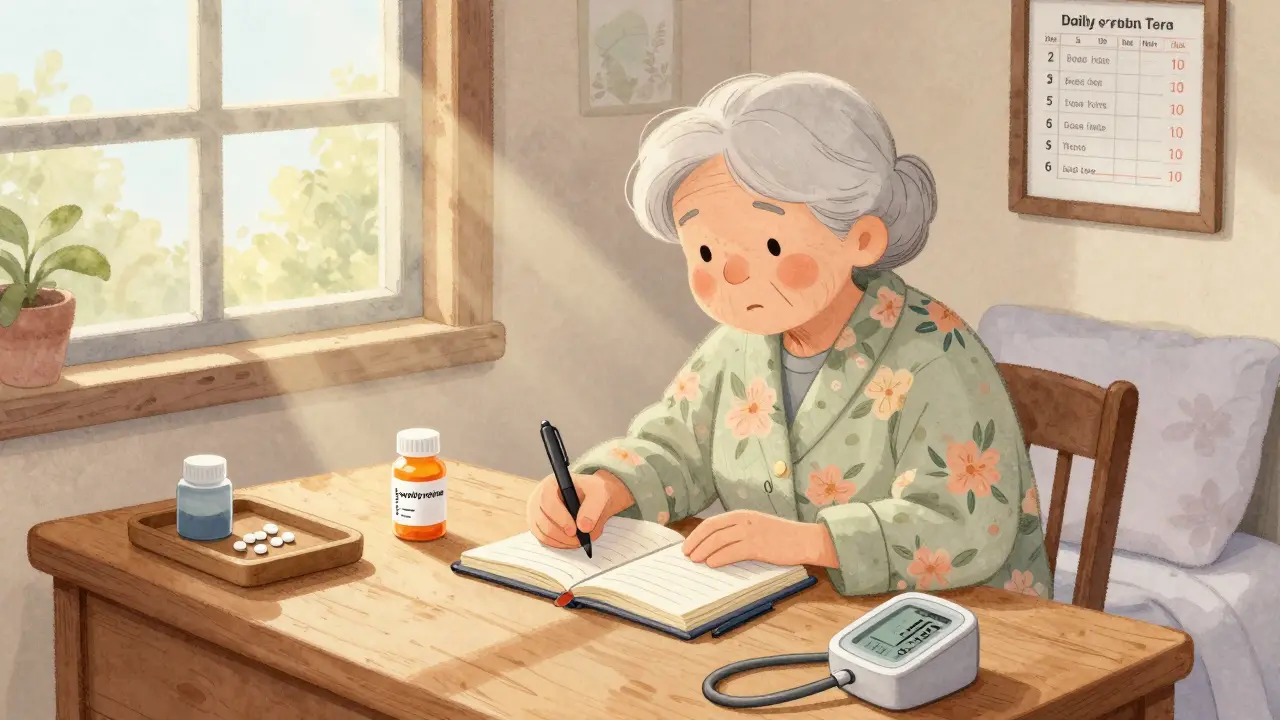
Switching to a generic drug can save you hundreds of dollars a year. But what if you don’t feel the same after the switch? Maybe your pain isn’t as well controlled. Maybe you’re more tired, dizzy, or anxious. Or worse - you’re having new side effects you never had before. You’re not imagining it. And you’re not alone.
Over 90% of prescriptions in the U.S. are filled with generic drugs. They’re cheaper, widely available, and approved by the FDA as bioequivalent to brand-name versions. But bioequivalent doesn’t always mean identical. The FDA allows generics to vary by up to 20% in how much of the drug gets absorbed into your bloodstream. For most people, that’s fine. For others - especially those on drugs with a narrow therapeutic index - even small differences can make a big difference.
Why Your Body Might React Differently to Generics
Think of a generic drug like a copy of a recipe. Same ingredients, same instructions. But what if the flour is from a different mill? Or the salt has a different grain size? The cake still bakes - but maybe it’s a little drier, or rises unevenly. That’s what can happen with generics.
Manufacturers of generic drugs aren’t required to use the same inactive ingredients (fillers, dyes, coatings) as the brand-name version. These don’t affect the active drug, but they can change how quickly the pill breaks down in your stomach. For someone taking thyroid medication like levothyroxine, that small delay can throw off hormone levels. For someone on seizure medicine like phenytoin, even a 10% drop in absorption can trigger a seizure.
And it’s not just about the formula. Different manufacturers produce the same generic drug. One batch might come from a plant in India, another from a plant in Puerto Rico. The FDA says they’re all safe. But inspection rates for foreign facilities have dropped - nearly half went uninspected for five years by the end of 2021. That means quality control isn’t always consistent.
What to Track in Your Medication Journal
A simple journal doesn’t need to be fancy. But to make it useful when switching generics, you need to track more than just "took my pill." Here’s what matters:
- Drug name - Write both the brand name (e.g., Synthroid) and the generic (e.g., levothyroxine), plus the manufacturer (e.g., Teva, Mylan, Dr. Reddy’s). You’ll need this later.
- Lot number - Found on the bottle or box. It’s not just for recalls. It helps you trace which batch you were on when symptoms changed.
- Physical appearance - Color, shape, score lines, imprint code. If your pill suddenly looks different, write it down. 33% of patients report confusion or anxiety when their pill changes look.
- Dosage and timing - Did you take it at 8 a.m. or 10 p.m.? Did you skip a dose? Did you take it with food? These all affect absorption.
- Symptoms - Use a simple 1-10 scale. Rate your pain, fatigue, mood, dizziness, or nausea each day. Don’t just say "I felt bad." Say "Mood: 7/10, Fatigue: 9/10, Headache: Yes, 3x this week."
- Objective measurements - If you monitor blood pressure, blood sugar, or INR (for warfarin), write those numbers. A 0.5-point swing in INR can mean the difference between a clot and a bleed.
- Switch date - When did you go from one manufacturer to another? Mark it clearly.
Don’t forget to note if your drug has an AB rating in the FDA’s Orange Book. That means it’s considered interchangeable. If it’s BX, the FDA hasn’t confirmed it’s equivalent. That’s a red flag to be extra careful.
Real Stories from People Who Kept a Journal
One woman on Reddit, "AnxiousAsthmatic87," switched her levothyroxine three times in six months because her insurance kept changing the preferred brand. She started journaling. Within weeks, she saw her TSH levels jump from 1.2 to 8.7 - way out of range - even though she never missed a dose. She brought the journal to her endocrinologist. They switched her back to Synthroid. Her levels normalized in three weeks.
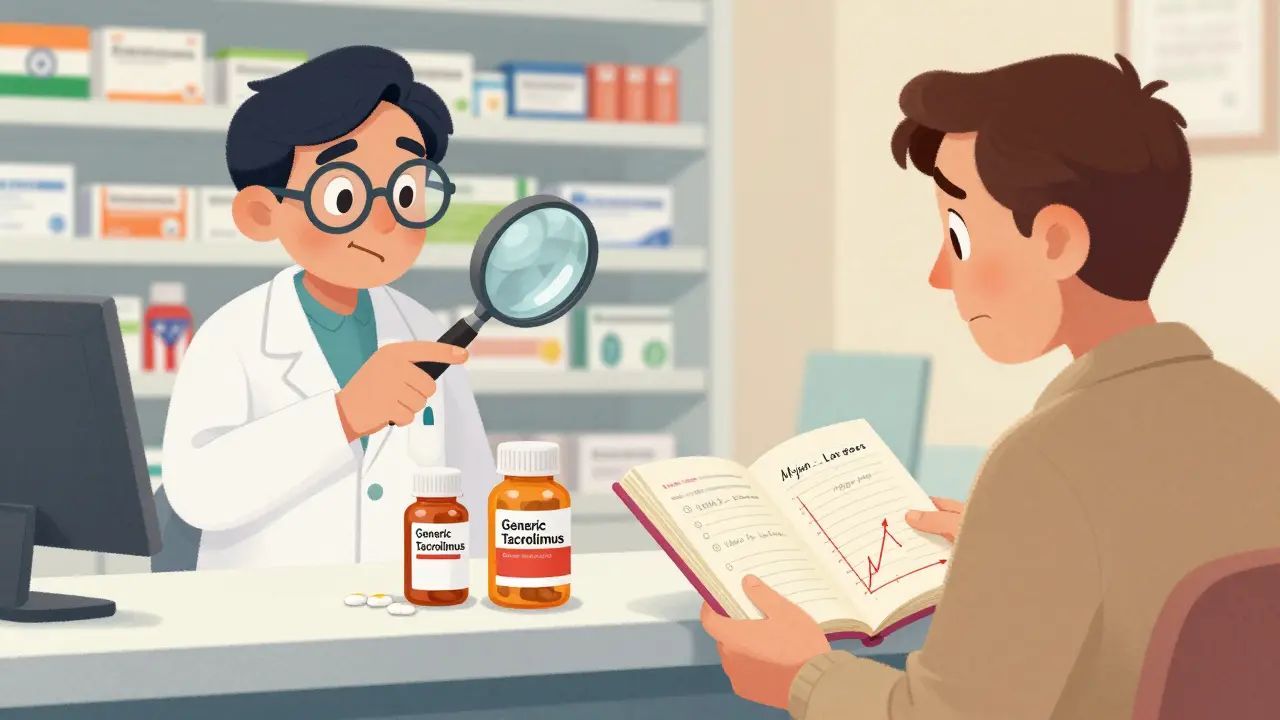
Another man, a heart transplant patient, started taking a generic version of tacrolimus after his insurance denied the brand. Within a month, he was back in the ER with high blood pressure and confusion. His doctor found his drug levels were too low. The generic from Dr. Reddy’s wasn’t absorbing the same way. He switched back. His body stabilized.
But not everyone has problems. On PatientsLikeMe, 68% of users tracking antidepressants reported no difference between brand and generic. The key? They used standardized tools like the PHQ-9 depression scale. They weren’t guessing. They were measuring.
How to Start - Paper, App, or Spreadsheet?
You have options. Pick one that fits your life.
- Paper journal - Preferred by 62% of people over 65. Simple. No batteries. The CDC offers a free printable template with tear-off sheets for doctor visits. Costs under $5 for 100 pages.
- Spreadsheet - Google Sheets or Excel. Easy to sort, chart, and share. You can add formulas to auto-calculate averages. Great if you’re tech-savvy.
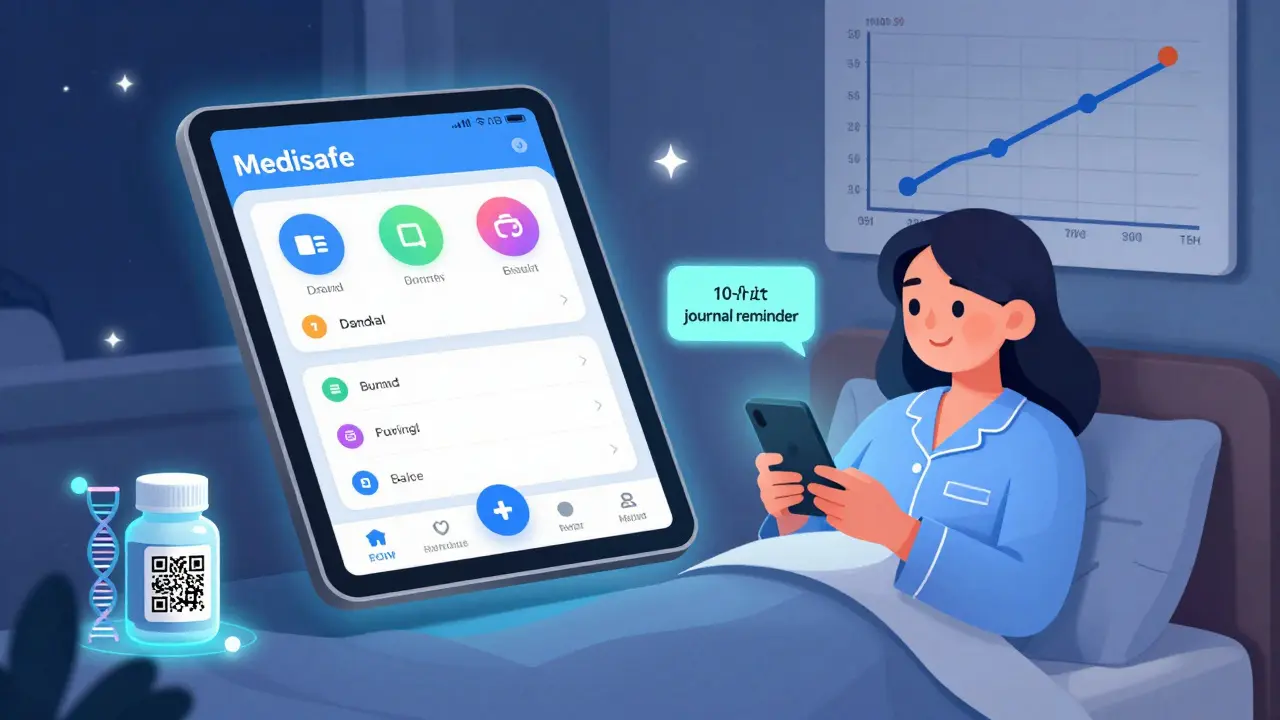
- App - Medisafe (rated 4.7/5 on Apple App Store) and MyTherapy (used by 8 million people) let you log doses, set reminders, and even export data. Both sync with Apple Health and Google Fit. But if you’re not comfortable with apps, don’t force it.
Pro tip: Set a daily phone reminder for 10 minutes after you take your pill. That’s when your memory is freshest. Don’t wait until bedtime.
When Journaling Helps - and When It Doesn’t
Journaling works best for drugs where effects show up fast. Think blood pressure pills, painkillers, thyroid meds, seizure drugs, or blood thinners. You’ll see changes within hours or days.
It’s less helpful for antidepressants or medications that take weeks to work. If you’re on fluoxetine, a bad day doesn’t mean the generic failed. It might just be a bad day.
Also, don’t panic over small changes. The FDA says 90% of generic switches cause no clinical difference. But if you notice a pattern - say, every time you get the blue pill from Manufacturer X, your headaches get worse - that’s worth investigating.
What Your Doctor and Pharmacist Can Do
Bring your journal to every appointment. It’s not just for you - it’s for them. A 2022 University of Michigan study found that patients who showed their journal had 32% fewer unnecessary medication changes and 27% better adherence.
Pharmacists are your secret weapon. Kaiser Permanente ran a program where pharmacists reviewed patient journals. They cut generic-related medication errors by 44%. They can spot when you’ve been switched to a different manufacturer, explain lot numbers, and even tell you which generics are made by the same company under different names.
Common Mistakes (and How to Avoid Them)
- Only tracking symptoms - Without dates, lot numbers, or manufacturer names, your journal is useless. You need details to connect cause and effect.
- Stopping after a few weeks - Most people quit after 3 months. But problems can show up later. Keep going. Even if you feel fine.
- Confusing normal fluctuations - Stress, sleep, diet, and illness can all affect how you feel. Don’t blame the pill for everything.
- Using multiple systems - Writing in a notebook, logging in an app, and using a spreadsheet? That’s a mess. Pick one and stick with it.
What’s Next? The Future of Medication Tracking
The FDA is starting to listen. In 2023, they partnered with Apple Health to build standardized templates for generic drug tracking in iOS 17. In 2024, they launched a pilot where QR codes on pill bottles link to detailed bioequivalence data. That means you can scan your bottle and see exactly how the generic compares to the brand.
And it’s not just tech. The Generic Pharmaceutical Association launched "Know My Generic" in January 2024 - a free resource with manufacturer comparisons, lot tracking, and patient stories. You can find it at KnowMyGeneric.org.
AI tools are coming too. Microsoft’s Healthcare NExT team built a prototype that analyzes journal entries and predicts when a patient might have a bad reaction - with 82% accuracy. It’s not here yet, but it’s coming.
For now, the best tool you have is your own observations - written down, organized, and shared.
Do I really need to track my generic medication if I feel fine?
Yes - even if you feel fine. Many problems show up slowly. A small drop in thyroid hormone levels might not cause symptoms right away, but over months, it can lead to weight gain, fatigue, or heart issues. Tracking helps catch those changes before they become serious.
Can my pharmacist tell me which generic manufacturer is best?
They can’t say one is "best," but they can tell you which ones have had fewer reports of issues. For example, some manufacturers have had more recalls or FDA warning letters. Your pharmacist can also tell you if two different generics are made by the same company under different brand names - which means they’re likely identical.
What if my insurance keeps switching my generic?
Keep your journal updated. When you notice a pattern - say, every time you get the green pill, your blood pressure spikes - take it to your doctor. They can request a "non-substitutable" prescription. That means the pharmacy must give you the same brand or generic every time. It’s legal. And your journal is your proof.
Is there a template I can use?
Yes. The Cleveland Clinic offers a free NTI (Narrow Therapeutic Index) medication tracking form that includes columns for manufacturer, lot number, physical description, and symptom scores. It’s downloaded over 28,000 times. You can find it by searching "Cleveland Clinic generic medication journal" in your browser.
How long should I track before deciding if a generic isn’t working?
At least 4-6 weeks. Your body needs time to adjust. But if you notice a sudden, clear change right after a switch - like new dizziness, a seizure, or a spike in blood pressure - don’t wait. Call your doctor immediately. That’s not normal.
Keeping a medication journal isn’t about distrust. It’s about control. You’re not just taking pills. You’re learning how your body responds. And when you switch to a cheaper version, you deserve to know if it’s really working for you.
Comments
Sarah Barrett
There's something quietly revolutionary about tracking your pill's color and lot number. It turns passive consumption into active partnership with your own body.
For years, I thought my fatigue was just "aging." Then I started journaling after switching generics-and realized every time I got the teal tablet from Teva, my cortisol spiked.
It wasn't anxiety. It wasn't insomnia. It was a milligram shift in absorption.
I showed my endocrinologist the log. She ordered a specialty pharmacy that sources from the same manufacturer as my original brand.
Three weeks later, I slept through the night for the first time in years.
Generics aren't the enemy. But blind substitution? That's negligence dressed as cost-cutting.
Knowledge is the only real insurance you have when your life depends on consistency.
Don't wait for a crisis to start documenting.
Start today. Even if you feel fine.
Your future self will thank you.
February 14, 2026 at 13:55
Kapil Verma
Why are Americans so obsessed with tracking pills like they're nuclear codes? In India, we take what we're given and trust the system.
Our generics are cheaper, yes-but they're not inferior.
Our manufacturers follow WHO-GMP standards, not just FDA whims.
You people treat every pill like it's a lottery ticket.
Stop overcomplicating life.
If you're having side effects, maybe it's your stress, your diet, your sleep-or your obsession with control.
Not every difference is a danger. Some are just noise.
February 15, 2026 at 04:32
Michael Page
The FDA’s 20% bioequivalence range is mathematically sound for population-level outcomes.
But individual pharmacokinetics are not populations.
They are singular biological systems shaped by epigenetics, gut microbiota, and metabolic idiosyncrasies.
What is statistically insignificant can be clinically catastrophic for one person.
Journaling is not paranoia.
It is epistemological humility in the face of biological complexity.
And yes, the FDA’s inspection regime for foreign facilities is deeply flawed-especially given the rise in counterfeit active pharmaceutical ingredients.
This isn't about distrust.
This is about acknowledging that science has limits when applied to individual human bodies.
February 16, 2026 at 08:46
Mandeep Singh
Oh please. You think your little notebook is going to fix everything? Let me tell you something-my cousin in Mumbai took the same generic levothyroxine for 12 years, no journal, no app, no obsession.
She’s fine. Healthy. No hospital visits.
Meanwhile, Americans are turning medication into a full-time job.
Do you even know how many people die because they overthink their pills?
You’re not tracking health-you’re creating anxiety.
And don’t even get me started on the $500 apps that charge you to log your pill color.
Stop monetizing fear.
Take the pill. Live your life.
Not every difference matters.
Most of you just need to chill.
February 16, 2026 at 13:00
Kaye Alcaraz
Start simple.
One notebook.
One pen.
One daily check-in.
That’s all you need.
Write the date.
Write the name.
Write how you felt.
That’s it.
You don’t need color-coded charts or QR codes.
You just need to show up for yourself.
And if you start noticing a pattern?
Take it to your doctor.
They’ll listen.
Because you cared enough to write it down.
You’re not crazy.
You’re wise.
February 18, 2026 at 09:30
Esha Pathak
Every time I see someone say "just trust the system," I want to hand them a copy of the FDA’s 2021 inspection report.
Half of foreign facilities? Uninspected for five years.
And yet we’re supposed to believe that a pill made in a warehouse with no temperature control is identical to one made in a sterile lab?
My body doesn’t care about FDA logos.
It cares about absorption.
And if my thyroid can’t tell the difference between a pill from India and one from Puerto Rico?
Then maybe it’s time we stopped pretending generics are magic.
They’re chemistry.
And chemistry doesn’t lie.
But it does need careful tracking.
That’s not paranoia.
That’s science.
And I’m not alone.
Look at the data.
It’s there.
And it’s real.
February 19, 2026 at 14:00
Virginia Kimball
I used to think journaling was for people who overthink everything.
Then I switched my blood pressure med and started getting dizzy every Tuesday.
Turns out, the new generic came in a different coating-and it dissolved slower with breakfast.
So I started writing: date, pill color, time taken, food eaten, dizziness score.
Within a week, I saw the pattern.
I showed my pharmacist.
She said, "Oh yeah, that batch has a sugar coating. Try taking it at night."
Problem solved.
And it cost me nothing but 10 minutes a day.
You don’t need an app.
You don’t need a spreadsheet.
You just need to notice.
And care enough to write it down.
You’ve got this.
February 20, 2026 at 06:26
Betty Kirby
Let’s be brutally honest: most people who keep these journals are either hypochondriacs or have been gaslit by the pharmaceutical industry.
Generic drugs are not dangerous.
The FDA doesn’t approve drugs based on marketing.
They test them.
And if you’re having side effects, maybe it’s not the pill.
Maybe it’s your anxiety.
Your sleep.
Your stress.
Your need to control every variable in your life.
Stop blaming the pill.
Start blaming your obsession with perfection.
And for the love of God, stop buying into the fear-mongering marketing of "medication tracking" apps that charge $12/month to remind you to take your pill.
You’re not a lab rat.
You’re a human.
Trust your body.
Not your spreadsheet.
February 21, 2026 at 02:50
Josiah Demara
You people are hilarious.
Let’s break this down.
First, the FDA allows 20% variation? That’s not a loophole-it’s a statistical buffer for population averages.
Second, you’re acting like a pill from Teva is somehow "contaminated" because it was made in a facility that hasn’t been inspected since 2019.
But you’ll trust a $300 brand-name drug made in the same country?
Third, you’re ignoring that 90% of people have zero issues.
Fourth, you’re turning a simple pharmacological fact into a crusade against Big Pharma-when the real problem is insurance companies forcing switches every 90 days.
Fifth, your "journal" is just a symptom of medicalization gone wild.
You’re not gaining control.
You’re surrendering your autonomy to a spreadsheet.
And worst of all?
You’re giving pharmaceutical companies more data to monetize.
They love this.
They’re selling you peace of mind.
And you’re paying for it-with your time, your anxiety, and your trust in systems you claim to distrust.
Pathetic.
February 21, 2026 at 16:09
Write a comment