
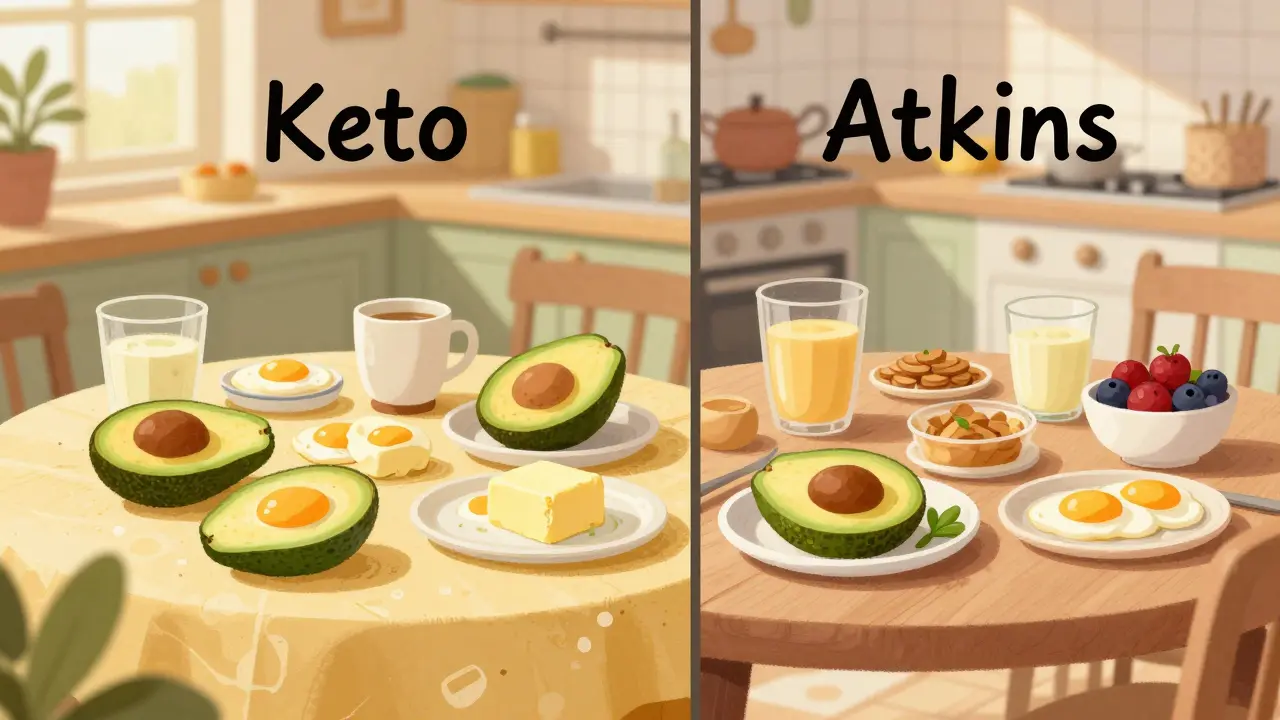
The Quick Breakdown: Keto vs. Atkins
Before we get into the weeds, here is the bottom line: The ketogenic diet is a high-fat, ultra-low-carb regimen designed to keep your body in a state called ketosis. The Atkins diet is a phased approach that starts very strict but gradually lets you add carbs back into your life to find a sustainable balance.
| Feature | Ketogenic Diet | Atkins Diet |
|---|---|---|
| Primary Goal | Maintain continuous ketosis | Weight loss through phased carb reintroduction |
| Carb Limit | Strictly under 50g (usually 20-50g) | Starts at 20-25g, scales up to 100g |
| Protein Intake | Moderate (to avoid gluconeogenesis) | Higher / More flexible |
| Fat Intake | Very High (75-90% of calories) | High (60-70% initially) |
| Sustainability | Difficult for most long-term | Easier due to phased flexibility |
How the Ketogenic Diet Actually Works
The Ketogenic Diet is a high-fat, low-carbohydrate dietary pattern designed to shift the body's metabolism away from glucose and toward ketone bodies. Originally developed in the 1920s at the Mayo Clinic to treat epilepsy, it's now a powerhouse for rapid weight loss. To make it work, you have to trick your body into a state of Ketosis. This happens when you restrict carbs so heavily that your liver begins converting fat into ketones, which your brain and muscles then use for fuel.
In a typical keto setup, you're looking at a strict macronutrient split: roughly 75-90% fat, 20% protein, and only 5-10% carbs. Why so little protein? Because of a process called Gluconeogenesis. If you eat too much protein, your body can actually turn those amino acids back into glucose, which can kick you right out of ketosis. This is why keto feels like a tightrope walk-one high-carb cheat meal or an oversized steak could stall your progress.
The Atkins Method: A Phased Journey
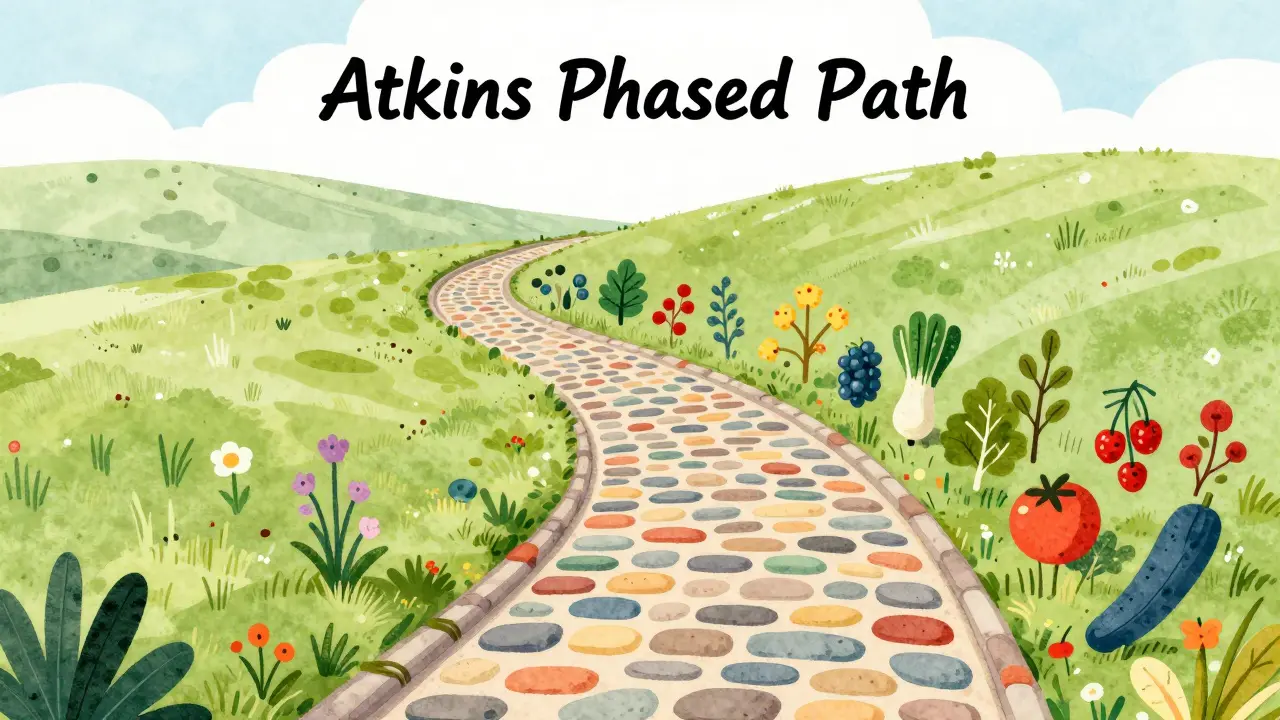
The Atkins Diet takes a different route. Created by Dr. Robert Atkins in 1972, it doesn't demand that you stay in permanent ketosis. Instead, it uses a phased system to help you discover your "carb balance." This makes it feel less like a medical prescription and more like a structured plan.
- Phase 1 (Induction): This is the "kickstart." For about two weeks, you limit net carbs to 20-25 grams per day to jumpstart weight loss.
- Phase 2 (Ongoing Weight Loss): You slowly increase your carb intake to between 25-50 grams.
- Phase 3 (Pre-Maintenance): You push the limit further, allowing 50-80 grams of carbs to see where your weight stabilizes.
- Phase 4 (Lifetime Maintenance): This is the goal. You find a permanent level-often up to 100 grams of net carbs-that keeps the weight off.
Unlike keto, Atkins allows for much more protein. You don't have to worry about gluconeogenesis as much because the goal isn't necessarily to maintain a strict state of ketosis forever, but rather to manage insulin levels and reduce overall carbohydrate intake.
Weight Loss Results: What the Science Says
If you're looking for the fastest drop on the scale, keto often takes the lead in the short term. A 2014 study showed participants on a low-calorie keto diet lost about 44 pounds over a year, compared to just 15 pounds for those on a standard low-calorie plan. This is partly because keto helps maintain your Resting Metabolic Rate (RMR), meaning you don't slow down your metabolism as much while losing weight.
Atkins is also highly effective, especially for those dealing with metabolic issues. A 2013 study of adults with type 2 diabetes showed that the Atkins diet significantly lowered HgbA1c levels and reduced the need for medication. However, when you look at the 24-month mark, the gap narrows. Research published in the American Journal of Clinical Nutrition suggests that by two years, the weight loss difference between strict low-carb diets and moderate-carb diets is minimal. Basically, the "magic" of the specific diet matters less than your ability to actually stick to it.
The Trade-Offs: Side Effects and Sustainability
Nothing worth doing is easy, and both diets have their pitfalls. If you go the keto route, be prepared for the Keto Flu. About 70-80% of beginners experience headaches, brain fog, and irritability during the first two weeks as the body adapts to burning fat. It's a brutal transition, but it usually passes once you increase your electrolytes.
Then there's the sustainability problem. Keto requires perpetual vigilance. If you want to eat a piece of fruit or a slice of whole-grain bread, you're likely breaking your metabolic state. On the other hand, Atkins is designed for the long haul. Because it gradually reintroduces carbs, many people find it more practical. However, Atkins users often report hitting plateaus during Phase 3, where weight loss slows down as carbs increase.
We also have to talk about heart health. Some experts, including those at the Physicians Committee for Responsible Medicine, warn that the high saturated fat often found in keto meal plans could increase cardiovascular risks. If you're doing keto, focusing on healthy fats like olive oil and avocado rather than just loads of bacon is a smarter move.
Which One Should You Choose?
Choosing between these two depends on your personality and your goals. If you love data, tracking macros, and want the most aggressive results possible, keto might be your jam. It's a high-effort, high-reward system that works wonders for people who thrive on strict rules.
If you want a plan that evolves with you and allows for more flexibility-like the occasional berry or a wider variety of vegetables-Atkins is the better bet. It’s less about a biological "switch" and more about finding a sustainable lifestyle.
Can I do both at the same time?
Not really. While they share similarities, the goals are different. Keto is about maintaining a specific metabolic state (ketosis), while Atkins is a phased transition. If you're following the Atkins phases, you'll eventually move out of the strict state that defines a ketogenic diet.
Which diet is better for diabetes?
Both can be effective for improving glycemic control and lowering blood sugar. However, because keto is more restrictive and can cause rapid changes in blood glucose, it is absolutely critical to consult a doctor first, as medications may need immediate adjustment to avoid hypoglycemia.
What are "net carbs" in the Atkins diet?
Net carbs are the total carbohydrates in a food minus the fiber and certain sugar alcohols. Since fiber isn't digested by your body, it doesn't raise blood sugar, so Atkins (and many keto followers) subtracts it from the total count to get a more accurate picture of the impact on insulin.
Is the Keto Flu dangerous?
It's not dangerous, but it is uncomfortable. It's caused by the loss of water and electrolytes as your body burns through glycogen. You can usually fix it by drinking more water and increasing your intake of salt, magnesium, and potassium.
Do I need to test my ketones?
For keto, testing via blood, breath, or urine strips helps confirm you're actually in ketosis. It's a great tool for troubleshooting plateaus. For Atkins, it's generally not necessary because the goal is weight management rather than maintaining a strict ketogenic state.
Next Steps for Your Journey
If you're ready to start, don't just jump in blindly. First, clear out your pantry of high-sugar snacks and refined flours. If you're choosing keto, start by calculating your specific macros using an app like Carb Manager so you don't accidentally eat too much protein. If you're choosing Atkins, commit to the two-week Induction phase without cheating; that's where the metabolic shift happens.
For those who find strict low-carb too limiting, consider a "cyclical" approach or a hybrid model-starting with a strict ketogenic phase for a few months to drop initial weight, then transitioning into a Mediterranean-style diet for long-term maintenance. This often prevents the dreaded weight regain that happens when people quit strict diets cold turkey.