
Liver Drug Clearance Calculator
How This Calculator Works
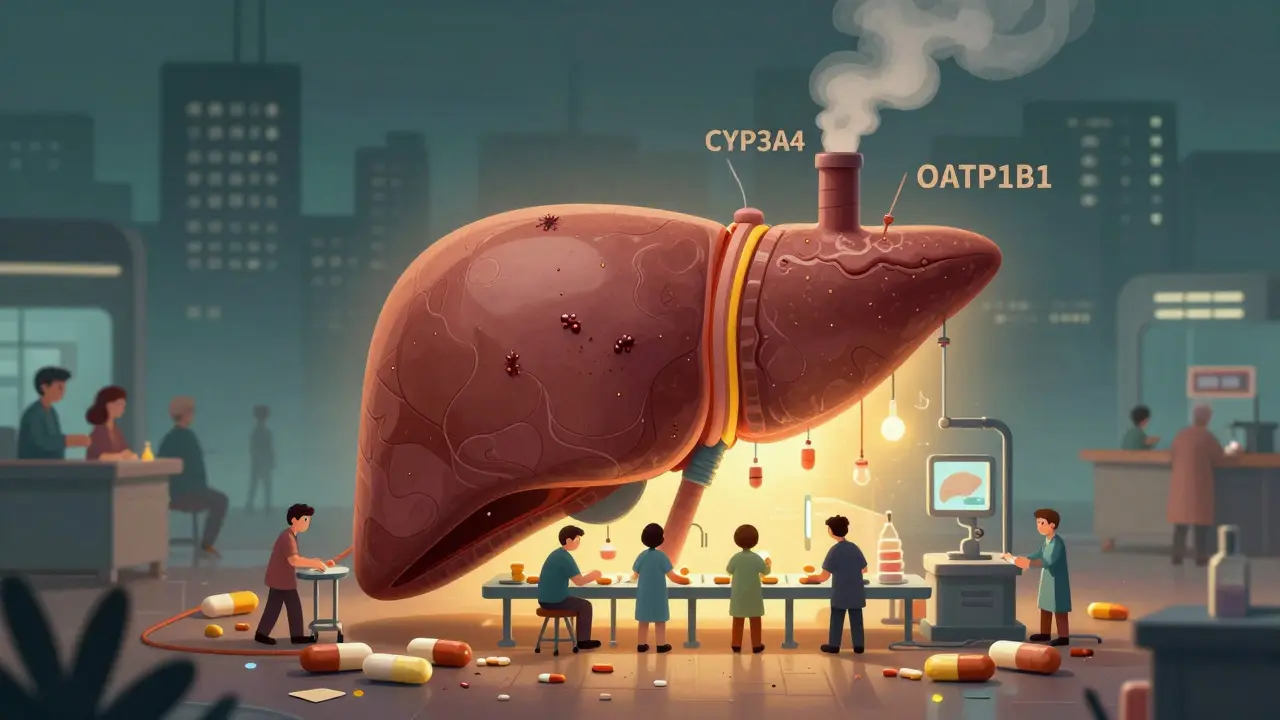
This calculator adjusts medication dosages based on liver function and drug extraction ratio. Your liver processes about 70% of all prescription medications. In liver disease, reduced enzyme activity (CYP3A4, CYP2E1) and impaired transport proteins (OATP1B1) can cause drug buildup and toxicity. High-extraction drugs (ratio >0.7) are affected by blood flow changes, while low-extraction drugs (ratio <0.7) are more affected by enzyme function.
Calculate Adjusted Dose
When your liver is damaged, it doesn’t just affect how you feel-it changes how every pill you take works in your body. For people with liver disease, standard doses of common medications can become dangerous. This isn’t theoretical. It’s happening right now in clinics and homes across the U.S., where over 22 million people live with chronic liver conditions. The problem isn’t that drugs are faulty. It’s that the liver, once a reliable drug processor, is now struggling to keep up.
Why the Liver Matters for Medications
Your liver doesn’t just filter toxins. It’s the main factory for breaking down drugs. About 70% of all prescription medications rely on liver enzymes to be processed and cleared from your system. Two key enzyme families handle this: the cytochrome P450 system (especially CYP3A4 and CYP2E1) and transport proteins like OATP1B1. In healthy people, these enzymes work like a well-tuned assembly line. But in liver disease-especially cirrhosis-this line slows down, stalls, or even shuts off in places. Studies show that in advanced cirrhosis, CYP3A4 activity drops by 30-50%, and CYP2E1 can fall by as much as 60%. Transport proteins that pull drugs into liver cells for processing are also impaired, with OATP1B1 activity reduced by 50-70%. The result? Drugs don’t get broken down fast enough. They build up. And that buildup can turn a safe dose into a toxic one.High-Extraction vs. Low-Extraction Drugs: What’s the Difference?
Not all drugs are affected the same way. Experts classify them by something called the extraction ratio. This tells you how much of the drug the liver removes during its first pass. - High-extraction drugs (ratio >0.7) depend mostly on liver blood flow. Examples: fentanyl, morphine, propranolol. In cirrhosis, blood flow to the liver drops by 30-40% due to scarring and shunting. These drugs see reduced clearance, but the effect is predictable. - Low-extraction drugs (ratio <0.3) depend on enzyme activity. Examples: diazepam, lorazepam, methadone, warfarin. These are the real troublemakers. Why? Because 70% of commonly prescribed drugs fall into this group. Even if blood flow stays stable, if the enzymes are damaged, these drugs pile up. That’s why a standard dose of diazepam can leave a cirrhotic patient groggy, confused, or even comatose.What Happens When Drugs Build Up
The most dangerous consequence? Hepatic encephalopathy. This is when toxins-especially sedatives and opioids-reach the brain because the liver can’t clear them. Patients with cirrhosis are 30-50% more sensitive to these drugs. A dose that’s fine for a healthy person can trigger confusion, slurred speech, or coma in someone with liver disease. Warfarin is another classic case. Its clearance drops by 30-50% in cirrhosis. If you don’t reduce the dose, INR levels spike. Bleeding risk goes up. Studies show that patients with cirrhosis need 25-40% lower doses to stay in the safe range. But many doctors still start with the standard 5 mg. That’s a recipe for disaster. Even drugs you might think are safe aren’t. Ceftriaxone, a common antibiotic, reaches 40-60% higher blood levels in cirrhotic patients. That’s not just a lab curiosity-it’s linked to higher rates of side effects like diarrhea and allergic reactions.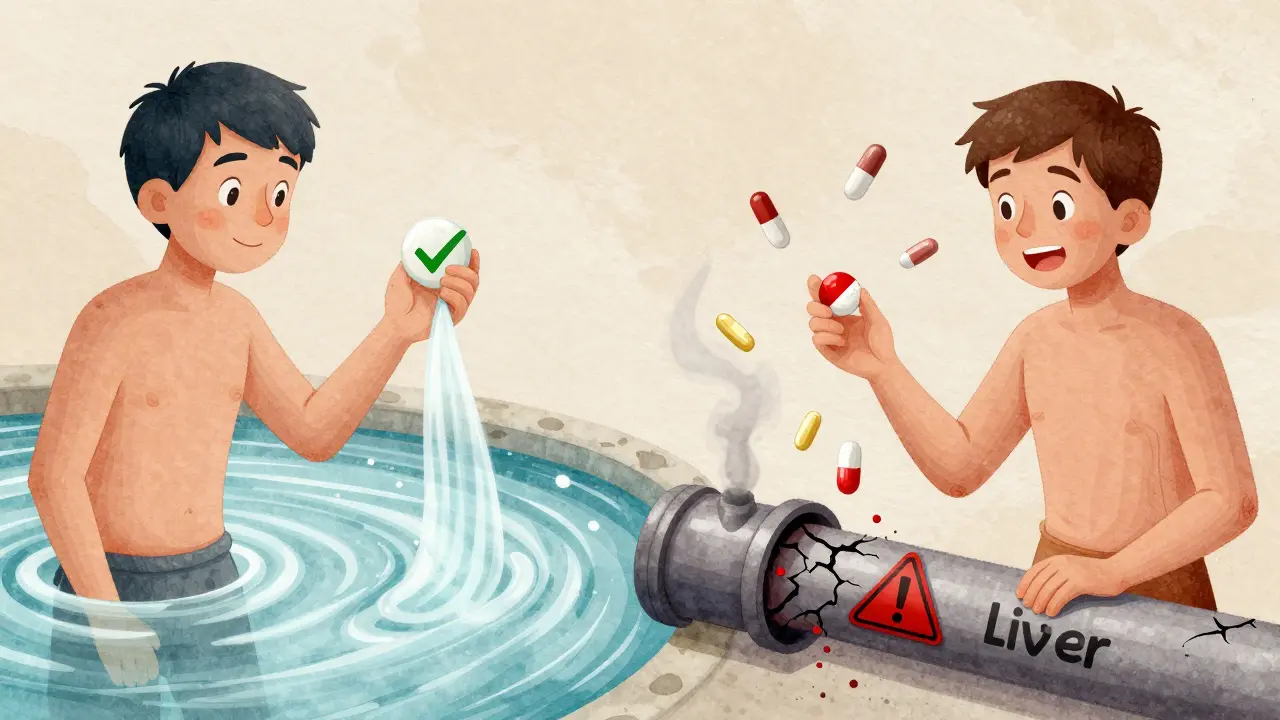
How Doctors Assess Liver Function (And Why Lab Tests Alone Aren’t Enough)
You can’t just look at ALT or AST levels. Those can be normal even in advanced disease. The gold standard is the Child-Pugh score, which combines five factors: bilirubin, albumin, INR, ascites, and encephalopathy. Class A (mild), B (moderate), C (severe). The MELD score (Model for End-Stage Liver Disease) is also widely used. For every 5-point increase in MELD above 10, drug clearance drops by about 15%. So a patient with a MELD of 20 has nearly 30% less clearance than someone with a MELD of 10. But here’s the catch: drug levels don’t always match these scores. Two people with the same Child-Pugh class can have wildly different drug metabolism. Why? Because liver damage isn’t uniform. One person might have more shunting. Another might have genetic variations in their enzymes. That’s why therapeutic drug monitoring-measuring actual drug levels in the blood-is critical for medications with narrow safety windows, like warfarin, digoxin, or some antivirals.Dosing Adjustments That Actually Work
Guidelines from AASLD and EASL give clear, drug-specific advice: - Diazepam (has active metabolites): Reduce dose by 50-70% in cirrhosis.- Lorazepam (no active metabolites): Only reduce by 25-40%.
- Morphine: Use with caution. Consider alternatives like hydromorphone.
- Warfarin: Start at 1-2 mg/day, monitor INR closely.
- Sugammadex: No dose change needed-it’s cleared by the kidneys. But recovery time is 40% longer.
- Direct-acting antivirals for hepatitis C: Wrong dosing in Child-Pugh C patients led to 22.7% treatment failure. Correct dosing brought it down to 5.3%. The American College of Gastroenterology reports that 68% of hepatologists regularly struggle with antibiotic dosing in cirrhotic patients. Ceftriaxone, vancomycin, and linezolid all need tweaks. Yet many hospitals still use standard dosing. That’s not just outdated-it’s risky.
The New Frontier: Modeling and Personalized Dosing
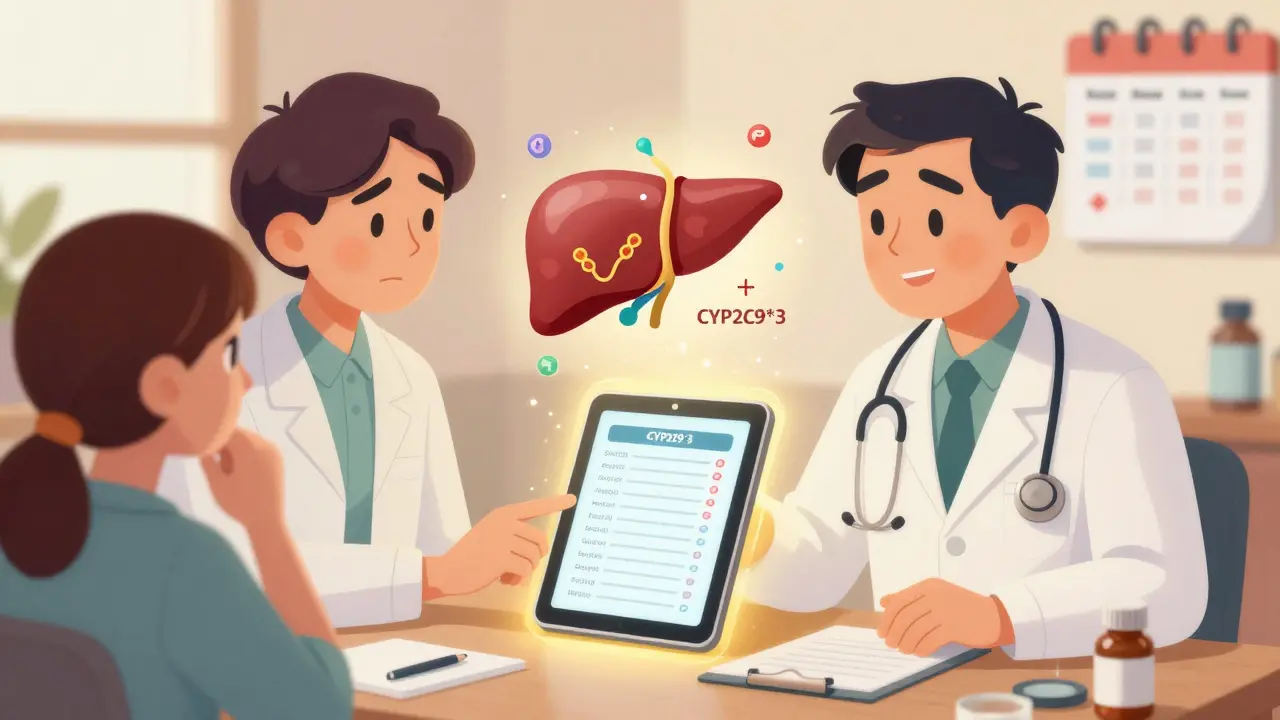
The future isn’t guesswork. It’s math. Physiologically based pharmacokinetic (PBPK) modeling uses computer simulations to predict how a drug behaves in a person with liver disease. These models factor in real data: reduced liver blood flow, fewer liver cells, shunting, enzyme activity levels. Studies show PBPK models predict drug exposure with 85-90% accuracy. The FDA is pushing for this. Their 2024 draft guidance says drug makers should use PBPK modeling to set dosing recommendations. Within five years, 70% of new drug labels will likely include model-based dosing for liver impairment. Even more promising: combining liver function scores with genetic testing. About 8.3% of Caucasians carry the CYP2C9*3 allele, which slows warfarin metabolism. If you’re cirrhotic AND carry this gene, your dose might need to be cut by 60% or more. That’s not a one-size-fits-all world anymore.What Patients and Caregivers Should Do
If you or someone you care for has liver disease:- Always tell every doctor and pharmacist about your liver condition-even if it’s "mild".
- Ask: "Is this drug processed by the liver? Do I need a lower dose?"
- Don’t assume a drug is safe because it’s "over-the-counter." Even acetaminophen can be dangerous in high doses or with advanced disease.
- Request therapeutic drug monitoring if you’re on warfarin, digoxin, or seizure meds.
- Watch for signs of toxicity: confusion, drowsiness, unsteady walking, nausea, or unusual bruising.
The Bigger Picture
The pharmaceutical industry is waking up. In 2023, 92% of new drug applications included liver impairment studies-up from 65% in 2018. The FDA approved 18 new drugs with specific liver dosing labels last year alone. The global market for therapeutic drug monitoring in liver disease is projected to hit $1.24 billion by 2026. But awareness still lags. Many primary care doctors aren’t trained in liver-specific pharmacology. Pharmacists are stepping in-ASHP reports a 40% rise in pharmacist-led dose adjustment services since 2020. That’s progress. But it shouldn’t have to be this hard. The truth is simple: liver disease changes everything about drugs. What was safe yesterday might be dangerous today. The solution isn’t just more pills. It’s smarter dosing, better monitoring, and a system that treats liver patients as a special population-not an afterthought.Can I still take painkillers if I have liver disease?
It depends. Acetaminophen (Tylenol) is generally safe at low doses-no more than 2,000 mg per day in liver disease. Avoid NSAIDs like ibuprofen or naproxen-they can harm kidney function, which is already at risk in cirrhosis. Opioids like morphine or oxycodone can cause dangerous sedation. Always ask your doctor for alternatives like tramadol or low-dose gabapentin, and never exceed recommended doses.
Do all medications need dose adjustments in liver disease?
No. Drugs that are cleared entirely by the kidneys (like sugammadex, vancomycin, or most antibiotics) don’t need adjustment. Also, drugs with minimal liver metabolism (less than 20%) and a wide safety margin (like some antihistamines) usually don’t require changes. But if a drug is metabolized by the liver-even a little-you should assume it needs review.
Why does my doctor check my INR so often if I’m on warfarin?
Because warfarin clearance drops by 30-50% in cirrhosis, and your body’s ability to make clotting factors also declines. That means even small changes in dose can cause your INR to swing dangerously high or low. Frequent monitoring-sometimes weekly-is needed to find the right dose. Never adjust your dose on your own.
Can early fatty liver affect how drugs work?
Yes. Even before scarring begins, metabolic dysfunction-associated steatotic liver disease (MASLD) can reduce CYP3A4 enzyme activity by 15-25%. That means common drugs like statins, antidepressants, or blood pressure meds may stay in your system longer than expected. You don’t need to have cirrhosis to be at risk for altered drug metabolism.
What should I do if I’m prescribed a new medication and have liver disease?
Ask three questions: 1) Is this drug cleared by the liver? 2) Is there a recommended dose for liver disease? 3) Do I need blood tests to monitor levels? If the answer to any is "I don’t know," ask for a pharmacist consultation. Many hospitals now offer clinical pharmacy services specifically for liver patients. Use them.
Comments
Windie Wilson
So let me get this straight-we’re giving people with cirrhosis the same dose of painkillers as someone with a perfectly functioning liver, and we’re surprised when they OD? Classic American healthcare brilliance. 🙃
January 11, 2026 at 19:40
Daniel Pate
The extraction ratio framework is critical but often ignored in clinical practice. CYP3A4 downregulation isn’t linear-it’s nonlinear and patient-specific. We need pharmacogenomic screening before prescribing, not just ‘reduce dose by 25%’ as a blanket rule. This isn’t pharmacology-it’s guesswork with side effects.
January 12, 2026 at 22:36
Alex Fortwengler
Big Pharma doesn’t want you to know this. They’ve known for decades that liver patients are getting poisoned by standard doses. But if they changed labeling, they’d have to recall half their drugs. So instead they blame the patient for ‘noncompliance.’ Wake up people.
January 13, 2026 at 20:49
jordan shiyangeni
It’s not just the liver enzymes-it’s the gut-liver axis, the endotoxin leakage, the systemic inflammation that further suppresses CYP activity. And yet, we still treat these patients like they’re just ‘liver patients’ and not whole-body failures. We’ve medicalized decline instead of preventing it. This is what happens when profit drives care.
January 14, 2026 at 01:27
Monica Puglia
My aunt had cirrhosis from alcohol and was on a low-dose statin. She didn’t know the dose was wrong until she got hospitalized for rhabdo. Please, if you’re reading this-ask your doctor about hepatic clearance. It could save your life. 💔
January 15, 2026 at 00:28
George Bridges
This is such an important topic. So many people are silently suffering because their meds are stacking up. We need better education-not just for patients, but for primary care docs who aren’t specialists. A simple chart in the EHR could make a huge difference.
January 16, 2026 at 04:26
Faith Wright
Oh so now we’re blaming the liver? Funny how the same people who say ‘just stop drinking’ are the first to act shocked when the meds don’t work. Wake up. This is preventable.
January 17, 2026 at 06:09
Rebekah Cobbson
If you or someone you love has liver disease, talk to a clinical pharmacist. They’re the unsung heroes who actually know this stuff. Most doctors don’t have time to dig into pharmacokinetics-but pharmacists do. Don’t be afraid to ask for a med review.
January 18, 2026 at 10:11
gary ysturiz
Good info. Simple takeaway: if your liver is hurt, your meds are stronger than you think. Talk to your doc. Don’t guess. You got this.
January 18, 2026 at 11:28
laura manning
It is, however, imperative to note that the reduction in CYP3A4 activity, while statistically significant, is not uniformly distributed across all cirrhotic subtypes; furthermore, the Child-Pugh classification must be considered in conjunction with albumin levels, bilirubin, and INR to accurately predict clearance kinetics. Failure to do so constitutes a clinically significant oversight.
January 20, 2026 at 05:55
Sumit Sharma
Even in India, we see this daily. NCDs are exploding, and doctors still prescribe standard doses of paracetamol, metformin, and atorvastatin to patients with advanced fibrosis. We need national guidelines. This isn’t just a US problem-it’s a global failure of pharmacovigilance.
January 21, 2026 at 09:42
Jay Powers
I’ve seen this in ER-patients on blood pressure meds who end up with hypotension because their liver couldn’t clear it. Nobody told them. Nobody checked. We need a simple flag in the prescription system. Like, ‘LIVER DISEASE? REDUCE DOSE.’
January 23, 2026 at 04:49
Lawrence Jung
The real issue is that we’ve turned medicine into a factory. Pills are produced, not personalized. We treat disease like a math equation, but the human body is poetry. You can’t reduce a liver to an enzyme chart and expect it to work.
January 23, 2026 at 06:56
Alice Elanora Shepherd
There’s a 2022 meta-analysis in The Lancet Gastroenterology & Hepatology that quantifies the dose-adjustment thresholds for 12 common drugs in Child-Pugh A/B/C patients. I’ve linked it below. This should be mandatory reading for all prescribers.
January 23, 2026 at 13:22
Konika Choudhury
Why do Americans make everything so complicated? Just tell the doctors to give less medicine to sick people. Done. No need for enzymes or ratios. Less is more. Simple.
January 23, 2026 at 23:56
Write a comment