
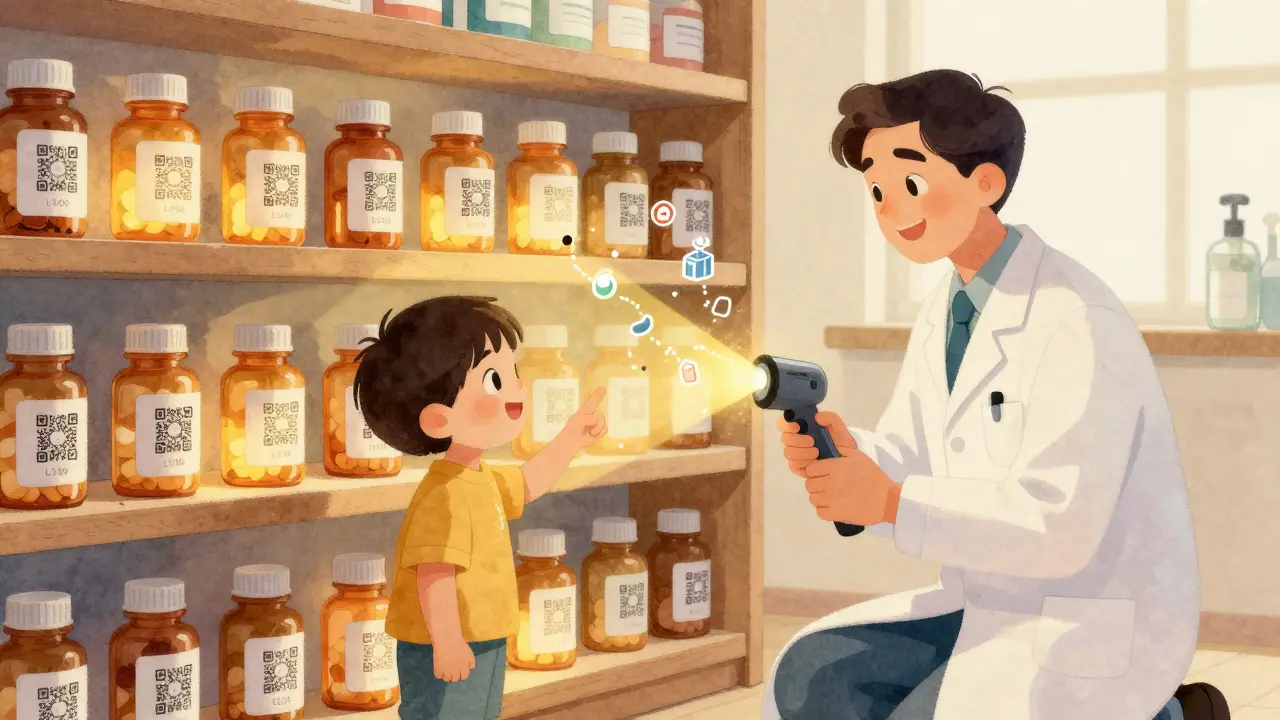
Every pill, vial, or injection you take has a story. Not the kind you’d find in a novel, but a digital trail of numbers and codes that tell you where it came from, when it was made, and who handled it along the way. This isn’t science fiction. It’s the real system keeping fake drugs off the shelves and patients safe. And at the heart of it? Lot numbers and serial codes.
What’s the Difference Between Lot Numbers and Serial Codes?
Lot numbers and serial codes sound similar, but they do very different jobs. Think of a lot number like a batch ID. If a factory makes 10,000 bottles of a blood pressure pill on Tuesday morning, they all get the same lot number. That number links everything made under the same conditions - same ingredients, same machine, same shift. It’s a group tag.
Serial codes, on the other hand, are one-of-a-kind. Every single bottle gets its own unique code. It’s like a fingerprint for that one item. You’ll see this on high-value or high-risk products - think insulin pens, cancer drugs, or medical devices. If one bottle turns out to be faulty or fake, they can pull just that one. No guesswork. No mass recalls.
In the drug industry, lot tracking catches problems at the group level. Serial tracking catches them at the individual level. Both matter. But for counterfeit drugs, serial codes are the game-changer.
Why This System Exists: The Elixir Sulfanilamide Tragedy
Back in 1937, over 100 people died after drinking a liquid antibiotic called Elixir Sulfanilamide. The company hadn’t tested it for safety. There was no way to trace where it came from. No lot numbers. No records. Just a toxic product flooding the market.
That disaster led to the 1938 Food, Drug, and Cosmetic Act - the law that forced drugmakers to track every batch. Today, that rule has grown into a global network. The FDA, EU, WHO, and other agencies now require detailed tracking for most prescription drugs. Why? Because counterfeit drugs are a growing crisis.
In 2023, the WHO estimated that 1 in 10 medical products in low- and middle-income countries are fake. In some regions, it’s as high as 1 in 3. These aren’t just ineffective. They’re deadly. Fake antibiotics can cause resistant infections. Fake cancer drugs can let tumors grow unchecked. And without track-and-trace, there’s no way to stop them.
How Track-and-Trace Stops Counterfeit Drugs in Real Life
Here’s how it works on the ground.
When a drugmaker produces a batch of 50,000 tablets, they assign a unique lot number. That number includes the production date, location, and raw material source. Every time the batch moves - from warehouse to distributor to pharmacy - the lot number is scanned and logged. If a problem pops up later, like contamination or mislabeling, regulators can pull only that lot. No need to recall every pill made that year.
Now, add serial codes. Each bottle gets a unique code printed on the label, often as a QR code or barcode. That code links to a secure digital database. When a pharmacist scans it at the counter, the system checks: Is this code registered? Was it made by the real manufacturer? Has it been reported stolen or tampered with?
In 2022, a major U.S. pharmacy chain caught 17 fake opioid vials because their serial codes didn’t match the manufacturer’s database. The fake bottles looked perfect. But the codes were copied from real ones - and the system flagged them because they’d already been scanned once before. That’s how track-and-trace catches forgers.
According to FDA case studies, systems using both lot and serial tracking cut recall costs by up to 63% and reduce investigation time by 72%. That’s not just money saved. It’s lives protected.
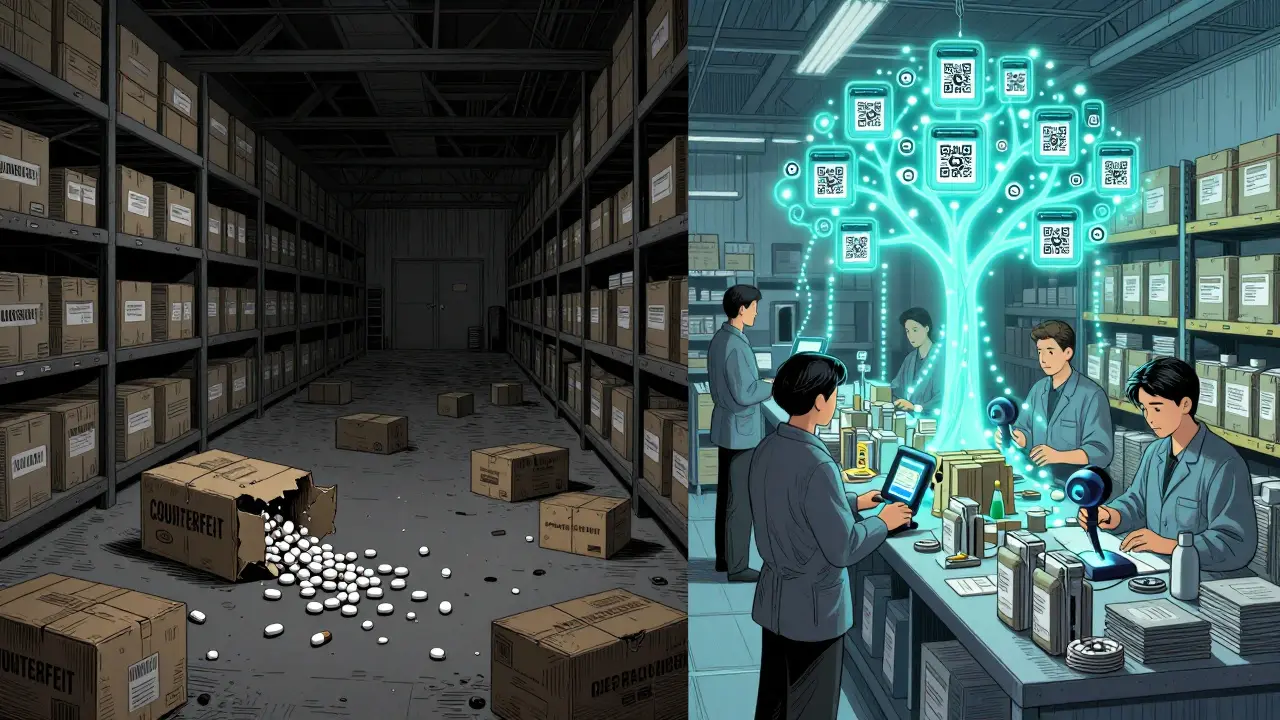
Who Uses This System? It’s Not Just Big Pharma
You might think this is only for big drug companies. It’s not.
Generic drugmakers, compounding pharmacies, and even mail-order pharmacies now use the same systems. The FDA’s Drug Supply Chain Security Act (DSCSA), fully active since 2023, requires every entity in the supply chain - from makers to shippers to pharmacies - to scan and verify serial codes at every handoff.
Even small clinics and rural pharmacies have to comply. Many now use handheld scanners that cost under $200. They connect to cloud-based systems. No servers. No IT team. Just a phone or tablet that checks codes in seconds.
One clinic in rural Kentucky started using serial tracking in 2024. Within three months, they blocked three fake insulin shipments. The forgers had copied the label perfectly - but the QR code led to a dead link. The system told them instantly: “This code was never issued.”
The Tech Behind the Scenes: Barcodes, QR Codes, and Blockchain
How do you track thousands of codes without errors? You don’t type them in. You scan them.
Barcode scanners and QR code readers are now standard in pharmacies. They’re 99.8% accurate - compared to 87% accuracy for manual entry. That means fewer mistakes, fewer delays, and fewer fake drugs slipping through.
Some systems now use blockchain - not the cryptocurrency kind, but the tamper-proof record kind. Every scan gets recorded in a digital ledger that can’t be altered. If someone tries to fake a code, the system sees the mismatch immediately.
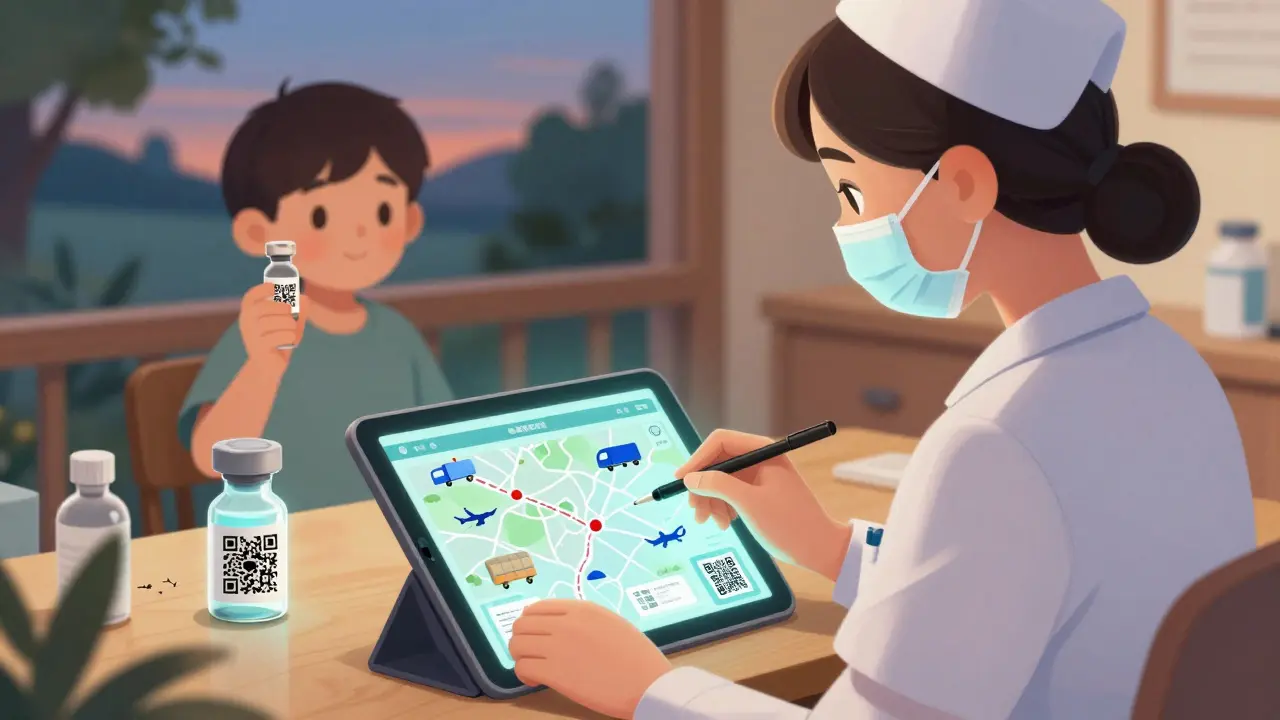
Microsoft Business Central and QR Inventory released updates in late 2023 that let users visualize the entire journey of a drug - from raw chemical to patient’s hand - on a single screen. If a lot number appears in two places at once, the system flags it. That’s how they caught a smuggling ring in 2024 that was relabeling expired cancer drugs as new ones.
What Happens When the System Fails
Track-and-trace isn’t magic. It only works if people follow the rules.
In 2023, the FDA issued warning letters to three mid-sized manufacturers because they weren’t recording lot numbers consistently. One pharmacy chain skipped scanning at the warehouse level to save time. The result? A fake batch of diabetes medication entered circulation. It took 11 days to trace - and two patients died.
Training matters. A 2024 survey found that 38% of pharmacy staff had never been trained on how to use serial code scanners. That’s a huge gap. You can have the best system in the world, but if your front-line workers don’t know how to use it, it’s useless.
The fix? Simple: mandatory scanning. No exceptions. No shortcuts. Every package gets scanned. Every code gets verified. Every scan gets logged.
What’s Next? AI, IoT, and Global Rules
The system is getting smarter.
By 2027, the EU’s Digital Product Passport will require every medicine, medical device, and even some supplements to carry a digital serial code linked to a global database. That’s not just for Europe - if you sell drugs there, you have to comply.
Pharmaceutical companies are testing IoT sensors inside shipping containers. These sensors track temperature, humidity, and even light exposure. If a batch of insulin was stored at 90°F for six hours, the system flags it before it ever reaches a pharmacy.
And AI? It’s starting to predict problems. One system in Germany uses machine learning to spot patterns - like a sudden spike in returns from one distributor. It flagged a fake drug ring before anyone reported it.
Experts say 65% of track-and-trace systems will use AI for anomaly detection by 2027. That means fewer fake drugs, fewer recalls, and faster responses.
What You Can Do
If you’re a patient: Always check the packaging. Does the lot number match what’s on the box? Is the QR code scannable? If it looks off, ask your pharmacist. They’re trained to spot fakes.
If you’re a pharmacy worker: Scan every package. Every time. Don’t skip steps. Report anything suspicious.
If you’re a manufacturer: Don’t cut corners. Track every lot. Assign every serial code. It’s not just compliance - it’s ethics.
The system works. But only if everyone plays their part.
Comments
Lorna Brown
It’s wild how something as simple as a number on a pill bottle can mean the difference between life and death. I’ve been thinking about this a lot lately - how systems like this are quietly holding up the entire healthcare infrastructure. We don’t notice them until they break. And when they do? People die. Not because of malice, but because of negligence. That’s the real horror.
Lot numbers aren’t just logistics. They’re accountability. Serial codes aren’t just tech - they’re dignity. Every patient deserves to know their medicine isn’t a gamble. And yet, so many systems still rely on trust. We need more than trust. We need verification. At every step.
I wish more people understood this. Not just pharmacists or regulators. Patients too. This isn’t a corporate compliance issue. It’s a human rights issue.
And honestly? If we can track a coffee bean from farm to cup, why are we still arguing about whether we need to track life-saving drugs? The tech exists. The will doesn’t.
March 15, 2026 at 18:54
Rex Regum
Oh great. Another ‘tech will save us’ fairy tale. You know what’s *really* stopping counterfeit drugs? Not QR codes. Not blockchain. It’s corruption. Bribery. Smugglers who pay off customs officers like it’s a damn toll booth. You think a barcode stops a guy with a suitcase full of fake insulin in Mumbai? Please. This whole system is a PR stunt for Big Pharma to look like heroes while they jack up prices 400%.
And don’t even get me started on the FDA. They’ve been asleep at the wheel for decades. Now they want a medal for doing the bare minimum? Gimme a break.
March 17, 2026 at 10:36
Jimmy V
Serial codes work because they’re unique. Lot numbers catch bulk failures. Together? They’re a one-two punch. But here’s the kicker: 80% of counterfeits are caught at the pharmacy level - not the border, not the warehouse. Frontline staff scanning every box. No exceptions. No shortcuts. That’s the real hero. Not the tech. The people.
And yeah, training is the gap. Fix that, and you cut fake drugs by half overnight.
March 17, 2026 at 15:48
Kandace Bennett
OMG I’m SOOOO glad we’re finally doing this right!! 🙌 I’ve been screaming from the rooftops for YEARS that we need to track EVERYTHING. Like, how is it even possible that we didn’t do this in 1998?? 🤦♀️ I mean, we have apps that track our cat’s poop. But not our insulin? UNACCEPTABLE.
Also, blockchain? YES. Because if it’s good enough for Bitcoin, it’s good enough for saving lives. 💉✨ #PharmaTechRevolution
March 19, 2026 at 11:35
Tim Schulz
Wow. Just… wow. You wrote an entire novel on how QR codes save lives. Did you get paid by Microsoft to write this? Or is this just the kind of thing people say when they’ve been staring at a supply chain dashboard for 14 hours straight?
‘Tamper-proof ledger’? ‘Digital product passport’? Sounds like a TED Talk written by a corporate lawyer who thinks ‘synergy’ is a personality trait.
Meanwhile, in the real world, people are still buying fake Viagra from Instagram. And you think a barcode is gonna fix that? Cute.
March 19, 2026 at 22:12
Jinesh Jain
Interesting. In India, we see a lot of fake medicines. But most people don’t have scanners. So they rely on the pharmacist’s word. Or the price. If it’s cheaper, they buy it. No QR code changes that.
Maybe the real solution is education. Not tech.
March 19, 2026 at 23:55
douglas martinez
The integrity of the pharmaceutical supply chain is a matter of public health and ethical responsibility. The implementation of track-and-trace protocols represents a significant advancement in patient safety. It is imperative that all stakeholders, regardless of scale, adhere to standardized protocols to ensure consistency and efficacy across the entire distribution network.
Compliance is not optional. It is foundational.
March 21, 2026 at 00:40
Alex MC
It’s easy to get lost in the tech details - barcodes, blockchain, AI - but the real win here is that we’re finally treating medicine like something that matters. Not a commodity. Not a profit center. A lifeline.
And that shift? That’s what matters. The tools just help us do it right.
March 21, 2026 at 09:16
Dylan Patrick
They caught 17 fake opioid vials because the code was already used? That’s wild. Like, imagine being a criminal and thinking, ‘Hey, I’ll just copy this barcode real quick.’ And then… it’s already been scanned. Like, the system goes, ‘Nah, bro. We already did that one.’
That’s the kind of thing that makes me proud to be alive right now.
Scan everything. Every time. No excuses.
March 21, 2026 at 20:00
Kathy Leslie
I work at a clinic. We started scanning last year. First week, we blocked a fake asthma inhaler. Looked perfect. Smelled right. Even the box felt right.
But the QR code? Dead link.
My coworker cried. Not because she was scared. Because she realized - this actually works.
March 23, 2026 at 02:37
Amisha Patel
Lot numbers for batches serial for each one makes sense. But what about when the scanner breaks? Or the internet is down? We still need backup systems
March 23, 2026 at 17:20
Elsa Rodriguez
I’m not crying, you’re crying. 😭 I had my mom on insulin last year. She almost got a fake one. The pharmacist said it looked ‘off’ - but couldn’t prove it. We had to call the manufacturer. Took three days. Three DAYS. While she was dizzy and weak.
If this system had been in place? She’d have known in 10 seconds.
Why didn’t we do this 20 years ago? Who decided fake medicine was just ‘part of the risk’? I’m so angry. And so grateful.
March 24, 2026 at 04:19
tynece roberts
so like… i read this whole thing and i’m just like… wow. i had no idea. i thought the pharmacy just gave you the pills and that was it. but nooo. it’s like a whole detective story with barcodes and qr codes and like… blockchain? is that like… a digital ledger? idk. but it sounds cool.
also i just scanned my blood pressure med and it said ‘valid’ and i felt like a spy. 🕵️♀️💊
March 24, 2026 at 19:43
Hugh Breen
Love this. Seriously. This is the kind of innovation that doesn’t make headlines but saves lives every single day. 🙌
And the fact that rural clinics in Kentucky are using $200 scanners? That’s the American dream. Not big corporations. Regular people doing the right thing with simple tools.
Also - blockchain for medicine? YES. Let’s make it global. Let’s make it mandatory. Let’s make it non-negotiable.
Because if we can track a package across the world, we can damn sure track a life-saving drug.
March 25, 2026 at 06:03
Byron Boror
Let’s be real - this whole system only works because America forces it. Other countries? They don’t care. India, Nigeria, Brazil - they’re still selling fake drugs like candy. You think a QR code stops a guy in Lagos who’s selling ‘Viagra’ out of a backpack?
This isn’t a global solution. It’s an American solution for Americans. And honestly? Good for us. Let the rest of the world figure it out themselves.
March 27, 2026 at 00:24
Write a comment