

Macrolide Safety Calculator
Personal Risk Assessment
This calculator helps you understand your risk of QT prolongation when taking macrolide antibiotics based on the article's research.
When you’re prescribed an antibiotic for a stubborn chest infection, you’re probably thinking about clearing up the cough, not your heart. But for some people, common antibiotics like azithromycin and clarithromycin can quietly mess with your heart’s rhythm - sometimes with deadly results. This isn’t science fiction. It’s a real, documented risk that’s been studied for over a decade, and it’s getting more attention as more people take multiple medications at once.
What Are Macrolides, and Why Do They Matter?
Macrolides are a class of antibiotics that have been around since the 1950s. Erythromycin was the first, then came clarithromycin and azithromycin - the ones you’re most likely to get today. They’re used for pneumonia, bronchitis, sinus infections, and even some skin conditions. They’re popular because they work against a broad range of bacteria and usually don’t cause serious stomach upset like some other antibiotics.
But here’s the catch: all three - azithromycin, clarithromycin, and erythromycin - can interfere with the heart’s electrical system. They block a specific potassium channel called IKr, which is coded by the HERG gene. This channel helps reset the heart’s rhythm after each beat. When it’s blocked, the heart takes longer to recharge between beats. On an ECG, that shows up as a longer QT interval. A prolonged QT interval doesn’t cause symptoms on its own, but it sets the stage for something dangerous: Torsades de Pointes (TdP), a chaotic, fast heart rhythm that can lead to sudden cardiac arrest.
The Real Risk: How Often Does This Happen?
Most people won’t have a problem. The baseline risk of TdP from macrolides alone is less than 1 in 100,000. That’s rare. But risk isn’t the same for everyone. If you have even one extra factor - like being over 65, having low potassium, taking another QT-prolonging drug, or having heart disease - your risk jumps. Studies show it can go up more than 24 times higher in those with pre-existing QT prolongation.
Clarithromycin carries the highest risk among macrolides. It’s the strongest blocker of the IKr channel. Azithromycin was once thought to be safer because it doesn’t interfere much with liver enzymes (CYP3A4), which means fewer drug interactions. But a major 2012 study in the New England Journal of Medicine found azithromycin still carried a 2.88 times higher risk of cardiovascular death compared to amoxicillin. That study shook up guidelines. The FDA issued a safety warning in 2013. Since then, the FDA’s adverse event database has recorded over 280 cases of TdP linked to macrolides between 2010 and 2020 - with clarithromycin responsible for nearly 6 out of 10 of those cases.
Who’s Most at Risk?
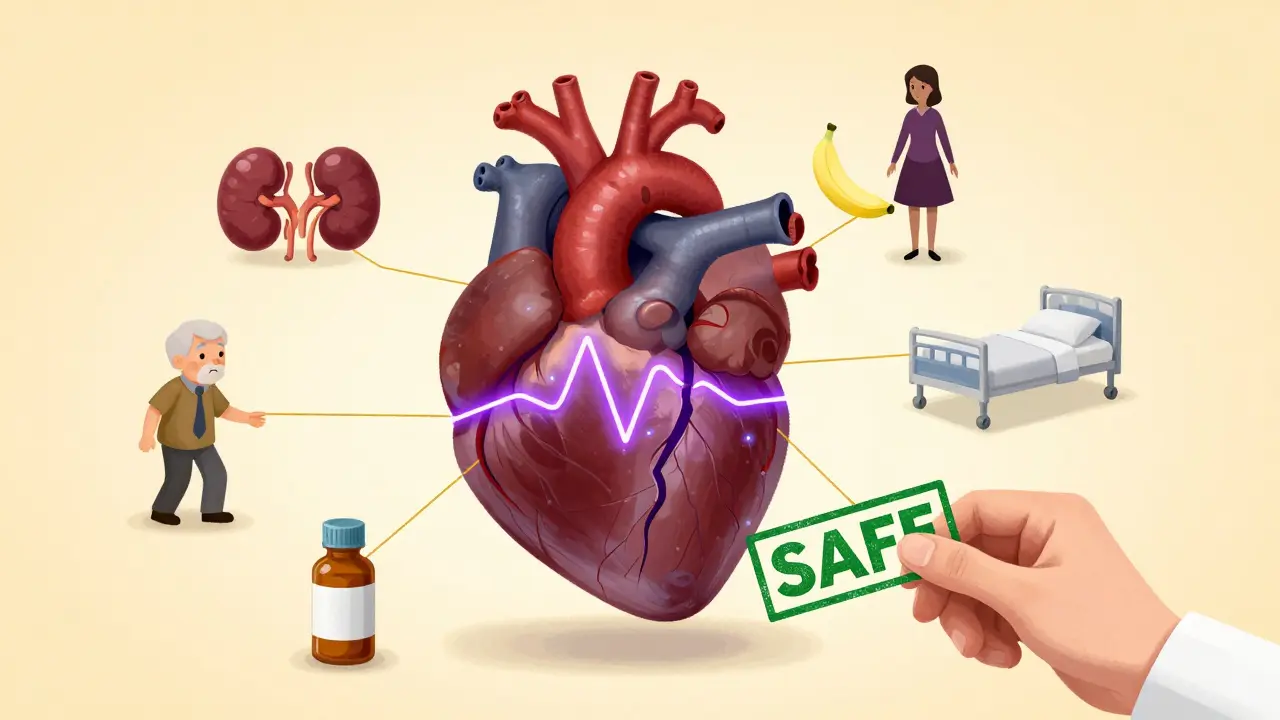
You’re not just at risk because you’re on a macrolide. You’re at risk because of what else is going on in your body. The American Heart Association lists seven key risk factors:
- Female sex (women are 2 to 3.5 times more likely to develop TdP)
- Age over 65
- Structural heart disease (like heart failure or past heart attack)
- Low potassium or magnesium levels
- Taking another QT-prolonging drug (like some antidepressants, antifungals, or antiarrhythmics)
- Chronic kidney disease
- Genetic long QT syndrome (even if undiagnosed)
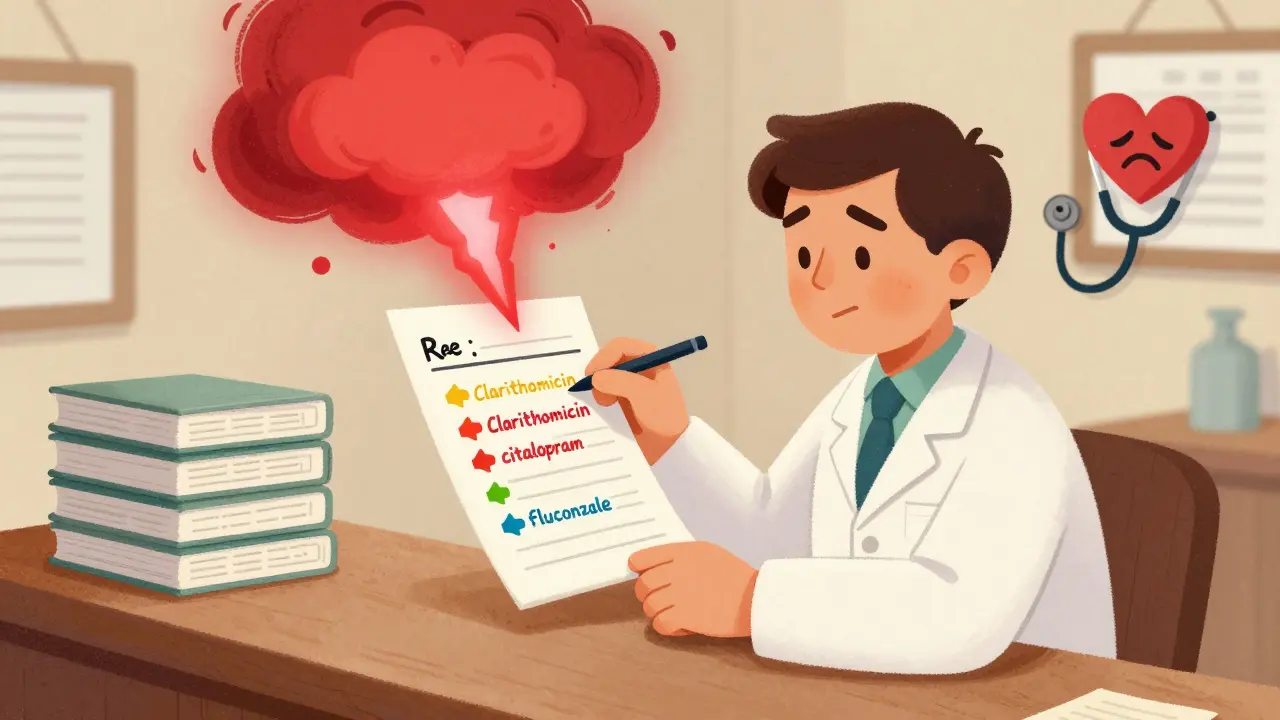
Here’s the scary part: many of these are invisible. Someone might have mild kidney impairment and not know it. Or they might be taking a common antidepressant like citalopram and not realize it’s also prolonging the QT interval. When you stack macrolides on top of that, you’re creating a perfect storm.
Drug Interactions: The Silent Killer
One of the biggest dangers isn’t the antibiotic alone - it’s what it’s taken with. A 2022 JAMA Internal Medicine study found that 42% of macrolide prescriptions in cardiac patients were paired with at least one other QT-prolonging drug. That’s not rare. It’s common.
Common offenders include:
- Fluoroquinolones (like levofloxacin and moxifloxacin)
- Antidepressants (citalopram, escitalopram, sertraline)
- Antifungals (fluconazole, ketoconazole)
- Anti-nausea drugs (ondansetron, domperidone)
- Some antipsychotics (haloperidol, ziprasidone)
Even over-the-counter drugs like antihistamines (astemizole, terfenadine - now mostly pulled from the market) used to cause this. But many newer drugs still carry the risk. The CredibleMeds database, updated in October 2023, lists over 100 drugs known to prolong QT. If you’re on more than one, you need to know which ones are safe together.
Clarithromycin vs. Azithromycin: Which Is Safer?
There’s a myth that azithromycin is “safe” and clarithromycin is “dangerous.” The truth is more nuanced.
Clarithromycin is a stronger IKr blocker. It raises the QT interval by 10-20 milliseconds on average. Azithromycin? More like 5-10 ms. That’s why clarithromycin causes more TdP cases - even though it’s prescribed less often. In fact, clarithromycin accounts for 58% of reported TdP cases despite making up only 15% of macrolide prescriptions.
But azithromycin isn’t harmless. That 2012 NEJM study found it increased cardiovascular death risk by nearly 3 times in high-risk patients. Later studies tried to dismiss this, saying “it’s just because sicker people get azithromycin.” But even after adjusting for 108 different health factors, some risk remained. The European Heart Rhythm Association says the absolute risk is still low - about 3 to 7 cases per million treatment courses. But when you’re one of those cases, “low” doesn’t matter.
What Should Doctors Do?
Guidelines from the American Heart Association in 2020 say this: screen, avoid, monitor.
- Screen: Check for the seven risk factors before prescribing. Ask about heart disease, kidney function, current meds, and electrolyte levels. A simple ECG can catch a prolonged QT before it becomes a problem.
- Avoid: If you have multiple risk factors, don’t use macrolides. Use doxycycline instead for respiratory infections. It doesn’t prolong QT. Or use a penicillin if the infection is likely bacterial and susceptible.
- Monitor: For moderate-risk patients - say, a 70-year-old with high blood pressure and mild kidney issues - check potassium and magnesium levels. Consider an ECG before and 3-5 days after starting the drug.
Some hospitals have already acted. Kaiser Permanente added automated alerts in their electronic health system in 2017. If a doctor tried to prescribe azithromycin to someone on a QT-prolonging drug, the system flagged it. Result? A 28% drop in high-risk prescriptions.
What About Newer Antibiotics?
There’s hope. Solithromycin, a newer ketolide antibiotic, was designed to avoid QT prolongation. In clinical trials, it didn’t lengthen the QT interval. But the FDA rejected it in 2016 because of liver toxicity. It’s a reminder: fixing one problem can create another.
Right now, no new macrolide-like antibiotic has replaced them. So we’re stuck with what we have - and we need to use them smarter.
What Should You Do?
If you’re prescribed a macrolide, ask:
- Is there a safer alternative?
- Am I taking any other drugs that affect my heart rhythm?
- Have my potassium or magnesium levels been checked recently?
- Do I have heart disease or kidney problems?
Don’t assume it’s safe just because it’s an antibiotic. If you’re over 65, on multiple meds, or have a history of heart issues, push for an ECG. If you feel dizzy, faint, or notice your heart racing or skipping beats after starting the drug, stop it and get help immediately. TdP doesn’t always warn you - it can strike without symptoms.
The Bottom Line
Macrolides aren’t dangerous for everyone. For healthy young people with no other meds and normal heart function, the risk is tiny. But for older adults, those with heart or kidney disease, or anyone on other QT-prolonging drugs, the risk is real - and preventable.
The goal isn’t to stop using macrolides. It’s to use them wisely. With better screening, smarter prescribing, and more awareness, we can keep these effective antibiotics in our toolkit - without putting lives at risk.
Comments
Frank Declemij
Just read this and had to pause. This is the kind of stuff that should be in every med school syllabus.
January 29, 2026 at 19:15
Ryan Pagan
Man, I’ve seen this play out in the ER too - old guy on azithro for bronchitis, also on amiodarone and lisinopril, didn’t even know the antibiotic could kill him. Docs just slap on the script like it’s Advil. We’re lucky he didn’t code in the waiting room.
January 30, 2026 at 20:56
Kacey Yates
Clarithromycin is the real villain here. Azithro gets all the hype but clarithro’s the silent assassin. CYP3A4 inhibition + IKr blockade = perfect storm. And yes, I’ve seen the ECGs. That QT spike looks like a mountain range on a bad day.
January 31, 2026 at 04:33
Laia Freeman
OMG I JUST GOT AZITHRO LAST WEEK AND I’M 68 AND ON LIPITOR AND ZOCOR AND I DIDN’T EVEN THINK ABOUT IT 😭
January 31, 2026 at 13:51
Laura Arnal
You’re not alone, Laia! 🙌 Seriously though, if you’re worried, call your pharmacist - they’re the unsung heroes who catch these combos before they blow up. And get your K+ checked, it’s a simple blood test. You got this!
February 1, 2026 at 12:00
Kristie Horst
It’s astonishing that, in an era of AI-driven diagnostics and real-time EHR alerts, we’re still relying on clinicians to manually cross-reference 100+ QT-prolonging drugs from a database they’ve never heard of. This isn’t negligence - it’s systemic failure. The tools exist. The data is public. The deaths are preventable. Why are we still treating this like an afterthought?
February 2, 2026 at 01:36
Keith Oliver
Oh please. You’re acting like macrolides are poison. People have been taking azithro for decades. If you’re on 12 meds and your heart’s a mess, maybe stop blaming the antibiotic and start blaming your own lifestyle. I’ve got COPD and I’ve taken azithro three times - no issues. Stop fearmongering.
February 2, 2026 at 11:14
paul walker
Keith, I get you’re frustrated but this isn’t about fearmongering - it’s about awareness. I’m 52, healthy, no meds, took azithro for sinusitis last year. No problem. But my aunt? 74, on fluoxetine and furosemide, took clarithro - ended up in ICU with TdP. She’s fine now but… it could’ve been worse. This isn’t about you. It’s about the people who don’t know they’re at risk.
February 2, 2026 at 21:13
rajaneesh s rajan
Interesting how we treat antibiotics like candy here in the US - pop one like it’s a vitamin. In India, we’re taught: ‘If it’s not penicillin, think twice.’ The irony? The drugs we overuse here are the same ones we hoard in rural clinics because they’re cheap. We’re the problem. Not the molecules.
February 4, 2026 at 08:56
Robin Keith
Look - I’m not a doctor, but I’ve sat in enough ER waiting rooms to know this: the system is broken. You get a prescription, you take it, you assume it’s safe - because why wouldn’t it be? But here’s the truth: your doctor didn’t even glance at your med list. The EHR popped up a warning? They clicked ‘override’ because they’re rushing to the next patient. The pharmacy? They filled it because they’re not trained to be cardiologists. And now you’re sitting here, reading this, wondering if you’re next. We’ve outsourced our health to a machine that doesn’t care if you live or die - as long as the billing code is correct. This isn’t medicine. It’s logistics with a stethoscope.
February 5, 2026 at 12:51
Andy Steenberge
There’s a deeper issue here that’s rarely discussed: the pharmaceutical industry’s role in shaping prescribing habits. Azithromycin’s marketing campaign in the early 2000s sold it as ‘the once-daily wonder drug’ - convenient, gentle, ‘safe for everyone.’ That narrative stuck. But the data? It was buried in small print. We rewarded convenience over caution. And now we’re paying the price in cardiac arrests. It’s not just clinical ignorance - it’s commercial manipulation disguised as innovation.
February 7, 2026 at 07:04
LOUIS YOUANES
So what’s the takeaway? Don’t take antibiotics unless you absolutely have to. And if you do, ask for doxycycline. It’s cheaper, works just as well for most infections, and doesn’t turn your heart into a ticking bomb. Also, stop Googling your symptoms - you’re not a doctor. But you can be smart enough to ask the right questions.
February 8, 2026 at 14:01
Alex Flores Gomez
Wow. This is the most thoughtful post I’ve seen on this topic. Finally someone who gets it. I’m a nurse in a rural clinic. We don’t have ECG machines. We don’t have pharmacists on staff. We just hand out scripts and hope. This isn’t just about drugs - it’s about healthcare inequality. The people most at risk? The ones who can’t afford to ask the questions.
February 10, 2026 at 11:21
Write a comment