
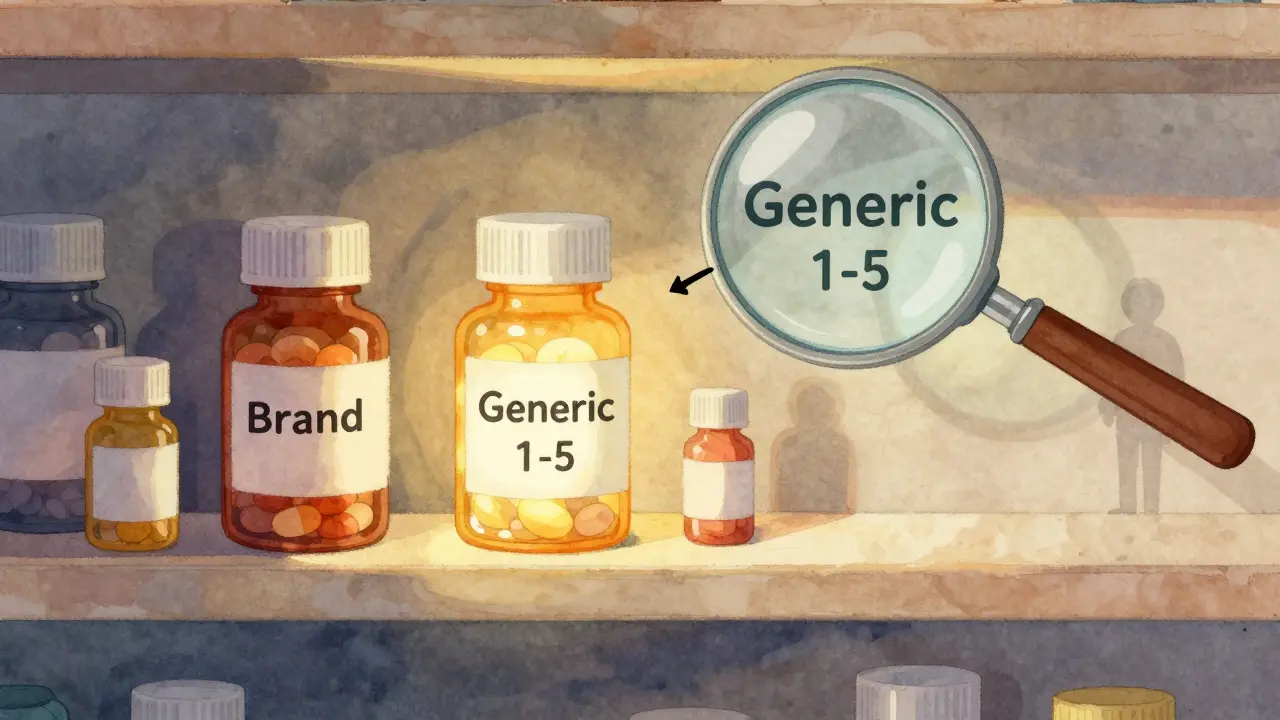
When more generic drugs enter the market, prices don’t always drop - and sometimes they go up
You’d think the more generic versions of a drug that show up, the cheaper they’d get. That’s the logic: more players, more competition, lower prices. But in real-world pharmaceutical markets, that’s not always what happens. In fact, sometimes having multiple generic competitors doesn’t lead to the price drops you’d expect - and in rare cases, the original brand drug even gets more expensive.
Take the U.S. market. Generic drugs now make up 90.3% of all prescriptions filled. That sounds like a win for consumers. But here’s the twist: generics account for only 23.4% of total drug spending. Why? Because while they’re prescribed more often, many still cost a lot. And the reason isn’t just about how many companies make them - it’s about how they compete, or don’t compete, with each other.
Price drops aren’t linear - they follow a steep, uneven curve
When the first generic enters the market, prices usually drop fast. On average, the brand drug’s price falls 30-39% right away. Add a second generic? Prices plunge another 15-20%, hitting about 54% below the brand. But here’s where things get strange: the biggest savings come from the sixth generic or beyond. At that point, prices can drop 95% compared to the original brand.
But that’s on paper. In reality, most drugs never get six generics. A 2023 study in China looked at 27 brand-name drugs after generic entry. Only 29.6% had three or more generic competitors. The rest? One or two generics max. That means most patients never see the 95% price drop. They’re stuck with prices that are only 40-60% lower - still a savings, but far from the full potential.
Why don’t more companies jump in? It’s not just about patents
You might think if a drug’s patent expires, a dozen small companies will rush to make a cheaper version. But it’s not that simple. For many drugs - especially those with complex formulations like inhalers, injectables, or extended-release pills - getting approval is expensive and slow. The FDA requires proof that the generic is identical in every critical way: how it dissolves, how it’s absorbed, even how it’s manufactured. This is called proving Q1, Q2, Q3 sameness.
These requirements mean only big generic manufacturers with deep pockets and advanced labs can compete. Smaller companies can’t afford the $5-10 million it often takes to get approval. So even when patents expire, the market stays thin. That’s the complexity advantage: the drug isn’t protected by a patent - it’s protected by cost.
Brands fight back - sometimes by raising prices
Here’s the paradox: when generics enter, brand companies don’t always lower their prices. In China, 15 out of 27 brand drugs lost market share after generics arrived - but 3 of them actually raised their prices by an average of 0.62%. Why? Because they shifted their strategy. Instead of competing on price, they competed on perception.
If patients or doctors believe the brand is “better,” “more reliable,” or “safer,” they’ll keep prescribing it - even if the generic is just as good. The brand company then uses that loyalty to hold or raise prices, knowing some customers won’t switch. This happens most often with drugs for chronic conditions like high blood pressure or depression, where trust matters more than cents.
Authorized generics: the secret weapon that confuses the market
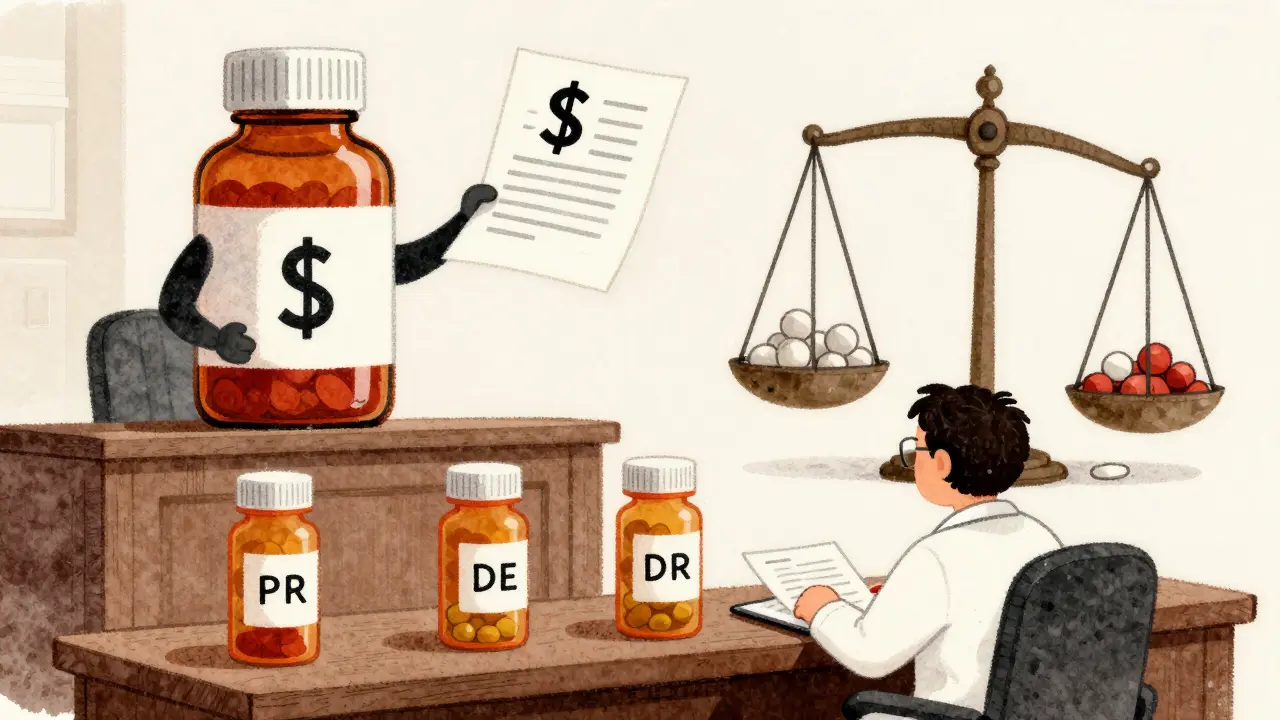
Here’s a trick you might not know: sometimes, the brand company itself launches a generic version. It’s called an authorized generic. It’s chemically identical to the generic, but sold under a different label - often at a lower price. The brand company does this to capture part of the generic market before competitors even get started.
When the brand owns the authorized generic, it can lower its own wholesale price by 8-12%. But here’s the kicker: if a third party owns the authorized generic (not the brand), the original brand’s price ends up 22% higher than when the brand owns it. Why? Because the brand knows it won’t be undercut by its own version - so it doesn’t need to lower prices at all. It lets the authorized generic eat the competition, while it holds its price high for loyal customers.
Pharmacy Benefit Managers (PBMs) control the game
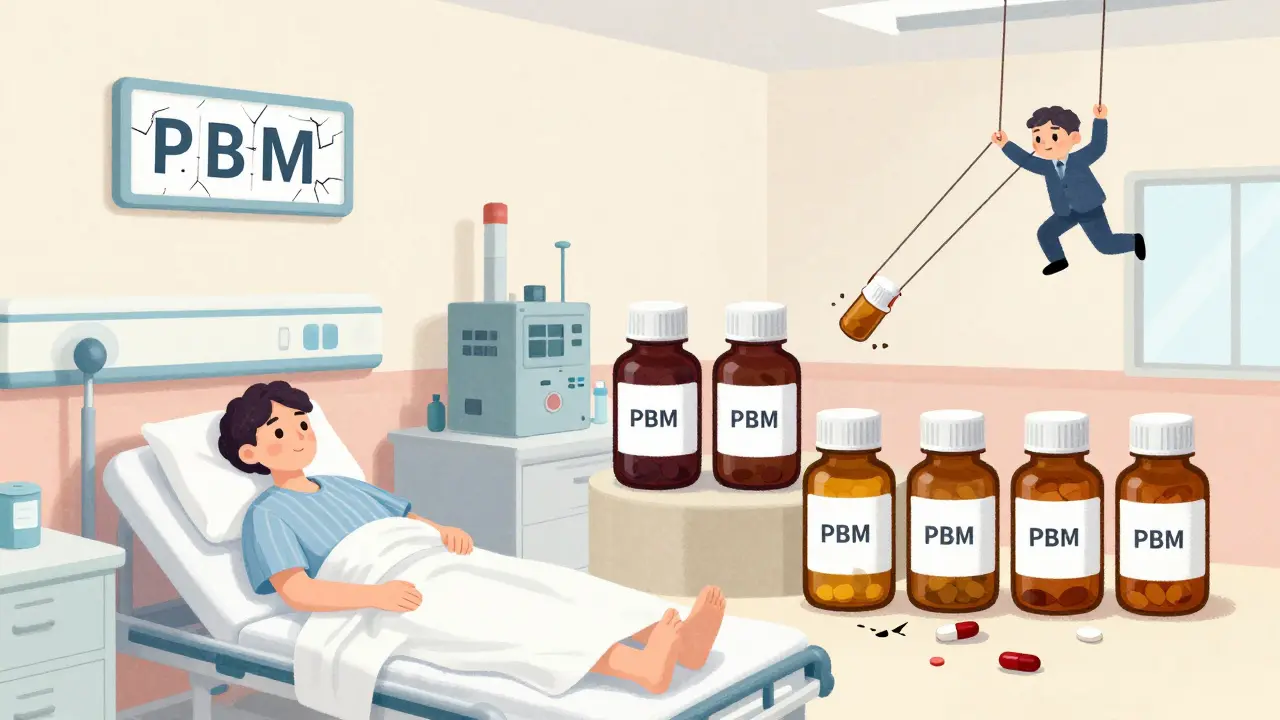
Who actually buys drugs? Not you. Not your doctor. It’s Pharmacy Benefit Managers - PBMs. These middlemen handle drug purchasing for insurance plans. In 2017, they controlled 90% of all pharmaceutical buying in the U.S.
PBMs don’t care about your out-of-pocket cost. They care about rebates. So if a brand drug offers a bigger rebate to the PBM than the generic does, the PBM will push the brand - even if the generic is cheaper. That means a drug can have five generics on the shelf, but if the brand gives the PBM a $5 rebate per pill and the generics offer nothing, the brand still gets prescribed most of the time.
This turns competition on its head. It’s not about who makes the cheapest drug - it’s about who gives the biggest kickback to the middleman.
Price caps can kill competition - not help it
In Portugal, the government caps how much a drug can cost. Sounds fair, right? But it backfires. When every generic must sell at the same capped price, companies stop competing on price. Why undercut each other if the cap locks everyone in? Instead, they practice mutual forbearance: they all just charge the maximum allowed. The result? Multiple generics, same price. No savings for patients.
This isn’t just Portugal. In countries with centralized price negotiations - like many in Europe - regulators set prices before generics even enter. That removes the incentive for manufacturers to fight for market share through lower prices. Competition becomes about who gets the contract, not who offers the best deal.
More competitors = fewer shortages
But there’s one big win from multiple generic competitors: supply stability. Between 2018 and 2022, drugs with three or more generic manufacturers had 67% fewer shortages than those with only one. Why? Because if one factory has a problem - say, a quality control issue or a natural disaster - others can pick up the slack.
That’s why the FDA warns that if new rules like the Inflation Reduction Act limit how much brand drugs can charge, it could hurt the entire generic supply chain. If a drug’s maximum fair price is set too low, manufacturers won’t make enough to cover costs. Then, even if there are five generics, only one might actually be producing. And that’s when shortages return.
What’s next? Biosimilars and digital tools are changing the game
Most of this applies to small-molecule drugs - the kind you swallow in pills. But the future is in biologics: complex drugs made from living cells, like insulin or cancer treatments. These aren’t generics - they’re called biosimilars. They’re harder to copy, cost more to make, and don’t drop 85% in price like traditional generics. The FDA says we might see only 20-40% price reductions for biosimilars, even with multiple competitors.
And now, digital tools are starting to influence prescribing. Apps that track drug costs in real time, or AI that suggests cheaper alternatives, could shift power back to patients and doctors. But right now, most systems still default to the brand - because of rebates, habit, or lack of data.
Bottom line: More competitors don’t always mean cheaper drugs
Having multiple generic competitors sounds like a win. And in theory, it is. But the real world is messy. Patents, complexity, rebates, price caps, and corporate strategy all twist the rules. The result? Price drops are unpredictable. Some drugs get 95% cheaper. Others barely budge. And sometimes, the brand gets more expensive.
If you’re trying to save money on prescriptions, don’t just assume the generic is cheaper. Ask your pharmacist: Is there more than one generic? Who makes it? Is there a rebate? And if your doctor keeps prescribing the brand - ask why. Sometimes, it’s not about cost. It’s about who’s paying.
Why don’t generic drug prices always drop when more companies make them?
Because competition isn’t just about the number of makers - it’s about who owns them, how much they pay in rebates, and whether the drug is complex to produce. Many generics are made by the same big companies that own the brand, or they’re priced the same due to government caps. So even with five generics, you might see no price difference.
Can brand-name drugs get more expensive after generics enter the market?
Yes. Some brands raise prices after generics arrive because they shift their strategy. Instead of competing on price, they compete on trust. If patients believe the brand is safer or more effective, doctors keep prescribing it - and the company can charge more. This happens most often with chronic condition drugs where brand loyalty is strong.
What’s an authorized generic, and why does it matter?
An authorized generic is a version of the brand drug sold under a different label - often by the brand company itself. It’s identical to the generic but priced lower to steal market share. If the brand owns it, prices drop. But if someone else owns it, the brand often raises its own price by 22% because it doesn’t have to compete with itself.
Do Pharmacy Benefit Managers (PBMs) affect generic drug prices?
Absolutely. PBMs control 90% of drug purchases in the U.S. They don’t pick the cheapest drug - they pick the one that gives them the biggest rebate. So even if a generic is cheaper, if the brand gives the PBM a bigger kickback, the brand gets prescribed more. That’s why price doesn’t always reflect competition.
Why do some generic drugs have fewer competitors than others?
Some drugs are hard to copy. Inhalers, injectables, and extended-release pills require expensive testing to prove they work the same as the brand. Only big manufacturers can afford that. So even after patents expire, only one or two companies make the generic - limiting competition and keeping prices higher.
Do multiple generic manufacturers prevent drug shortages?
Yes. Drugs with three or more generic makers had 67% fewer shortages between 2018 and 2022. If one factory has a problem, others can step in. But if only one company makes the generic, any issue - like a quality recall or supply chain delay - means the drug disappears from shelves.
Will the Inflation Reduction Act hurt generic drug competition?
It could. The law sets maximum prices for some brand drugs. If those prices are too low, generic makers may not make enough profit to keep producing. That means fewer companies will enter the market - and fewer companies mean higher risk of shortages. The FDA warns this could break the model that kept drug supplies stable for decades.
What you can do
If you’re paying out of pocket, ask your pharmacist: “Are there multiple generics available?” If yes, ask which one is cheapest - not all generics cost the same. If you’re on insurance, ask your plan: “What’s the rebate structure?” Sometimes, the brand is cheaper for you because of how your plan works. Don’t assume the generic is always the best deal. Know the rules - and ask questions.
Comments
Katie and Nathan Milburn
The disconnect between theoretical market dynamics and real-world pharmaceutical pricing is staggering. It’s not just about competition-it’s about structural incentives that reward inertia over innovation. The system isn’t broken; it’s working exactly as designed for the entities that profit from it.
February 1, 2026 at 04:48
Marc Bains
For anyone who’s ever tried to get a prescription filled, this makes perfect sense. I’ve seen the same generic with three different prices at the same pharmacy. It’s not about the drug-it’s about who’s paying the PBM and who’s got the rebate deal. Patients are just collateral in a game they never signed up for.
February 1, 2026 at 06:12
kate jones
The concept of Q1-Q3 sameness is critical but rarely understood by consumers. Demonstrating bioequivalence for complex formulations requires not just analytical chemistry, but advanced process validation-often involving PAT (Process Analytical Technology), DOE (Design of Experiments), and robust control strategies. These aren’t trivial hurdles. Only firms with GMP-certified, vertically integrated manufacturing can reliably meet them. That’s why the generic market is oligopolistic, not competitive. The FDA’s guidance documents are clear: it’s not about cost-it’s about consistency. And consistency costs money.
February 1, 2026 at 23:49
Natasha Plebani
What we’re really seeing isn’t market failure-it’s the collapse of the neoliberal myth that competition alone produces efficiency. The pharmaceutical industry has always been a hybrid: part science, part rent-seeking, part bureaucratic theater. The patent system was meant to incentivize innovation, but now it’s a shell game where the real barrier isn’t intellectual property-it’s capital intensity. The authorized generic is the ultimate irony: a brand weaponizing its own obsolescence to preserve its margins. And PBMs? They’re not intermediaries-they’re gatekeepers with fiduciary duties to no one but their shareholders. The patient isn’t a customer. They’re a data point in a revenue model that treats suffering as a commodity. We’ve outsourced morality to balance sheets, and now we’re surprised when the system collapses under its own moral vacuum.
February 3, 2026 at 12:46
Eliana Botelho
Okay but like, why are we even pretending this is about healthcare? It’s a casino. The brand drugs are the house. The generics are the other players who sometimes get lucky. The PBM? That’s the dealer who takes a cut no matter who wins. And you? You’re the sucker who keeps putting money in because you think the next hand will be different. Spoiler: it won’t. The only thing that changes is how much you lose. And don’t even get me started on those ‘authorized generics’-that’s like the casino letting the owner run a side table with the same cards but cheaper. Genius. Or evil. Either way, you’re still paying.
February 3, 2026 at 20:31
Rob Webber
Let me get this straight. You spent 1500 words explaining why the system is rigged, and the only solution you offer is ‘ask your pharmacist’? That’s it? That’s your big reveal? You think a person on a 10-minute appointment with a $50 copay is going to walk into a pharmacy and start asking about rebates, authorized generics, and Q2 sameness? This isn’t journalism. It’s performative outrage wrapped in a PowerPoint. The system doesn’t care about your questions. It cares about your credit card.
February 5, 2026 at 07:54
Lisa McCluskey
Multiple generics = fewer shortages. That’s the real takeaway. The rest is noise. If we want affordable drugs, we need more manufacturers, not more questions. Simple.
February 6, 2026 at 14:47
owori patrick
This reminds me of how we handle medicine in Nigeria. Sometimes, only one company imports a drug because the cost to register it is too high. Then the price stays high for years. No one else can afford to enter. The problem isn’t unique to the U.S. It’s global. We need international cooperation-not just individual patient advice.
February 7, 2026 at 04:10
Claire Wiltshire
Thank you for such a thorough and nuanced breakdown. The PBM rebate structure is the hidden engine of this entire system, and it’s rarely discussed outside of policy circles. I’ve worked in health administration for over a decade, and this is exactly what we see on the ground: patients confused, clinicians constrained, and pharmacists caught in the middle. The solution isn’t just regulatory-it’s cultural. We need to reframe drug access as a public good, not a market product.
February 9, 2026 at 03:31
Darren Gormley
LOL at the idea that ‘more competitors = lower prices’ in pharma. 😂 This is like expecting Netflix to drop prices because there are 17 streaming services. The whole system is designed to extract value, not deliver it. PBMs are the real villains here-corporate parasites who turn healthcare into a bidding war. And don’t even get me started on how the Inflation Reduction Act is going to backfire. 🤦♂️
February 9, 2026 at 11:57
Mike Rose
so like... generics are supposed to be cheaper but theyre not? weird. guess the rich still get the good stuff. 🤷♂️
February 11, 2026 at 07:02
Write a comment