
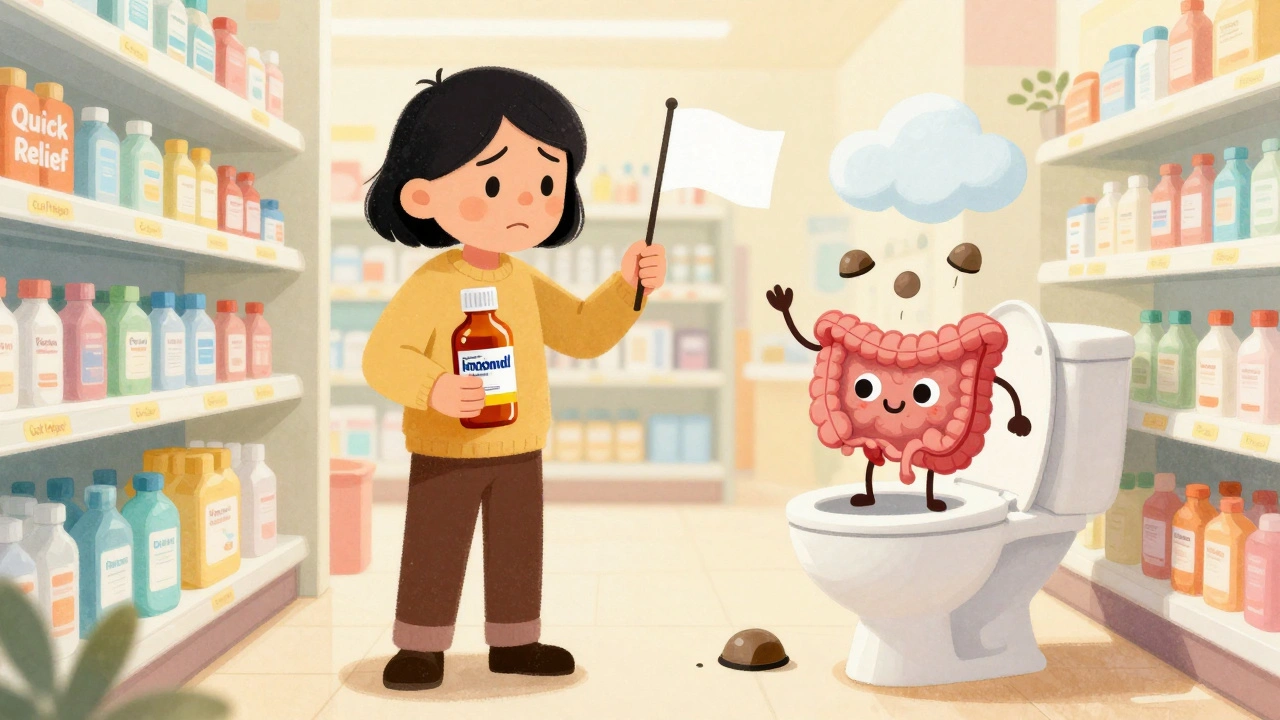
Diarrhea is one of those things that can hit you out of nowhere - maybe after eating street food on vacation, or from a bug going around the office. You feel crampy, you’re running to the bathroom, and you just want it to stop. That’s where over-the-counter (OTC) treatments like Imodium and Pepto-Bismol come in. They’re easy to grab off the shelf, and they work fast. But here’s the thing: they’re not always the right answer. Sometimes, using them can actually make things worse.
What OTC Diarrhea Treatments Actually Do
There are two main types of OTC diarrhea meds you’ll find in any pharmacy: loperamide and bismuth subsalicylate. Loperamide is the active ingredient in Imodium is a synthetic opioid that works locally in your gut. It doesn’t make you high - it can’t cross into your brain at normal doses - but it slows down how fast food moves through your intestines. That means fewer trips to the bathroom. Studies show it cuts stool frequency by about 62% within 24 hours.
Bismuth subsalicylate, found in Pepto-Bismol and Kaopectate, works differently. It coats your gut lining, reduces inflammation, and even kills some bacteria like E. coli and Campylobacter. It doesn’t just stop diarrhea - it also helps with nausea and stomach cramps. About 37% of users report less nausea after taking it. Plus, it’s the only OTC option that’s been shown to help prevent traveler’s diarrhea if taken before exposure.
Both are available in multiple forms: caplets, liquids, chewables. Imodium’s liquid form is approved for kids as young as 6, while Pepto-Bismol’s children’s formula is for ages 12 and up. Adults should stick to the standard dose: 4mg loperamide after the first loose stool, then 2mg after each one after that - no more than 8mg total in 24 hours. For Pepto-Bismol, that’s 30mL of liquid or two chewable tablets every 30 to 60 minutes, up to eight doses in a day.
When OTC Treatments Work Best
OTC meds are great for mild, short-term diarrhea - the kind that comes from a bad taco, a change in water, or a stomach bug that’s not serious. If you’re having three to five loose stools a day, no fever, no blood, and you’re not feeling dangerously weak, then yes, reach for the Imodium or Pepto-Bismol.
Here’s what works in real life: Start with the full first dose right after the first watery stool. Then take a second dose only if another loose stool comes within the next few hours. Don’t keep taking it just because you’re nervous. Most cases resolve on their own in 24 to 48 hours. The goal isn’t to stop diarrhea completely - it’s to make it manageable so you can rest, drink fluids, and recover.
Hydration is just as important as the pill. The World Health Organization recommends oral rehydration solutions with 75mmol/L sodium. You can buy these at pharmacies, or make your own with 1 liter of clean water, 6 teaspoons of sugar, and half a teaspoon of salt. Avoid milk, caffeine, and high-fiber foods like beans or broccoli while you’re recovering. Stick to the BRAT diet - bananas, rice, applesauce, toast - which 92% of pediatricians recommend for adults too.
When You Should NOT Use OTC Diarrhea Medicine
This is where people get into trouble. You can’t treat every case of diarrhea the same way. If you have any of these signs, don’t take loperamide or bismuth subsalicylate - see a doctor instead:
- Bloody or black stools - This isn’t just diarrhea. It could be an infection like C. diff, ulcerative colitis, or even internal bleeding.
- Fever above 100.4°F (38°C) - A fever means your body is fighting something serious. Slowing your gut down with loperamide traps the bacteria inside, which can make the infection worse.
- Severe abdominal pain - Not just cramps. Sharp, constant, or worsening pain could mean appendicitis, diverticulitis, or intestinal blockage.
- Diarrhea lasting more than 48 hours - If it’s still going strong after two days, it’s not a bug. It could be something like antibiotic-associated diarrhea, a parasite, or a chronic condition.
- Signs of dehydration - Dry mouth, dizziness, dark urine, or not peeing in 8 hours. Especially in kids and older adults, dehydration can become dangerous fast.
The FDA issued a safety alert in 2016 after 48 deaths were linked to people taking huge doses of loperamide - sometimes over 100mg a day - to ease opioid withdrawal symptoms. That’s 50 times the recommended dose. It can cause fatal heart rhythm problems. Even people who don’t have addiction issues have ended up in the ER after taking too much because they thought “more must be better.”

Imodium vs. Pepto-Bismol: Which One Do You Pick?
It’s not just about stopping diarrhea. It’s about what else you’re dealing with.
| Feature | Imodium (Loperamide) | Pepto-Bismol (Bismuth Subsalicylate) |
|---|---|---|
| Primary Action | Slows gut motility | Coats gut, kills bacteria, reduces inflammation |
| Best For | Fast relief of watery diarrhea | Diarrhea with nausea, cramps, or traveler’s diarrhea |
| Onset Time | 30-60 minutes | 30-90 minutes |
| Side Effects | Constipation (12%), dizziness | Black tongue, black stools (up to 98%), temporary darkening of stool |
| Contraindications | Fever, bloody stool, children under 6 | Aspirin allergy, children under 12, flu-like symptoms |
| Max Daily Dose | 8mg | 8 doses (524mg each) |
If you’re on a plane, at a hotel, and suddenly feel queasy with loose stools, Pepto-Bismol is the better pick - it tackles nausea too. If you’re at work and need to get through a meeting without running to the bathroom, Imodium gives faster, more targeted relief. But if you’re unsure? Skip the pills. Drink water. Rest. Wait it out.
What Experts Say About OTC Diarrhea Use
Dr. Kyle Staller from Massachusetts General Hospital says: “Taking anti-diarrheals when you have a fever or bloody stool is like putting a lid on a boiling pot - it traps the infection inside.” The American Gastroenterological Association agrees. Their 2023 guidelines say OTC meds should be used for symptom relief only, never as a cure.
The Mayo Clinic’s advice is simple: “Don’t use them if diarrhea lasts more than 48 hours, or if you have fever, blood, or severe pain.” The NHS warns against giving loperamide to kids under 12 without a doctor’s approval. Between 2010 and 2020, the FDA logged 127 cases of children suffering from paralytic ileus - a dangerous gut shutdown - after taking loperamide.
Even in emergency rooms, the trend is shifting. The American College of Emergency Physicians now recommends against routinely giving anti-diarrheals to patients with infectious diarrhea. Instead, they focus on IV fluids and testing for pathogens. Why? Because stopping diarrhea doesn’t fix the root cause - and in some cases, it makes it worse.

What to Do If OTC Medicine Doesn’t Work
If you’ve taken the right dose for 48 hours and you’re still having six or more loose stools a day, or you’re dizzy, weak, or can’t keep fluids down, it’s time to see a doctor. Don’t wait. Don’t try doubling up on pills. Don’t rely on Reddit advice.
Doctors can test your stool for parasites, bacteria, or viruses. They can check for conditions like Crohn’s disease, celiac disease, or antibiotic-resistant infections. In some cases, you might need antibiotics - but only if it’s confirmed you have a bacterial infection. Most diarrhea is viral and doesn’t need them.
If you’re traveling and diarrhea keeps coming back, talk to your doctor about prophylactic options. Bismuth subsalicylate taken before and during travel can reduce your risk by 65%. But it’s not a substitute for clean water and good hygiene.
Common Mistakes People Make
Most people aren’t bad - they just don’t know the rules. Here are the top errors I see:
- Taking more than the label says - “I took 6 Imodium caplets because I felt worse.” That’s 12mg. You’re at risk for heart problems.
- Using it for more than 48 hours - Diarrhea that lasts longer isn’t “just a bug.” It needs investigation.
- Combining Pepto-Bismol and Imodium - No reason to. They work differently. You’re not getting double the benefit - you’re increasing side effects.
- Ignoring dehydration - You can take all the pills in the world, but if you’re not drinking enough, you’re still in danger.
- Using it for kids without checking age limits - Imodium liquid is okay for 6+, but caplets are only for 12+. Pepto-Bismol isn’t approved for under 12.
One user on Drugs.com wrote: “Took 6 caplets in 4 hours - ended up in ER with severe constipation.” That’s not rare. The FDA’s adverse event database shows 19% of OTC diarrhea medicine problems come from overdosing.
Can I give Imodium to my child?
Only if it’s the liquid form and your child is at least 6 years old. Imodium caplets are only approved for ages 12 and up. For younger kids, focus on hydration and call your pediatrician. Never give Pepto-Bismol to children under 12 - it contains salicylate, which can cause Reye’s syndrome, a rare but serious condition.
Why does my stool turn black after taking Pepto-Bismol?
It’s completely normal. Bismuth reacts with sulfur in your digestive tract and turns black. It’s harmless and goes away within a day or two after you stop taking it. But if you’re also having black, tarry stools without taking Pepto-Bismol, that’s a sign of bleeding - see a doctor immediately.
Is it safe to take OTC diarrhea medicine every time I have loose stools?
No. If you’re having diarrhea more than twice a month, it’s not normal. Chronic diarrhea can be a sign of irritable bowel syndrome (IBS), food intolerances, thyroid problems, or even colon cancer. Keep a log of what you eat and when symptoms happen. Talk to your doctor if it keeps coming back.
Can I use these medicines if I’m pregnant?
Loperamide is considered low-risk in pregnancy when used occasionally and at recommended doses. Bismuth subsalicylate should be avoided - especially in the third trimester - because it contains salicylate, which is related to aspirin. Always check with your OB-GYN before taking anything, even OTC meds.
What’s the fastest way to recover from diarrhea?
Hydration first. Then rest. Use OTC meds only if you need symptom control - not to force your body to stop. Stick to bland foods. Avoid alcohol, caffeine, and dairy. Most cases clear up in 1-3 days without any medicine at all. The goal isn’t to stop diarrhea - it’s to let your body heal while staying safe.
Final Thoughts: Listen to Your Body
OTC diarrhea treatments are useful tools - but they’re not magic. They won’t fix an infection. They won’t cure a food allergy. They won’t reverse damage from antibiotics. They’re band-aids for symptoms, not solutions for causes.
If you’re healthy, have mild diarrhea, and no warning signs - go ahead and use them. But if you’re unsure, if symptoms linger, or if you feel worse - don’t guess. See a doctor. Your gut is trying to tell you something. Sometimes, the best thing you can do is let it do its job - and just stay hydrated while it does.
Comments
Katherine Rodgers
so i took imodium like 7 times in one day bc i was on a road trip and my butt was on fire… turned out i had salmonella. my poop was black for a week. also my heart felt like it was doing the cha-cha. thanks, reddit wisdom. 🤦♀️
December 9, 2025 at 14:50
Lauren Dare
While the pharmacokinetics of loperamide are indeed localized to the enteric nervous system, the clinical implication of suppressing motility in the presence of systemic inflammatory markers-such as pyrexia or hematochezia-is fundamentally contraindicated. The gut is not a pipeline to be throttled; it’s an immune interface. Misuse of antidiarrheals in infectious contexts constitutes iatrogenic pathogen retention. Case reports from the FDA’s MAUDE database corroborate this risk profile.
December 11, 2025 at 00:44
Gilbert Lacasandile
Yeah I’ve used Pepto before on trips and it helped with the nausea a lot. I didn’t realize it could prevent traveler’s diarrhea though. I always just stuck to bottled water and avoided street food. Guess I could’ve been extra safe. Also, black stools freaked me out at first-glad to know it’s normal with Pepto. 😅
December 12, 2025 at 23:50
Lola Bchoudi
Hydration is non-negotiable. Seriously. I’ve seen so many people reach for the meds before reaching for the electrolytes. Your body isn’t broken-it’s trying to flush something out. Rehydration solution? DIY with salt + sugar + water? Genius. And yes, BRAT diet works. Not because it’s magic, but because it’s gentle. Don’t overcomplicate it. Rest. Sip. Wait. Let your gut breathe.
December 14, 2025 at 18:09
Morgan Tait
Did you know the FDA’s 2016 alert was triggered by people using Imodium to get off opioids? That’s not a coincidence. Big Pharma knew. They let it stay on shelves. Same companies that pushed OxyContin. They want you dependent on the fix, not the truth. And Pepto? Bismuth is a heavy metal. It’s not ‘harmless.’ It’s bioaccumulating in your liver while you’re scrolling memes about ‘natural cures.’ Wake up.
December 15, 2025 at 13:58
Darcie Streeter-Oxland
It is, of course, imperative to underscore the necessity of adhering strictly to the prescribed dosage regimens, as deviations may precipitate severe adverse outcomes. The literature is unequivocal in its delineation of contraindications, particularly in paediatric and geriatric populations. One is compelled to observe, with a measure of dismay, the casual disregard for pharmaceutical safety protocols observed in contemporary discourse.
December 17, 2025 at 08:34
Taya Rtichsheva
took pepto once and my tongue turned black for 3 days… i thought i was dying. then i saw a reddit post like this and realized i’m not dead. lol. also, why do people think more pills = better? my cousin took 10 imodium once and slept for 18 hours. he woke up and said ‘that was the best nap ever.’
December 18, 2025 at 05:45
Christian Landry
so i had diarrhea after that sushi place downtown… took imodium, felt better, but then i got super constipated for like 3 days 😭. i thought it was just ‘normal’ but now i’m scared i broke my gut. is that normal?? also can i still eat ice cream?? 🍦
December 19, 2025 at 11:17
Katie Harrison
It is worth noting that, in certain cultural contexts-particularly in regions with limited access to clean water-prophylactic bismuth subsalicylate may represent a pragmatic, evidence-based intervention. However, its use must be contextualized within broader public health infrastructure. In Canada, for example, the availability of purified water and accessible healthcare reduces the necessity for routine prophylaxis. We must not universalize solutions without acknowledging systemic disparities.
December 21, 2025 at 04:01
Mona Schmidt
Chronic diarrhea-defined as symptoms persisting beyond four weeks-warrants thorough investigation. Potential etiologies include microscopic colitis, lactose intolerance, celiac disease, or even colorectal malignancy. Self-treatment with OTC agents delays diagnosis and may exacerbate underlying pathology. A detailed dietary and medication history, paired with stool studies and serologic screening, is the gold standard. Please consult a gastroenterologist if symptoms recur, even if they seem ‘mild.’ Your health is not a trial-and-error experiment.
December 22, 2025 at 19:03
Guylaine Lapointe
People still take Imodium like it’s candy? Are you kidding me? I saw a guy in the pharmacy last week buy three boxes of it and ask if he could ‘take one before every meal.’ I almost called the pharmacist. This isn’t a game. You’re not ‘just being cautious’-you’re risking cardiac arrest. And don’t even get me started on parents giving it to kids. It’s not ‘natural’-it’s dangerous. Stop glorifying self-medication.
December 24, 2025 at 15:41
Write a comment