
Quick Takeaways
- OTC medications must use the standardized Drug Facts label; supplements use the less stringent Supplement Facts panel.
- Supplements aren't required to list drug interactions or detailed side effects, unlike OTC drugs.
- The FDA does not review supplements for safety or efficacy before they hit the market.
- "Proprietary blends" on supplement labels can hide the exact amount of active ingredients.
- Critical pregnancy warnings are often missing from high-dose vitamin supplements.
The Regulatory Divide: Drugs vs. Food
To understand why your vitamins don't have the same warnings as your pain relievers, you have to look at the law. Since 1999, the FDA (Food and Drug Administration) has mandated a specific format for Drug Facts labels. This ensures every consumer knows the active ingredients, exact dosages, and specific warnings. It's a proactive system: the drug must be proven safe and the label must be standardized before it's sold. Supplements, however, fall under the Dietary Supplement Health and Education Act (DSHEA) of 1994. This law effectively treats supplements as food. Because of this, they use a "Supplement Facts" panel. The difference is huge. While a drug label tells you "do not take if you have high blood pressure," a supplement label might simply say it "supports cardiovascular health." This creates a dangerous illusion of safety. A 2022 study in the AMA Journal of Ethics found that 72% of people wrongly believed supplements undergo the same safety reviews as medications.What's Missing from the Supplement Facts Panel?
When you look at a Drug Facts label, you see nine mandatory elements: active ingredients, uses, warnings, inactive ingredients, purpose, dosage, storage, expiration dates, and manufacturer info. Supplement labels don't have these requirements. One of the scariest gaps is drug interactions. A 2021 study in JAMA Internal Medicine revealed a shocking statistic: 100% of OTC medication labels warn about potential interactions with other drugs, but only 17% of supplement labels do the same. If you're taking a prescription blood thinner and start a high-dose vitamin K supplement, the label might not warn you that it could interfere with your medication. Then there are the "structure/function claims." You'll see phrases like "boosts immunity" or "promotes brain health." These aren't medical claims. By law, they must include a disclaimer stating the FDA hasn't evaluated the claim and the product isn't intended to treat or cure any disease. This is a legal loophole that lets companies avoid providing the clinical evidence required for actual medicines.| Feature | Drug Facts Label (OTC) | Supplement Facts Panel |
|---|---|---|
| FDA Pre-market Review | Required for safety/efficacy | Not required |
| Drug Interaction Warnings | Mandatory & Specific | Optional & Rare |
| Ingredient Precision | Exact milligram amounts | Can use "Proprietary Blends" |
| Standardized Formatting | Strict font and placement | Flexible manufacturer design |
| Disease Claims | Allowed (if proven) | Prohibited (only structure/function) |
The Hidden Risks: Pregnancy and Toxicity
Nowhere is this gap more apparent than in pregnancy safety. Certain ingredients, like retinol (a form of Vitamin A), can cause birth defects. For an OTC medication containing these risks, the FDA requires aggressive warnings and risk management protocols. But look at the supplements. Many prenatal vitamins contain Vitamin A levels exceeding the 10,000 IU limit recommended during pregnancy. According to an advisory from the American College of Obstetricians and Gynecologists, only 22% of these products have prominent pregnancy warnings. Even worse, labels often list "Vitamin A" without specifying if it's retinol (risky) or beta-carotene (safe). This makes it nearly impossible for a consumer to judge the actual risk. Other missing details include sodium content. While OTC drugs must list sodium per dose to protect people with hypertension, supplements don't have to. If you're monitoring your salt intake for a heart condition, a "healthy" supplement could be sneaking in sodium without you ever knowing.The "Proprietary Blend" Trap
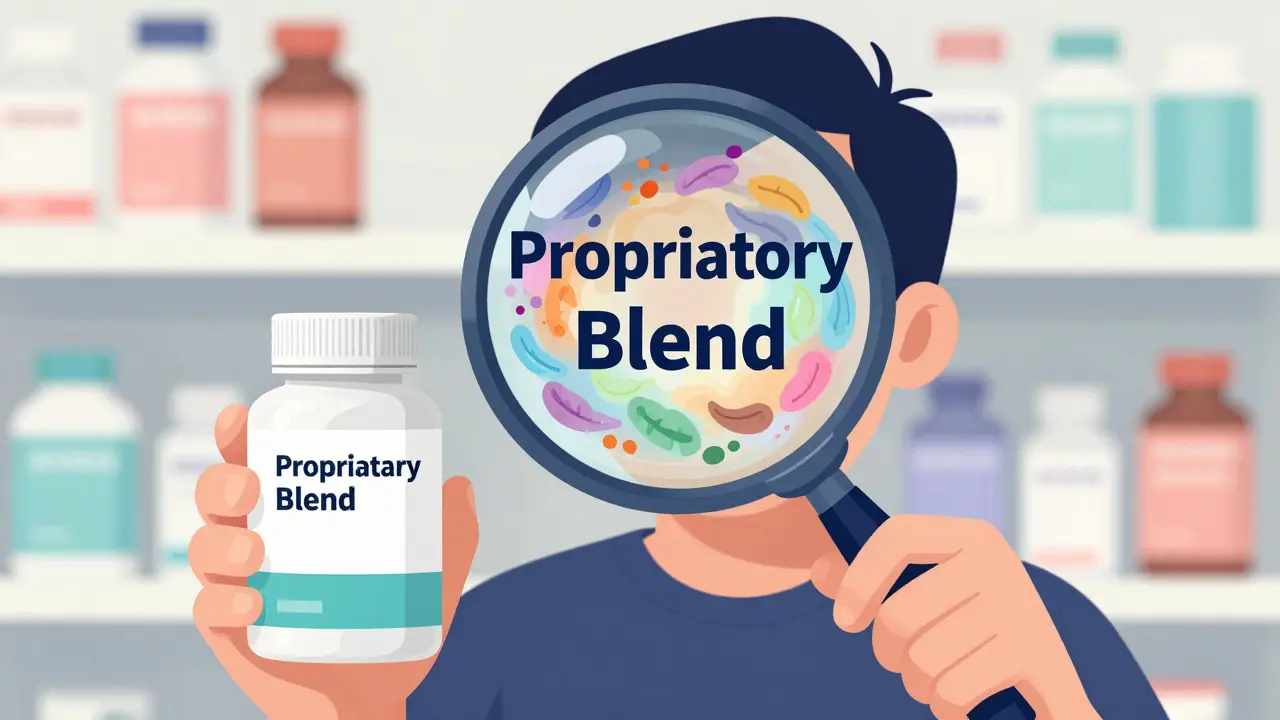
Have you ever seen a protein powder or weight loss pill that lists a "Proprietary Blend"? This is a legal way for companies to hide exactly how much of each ingredient is in the product. They list the ingredients in the blend, but not the amount of each. An analysis by NSF International found this practice affects 41% of protein supplements and 63% of weight loss supplements. This is a nightmare for anyone trying to avoid a specific ingredient or ensure they aren't taking a toxic dose of a stimulant. Unlike a drug label, where every milligram is accounted for, proprietary blends leave you guessing. This lack of transparency is why a University of North Carolina study found only 28% of people could correctly identify dangerous ingredient levels on supplement labels, compared to 89% for medication labels.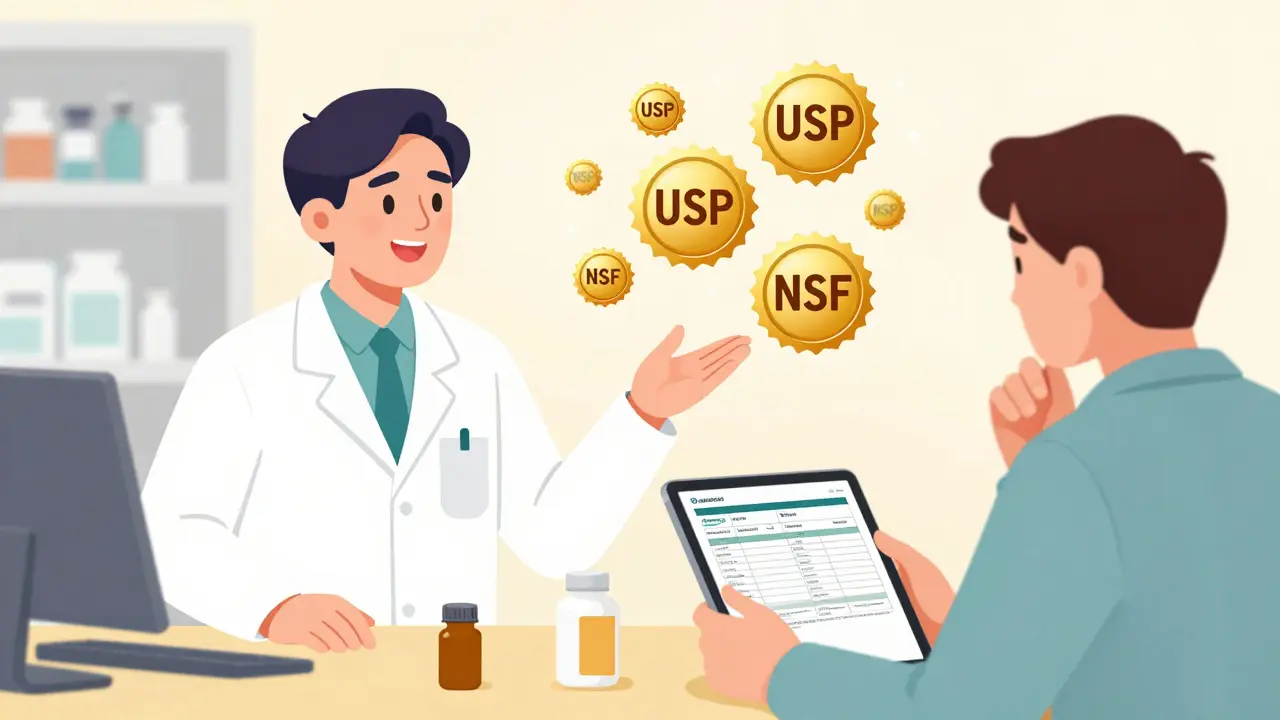
Why This Doesn't Change
If this is so dangerous, why isn't it fixed? It comes down to money and lobbying. The supplement industry is a behemoth, generating over $54 billion in sales in 2022. That kind of money buys influence. In 2022 alone, the industry spent $8.2 million on federal lobbying to keep these regulations lax. Because the FDA can only act *after* a supplement is proven to be "adulterated" or "misbranded," the process is reactive. The Government Accountability Office found that it takes the FDA an average of 427 days to act on a dangerous supplement report. Compare that to just 45 days for a problematic OTC medication. The system is designed to let the product stay on the shelf until someone gets hurt.How to Protect Yourself
Since the labels aren't enough, you have to do the heavy lifting. Don't assume a product is safe just because it's in a pharmacy.- Use Third-Party Verifiers: Look for seals from organizations like USP, NSF International, or ConsumerLab. These groups test if the bottle actually contains what the label claims.
- Consult a Professional: Don't rely on the "Supplement Facts." Ask your pharmacist or doctor to check for interactions with your current prescriptions.
- Search Independent Databases: Use resources like Examine.com or the NIH Office of Dietary Supplements database to get unbiased data on ingredients.
- Avoid Proprietary Blends: If you can't see the exact milligram count for every active ingredient, put it back on the shelf.
Does the FDA approve supplements before they are sold?
No. Unlike OTC medications, the FDA does not review dietary supplements for safety or effectiveness before they reach the consumer. The FDA only steps in after a product is on the market if it is reported to be unsafe or makes illegal medical claims.
Why do some vitamins say "supports immune health" instead of "cures the cold"?
This is due to the DSHEA of 1994. Supplements are not allowed to claim they treat, cure, or prevent a disease. They can only make "structure/function" claims, which describe how a nutrient affects a normal body function. This is why you see the mandatory disclaimer stating the FDA hasn't evaluated the claim.
What is a proprietary blend on a label?
A proprietary blend is a group of ingredients listed together without specifying the exact amount of each. While the total weight of the blend is listed, the individual doses are hidden, making it difficult for consumers to know if they are getting an effective or dangerous amount of a specific substance.
Can supplements interact with prescription medications?
Yes, and this is a major safety risk. Many supplements can either block the effect of a medication or dangerously amplify it. Because supplement labels rarely list these interactions (only 17% do), it is vital to clear all supplements with a healthcare provider.
How can I tell if a supplement is actually high-quality?
Look for third-party certifications such as USP (U.S. Pharmacopeia) or NSF. These organizations verify that the product contains the ingredients listed on the label in the declared potency and that it isn't contaminated with harmful levels of impurities.