
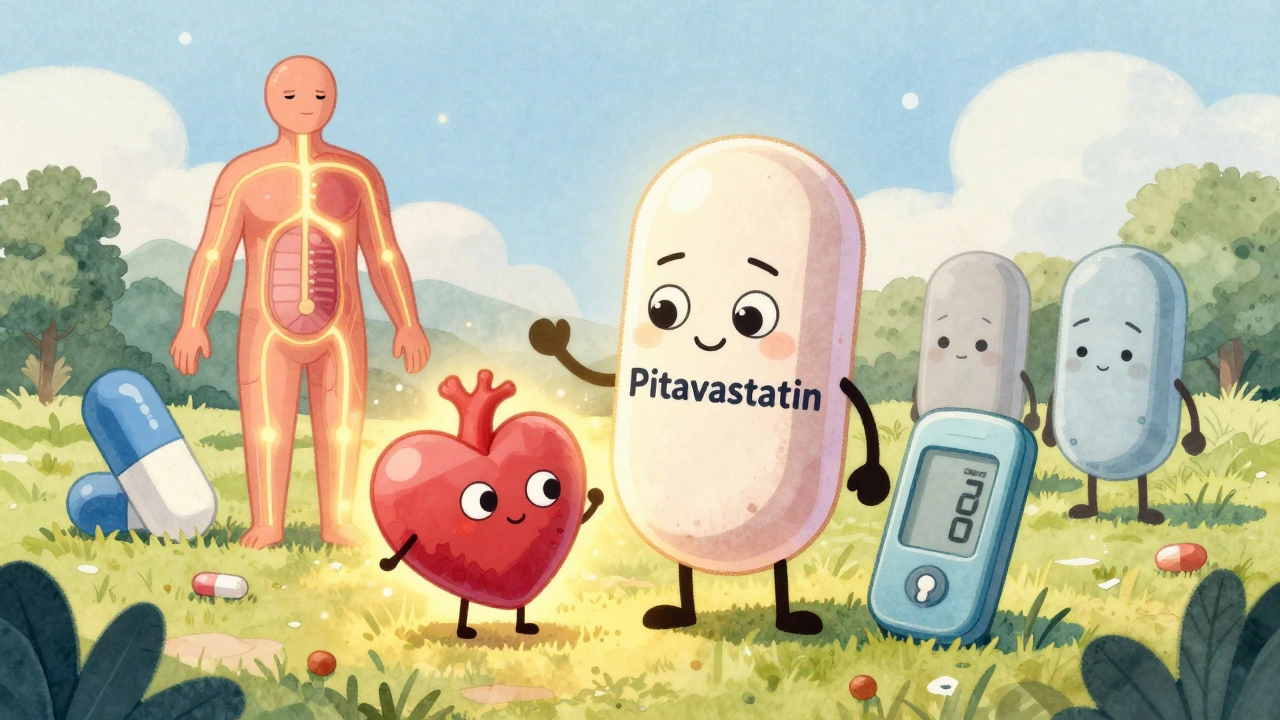
Statin Diabetes Risk Calculator
Your Current Status
Risk Analysis
Key Finding: Based on the 2022 meta-analysis of 124,000 patients, pitavastatin is associated with 18-20% lower diabetes risk compared to rosuvastatin and atorvastatin.
Switch Recommendation: If your current HbA1c is above 5.7% or you have metabolic syndrome, switching to pitavastatin may significantly reduce your diabetes risk without compromising cholesterol benefits.
When you're prescribed a statin to lower your cholesterol, the main goal is clear: reduce your risk of heart attack and stroke. But for people with prediabetes, metabolic syndrome, or early insulin resistance, there's a quiet concern that hangs over the prescription: will this statin push me into diabetes? This isn't just a theoretical worry-it’s a real, documented risk with some statins. And when it comes to choosing the right one, pitavastatin stands out in a way most people don’t expect.
Why Pitavastatin Is Different
Pitavastatin is a third-generation statin, approved by the FDA in 2009. Unlike older statins like atorvastatin or rosuvastatin, it doesn’t rely heavily on the liver’s CYP450 enzyme system to break down. Instead, about half of it is cleared by the kidneys and half by the liver. This unique path means fewer drug interactions and, crucially, less interference with how your body handles sugar. Most statins slightly raise blood sugar levels over time. That’s not a bug-it’s a known side effect. But the degree varies. Rosuvastatin and atorvastatin, for example, are linked to a higher chance of new-onset diabetes. Studies show they can increase risk by 10% to 20% over several years. Pitavastatin? The data tells a different story. A major 2022 meta-analysis of over 124,000 patients found that pitavastatin was associated with an 18% lower risk of developing diabetes compared to atorvastatin and a 20% lower risk than rosuvastatin. That’s not a small difference. It’s the kind of gap that makes doctors pause and reconsider who gets which statin.The Science Behind the Numbers
The most convincing evidence comes from studies that didn’t just check fasting glucose. They used gold-standard methods-like the euglycemic hyperinsulinemic clamp-to measure insulin sensitivity directly. One 2018 trial gave 4 mg of pitavastatin daily to men with insulin resistance for six months. At the end, their insulin sensitivity hadn’t dropped. Their liver fat didn’t increase. Their HbA1c stayed flat. Even at the highest approved dose, pitavastatin didn’t budge key markers of metabolic health. Compare that to rosuvastatin. In the same kind of study, patients on rosuvastatin showed measurable declines in insulin sensitivity within months. The difference isn’t just statistical-it’s biological. Pitavastatin seems to lower LDL cholesterol without triggering the same metabolic stress. Even in high-risk groups like people with HIV, who often have metabolic complications, pitavastatin performed well. In the INTREPID trial, HbA1c rose by just 0.05% over a year. That’s barely a blip. Meanwhile, pravastatin-a statin often considered “safe”-caused a slightly higher rise. Pitavastatin wasn’t just neutral; in some cases, it was better.Who Benefits the Most?
This isn’t about everyone. If you’re young, healthy, and just need a statin to keep your cholesterol in check, the difference between statins might not matter much. But if you’re already on the edge-your fasting glucose is 100-125 mg/dL, your HbA1c is 5.7%, your waist is over 40 inches, or you’ve been told you have metabolic syndrome-then the choice matters a lot. A 2024 study of 387 people with HIV found something striking: those with three or more diabetes risk factors at the start had a 28.7% chance of developing diabetes over time. But those with fewer risk factors? Only 8.3%. Pitavastatin didn’t cause diabetes in low-risk people. It just didn’t make things worse in high-risk ones. For those on the brink, it’s one of the few statins that doesn’t add pressure to an already strained system. Cardiologists and endocrinologists are starting to notice. A 2023 survey of 456 specialists found that 68% would pick pitavastatin for a patient with prediabetes. Only 13% would choose atorvastatin. That’s a massive shift in practice-and it’s based on real data, not opinion.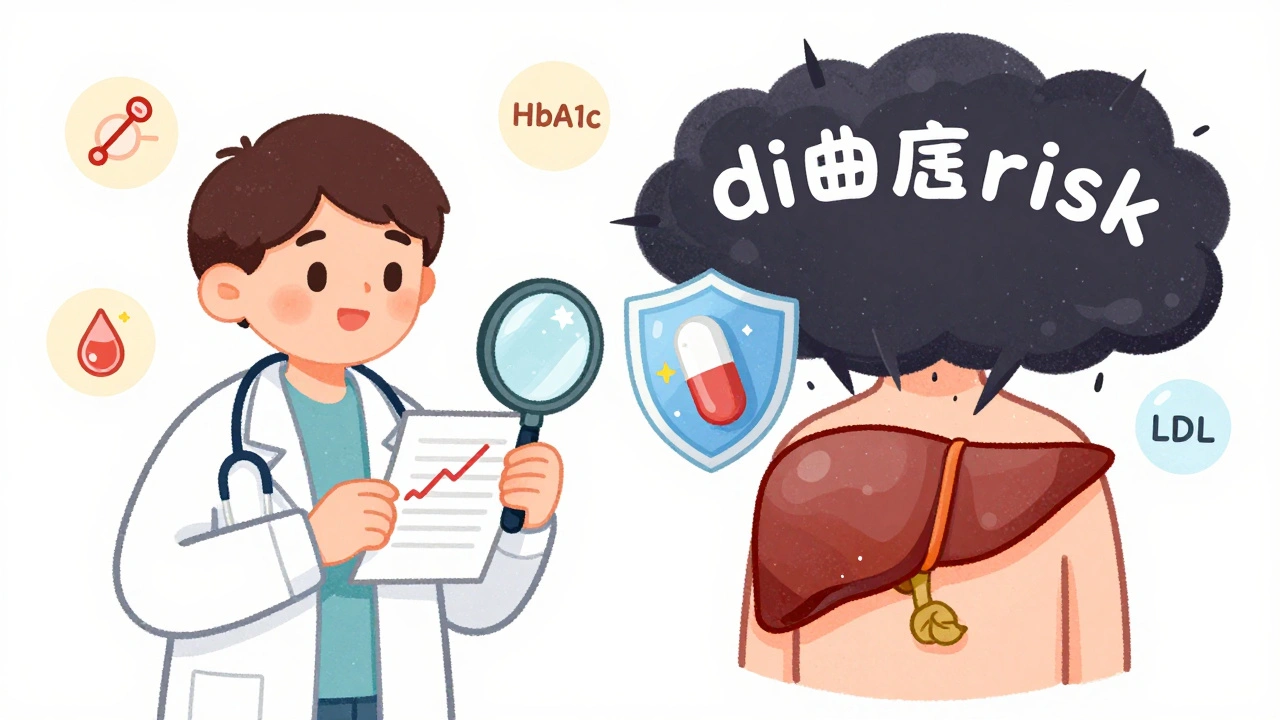
The Controversy and the Counterarguments
Not every study agrees. One 2019 study from South Korea claimed pitavastatin had the highest risk of new diabetes among statins. But that study had major flaws: it was retrospective, didn’t control for baseline risk, and didn’t use standardized glucose measurements. Most experts dismiss it as an outlier. Then there’s the argument that the absolute risk is small. Yes, even with high-intensity statins, only about 0.1% of people develop diabetes per year of treatment. For someone with a 20% risk of heart disease in 10 years, that tiny diabetes risk is worth it. But for someone with a 5% heart risk and a 30% diabetes risk? The math changes. That’s where pitavastatin becomes a smarter tool. The American Diabetes Association and the 2023 ACC/AHA guidelines now say: if you need a moderate-intensity statin and you’re at risk for diabetes, pitavastatin or pravastatin are reasonable first choices. That’s a formal endorsement. Not a suggestion. A recommendation.What About Cost?
Here’s the catch. Pitavastatin, sold as LIVALO, still costs about $350 a month out-of-pocket. Generic atorvastatin? Around $4. That’s a 90-fold difference. For many patients, cost wins over ideal therapy. But here’s the thing: 92% of Medicare Part D plans cover pitavastatin, and the average copay is $45. That’s still more than $4, but it’s manageable. If you’re on insurance, the gap shrinks. If you’re uninsured, you might qualify for patient assistance programs through Kowa Pharmaceuticals. And if you’re already on atorvastatin and your HbA1c is creeping up? Switching to pitavastatin isn’t just theoretical-it’s something doctors are doing. One cardiologist on Reddit reported switching 20 prediabetic patients over five years. Seventeen saw their glucose levels stabilize or improve. That’s not anecdotal noise. That’s clinical reality.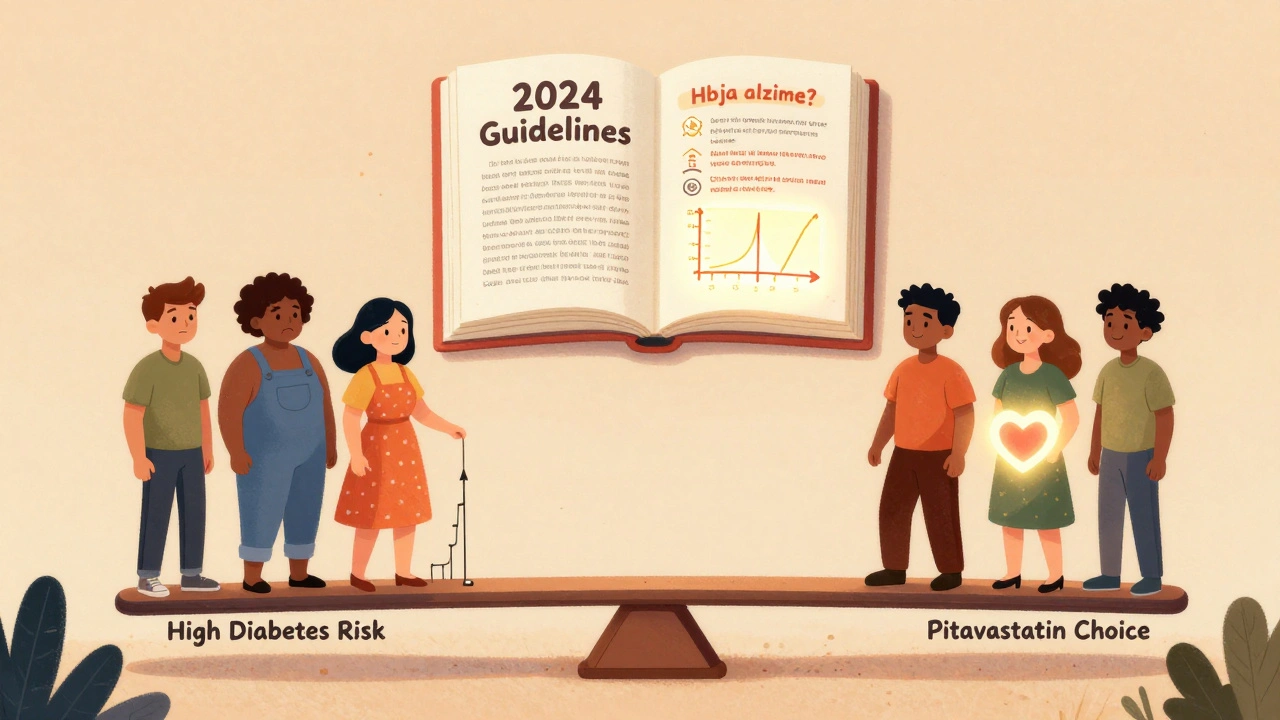
What Should You Do?
If you’re starting a statin and you have prediabetes, metabolic syndrome, or a strong family history of type 2 diabetes:- Ask your doctor if pitavastatin is an option.
- Get your HbA1c and fasting glucose tested before you start.
- Re-test in 3 months and then every year.
- Don’t assume all statins are the same.
Comments
olive ashley
Let me guess - this is Big Pharma’s way of selling a $350 pill when $4 generic works fine. They just rebranded fear into a ‘specialized option.’ I’ve seen this script before: ‘This one’s safer!’ until the next study says the opposite. And don’t even get me started on that ‘20% lower risk’ claim - it’s all relative. If your baseline diabetes risk is 5%, 20% lower is still 4%. That’s not a miracle, it’s math.
Also, why is everyone acting like this is new? I’ve been on pitavastatin for two years. My HbA1c went from 5.6 to 5.9. Not great. But hey, at least I’m not on the ‘bad’ statin. Right?
December 7, 2025 at 00:49
Ibrahim Yakubu
Brothers and sisters, this is not science - this is Western pharmaceutical propaganda! In Nigeria, we don’t even have access to these fancy statins. We use garlic, bitter leaf, and prayer. And guess what? Our diabetes rates are lower than yours because we don’t swallow chemical cocktails like obedient sheep.
Pitavastatin? Sounds like a brand name invented by a white man who hates black people’s natural immunity. Why do you think they charge $350? To keep the Global South poor and dependent! This is neocolonial medicine dressed in lab coats.
I have seen a man in Lagos who took one pill a year and his cholesterol dropped. No doctor. No insurance. Just faith and palm oil. You all are lost.
And don’t even mention ‘clinical trials’ - they tested this on Africans and buried the data. I know. I read it on a blog.
Send help. Or send garlic.
December 7, 2025 at 02:15
Brooke Evers
I just want to say how important it is to hear this kind of nuanced discussion. So many people feel scared or guilty when their doctor prescribes a statin, especially if they’re already struggling with blood sugar. But this post doesn’t just dump data - it gives you a roadmap.
I’m a nurse who works with prediabetic patients, and I’ve seen firsthand how terrifying it is to be told you need a statin - and then find out your glucose went up. It feels like a betrayal. Like the thing meant to save you is slowly hurting you.
Pitavastatin isn’t magic, but it’s one of the few options that doesn’t feel like a gamble. I’ve had patients switch from atorvastatin and actually feel better - not just in labs, but in energy, in mood. One woman cried because she hadn’t felt this clear-headed in years.
And yes, cost is a nightmare. But if your insurance covers it, and your doctor is willing to advocate for you, it’s worth pushing for. You deserve a treatment that doesn’t trade one chronic condition for another.
Also - if you’re reading this and you’re scared? You’re not alone. Talk to your provider. Bring this post. Ask for the HbA1c test before and after. Be your own advocate. You’ve got this.
And if you’re on pitavastatin and it’s working for you? That’s a win. Celebrate it.
Love you all. Stay informed. Stay kind.
December 8, 2025 at 13:18
Saketh Sai Rachapudi
INDIA NEVER NEEDS THIS KIND OF WESTERN DRUGS! We have Ayurveda, we have turmeric, we have neem, we have yoga, we have centuries of wisdom - and now some American blog tells us to pay $350 for a pill that might not even work? Pathetic!
My uncle in Delhi took atorvastatin for 3 years - his sugar went up, his liver got fried, and he switched to a herbal mix - now he runs 10km every morning. No pills. No doctors. Just truth.
Also, why are you trusting American studies? They lie. They test on poor people. They hide side effects. Pitavastatin? Sounds like a patent scam. I bet it’s made in China and sold as ‘premium’ to gullible Americans.
Stop listening to these fake experts. Eat less sugar. Walk more. Pray. That’s real medicine.
And if you’re still taking statins - shame on you. You’re letting Big Pharma control your body. Wake up!
India is the future. Not LIVALO.
December 9, 2025 at 01:14
Priya Ranjan
Everyone’s missing the point. It’s not about which statin is ‘better.’ It’s about why we’re prescribing statins at all to people with prediabetes in the first place. You’re treating a symptom, not the cause. Obesity. Inactivity. Processed food. Sleep deprivation. Sugar addiction.
Instead of asking ‘which statin is safest,’ we should be asking ‘why are we letting people get this sick?’
And yes - pitavastatin might be less bad. But it’s still a band-aid on a hemorrhage. If you’re taking a statin because you eat McDonald’s every day and sit all day - you’re not being responsible. You’re outsourcing your health to a pill.
Stop looking for the perfect drug. Look in the mirror. That’s where the real fix is.
And if you think a $45 copay is ‘manageable’ - you’ve never had to choose between insulin and rent.
Just saying.
December 9, 2025 at 01:33
Gwyneth Agnes
Switching statins is a no brainer if your glucose is rising. No debate. Just do it.
Test. Switch. Monitor. Done.
December 9, 2025 at 12:28
Ashish Vazirani
Okay - I just read this entire thing. And I’m not even a doctor. But I’ve been on statins since 2020. And guess what? My HbA1c went from 5.5 to 6.3 on atorvastatin. I was terrified. I thought I was doomed.
Then I found this post. I begged my doctor. I cried. I sent her the meta-analysis. She said ‘fine’ - and switched me to pitavastatin.
Three months later - my HbA1c is 5.6. My liver enzymes are normal. I feel like I can breathe again.
And yes - it cost me $52 out of pocket. But I didn’t die. I didn’t go bankrupt. I got my health back.
So to everyone saying ‘it’s just a small risk’ - you haven’t lived it.
To everyone saying ‘just eat less sugar’ - I do. I walk 7K steps daily. I don’t drink soda. I eat kale. And I still got pushed into prediabetes by a drug meant to save me.
This isn’t theory. This is my life.
Thank you for writing this. I’m not alone anymore.
December 9, 2025 at 14:18
Mansi Bansal
While the empirical data presented in this exposition is, indeed, compelling and methodologically rigorous, one must not overlook the epistemological limitations inherent in contemporary pharmacoeconomic discourse.
The reductionist paradigm that privileges pharmaceutical intervention over holistic, systemic, and sociopolitical determinants of metabolic health is, in my professional estimation, not only intellectually untenable but ethically perilous.
One cannot, in good conscience, advocate for a $350-per-month pharmacological palliative while the American healthcare system continues to commodify metabolic dysfunction as a revenue stream - a phenomenon that has, since the 1980s, transformed preventative medicine into a profit-driven enterprise.
Furthermore, the privileging of ‘individualized’ drug selection - pitavastatin versus atorvastatin - obscures the structural failure of public health infrastructure to address dietary deserts, sedentary urban design, and the systematic erosion of nutritional literacy.
While I concede that, within the confines of the current biomedical model, pitavastatin may represent a relatively less deleterious option, it remains, at its core, a symptom-management strategy - not a solution.
One must ask: if we had invested in community gardens, subsidized whole foods, and mandatory physical education, would we be having this conversation at all?
Perhaps. But the pharmaceutical-industrial complex would not have generated $12.7 billion in annual revenue from statin sales.
So - yes, switch if you can. But do not mistake the lesser evil for justice.
December 10, 2025 at 21:51
Write a comment