
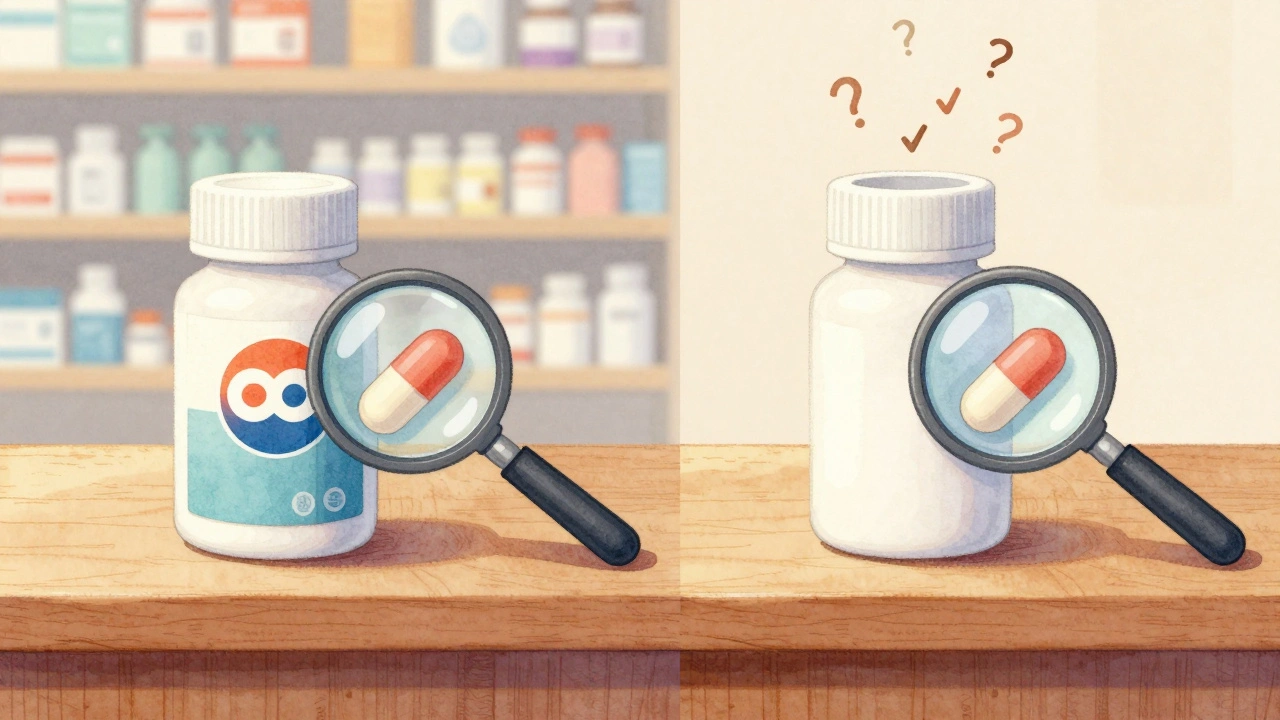
When you pick up a prescription, you might see two pills that look completely different-one with a colorful logo, another plain and white. The brand-name version costs $120. The generic? $25. You’re tempted to save money, but you wonder: are authorized generics as good as brands? The answer isn’t just yes-it’s exactly yes. And here’s why.
What Exactly Is an Authorized Generic?
An authorized generic isn’t just another generic. It’s the exact same pill, made in the same factory, with the same ingredients, under the same approval as the brand-name drug. The only difference? No brand name on the label. The FDA defines it clearly: it’s the brand-name drug, stripped of its trademarked packaging and name. Think of it like buying a soda in a store-brand bottle-it’s the same liquid, just without the logo. Unlike traditional generics, which go through a separate approval process called an ANDA (Abbreviated New Drug Application), authorized generics are sold under the original brand’s NDA (New Drug Application). That means they never had to prove they’re similar to the brand-they already are the brand. No bioequivalence studies. No guesswork. Just the same tablet, same capsule, same release profile.Same Ingredients, Same Factory, Same Standards
Authorized generics contain identical active and inactive ingredients as their brand-name counterparts. That includes everything from the medicine that treats your condition to the fillers, coatings, and binders holding it together. Traditional generics sometimes swap out inactive ingredients-like changing the dye or the preservative-which can cause issues for people with allergies or sensitivities. Authorized generics don’t. If you react to a brand-name drug because of a dye or filler, you’ll react the same way to its authorized generic. But if you’re fine with the brand, you’ll be fine with the generic version too. Manufacturing happens in the same facility, on the same machines, under the same FDA inspections. The FDA holds authorized generics to the same cGMP (Current Good Manufacturing Practices) standards as the brand. That means quality control, cleanliness, and testing are identical. There’s no lower-tier production line for authorized generics. They’re not made on a budget. They’re made the same way, because they’re the same product.Why Do They Cost Less Than the Brand?
The brand-name drug company often releases its own authorized generic to stay competitive after the patent expires. Instead of letting another company take market share with a cheaper traditional generic, they release their own version at a lower price. It’s a smart business move: they keep customers, undercut competitors, and still make money. Prices for authorized generics typically run 15-30% lower than the brand-name version. That’s a $10-$30 monthly savings for many prescriptions. They’re usually 10-20% more expensive than traditional generics, but that’s because they’re sold under the same distribution system as the brand. You’re paying a little more than the cheapest generic, but you’re getting the exact same product as the brand-without the brand markup.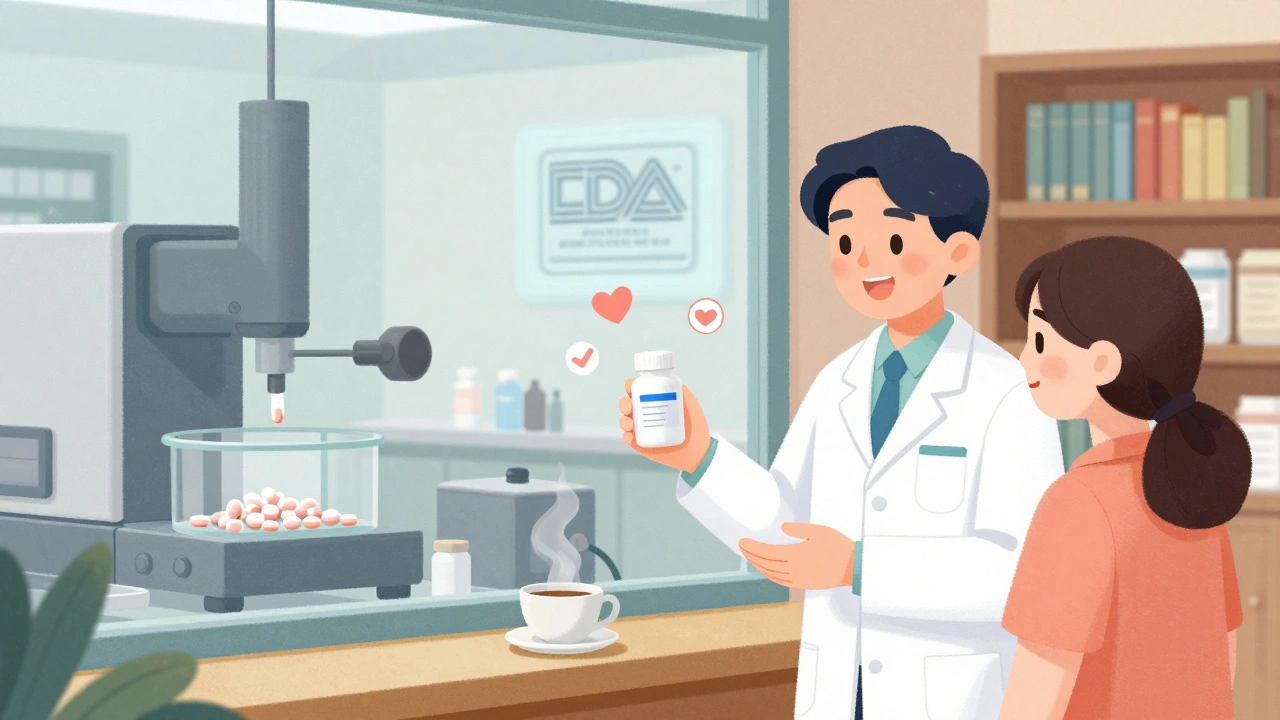
Real-World Evidence: Do They Work the Same?
A 2018 study tracked over 5,000 patients who switched from brand-name drugs to generics. The researchers used authorized generics as the gold standard for comparison because they’re identical to the brand. The results? No meaningful difference in hospital visits, emergency room trips, or medication discontinuation rates. Patients on authorized generics had outcomes nearly identical to those staying on the brand. Even when comparing authorized generics to traditional generics, the differences were tiny. One small increase in ER visits was noted for authorized generics-but researchers believe this was due to confusion in the system, not the drug itself. Pharmacists sometimes mislabeled them as “different,” leading to patients switching back and forth between products, which can disrupt treatment. Patient surveys back this up. On GoodRx, 92% of users who tried authorized generics said they’d recommend them to a friend. In a Kaiser Permanente survey of over 8,000 people, 94% stuck with their authorized generic prescription-just as faithfully as those on the brand. Only 8% of asthma patients switching from Singulair to its authorized generic reported any change in how they felt. And most of those changes were tied to the pill’s size or shape, not its effect.What About the FDA’s Stance?
The FDA doesn’t just allow authorized generics-they created the framework for them. Dr. Janet Woodcock, former head of the FDA’s drug evaluation center, said plainly in 2019: “Authorized generics are the brand product without the brand name on the label-they are identical in every way.” The American College of Clinical Pharmacy agrees. Their official position: authorized generics are therapeutically equivalent to brand-name drugs because they are exactly the same drug product. There’s no “might be” or “probably.” It’s a fact. The FDA also requires that authorized generics maintain the same lot tracking and adverse event reporting as the brand. If something goes wrong, they trace it back to the same batch, the same facility, the same process. There’s no separate safety system. It’s all one system.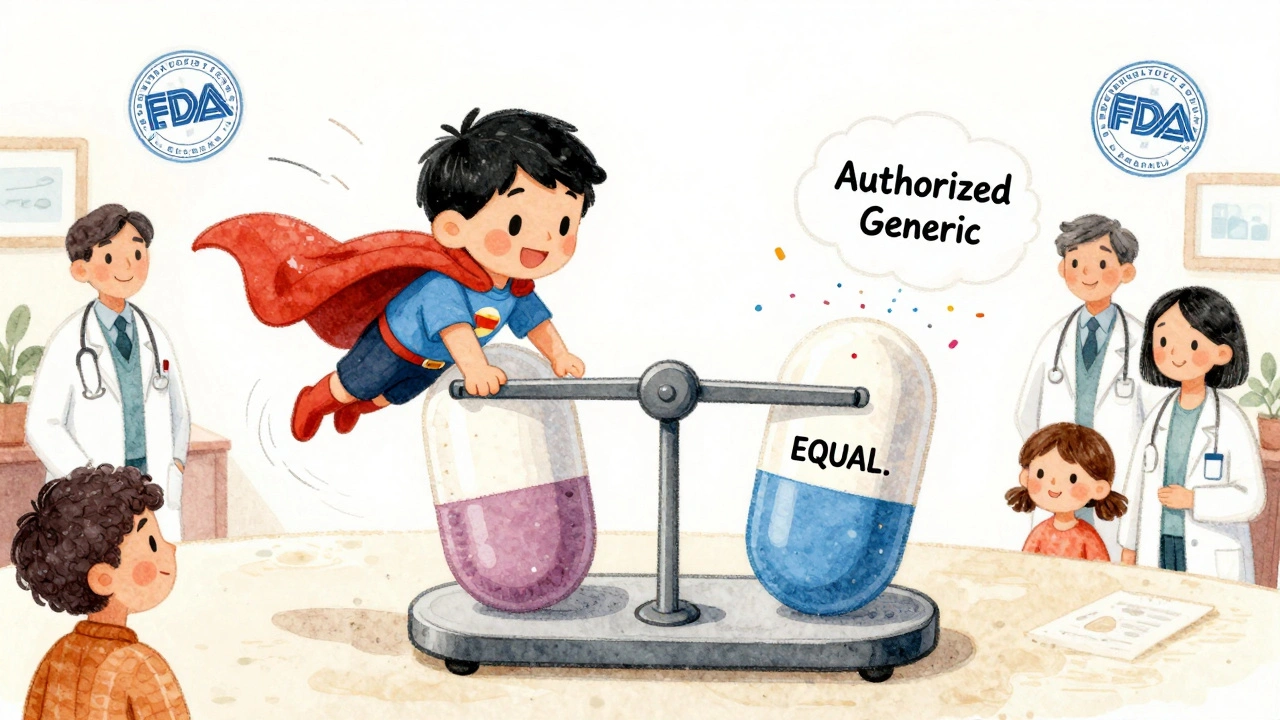
Why Aren’t They More Common?
About 20-25% of brand-name drugs have an authorized generic available after patent expiration. That’s growing fast-68% of top-selling brand drugs launch an authorized generic within six months of losing exclusivity. In 2022, there were 387 authorized generics on the market, worth $18.7 billion. That number is expected to grow to over 15% of the global generic market by 2027. But here’s the catch: you have to ask for them. Most pharmacies automatically dispense the cheapest generic they have on hand-often a traditional one. If you want the authorized version, you need to request it. Tell your pharmacist: “Is there an authorized generic for this?” Some insurance plans treat authorized generics the same as traditional generics, so your copay might be the same. Others might require prior authorization. But if cost is your concern, asking for the authorized generic often saves you more than the regular generic-and gives you peace of mind.What Should You Do?
If you’re on a brand-name drug and you’re considering switching to save money, here’s your simple checklist:- Ask your pharmacist: “Is there an authorized generic for this medication?”
- Check your insurance formulary-authorized generics are often in the same tier as traditional generics.
- Compare prices: Sometimes the authorized generic is only $5 more than the traditional one, but it’s the exact same drug.
- If you’ve had issues with traditional generics (side effects, inconsistent results), ask for the authorized version.
- Don’t assume “generic” means “different.” Authorized generics are the closest thing to the brand you can get.
Final Answer: Are Authorized Generics as Good as Brands?
Yes. Not just “mostly.” Not just “in most cases.” They are the same drug. Same formula. Same factory. Same quality. Same results. The only difference is the label. If you’re worried about effectiveness, safety, or side effects-stop. The science, the regulators, and real-world patient data all say the same thing: authorized generics are not a compromise. They’re the brand, priced right. You don’t have to pay more to get the same medicine. You just have to ask for it.Are authorized generics FDA-approved?
Yes. Authorized generics are made under the original brand’s FDA-approved New Drug Application (NDA). They don’t need a separate approval because they’re identical to the brand-name drug. The FDA requires the manufacturer to notify them when an authorized generic is launched, but no additional testing is needed.
Can I switch from a brand-name drug to an authorized generic safely?
Absolutely. Since authorized generics are identical in active and inactive ingredients, strength, dosage form, and manufacturing process, switching poses no safety risk. Many patients switch without noticing any difference. If you’ve had issues with traditional generics, an authorized version is often the best alternative.
Why do authorized generics cost more than traditional generics?
Authorized generics typically cost 10-20% more than traditional generics because they’re distributed through the same channels as the brand-name drug. Traditional generics are made by separate manufacturers competing on price, which drives costs down. Authorized generics are made by the original brand’s company, so they’re priced to compete with traditional generics but still reflect the brand’s distribution system.
Do authorized generics work as well for chronic conditions like high blood pressure or diabetes?
Yes. Studies tracking patients with chronic conditions-including hypertension, diabetes, and asthma-show no difference in outcomes between those taking brand-name drugs and those taking authorized generics. Blood pressure control, glucose levels, and symptom management were statistically identical across groups in multiple real-world studies.
How do I know if my pharmacy is giving me an authorized generic?
Ask. Look at the pill label-it won’t have the brand name. You can also ask your pharmacist directly: “Is this an authorized generic?” Some pharmacies list it as “AG” or “Authorized Generic” on the bottle. If you’re unsure, call the manufacturer of the brand-name drug-they’ll tell you if they offer an authorized version.
Can authorized generics be substituted for brand-name drugs without a doctor’s approval?
Yes. Because authorized generics are identical to the brand-name drug and share the same NDA, pharmacists can substitute them without needing a new prescription. In fact, 78% of independent pharmacists consider them fully interchangeable with the brand at the pharmacy level.
Comments
Kumar Shubhranshu
Authorized generics are the real deal. Same pill. Same factory. No fluff.
December 5, 2025 at 23:57
Mayur Panchamia
Who the hell are you trying to fool? Big Pharma is still pulling the wool over your eyes! They make the generic themselves? Of course they do-because they OWN the whole damn system! Don’t be fooled by the ‘same factory’ lie-it’s still their monopoly, just repackaged!
December 7, 2025 at 19:57
Nava Jothy
I’m just… *sigh*… so disappointed in how easily people accept this. It’s not about science-it’s about trust. And when the same company that charged you $120 for a pill now sells you the same one for $25? It’s not generosity. It’s manipulation. 🥺
December 9, 2025 at 01:25
brenda olvera
This is actually such a relief to read. I’ve been switching to generics for years and always worried I was compromising. Knowing there’s a version that’s literally identical makes me feel so much better about saving money. Thank you for clarifying this so clearly 💚
December 9, 2025 at 02:38
Myles White
I’ve been researching this for months because my dad has been on a brand-name statin for 12 years and we were terrified to switch. We found out his medication had an authorized generic and he’s been on it for six months now. His cholesterol is actually better controlled, and his copay dropped from $45 to $8. The only difference? The pill is a different color. No side effects, no drop in efficacy, no weird fluctuations. Honestly, the whole fear around generics is just marketing fearmongering. The science is rock solid. The FDA doesn’t mess around with this stuff. And if you’re still skeptical, look up the lot numbers-they’re tracked the same way. It’s the same batch. Just without the logo.
December 11, 2025 at 02:33
olive ashley
Wait… so the same company makes the brand AND the generic? That’s not a coincidence. That’s a trap. They’re letting you think you’re saving money while still controlling the entire supply chain. They’re the ones who set the price. They’re the ones who decide when to release it. They’re the ones who own the patents. This isn’t freedom-it’s a velvet prison.
December 11, 2025 at 21:35
Ibrahim Yakubu
You think this is new? In Nigeria, we’ve been using these for decades. The brand-name drug is a luxury. The real medicine? The one made in the same lab but without the fancy packaging. The difference is not in the pill. The difference is in your wallet. And your ignorance.
December 12, 2025 at 22:34
Chris Park
Correction: The FDA does not ‘create the framework’ for authorized generics. The FDA regulates them under existing NDA pathways. There is no separate ‘framework.’ The term ‘authorized generic’ is a marketing term, not a regulatory one. The FDA does not recognize ‘authorized generic’ as a distinct category-it’s simply a product sold under an NDA. Misleading terminology is being weaponized here to create false trust.
December 14, 2025 at 18:27
Saketh Sai Rachapudi
India makes better generics than any US company ever could. Why are we even talking about American pharma? Their pills are overpriced garbage. Our generics are pure, tested, and trusted by millions. This whole article is just a US ad for Big Pharma. We don’t need their labels to know what works.
December 16, 2025 at 13:14
joanne humphreys
I’ve been on an authorized generic for my thyroid med for two years now. I was nervous at first too. But my labs haven’t changed. My energy is the same. I even forgot which version I was on until I checked the bottle. It’s just… medicine. Doesn’t need a logo to work.
December 17, 2025 at 13:26
Nigel ntini
This is exactly the kind of information people need to hear. Too many assume ‘generic’ means ‘lesser.’ But when you know it’s the exact same product, it changes everything. I’ve been encouraging my patients to ask for authorized generics for years. It’s not just about cost-it’s about empowerment. You’re not settling. You’re choosing wisely.
December 17, 2025 at 20:53
Priya Ranjan
How can anyone be so naive? You think the FDA is impartial? They’re funded by industry. The ‘same factory’ claim? That’s just corporate spin. If it were truly identical, why do they even bother labeling it differently? It’s because they know people will still distrust it. They’re banking on your ignorance.
December 18, 2025 at 01:52
Gwyneth Agnes
Same pill. No reason to overthink it.
December 19, 2025 at 10:37
Ashish Vazirani
I WAS SO SCARED TO SWITCH. I THOUGHT I WAS GONNA DIE. MY DOCTOR SAID IT WAS FINE. I DID IT ANYWAY. I WAS CRYING WHEN I TOOK THE FIRST PILL. IT WAS A WHITE CAPSULE. NO LOGO. NO COLORS. NO BRAND. I FELT LIKE I WAS BEING BETRAYED. BUT THEN… I FELT THE SAME. THE SAME ENERGY. THE SAME SLEEP. THE SAME LIFE. I DIDN’T NEED THE LOGO. I NEEDED THE MEDICINE. AND NOW I TELL EVERYONE. DON’T BE FOOLED BY THE BRAND. BE SMART. ASK FOR THE AUTHORIZED ONE.
December 19, 2025 at 19:27
Mansi Bansal
It is imperative to underscore, with the utmost academic rigor, that the conceptual framework surrounding the so-called 'authorized generic' is not merely a commercial euphemism, but a regulatory anomaly predicated upon the strategic erosion of pharmaceutical transparency. The identicality of active ingredients, while statistically verifiable, does not account for the subtle, yet clinically significant, variances in excipient bioavailability profiles-variances which, though deemed 'insignificant' by the FDA under current cGMP interpretations, are nonetheless empirically detectable in longitudinal pharmacokinetic studies conducted in non-industry-funded laboratories. Furthermore, the assertion that manufacturing occurs 'in the same facility' is not only misleading, but ethically dubious: the same physical plant may house multiple production lines, each governed by distinct batch protocols, quality assurance checkpoints, and operator training regimens, rendering the notion of 'identical' production a fallacy of homogenization. One must question not only the veracity of the claim, but the moral imperative to disseminate such reductive narratives to vulnerable patient populations.
December 21, 2025 at 13:29
Write a comment