
Opioids and Benzos: Risks, Interactions, and What You Need to Know
When you take opioids, a class of pain-relieving drugs that act on the brain’s reward system, including prescription painkillers like oxycodone and illegal drugs like heroin and benzos, short for benzodiazepines, which are sedatives used for anxiety, insomnia, or seizures—examples include Xanax, Valium, and Klonopin, you’re combining two powerful central nervous system depressants. This isn’t just a mild risk—it’s one of the leading causes of accidental drug deaths in the U.S. The CDC reports that over 30% of opioid overdose deaths also involve benzodiazepines. These drugs don’t just add up—they multiply each other’s effects, slowing your breathing to dangerous levels, sometimes stopping it entirely.
Doctors used to prescribe them together for chronic pain and anxiety, thinking the combo would help patients feel better faster. But research shows this approach is dangerously outdated. The naloxone, a medication that can reverse opioid overdose by blocking opioid receptors in the brain works for opioids alone, but if someone has also taken benzos, they may need longer monitoring—even after naloxone is given—because benzos linger longer and can cause breathing to shut down again. Many people don’t realize they’re at risk because they’re taking a benzo for sleep or anxiety and an opioid for back pain, not knowing the combo can be lethal. Even if you’re taking them as prescribed, your body builds tolerance over time, meaning you need more to get the same effect—and that’s when the danger spikes.
There’s no safe way to mix opioids and benzos without close medical supervision. If you’re on both, talk to your doctor about tapering one or both. Don’t stop suddenly—withdrawal from either can be life-threatening. If you’re helping someone who uses these drugs, learn how to recognize the signs of overdose: pinpoint pupils, slow or shallow breathing, unresponsiveness, blue lips. Keep naloxone on hand. It’s not just for heroin users—it’s critical for anyone taking prescription pain meds, especially if they’re also using a sedative. The posts below cover real cases, safety steps, and alternatives that reduce risk without sacrificing relief. You’ll find guides on managing pain without opioids, safer sleep aids, and how to talk to loved ones about these risks. This isn’t theoretical. It’s life-or-death information, written for people who need it now.
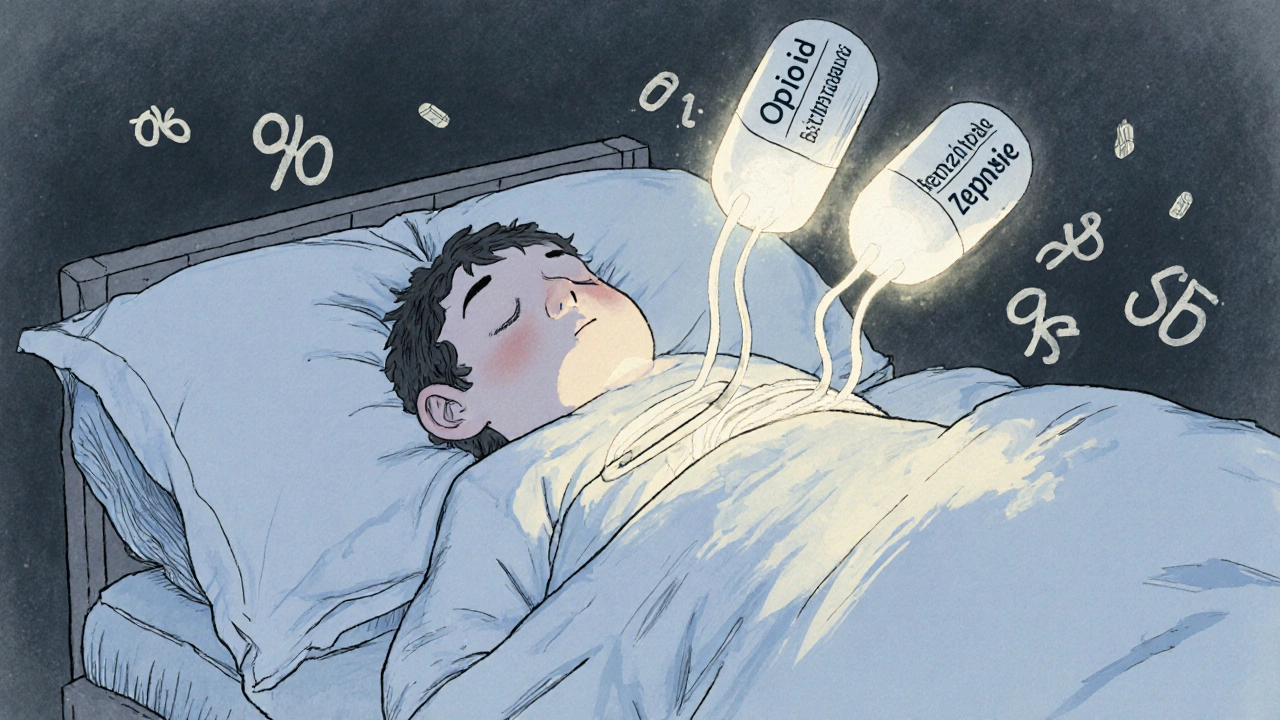
Taking opioids and benzodiazepines together can stop your breathing-even at normal doses. Learn why this combination is deadly, who’s at risk, and what to do if you’re already on both.