
Respiratory Depression: Signs, Causes, and How Medications Can Trigger It
When your breathing slows too much, your body doesn’t get enough oxygen—that’s respiratory depression, a life-threatening condition where breathing becomes too shallow or too slow to sustain life. It’s not just about feeling sleepy; it’s when your lungs stop doing their job, and your brain doesn’t get the signal to keep going. This isn’t rare—it happens every day from prescription painkillers, anxiety meds, sleep aids, and especially from opioids like oxycodone, fentanyl, or heroin.
Opioids, a class of drugs that bind to brain receptors to reduce pain are the most common cause. They don’t just dull pain—they quiet the part of your brain that controls breathing. Even a small dose increase can tip someone into respiratory depression, especially if mixed with alcohol, benzodiazepines, or other sedatives. Benzodiazepines, like Xanax or Valium, used for anxiety or insomnia, make this risk much worse. Combine them with opioids, and you’re playing with fire. That’s why doctors warn against mixing these drugs, and why emergency responders carry naloxone, a fast-acting drug that reverses opioid overdose by kicking opioids off brain receptors.
Signs aren’t always obvious. Someone might seem drowsy, nodding off, or unresponsive. Their lips or fingertips may turn blue. Their breathing might be slow—less than 8 breaths per minute—or shallow, like they’re barely breathing at all. If you’re caring for someone on strong pain meds, watch for these signs. Don’t wait for them to pass out. Act fast.
Respiratory depression doesn’t just happen with street drugs. It’s a real risk with legitimate prescriptions. People on long-term pain management, especially after surgery or for chronic conditions, can develop tolerance and accidentally overdose. Elderly patients on multiple meds are especially vulnerable. That’s why checking drug interactions, using pill organizers, and involving family in medication safety—like in our posts on medication safety and caregiver medication management—isn’t just helpful, it’s critical.
You won’t find magic cures here, but you’ll find real stories and practical guides on how drugs affect breathing, how to recognize danger before it’s too late, and how naloxone works in emergencies. Whether you’re managing pain, helping a loved one, or just trying to understand why some meds are so tightly controlled, this collection gives you the facts you need to stay safe.
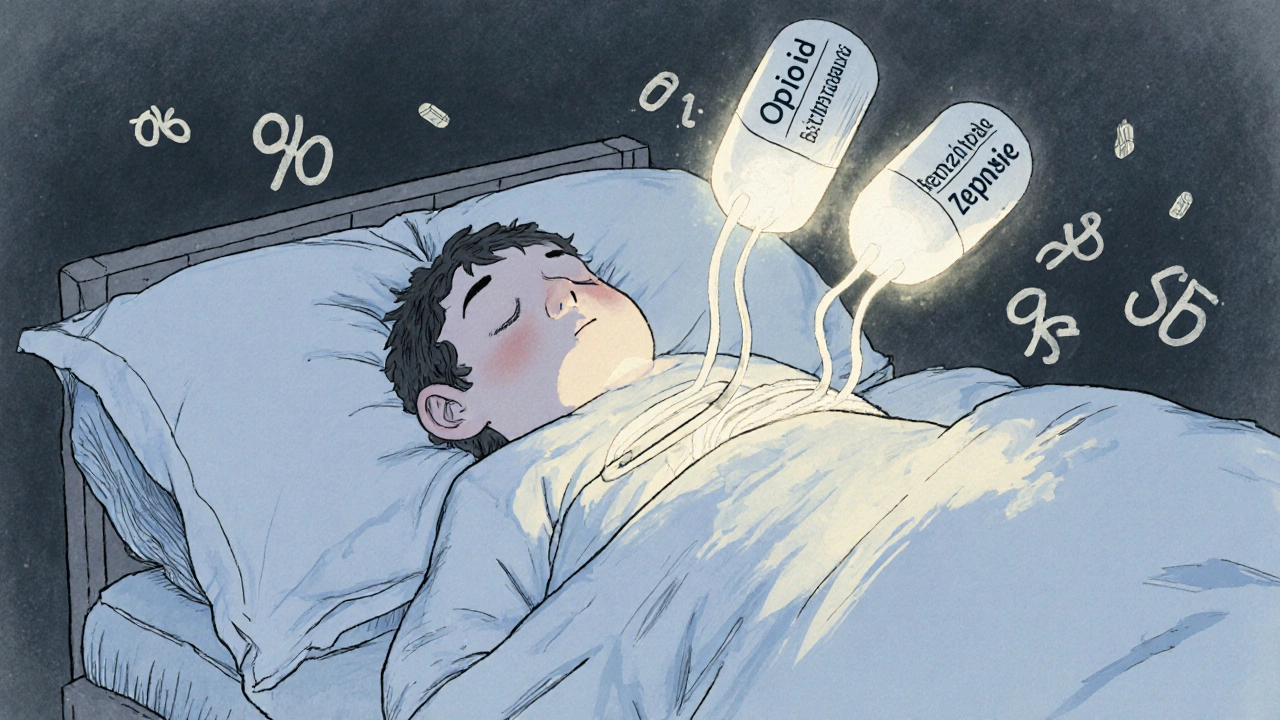
Taking opioids and benzodiazepines together can stop your breathing-even at normal doses. Learn why this combination is deadly, who’s at risk, and what to do if you’re already on both.