
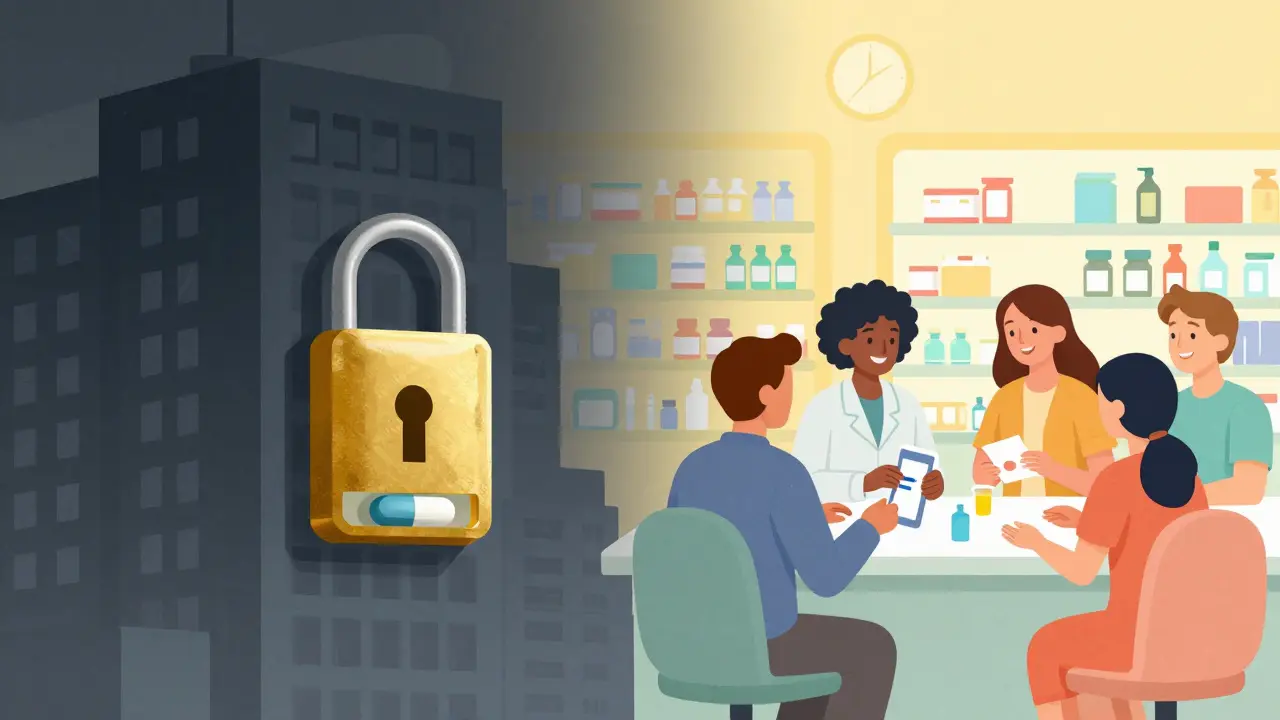
Quick Takeaways
- First generic approval gives the first company to launch a generic version a 180-day window of market exclusivity.
- It significantly lowers drug prices, often by 70-90% within the first six months of entry.
- The process is governed by the HHatch-Waxman Act, balancing innovation with affordability.
- Companies must prove "bioequivalence," meaning the generic works exactly like the brand name.
The Magic Window: 180-Day Exclusivity
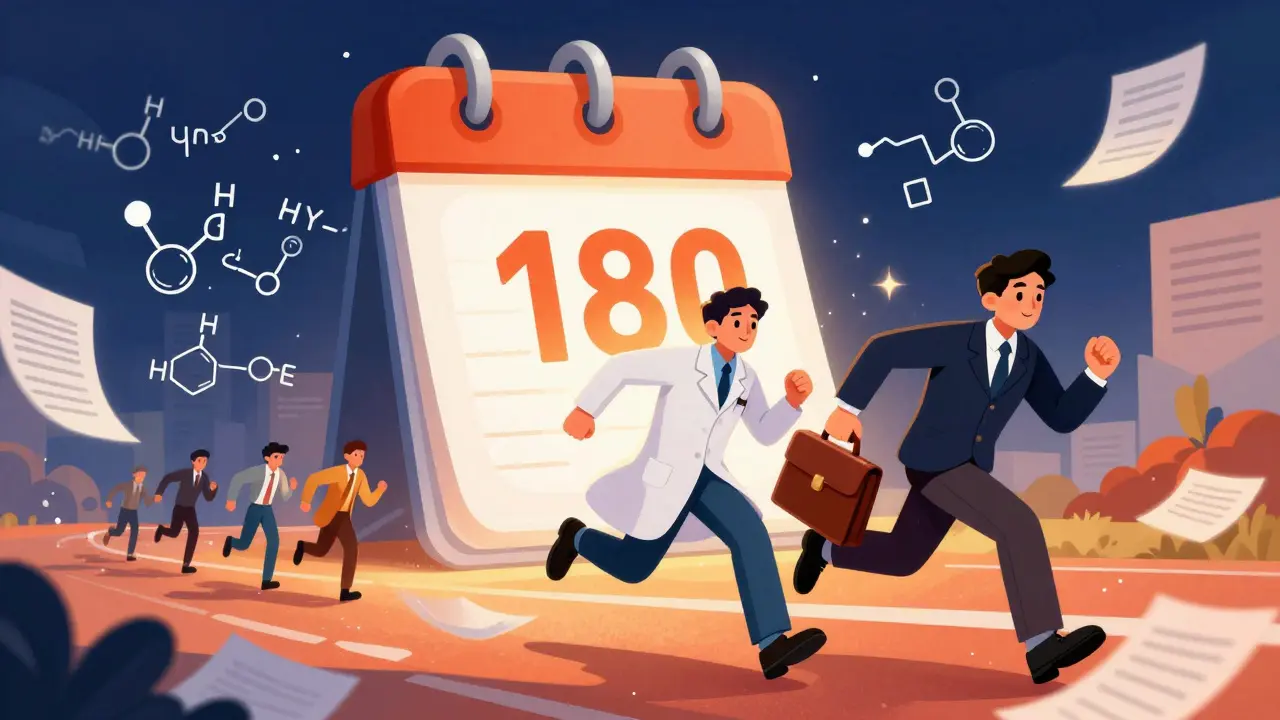
The most critical part of a first generic approval is the 180-day marketing exclusivity. Think of this as a "head start" given to the first company that successfully challenges a brand-name drug's patent. During these six months, no other generic versions of that drug can enter the market. This allows the first mover to capture a massive chunk of the market-often 70-80%-before the crowd arrives.
For a "blockbuster" drug-one that makes over $1 billion annually-this window is incredibly lucrative. A company can price their version 15-20% lower than the brand name and still rake in an extra $100 to $500 million in profit. It's a massive incentive for companies to spend millions on research and legal fees just to be first in line.
How the Process Actually Works
Getting this approval isn't as simple as copying a formula. A company must submit an Abbreviated New Drug Application, or ANDA. Unlike the original brand-name drug, which required massive clinical trials to prove it was safe and effective, a generic company only needs to prove bioequivalence.
In plain English, this means the generic drug must enter the bloodstream at the same rate and to the same extent as the original. The FDA (Food and Drug Administration) requires that the drug's absorption (the area under the curve or AUC) and its maximum plasma concentration (Cmax) fall within a strict 80-125% range of the original. To give you an idea of how tight this is, the FDA found that the average difference between generics and brands is only 3.5%-which is basically the same difference you'd find between two different batches of the same brand-name drug.
The process usually follows these steps:
- The Challenge: The company files a "Paragraph IV certification," essentially claiming the brand-name patent is invalid or not infringed.
- The Legal Battle: This often triggers a lawsuit from the brand manufacturer, leading to a 30-month stay where the FDA cannot approve the generic while the court decides.
- The Review: The FDA prioritizes these first-to-file applications. While a standard generic might take 14-18 months to get approved, a first generic often moves faster, averaging 10-12 months.
- The Launch: Once approved, the 180-day clock starts ticking the moment the drug hits the market.
| Feature | First Generic Approval | Standard Generic Approval |
|---|---|---|
| Market Exclusivity | 180 Days | None |
| Typical Approval Time | 10-12 Months | 14-18 Months |
| Typical Market Share | 70-80% (during exclusivity) | Shared among multiple players |
| Legal Risk | High (Patent litigation common) | Lower (Usually waits for patent expiry) |
The Legal Engine: The Hatch-Waxman Act
None of this would be possible without the Hatch-Waxman Act of 1984. Before this law, generic companies had to do the same grueling clinical trials as the original inventors, which was a waste of time and money since the drug's safety was already proven. Senator Orrin Hatch and Representative Henry Waxman created a compromise: brand names keep their patents for a while to make their money back, but generics get a streamlined path to enter the market once those patents expire.
The impact has been staggering. In 1984, only 19% of prescriptions were generics. By 2023, that number jumped to over 90%. This shift has saved the U.S. healthcare system an estimated $1.7 trillion. It's one of the most successful pieces of public health legislation in history, though it isn't without its flaws.
The "Dark Side" of the Exclusivity Race
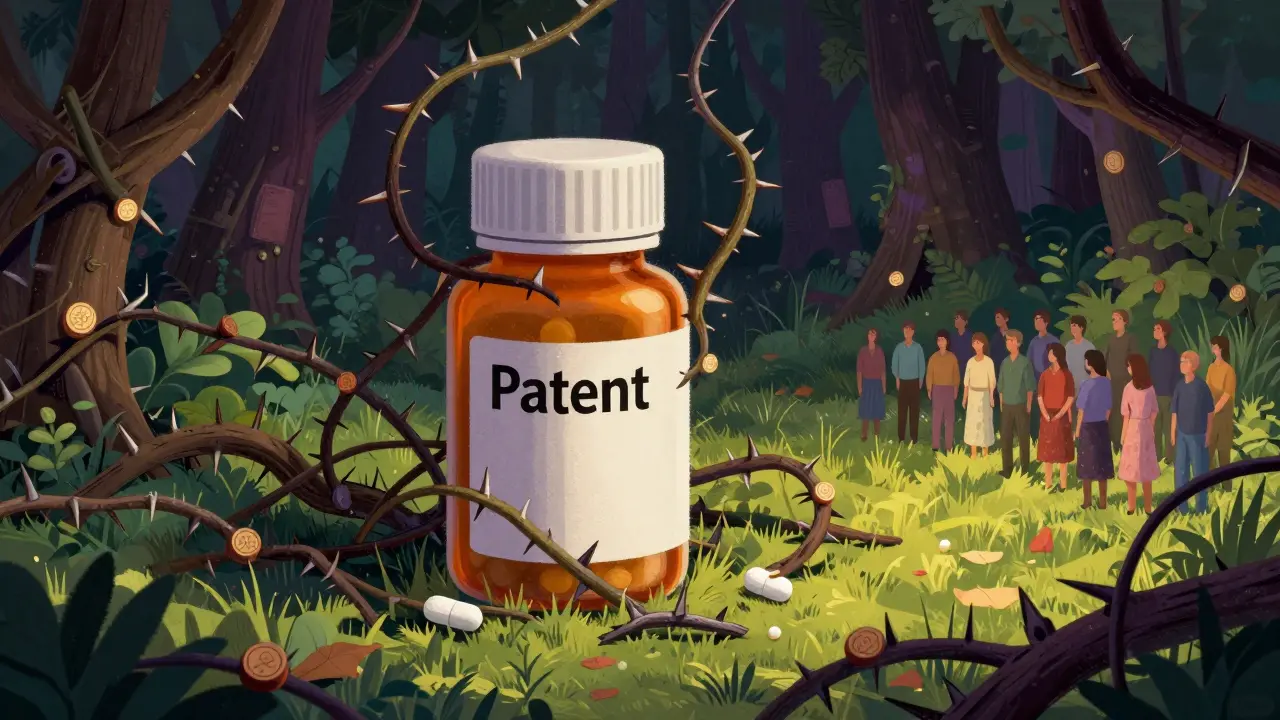
While the system aims for affordability, some companies find ways to game it. You might hear about "patent thickets," where a brand-name company files dozens of tiny, insignificant patents on a drug (like the shape of the pill or the coating) just to block generics from entering. This is a common tactic that has delayed the entry of 42% of first generics between 2010 and 2020.
Then there's the "authorized generic." This is a sneaky move where the brand-name company sells its own drug without the brand name. Because it's technically the same product, they can launch it during the first generic's 180-day exclusivity window. This can eat away about 20-30% of the first generic company's expected profits, turning a victory into a bit of a headache.
Real-World Impact on Patients
For the person at the pharmacy counter, first generic approval is the difference between taking a medication and skipping doses because of the cost. A survey of 1,200 pharmacists found that 87% believe these approvals significantly improved patient access. When people can afford their meds, they actually take them, which leads to better health outcomes across the board.
Take the case of Humira (adalimumab). When Amgen launched the first biosimilar (a more complex version of a generic for biologic drugs) in September 2023, it hit 42% market penetration in just 90 days. Patients reported identical results to the brand name but at a fraction of the price. This is the goal of the entire system: identical quality, lower cost.
What's Next for Generic Drugs?
The landscape is shifting toward "complex generics." These aren't simple pills, but things like inhalers or topical creams that are much harder to copy. The FDA is currently streamlining the approval process for these products to ensure we don't have long-term monopolies on critical respiratory or skin treatments.
Additionally, the 2022 Inflation Reduction Act has started to tweak how these exclusivity clocks work, particularly for drugs with strict safety requirements (REMS). With $156 billion worth of branded drugs set to lose patent protection in the coming years, the race for first generic approval is only going to get more intense.
Is a first generic drug as safe as the brand-name version?
Yes. To get approval, the generic must pass rigorous bioequivalence testing. The FDA ensures the active ingredients, dosage, and absorption rates are virtually identical. Studies show the difference in absorption is usually only about 3.5%, which is within the normal variation of the brand-name drug itself.
Why does only the first company get 180 days of exclusivity?
The 180-day window is a reward for the risk and expense of challenging a patent. Challenging a big pharmaceutical company in court can cost between $5 million and $15 million. The exclusivity period makes this financial risk worth it, encouraging companies to fight patents and bring cheaper drugs to market faster.
What happens if multiple companies file for the first generic at the same time?
If the FDA determines there are multiple "first-to-file" applicants who are all eligible, they use a multiple first-applicant approach. This means the 180-day exclusivity is shared among those companies, which unfortunately dilutes the profit potential for each individual firm.
How much does a first generic drug actually save me?
While it varies by drug, prices typically drop 70-90% within the first six months of a first generic entering the market. This is significantly more dramatic than when multiple generics enter at once, where price drops usually hover around 30-40%.