
API Manufacturing: How Generic Drugs Are Made and Why It Matters
When you pick up a generic pill, you’re holding something built around an active pharmaceutical ingredient, the biologically active component in a medication that produces the intended effect. Also known as API, it’s the reason your blood pressure drops, your asthma opens up, or your infection clears. Without properly made API, even the most carefully designed pill is useless—or worse, dangerous. API manufacturing isn’t just chemistry; it’s precision engineering under strict rules. Every batch must match exact purity, strength, and consistency standards. The FDA doesn’t just approve the final pill—they inspect the entire process that creates the API inside it.
Most generic drugs you take come from API made in facilities across India, China, and a few other countries. These aren’t small labs—they’re massive, regulated plants where temperature, humidity, and even air pressure are controlled down to the degree. A single mistake in mixing or drying can turn a life-saving drug into a toxic one. That’s why the FDA Office of Generic Drugs, the branch responsible for reviewing and approving generic drug applications sends inspectors overseas. They check if the API source follows cGMP—current Good Manufacturing Practices. If they find a violation, the whole shipment gets blocked. This isn’t bureaucracy; it’s safety. You wouldn’t want your insulin made in a dirty room, and the same rules apply to every API, no matter the brand.
There’s also a financial side. API makes up 80% of the cost of a generic pill. The rest is packaging, shipping, and profit. That’s why patent fights and patent litigation, legal battles that delay generic entry by protecting brand-name drug exclusivity matter so much. When a company holds a patent, they can charge $1,000 for a month’s supply. Once the patent expires and API manufacturers start producing the same ingredient at scale, the price drops to $10. The Hatch-Waxman Act, the 1984 law that created the modern generic drug pathway in the U.S. was designed to make this switch happen faster. But delays from lawsuits, Orange Book tricks, and pay-for-delay deals keep prices high longer than they should be.
And it’s not just about price. The way API is made affects how your body absorbs it. That’s why bioequivalence testing exists—proving your generic metformin behaves just like the brand. But if the API particle size is off, or the solvent residue is too high, absorption changes. That’s why you see posts here about medication safety, drug interactions, and even placebo effects. People don’t feel the difference because the pill looks different—they feel it because the API inside might not be as pure or consistent as it should be.
What you’ll find below is a collection of real-world stories tied to this hidden world. From how steroid tapers depend on adrenal recovery linked to API purity, to why penicillin allergies get misdiagnosed because of filler ingredients from the same manufacturing lines, to how opioid overdose risks rise when generic formulations vary in release speed. These aren’t random posts. They’re all connected to the same root: how API is made, who controls it, and how it ends up in your hands. Whether you’re managing arthritis, asthma, or just trying to save money on prescriptions, understanding API manufacturing helps you ask the right questions—and demand better.
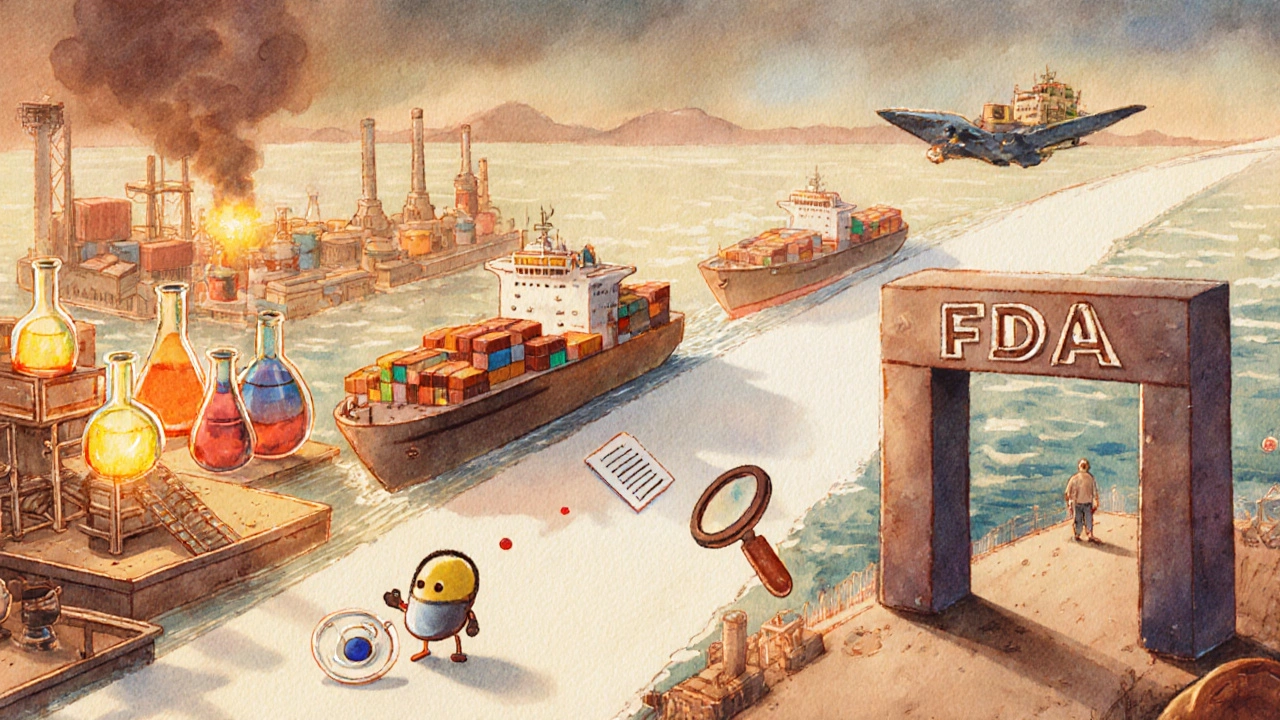
Learn how generic drugs travel from factories in India and China to your local pharmacy, and why the system that keeps them cheap is also surprisingly fragile.