
Diabetes Risk: What You Need to Know to Protect Your Health
When we talk about diabetes risk, the likelihood of developing type 2 diabetes due to lifestyle, genetics, or other health factors. It's not just about sugar—it's about how your body handles insulin, stores fat, and reacts to daily choices. Many people think they’re safe if they don’t drink soda, but insulin resistance, a condition where cells stop responding well to insulin, forcing the pancreas to work harder can creep in silently for years. By the time blood sugar levels climb into the danger zone, damage may already be happening. The good news? Most cases of type 2 diabetes are preventable if you catch the early signs.
prediabetes, a warning stage where blood sugar is higher than normal but not yet diabetic affects over 1 in 3 adults in the U.S., and most don’t know it. This isn’t just a number on a lab report—it’s your body screaming for a change. Weight gain around the belly, constant fatigue, dark patches on skin (acanthosis nigricans), and frequent urination are all red flags. You don’t need a fancy diet or expensive supplements. Studies show that losing just 5-7% of body weight and walking 30 minutes a day cuts diabetes risk by more than half. Even small, consistent steps matter more than drastic overhauls.
Medications can help, but they’re not magic. Drugs like metformin are often prescribed for prediabetes, but they work best when paired with real lifestyle shifts. And while some posts here dive into how certain drugs affect weight or how generic versions compare to brand names, the real power lies in understanding your own body’s signals. What you eat, how you move, how well you sleep—all of it ties back to your blood sugar, the amount of glucose circulating in your bloodstream, tightly regulated by insulin. High blood sugar doesn’t just lead to diabetes—it increases your risk for heart disease, nerve damage, and kidney problems too.
There’s no single cause of diabetes risk. Genetics play a role, but so do stress, poor sleep, and even the medications you take. Some drugs—like steroids or certain antipsychotics—can raise blood sugar. Others, like weight-loss meds or GLP-1 agonists, can help lower it. The key is awareness. If you’re taking any long-term medication, ask your doctor: could this be affecting my blood sugar? And if you’ve been told you’re at risk, don’t wait for a diagnosis. Start now. Track your meals, move more, sleep better. The tools are simple. The results? Life-changing.
Below, you’ll find real-world advice from people who’ve walked this path—how to spot hidden risks, what medications can help or hurt, and how to make changes that stick. No fluff. No fear. Just clear, practical steps to take control before it’s too late.
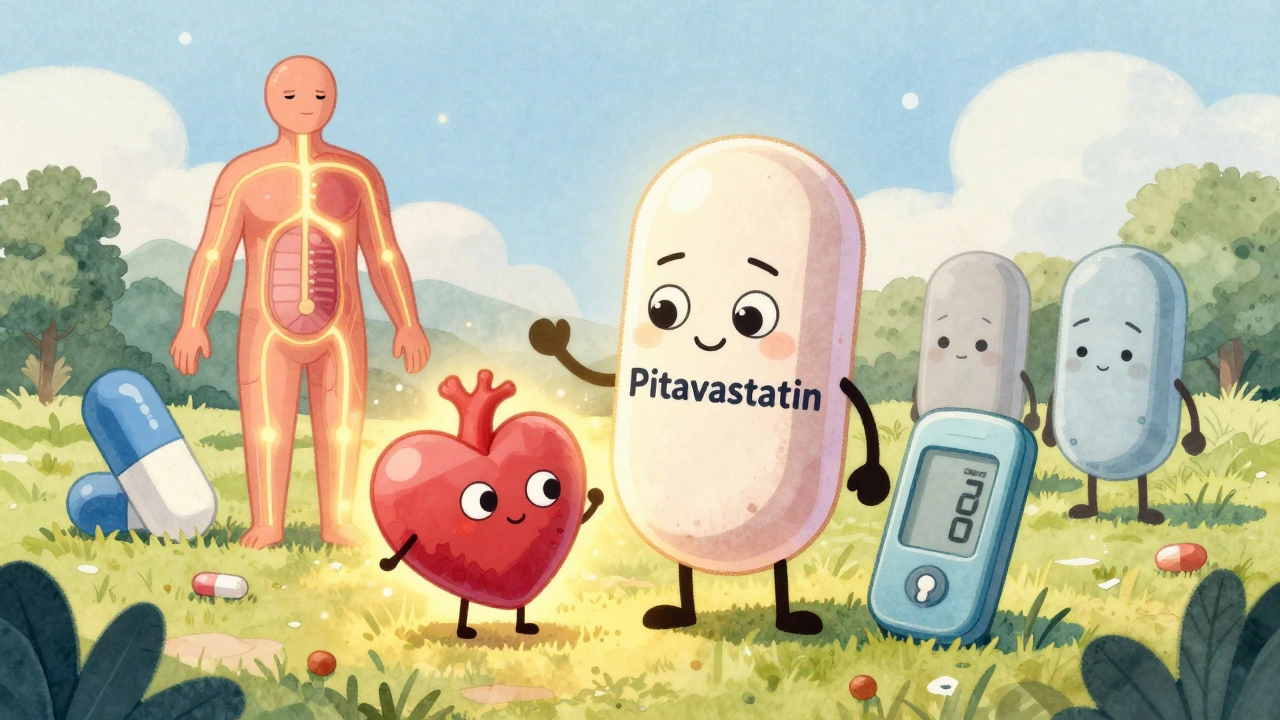
Pitavastatin offers a favorable metabolic profile compared to other statins, with studies showing it does not increase diabetes risk and may be the safest option for those with prediabetes or metabolic syndrome.