
Dosage Form Check: What You Need to Know About How Medicines Are Delivered
When you take a medicine, dosage form, the physical way a drug is prepared for use, like a pill, liquid, or injection. Also known as drug delivery system, it’s not just about what’s inside—it’s about how your body gets it. A tablet isn’t just a tablet. It could be designed to dissolve slowly, to survive stomach acid, or to release medicine only in the colon. Get this wrong, and the drug might not work—or worse, it could hurt you.
Think about oral tablets, solid pills swallowed whole. They’re common, but not always safe. If you crush a time-release pill, you could get a dangerous overdose. Or take a sublingual tablet, a pill meant to dissolve under the tongue and swallow it instead—you might miss the whole effect. Even something as simple as a liquid medication, a syrup or suspension taken by mouth needs proper measuring. A kitchen spoon isn’t accurate. A syringe is. And if you’re giving meds to a child or elderly person, getting the form right can mean the difference between recovery and a hospital visit.
Some medicines need to bypass the digestive system entirely. That’s where injections, medicines delivered straight into muscle, vein, or under the skin come in. Insulin, for example, can’t be taken as a pill—it gets destroyed in the gut. But if you use the wrong needle size or injection site, absorption changes. Same goes for patches, suppositories, or inhalers. Each form has rules. Skip them, and the treatment fails.
That’s why checking the dosage form isn’t just a pharmacist’s job—it’s your job too. If your medicine looks different than last time, ask why. Is it a generic? A new brand? A different form? The active ingredient might be the same, but the delivery can change how fast it works, how long it lasts, and whether it causes side effects. A capsule that opens in the stomach might cause heartburn. A patch that leaks could overdose you. A liquid that’s not shaken might give you too little—or too much.
The posts below cover real cases where dosage form made all the difference. From why crushing opioids can kill someone, to how a liquid steroid must be measured exactly to avoid adrenal crisis, to why some pain creams work only when applied to intact skin. You’ll find guides on how to handle pills safely, how to give meds to kids without mess or mistake, and how to spot when a form has changed without your knowledge. These aren’t theory pages. These are real-life checks that keep people alive.
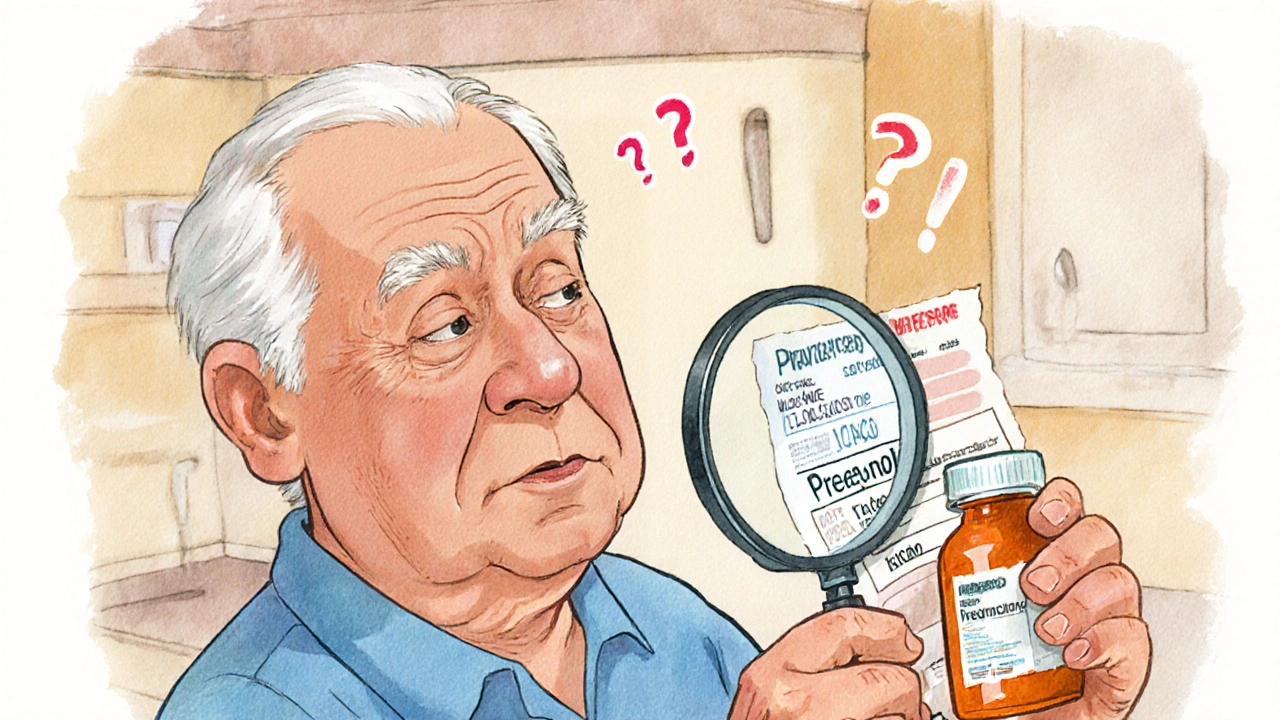
Learn how to safely verify medication names, strengths, and dosage forms to prevent dangerous errors. Simple steps like reading labels aloud, checking units, and using the three-point verification rule can save lives.