
Generic Medication Distribution: How Affordable Drugs Reach Patients Safely
When you pick up a prescription and see a cheaper version of a brand-name drug, you’re holding the result of generic medication distribution, the system that makes FDA-approved copies of brand-name drugs available at lower prices. Also known as generic drug supply chain, it’s what keeps millions of people on their medications without going broke. This isn’t just about saving money—it’s about access. Over 90% of U.S. prescriptions are filled with generics, but few people know how they get from the factory to your pharmacy.
The backbone of this system is the Hatch-Waxman Act, a 1984 law that balanced innovation and affordability by letting generic makers prove their drugs work just like the brand, without repeating expensive clinical trials. It created a fast-track path called the ANDA—Abbreviated New Drug Application—so generics could enter the market quickly. But it also gave brand companies a way to delay competition through patent listings in the Orange Book, the official FDA directory that tracks drug patents and exclusivity periods. That’s why some generics take years to appear, even after a patent expires. And when big pharma pays a generic maker to wait—what’s called a pay-for-delay settlement, a legal tactic where brand companies pay generics to stay off the market—it costs patients billions.
The FDA Office of Generic Drugs, the team inside the FDA that reviews every generic application and checks for bioequivalence makes sure these cheaper drugs are just as safe and effective. They don’t test for new benefits—they test that the generic delivers the same amount of medicine into your bloodstream at the same rate. That’s why a generic pill might look different, but works the same. Their work is silent but essential. Without them, the whole system would collapse.
And distribution? It’s not just shipping boxes. It’s managing supply chains that cross borders, handling batch recalls, ensuring storage conditions meet standards, and keeping pharmacies stocked—even during shortages. When a generic drug runs out, it’s often not because no one made it. It’s because of manufacturing issues, raw material delays, or regulatory hiccups. That’s why knowing where your meds come from matters.
You’ll find posts here that dig into every layer: how patent fights delay access, why some people think generics don’t work (even when they do), how the FDA checks each batch, and what happens when a drug gets pulled from shelves. You’ll see how weight loss pills, blood thinners, inhalers, and even ED meds all follow the same rules. Whether it’s a $5 generic for high blood pressure or a $500 brand, the path from lab to shelf is the same—and it’s more complex than you think.
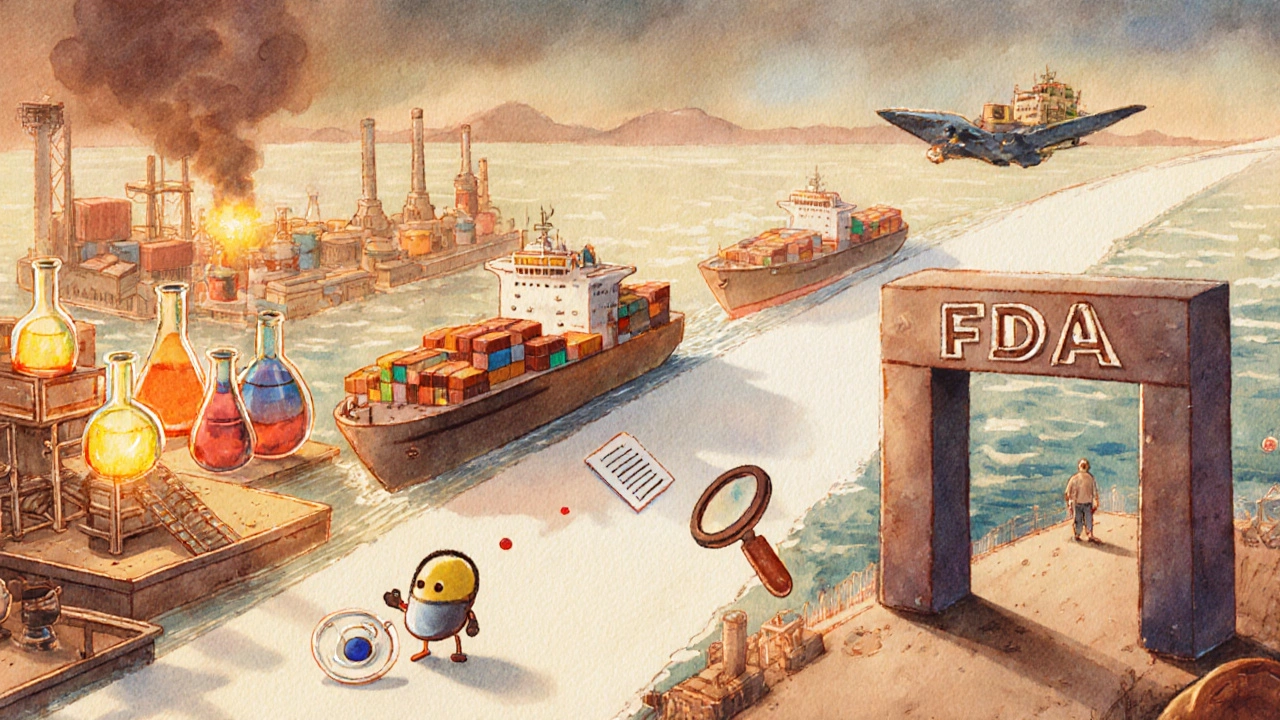
Learn how generic drugs travel from factories in India and China to your local pharmacy, and why the system that keeps them cheap is also surprisingly fragile.