
How Generic Drugs Are Made: From Lab to Medicine Cabinet
When you pick up a generic pill, you’re holding a copy of a brand-name drug—but it’s not a knockoff. It’s a generic drug, a medication that contains the same active ingredient, strength, dosage form, and route of administration as the original brand-name drug, and is proven to work the same way in the body. Also known as non-branded medication, it’s the reason millions of people can afford their prescriptions today. The FDA doesn’t approve generics because they’re cheaper—they approve them because they’re identical in how they work inside your body.
The process starts long before the pill is pressed. First, manufacturers reverse-engineer the original drug’s chemistry, using publicly available data from patents that have expired. They don’t just copy the formula—they rebuild it from scratch, matching every chemical detail. Then comes the real test: bioequivalence, a scientific standard that proves the generic drug releases the same amount of active ingredient into the bloodstream at the same rate as the brand-name version. This isn’t guesswork. It’s done with real people in clinical studies, measuring blood levels over time. If the generic’s curve matches the brand’s within strict FDA limits, it passes. No exceptions. No shortcuts.
Manufacturing happens in clean rooms under the same rules as brand-name factories. The same quality controls apply: raw material testing, environmental monitoring, batch consistency checks. The only difference? No marketing budget. No fancy packaging. No expensive ad campaigns. That’s why generics cost 80% less. But the pill you take? It’s made to the same standard. The FDA Office of Generic Drugs, the division responsible for reviewing and approving every generic drug application in the U.S. doesn’t treat generics as second-class. They review every single one using the same strict guidelines as the original.
Some people think generics don’t work as well. That’s not chemistry—it’s perception. Studies show people feel better on brand-name pills even when they’re actually taking generics. The mind plays tricks. But the science doesn’t lie. The generic drug you get from your pharmacy has been tested, verified, and approved to do exactly what the expensive version does. It’s not a compromise. It’s the same medicine, made smarter.
Behind every generic drug is a chain of science, regulation, and manufacturing precision. From the lab bench to the pharmacy shelf, every step is tracked and audited. The Hatch-Waxman Act made this possible, but it’s the FDA’s relentless focus on bioequivalence that keeps it honest. You won’t find this level of oversight in any other industry. And that’s why you can trust your generic meds—even if your insurance company paid less for them.
Below, you’ll find real guides that dig into how these drugs get approved, why some take longer to reach the market, how patents delay access, and what happens when perception clashes with reality. Whether you’re curious about the science, worried about safety, or just trying to save money, the answers are here—no fluff, no hype, just the facts.
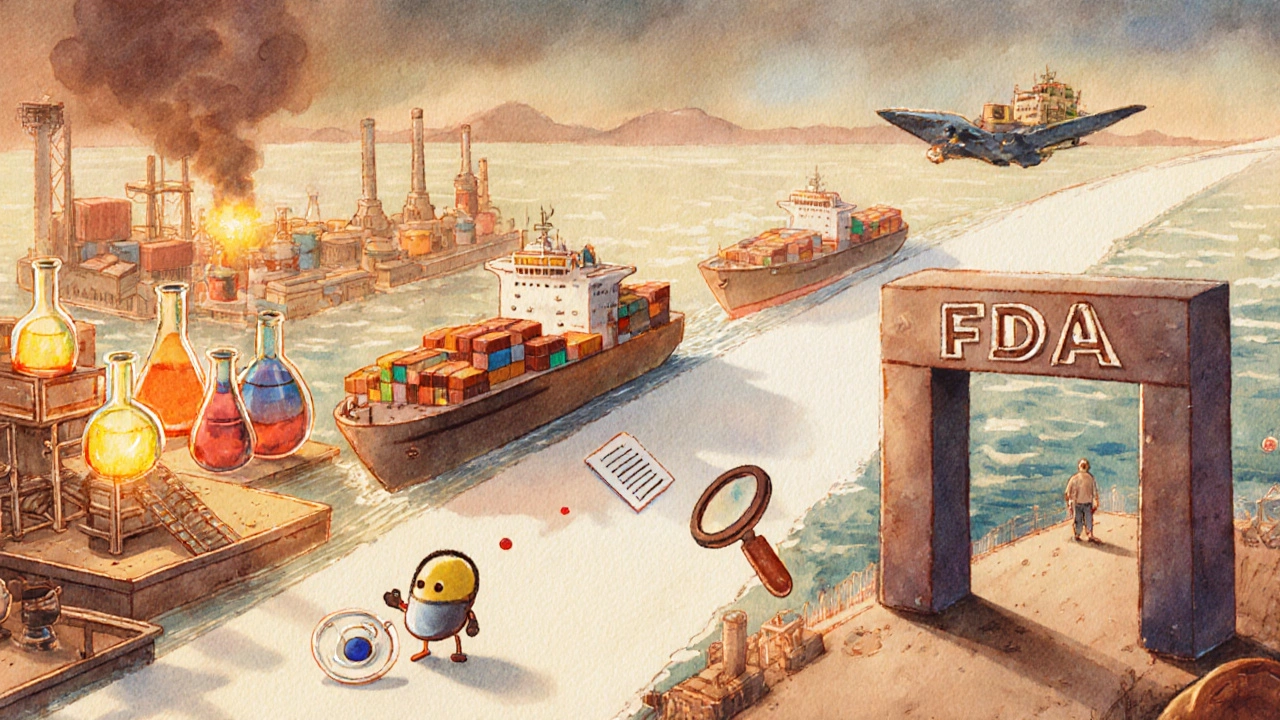
Learn how generic drugs travel from factories in India and China to your local pharmacy, and why the system that keeps them cheap is also surprisingly fragile.