
LDL Cholesterol: What It Is, Why It Matters, and How to Manage It
When doctors talk about LDL cholesterol, a type of lipoprotein that carries cholesterol through the bloodstream and is linked to artery-clogging plaque. Also known as bad cholesterol, it's not the cholesterol itself that's the problem—it's what happens when too much of it sticks to your artery walls. Over time, that buildup narrows your blood vessels, forcing your heart to work harder. It’s not a silent killer because it sneaks up—it’s because most people don’t check until something goes wrong.
LDL cholesterol doesn’t exist in a vacuum. It’s shaped by what you eat, how active you are, your genes, and even your sleep and stress levels. Foods high in trans fats and refined carbs push LDL up, while fiber-rich foods like oats, beans, and apples help bring it down. Exercise doesn’t just burn calories—it changes how your body handles cholesterol, boosting the good (HDL) and clearing out the bad. And here’s something most people miss: if your LDL stays high even after diet and exercise, it might not be about lifestyle—it could be genetic. Familial hypercholesterolemia affects 1 in 250 people, and without treatment, heart attacks can happen as early as your 30s or 40s.
Managing LDL isn’t about taking pills or starving yourself. It’s about knowing your numbers, understanding what moves them, and making changes that stick. Statins are common, but they’re not the only tool. Newer medications like PCSK9 inhibitors work differently and help people who can’t tolerate statins or need extra help. Even small wins—like swapping soda for water, walking 30 minutes a day, or cutting out fried snacks—add up. The goal isn’t to hit some magic number on a lab report. It’s to keep your arteries clear so your heart doesn’t have to fight just to keep you alive.
You’ll find real-world advice here—not theory. Articles cover how generic statins work just like brand names, why some people still feel unsure about them, and how pharmacogenetic testing can tell if your body responds well to certain drugs. You’ll see how weight loss impacts cholesterol, how insurance rules affect what you can afford, and how to talk to your pharmacist about your meds safely. There’s no fluff. Just what you need to know to take control of your numbers before they take control of your life.
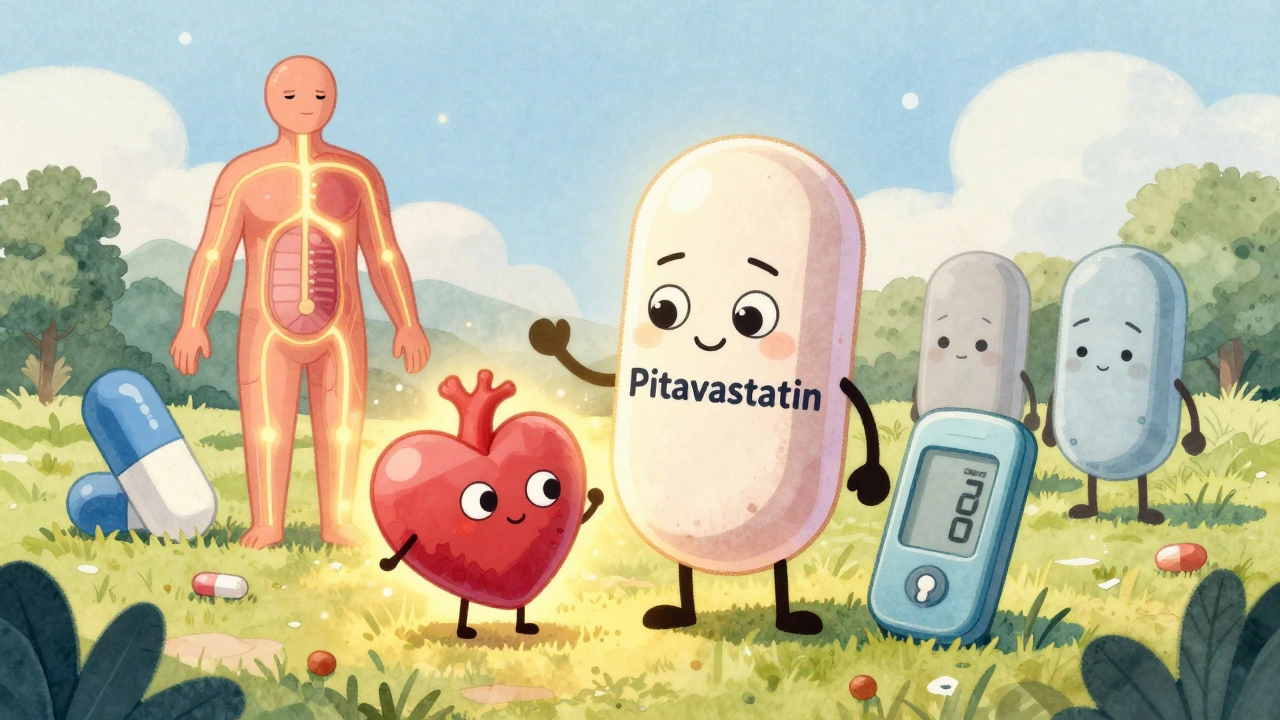
Pitavastatin offers a favorable metabolic profile compared to other statins, with studies showing it does not increase diabetes risk and may be the safest option for those with prediabetes or metabolic syndrome.