
Pharmacy Notes: Essential Guides for Safe Medication Use and Clinical Practice
When you hear pharmacy notes, practical, hands-on guidance used by pharmacists and clinicians to ensure safe and effective medication use. Also known as clinical pharmacy resources, they’re the unglamorous but vital behind-the-scenes work that keeps patients from getting hurt by pills, interactions, or miscommunication. These aren’t textbook theories—they’re the real-world tips you wish your pharmacist had written down for you: how to spot a dangerous combo before it’s too late, why your generic pill might look different but still work, or when a test for your genes could save your life.
Medication safety, the practice of preventing errors in prescribing, dispensing, and taking drugs is the backbone of every good pharmacy note. It’s not just about reading labels—it’s about catching a typo in "10 mg" vs. "100 mg," knowing that mixing warfarin and ibuprofen can cause internal bleeding, or realizing that most people who think they’re allergic to penicillin aren’t. Then there’s drug interactions, when two or more medications affect each other’s behavior in the body, often dangerously. Think opioids and benzodiazepines stopping your breathing, or how statins and grapefruit juice can turn a safe dose into a toxic one. These aren’t rare edge cases—they happen every day in clinics and homes.
And then there’s the rise of generic drugs, medications that are chemically identical to brand-name versions but cost far less. They make up over 90% of prescriptions in the U.S., yet many patients still doubt they work. Pharmacy notes clear up the myths: why a pill’s color or shape doesn’t change its effect, how the FDA ensures bioequivalence, and why patent lawsuits sometimes delay affordable access. Meanwhile, pharmacogenetic testing, using your DNA to predict how you’ll respond to certain drugs, is moving from labs into real clinics. It’s not sci-fi—it’s cutting adverse reactions by 30% and helping doctors pick the right drug the first time, not after three failed tries.
What you’ll find below isn’t a random list of articles. It’s a curated collection of pharmacy notes that actually matter—written by people who’ve seen the mistakes, fixed the errors, and saved lives with simple, practical steps. Whether you’re a patient trying to understand why your insurance forces a generic switch, a caregiver helping an older adult manage ten pills a day, or a healthcare worker brushing up on compliance, these guides give you what you need—no fluff, no jargon, just clear, usable info. Let’s get to the details that keep you safe.
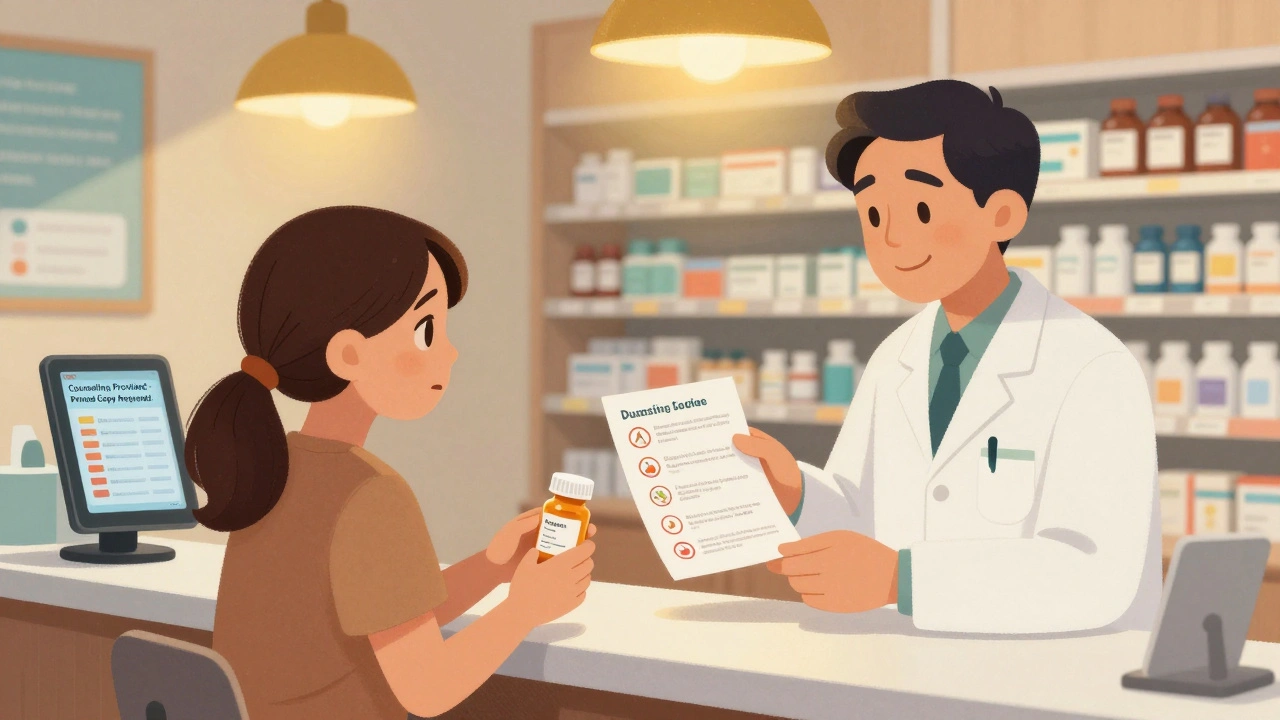
Learn how to confirm pharmacist counseling notes after picking up your prescription to avoid dangerous medication errors. Get step-by-step tips for accessing notes, what to look for, and why delays put your health at risk.